
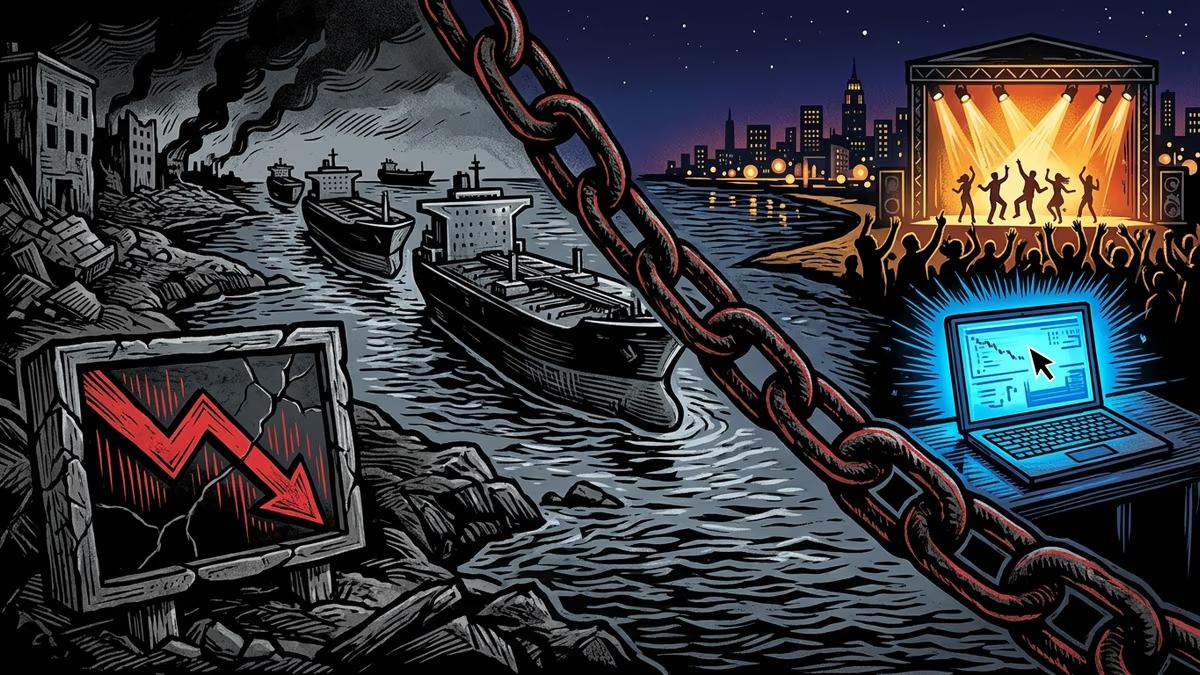
PRISM Weekly Digest: Second Week of March 2026
The Strait of Hormuz was blockaded. The S&P 500 fell for a third straight week. Iran quit the World Cup. OpenAI released an AI that uses your computer. BTS is returning at Gwanghwamun.
Mar Week 2, 2026 | Hormuz Is Closed — What the War Changed, and What It Couldn't
The waterway that carried 20% of the world's oil just shut down.
Iran's IRGC declared a full blockade of the Strait of Hormuz. "Not a litre of oil will pass." Tanker traffic dropped 70%, then effectively hit zero. On March 11 alone, three ships were struck. Off the port of Basra, two oil tankers caught fire from drone boat attacks.
Week three of the war. The S&P 500 fell for a third straight week to its 2026 low. U.S. GDP was revised down to 0.7%. Iran pulled out of the World Cup. Meanwhile, OpenAI released an AI that operates your computer, and BTS announced their return at Gwanghwamun.
The Lock on Hormuz
Week three of Operation Epic Fury. The war isn't ending — it's escalating.
On March 11, the IRGC declared the Strait of Hormuz fully closed to vessels linked to the U.S., Israel, and their allies. Over 150 tankers sit anchored outside the strait, waiting. Maritime intelligence confirms Iranian oil is still flowing through — Tehran has weaponized the waterway itself.
Markets responded with fear. WTI crude hit $98.71 per barrel. Brent topped $103.14. Oil prices have surged over 40% since the war began. U.S. gas prices jumped 70 cents per gallon since March 1, reaching $3.59. The S&P 500 broke through the 6,764 support level and hit its 2026 low after three consecutive weekly declines. The Dow fell 1.99%. The Nasdaq lost 1.26%.
Then came the scarier number. Q4 GDP growth was revised sharply down from 1.4% to just 0.7%. Prices rising while growth stalls — the ghost of 1970s stagflation is becoming real. Asian central banks, including South Korea's, are trapped between two bad options: fight inflation or protect growth. Neither works.
What the War Changed

Iran's sports minister Ahmad Donyamali made it official: "Under no circumstances can we participate in a World Cup hosted by a regime that assassinated our leader." Iran is boycotting the 2026 FIFA World Cup. All three of their group-stage matches were scheduled in American cities — Los Angeles and Seattle. No nation has withdrawn from a World Cup this close to kickoff in the modern era. FIFA has signaled potential fines of hundreds of thousands of dollars and possible bans from future competitions.
American opinion is split — and silent. An NPR/PBS/Marist poll shows 56 to 70 percent of Americans oppose the war. Support for ground troops sits at barely 20%. Yet there are no large-scale street protests. The Irish Times asked the obvious question: "The majority oppose the war. So why aren't they protesting?"
Trump hasn't ruled out ground forces. "If necessary." The Pentagon says no U.S. troops are currently inside Iran, but the door is wide open. Reports indicate the U.S. and Israel have discussed deploying special forces to secure Iran's stockpile of highly enriched uranium.
AI Learned to Use a Computer
While the war shook the world, AI quietly crossed a threshold.
OpenAI launched GPT-5.4 on March 5. A million-token context window. 33% fewer factual errors. But the headline feature is something else entirely — native computer use. The AI can see your screen, move a mouse, and operate applications like a human. Draft an email, edit a spreadsheet, schedule a meeting — all from a single natural-language command. API pricing: $2.50 per million input tokens.
The same week, Apple sent the opposite signal. Its Gemini-powered Siri overhaul, planned for iOS 26.4, has been delayed due to internal development challenges. The features will now be spread across iOS 26.5 (May) and iOS 27 (September). Apple promised on-screen awareness and 10-step sequential actions powered by Google's 1.2 trillion parameter Gemini model. The gap between promise and delivery widened again.
In the first week of March alone, OpenAI, Alibaba, Meta, ByteDance, and others released over 12 major AI models — the most concentrated burst of AI releases in history. The AI arms race is moving faster than the one in the Middle East.
Gwanghwamun's Return
Through the war and market chaos, Seoul was vibrating on a different frequency.
BTS officially announced their first full-group comeback in four years. Their fifth studio album "ARIRANG" drops March 20 with a 14-track tracklist. On March 21, a comeback concert takes over Gwanghwamun Square — from Gwanghwamun Gate to City Hall intersection. 22,000 seats. Netflix secured exclusive worldwide livestream rights. A documentary, "BTS: The Return," premieres on Netflix March 27, with a world tour launching in April.
In the drama scene, "Siren's Kiss" is making waves. The tvN romance thriller starring Wi Ha-joon and Park Min-young debuted at 5.6% ratings in just two episodes, ranking first across all channels in its time slot. An insurance fraud investigator and a mysterious woman at the center of serial deaths — Wi Ha-joon, fresh off "Squid Game," plays dangerous charm once again.
Authors

Combining the sharp eye of a financial auditor with the warm sensibility of a picture book editor, writing stories that read the currents of the AI era. Currently Editor-in-Chief at Liabooks.
Related Articles

Trump announced substantial progress on a US-Iran peace deal and Hormuz reopened after six weeks. Bitcoin jumped from $74,000 to $76,700 in four hours. Xi seated Putin, Iran, and India at the same desk in one week. SpaceX opened its books for the first time in 23 years with the largest IPO in U.S. history; Nvidia conceded China to Huawei. BTS held the Billboard 200 top 10 for an eighth straight week.
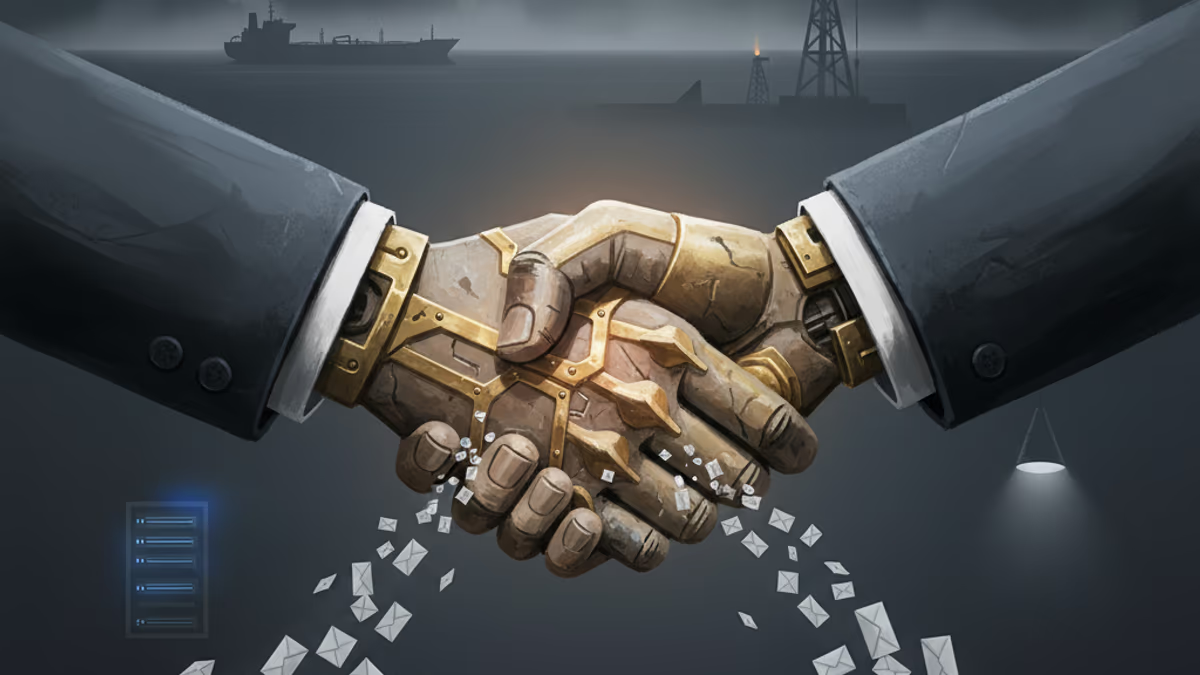
Trump and Xi met in Beijing for the first time in nine years. Microsoft poured $100B into OpenAI and became the supporting actor; Cerebras received $70B on day one. Hormuz entered week six. Cisco cut 4,000. ILLIT hit Billboard No. 1, CORTIS debuted at No. 3, and BTS is confirmed for the World Cup Final halftime stage.

A closed Hormuz arrives at the kitchen table, Musk vs. Altman puts a trillion dollars on trial, the Big Four bet $650 billion on AI, and Trump sends 25% tariff invoices to long-time allies. K-pop's seventeen-year slave-contract era closes with a standard-contract reform.
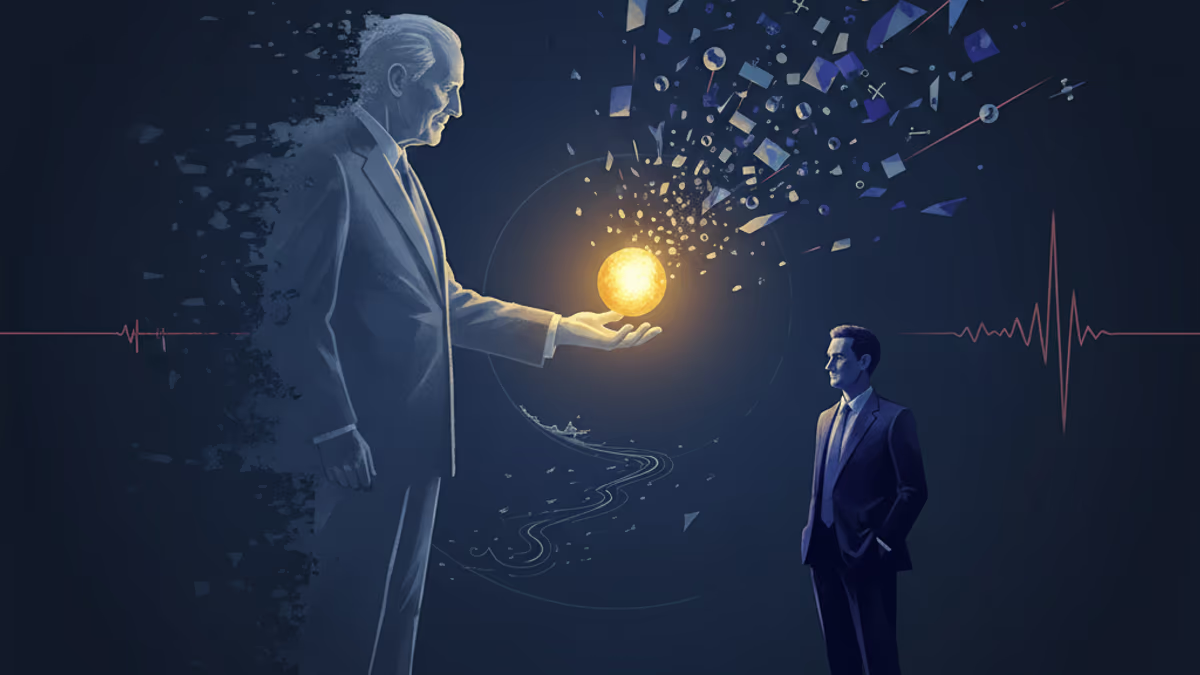
Tim Cook's 25-year goodbye, $40 billion poured into Anthropic, shots near the White House dinner, and TXT's first Grand Slam — a week of power handed over and crises distributed.
Trump announced substantial progress on a US-Iran peace deal and Hormuz reopened after six weeks. Bitcoin jumped from $74,000 to $76,700 in four hours. Xi seated Putin, Iran, and India at the same desk in one week. SpaceX opened its books for the first time in 23 years with the largest IPO in U.S. history; Nvidia conceded China to Huawei. BTS held the Billboard 200 top 10 for an eighth straight week.
Trump and Xi met in Beijing for the first time in nine years. Microsoft poured $100B into OpenAI and became the supporting actor; Cerebras received $70B on day one. Hormuz entered week six. Cisco cut 4,000. ILLIT hit Billboard No. 1, CORTIS debuted at No. 3, and BTS is confirmed for the World Cup Final halftime stage.
A closed Hormuz arrives at the kitchen table, Musk vs. Altman puts a trillion dollars on trial, the Big Four bet $650 billion on AI, and Trump sends 25% tariff invoices to long-time allies. K-pop's seventeen-year slave-contract era closes with a standard-contract reform.
Tim Cook's 25-year goodbye, $40 billion poured into Anthropic, shots near the White House dinner, and TXT's first Grand Slam — a week of power handed over and crises distributed.
Thoughts
Share your thoughts on this article
Sign in to join the conversation