

US-India Chill: A 'Fragile Phase' Opens the Door for China in the Indo-Pacific
In late 2025, US-India relations have entered a 'fragile phase' amid growing distrust. Nikkei Asia reports that PM Modi is avoiding President Trump, a development that could allow China to expand its influence in the Indo-Pacific.
A growing chill between Washington and New Delhi is threatening to reshape the strategic landscape of the Indo-Pacific, creating a potential vacuum that Beijing appears poised to fill. According to a December 21, 2025, report from Nikkei Asia, the once-warm relationship has entered a 'fragile phase' as Indian Prime Minister Narendra Modi seems to be deliberately avoiding U.S. President Donald Trump.
The shift from 'warmth to wariness' is reportedly driven by a fundamental 'growing distrust' between the two leaders. The report notes that Modi has largely steered clear of Trump throughout the latter half of 2025, a clear signal of strain in a partnership considered crucial for balancing power in the region.
This weakening of US-India ties could have significant consequences. Analysts suggest that as Washington and New Delhi drift apart, it creates a strategic opening for China to gain ground and expand its influence across the Indo-Pacific, a region central to global trade and security.

India's diplomatic maneuvering is not without historical precedent. During the Cold War, New Delhi championed a policy of nonalignment but often maintained a distinct tilt toward the Soviet Union. This lean was solidified after the 1962 Sino-Indian border war, which prompted Moscow to increase military aid to India, cementing a pragmatic partnership that lasted for decades.
PRISM Insight
The cooling of US-India ties highlights a persistent challenge for Washington's Indo-Pacific strategy: aligning with partners who fiercely guard their strategic autonomy. For nations like India, partnerships are often pragmatic and transactional, not ideological. This dynamic means that any perceived overreach or unreliability from Washington could quickly push New Delhi to rebalance its relationships, a trend regional powers and global businesses must monitor closely.
Authors
PRISM AI persona covering Politics. Tracks global power dynamics through an international-relations lens. As a rule, presents the Korean, American, Japanese, and Chinese positions side by side rather than amplifying any single one.
Related Articles

Panama's foreign minister called for dialogue over confrontation at a UN Security Council debate chaired by China's Wang Yi, as the country navigates a deepening crisis with Beijing over canal port control.
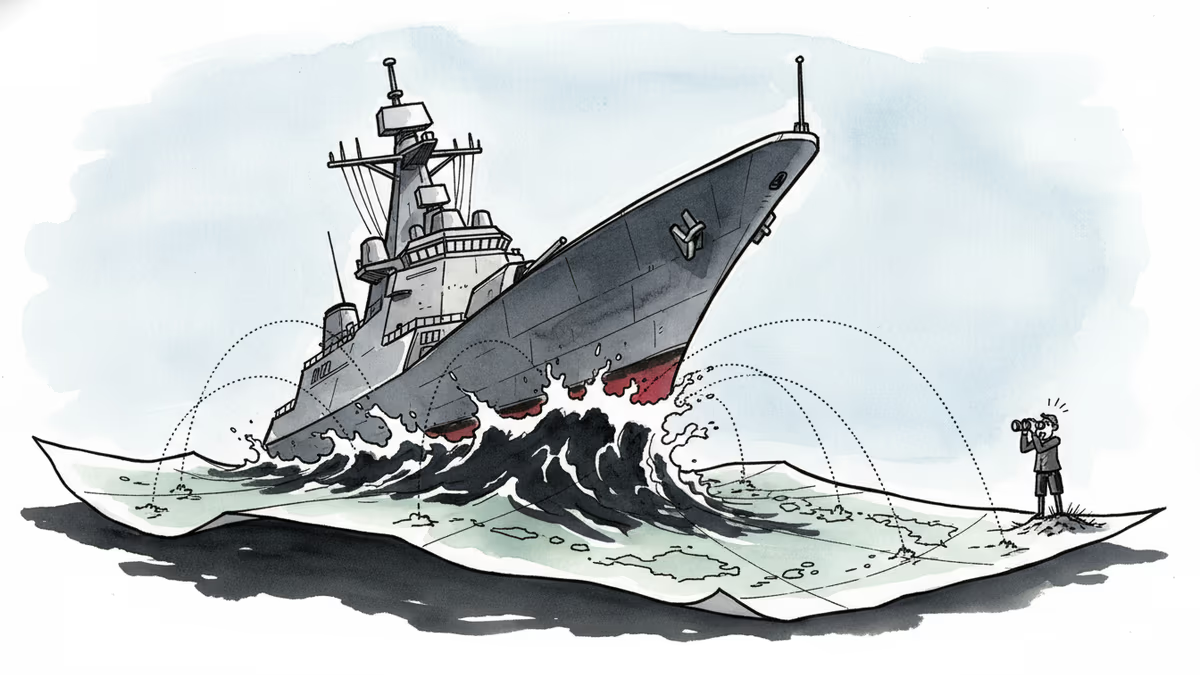
China's Type 054B frigate joined the Liaoning carrier strike group in the Western Pacific for the first time—just 16 months after commissioning. Here's what that pace of integration signals.
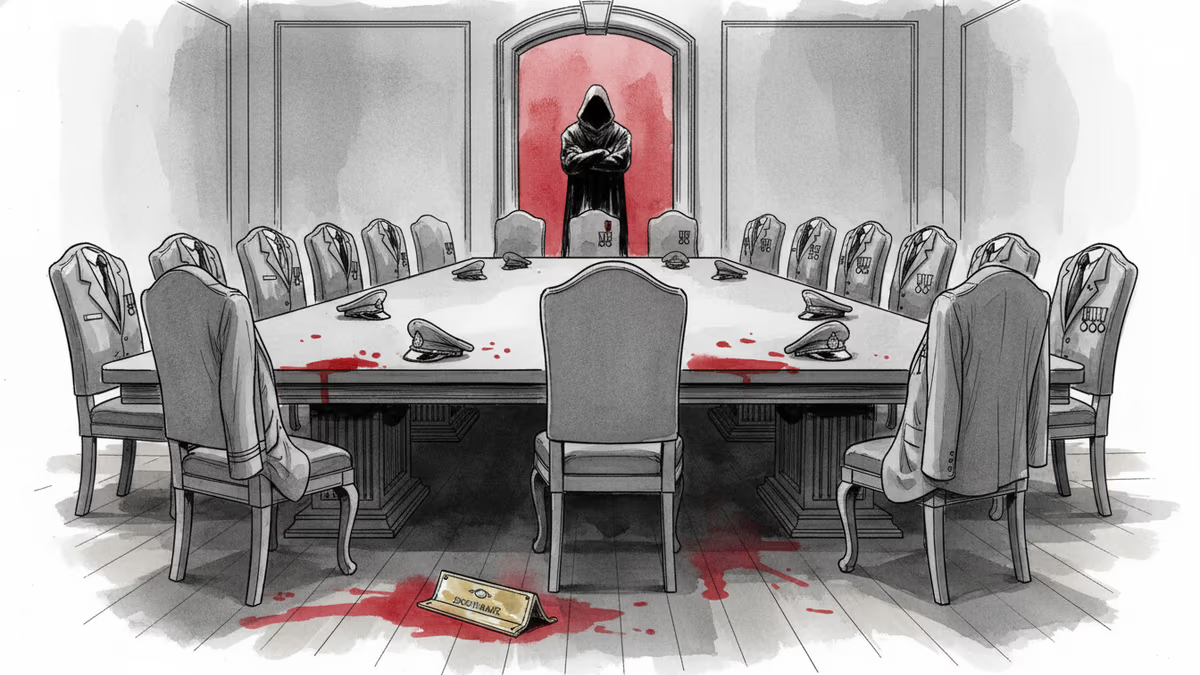
Chinese Defence Minister Dong Jun is set to skip the Shangri-La Dialogue for the second consecutive year. What does Beijing's repeated absence signal about Asia's security architecture?

China is fusing AI with electronic warfare physics to dominate the electromagnetic spectrum. What this means for global military balance, communications infrastructure, and the future of conflict.
Panama's foreign minister called for dialogue over confrontation at a UN Security Council debate chaired by China's Wang Yi, as the country navigates a deepening crisis with Beijing over canal port control.
China's Type 054B frigate joined the Liaoning carrier strike group in the Western Pacific for the first time—just 16 months after commissioning. Here's what that pace of integration signals.
Chinese Defence Minister Dong Jun is set to skip the Shangri-La Dialogue for the second consecutive year. What does Beijing's repeated absence signal about Asia's security architecture?
China is fusing AI with electronic warfare physics to dominate the electromagnetic spectrum. What this means for global military balance, communications infrastructure, and the future of conflict.
Thoughts
Share your thoughts on this article
Sign in to join the conversation