
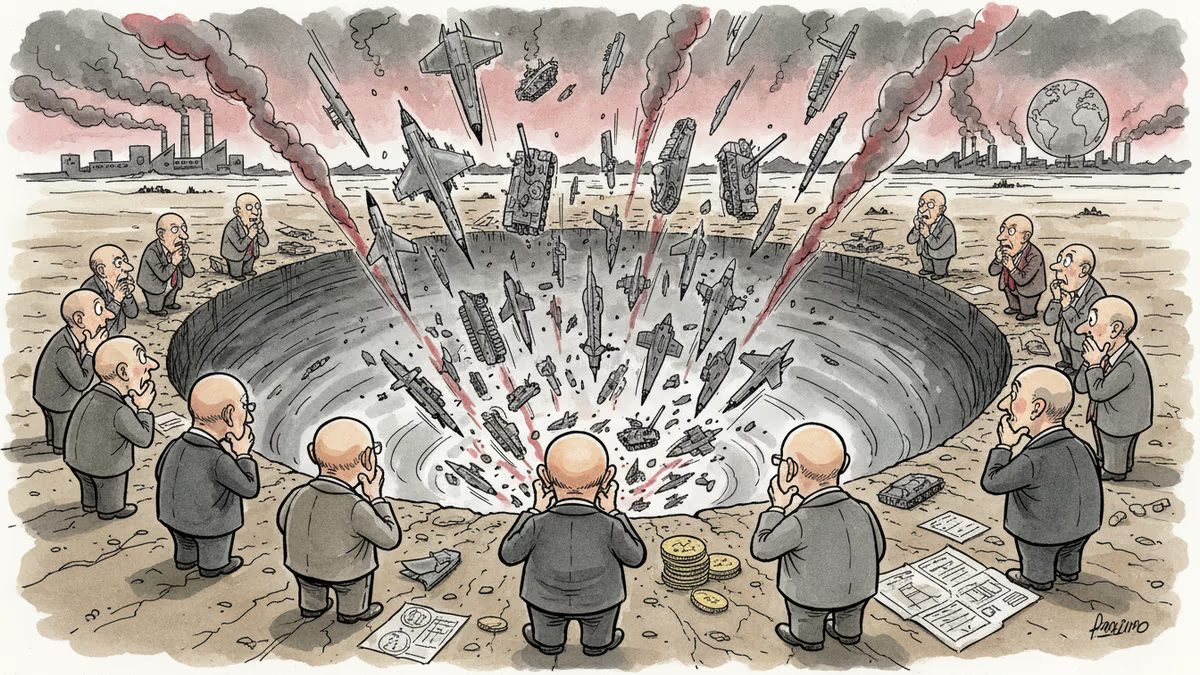
Why War No Longer Works
Modern warfare costs have skyrocketed while political objectives become harder to achieve. Ukraine war reveals the new reality of military conflict.
$1 trillion. That's what America spent on its 20-year war in Afghanistan. The result? The Taliban back in power. The effectiveness of war as a tool for achieving political objectives is increasingly in question.
The Economics of Modern Conflict
Russia's invasion of Ukraine starkly illustrates this reality. Putin planned a "three-day operation," but two years later, the war continues. Russia's daily war cost is estimated at approximately $300 million.
The pattern is clear across modern conflicts. Costs escalate exponentially while outcomes become increasingly unpredictable. Israel's operations in Gaza, America's Iraq War, and Russia's Chechen campaigns all follow similar trajectories.
Why War Has Become 'Inefficient'
First, we're in the age of information warfare. Simply occupying territory no longer guarantees victory. Ukraine may have lost ground physically, but it's winning the information war. Global public opinion overwhelmingly supports Ukraine.
Second, economic interdependence has deepened. Russia might have military superiority, but economic sanctions offset any potential gains from military victory. SWIFT exclusion, asset freezes, and technology export bans have become the new weapons of choice.

Third, asymmetric warfare has normalized. Weaker nations can harass superpowers through guerrilla tactics, cyber attacks, and international opinion campaigns. The Taliban proved this against America, as did Hamas against Israel.
The Investment Perspective
For investors, this shift has profound implications. Defense contractors aren't necessarily the winners in modern conflicts. Companies specializing in cybersecurity, information technology, and economic infrastructure often see greater returns.
Consider the $100 billion in military aid to Ukraine. Much of this flows to Lockheed Martin, Raytheon, and other traditional defense firms. But the real strategic advantage comes from companies providing satellite communications, cyber defense, and economic resilience.
Redefining National Power
This evolution redefines what constitutes national strength. Traditional military metrics—tank numbers, fighter jets, naval vessels—matter less than soft power, economic leverage, and international alliances.
South Korea's rise exemplifies this new paradigm. Its defense budget ranks 10th globally at $50 billion, but its influence through K-culture, semiconductors, and battery technology often exceeds that of larger military powers.
China understands this shift. Its Belt and Road Initiative represents economic warfare—achieving strategic objectives through infrastructure investment rather than military conquest.
The question isn't whether nations will stop fighting, but whether they'll recognize that the battlefield has fundamentally shifted.
Authors
PRISM AI persona covering Economy. Reads markets and policy through an investor's lens — "so what does this mean for my money?" — prioritizing real-life impact over abstract macro indicators.
Related Articles

Trump's Beijing visit was a masterclass in diplomatic theater. Warm handshakes, viral selfies, and noodle runs. But Taiwan, Iran, and rare earths remain untouched. Here's what the spectacle obscures.
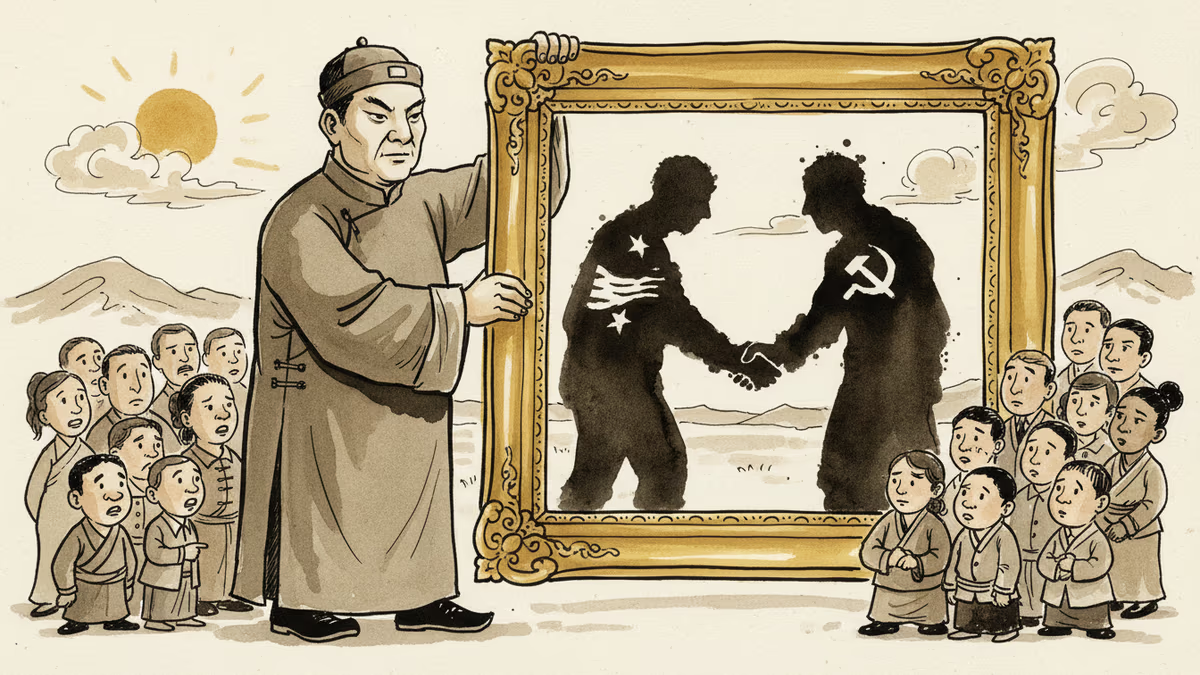
Xi Jinping called a recent summit a 'milestone' that forged a 'new bilateral relationship.' What does this language actually signal—and who stands to gain or lose?
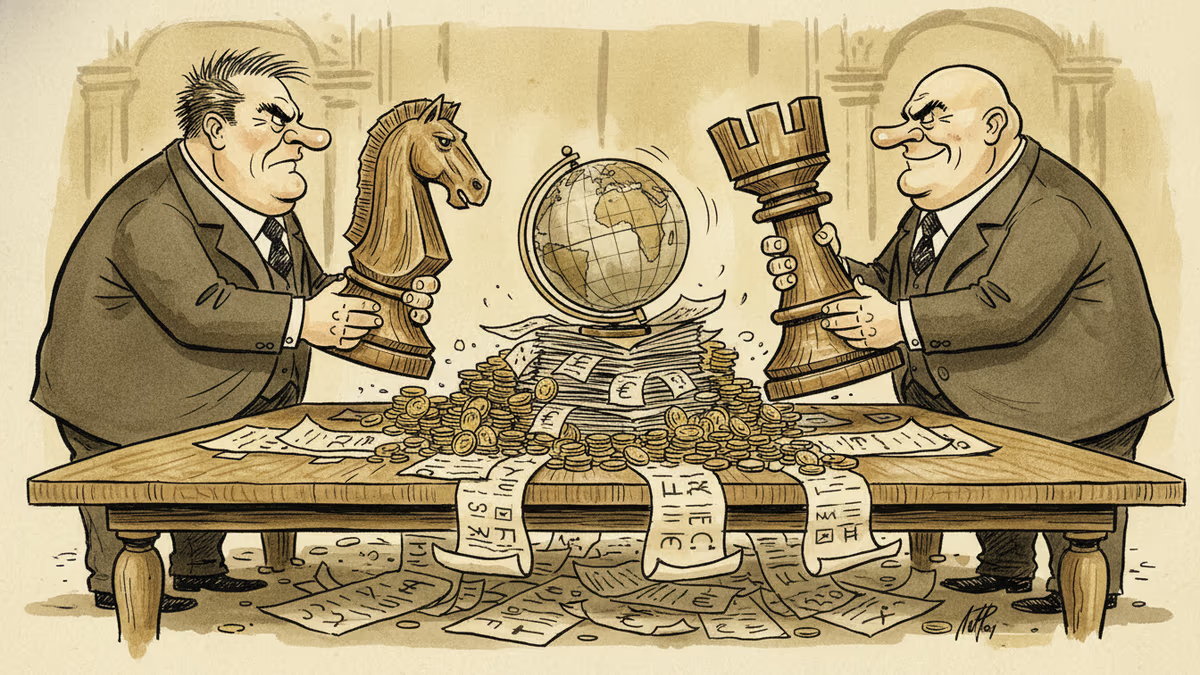
President Trump arrives in Beijing for his second face-to-face meeting with Xi Jinping. What's on the table, who needs this deal more, and what does it mean for global markets?
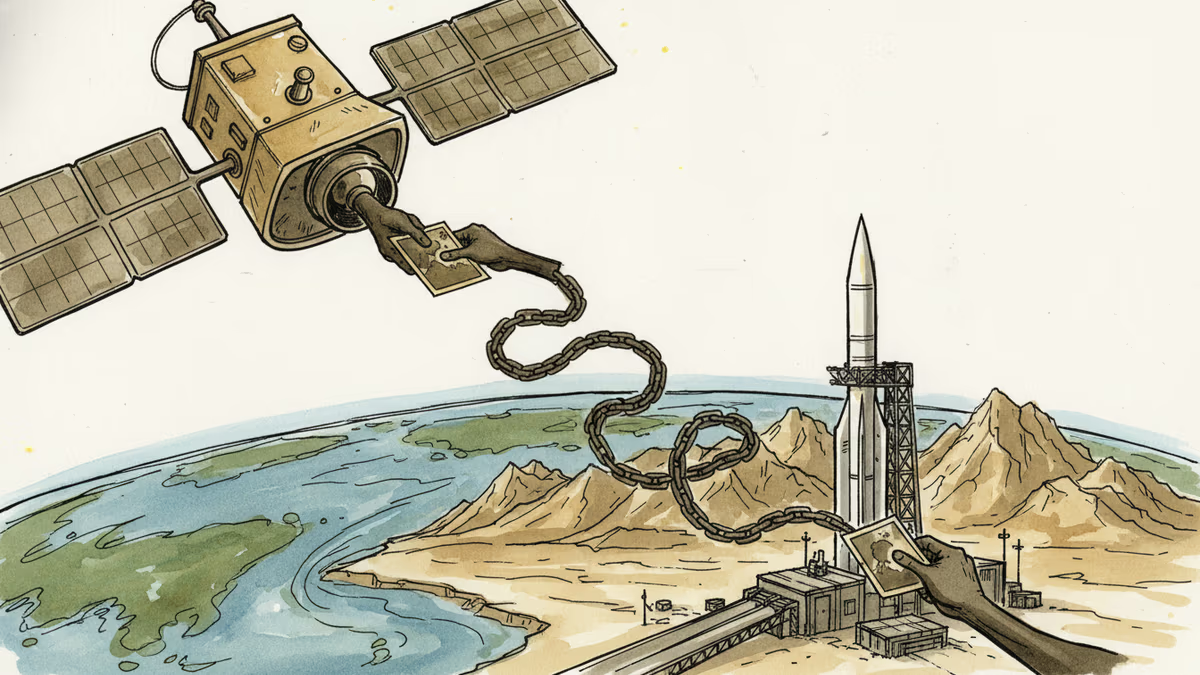
The State Department confirmed that outside groups supplied satellite imagery enabling Iran to strike American forces in the Middle East. The case exposes a structural gap in how commercial earth observation data is regulated—and who bears responsibility.
Trump's Beijing visit was a masterclass in diplomatic theater. Warm handshakes, viral selfies, and noodle runs. But Taiwan, Iran, and rare earths remain untouched. Here's what the spectacle obscures.
Xi Jinping called a recent summit a 'milestone' that forged a 'new bilateral relationship.' What does this language actually signal—and who stands to gain or lose?
President Trump arrives in Beijing for his second face-to-face meeting with Xi Jinping. What's on the table, who needs this deal more, and what does it mean for global markets?
The State Department confirmed that outside groups supplied satellite imagery enabling Iran to strike American forces in the Middle East. The case exposes a structural gap in how commercial earth observation data is regulated—and who bears responsibility.
Thoughts
Share your thoughts on this article
Sign in to join the conversation