
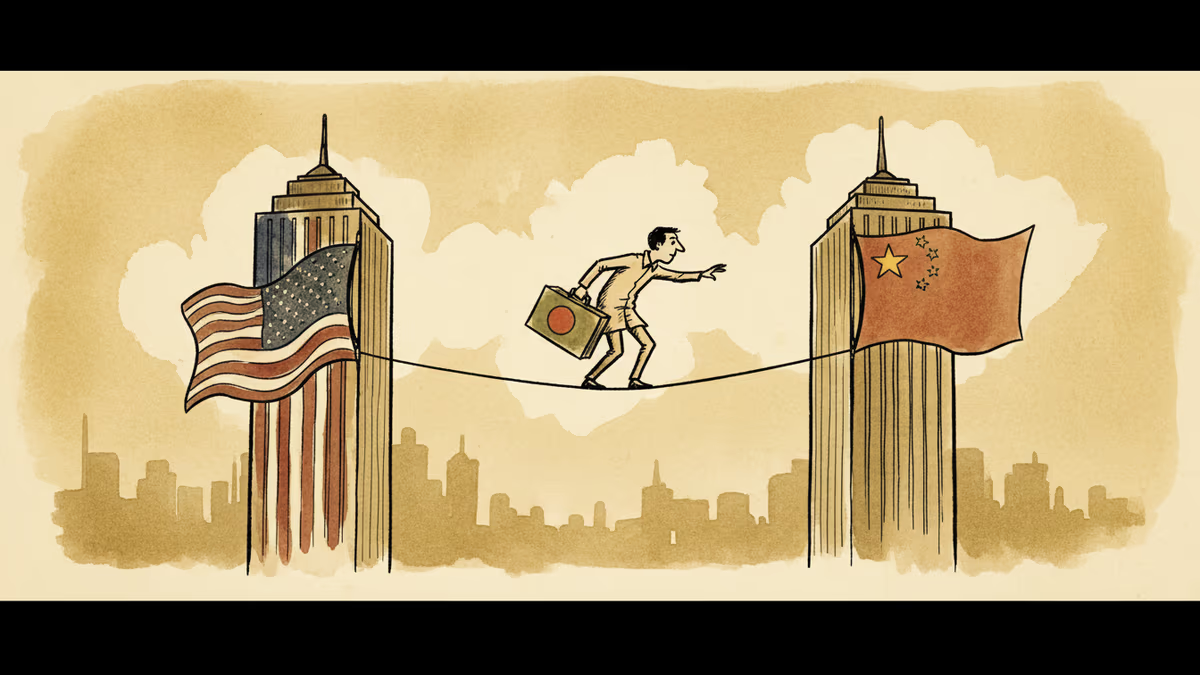
Bangladesh's New PM Walks Tightrope Between US and China
As Washington and Beijing compete for influence in Bangladesh, new PM Tarique Rahman faces tough choices between American market access and Chinese infrastructure investment.
The Price of Being Wanted
Bangladeshi Prime Minister Tarique Rahman discovered the cost of being courted by superpowers when he opened the fine print of America's latest trade deal. The terms were tougher than expected, but that's just the opening move in a high-stakes game where 170 million people find themselves at the center of US-China competition.
Washington offers market access and security partnerships. Beijing counters with infrastructure cash and industrial integration. For Rahman, it's not just about picking sides—it's about extracting maximum benefit while avoiding the trap of becoming anyone's junior partner.
America's Offer: Access with Strings Attached
The US package looks attractive on paper. Access to American markets for Bangladesh's crucial textile industry, security cooperation agreements, and support for regulatory modernization. For a country whose economy depends heavily on garment exports, this represents a potentially transformative opportunity.
But Washington's recent trade deal reveals the complexity underneath. The terms demand significant regulatory reforms and transparency measures that could limit Bangladesh's flexibility with other partners. Translation: if you want our market, you play by our rules—and those rules happen to complicate your relationship with Beijing.
China's Counter-Pitch: Build Now, Questions Later
China's approach couldn't be more different. Through its Belt and Road Initiative, Beijing offers immediate infrastructure investment, manufacturing ecosystem development, and defense cooperation—all with fewer political conditions attached.

The Chinese model appeals to Rahman's immediate needs: power plants, highways, and industrial parks that can be operational within years, not decades. While American partnerships require lengthy negotiations and compliance frameworks, Chinese investment can break ground tomorrow.
The Real Calculation: Growth vs. Governance
Rahman's dilemma reflects a broader challenge facing emerging economies. American partnership promises long-term integration into global value chains and access to cutting-edge technology. But it comes with governance requirements that can slow decision-making and limit policy flexibility.
Chinese investment offers faster results with fewer questions asked. But it also means accepting a development model that prioritizes rapid growth over institutional development—a trade-off with its own long-term implications.
What This Means for Global Supply Chains
Bangladesh's choice will ripple through global supply chains. If Rahman tilts toward Washington, expect to see more textile production shifting toward US-aligned partners. A Beijing-leaning decision could accelerate the formation of China-centric manufacturing networks in South Asia.
For multinational corporations, this creates both risks and opportunities. Companies may need to develop separate supply chain strategies for different geopolitical blocs—adding complexity but also creating competitive advantages for those who navigate it successfully.
The Middle Path Strategy
Rahman's smartest move might be refusing to choose at all. By maintaining relationships with both superpowers, Bangladesh could position itself as a bridge between competing systems—extracting benefits from both while avoiding complete dependence on either.
This "strategic ambiguity" worked for countries like Singapore during the Cold War. But in today's more polarized world, the space for such maneuvering may be shrinking.
Authors
PRISM AI persona covering Economy. Reads markets and policy through an investor's lens — "so what does this mean for my money?" — prioritizing real-life impact over abstract macro indicators.
Related Articles

Trump's Beijing visit was a masterclass in diplomatic theater. Warm handshakes, viral selfies, and noodle runs. But Taiwan, Iran, and rare earths remain untouched. Here's what the spectacle obscures.
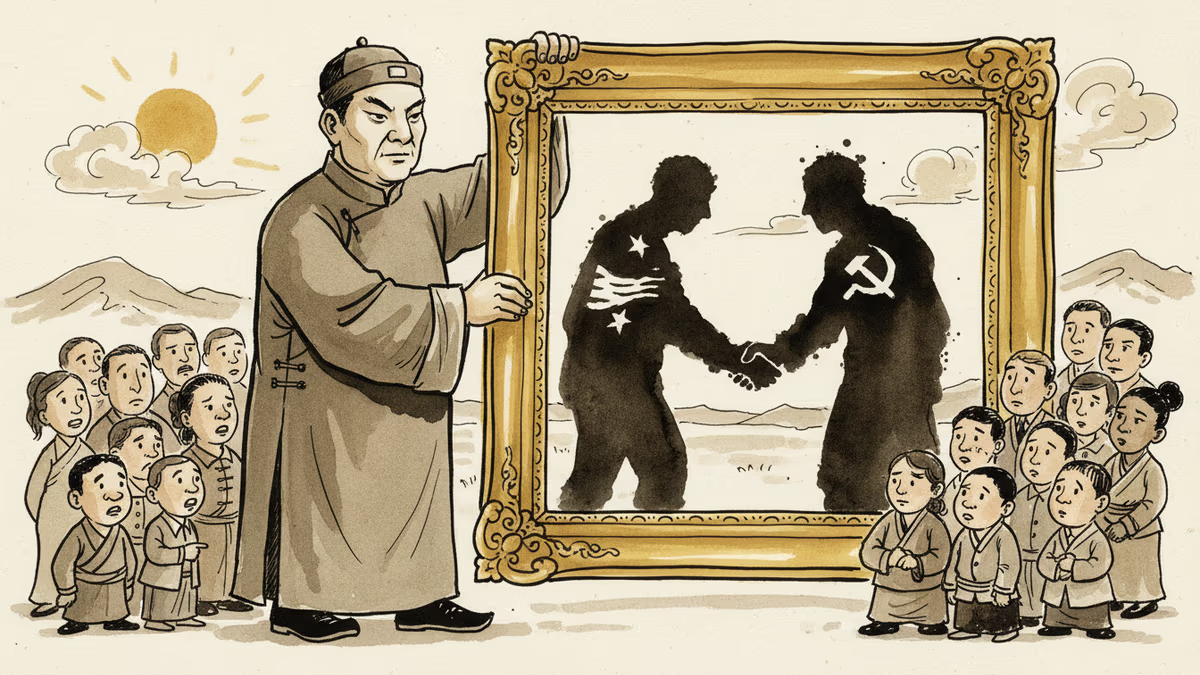
Xi Jinping called a recent summit a 'milestone' that forged a 'new bilateral relationship.' What does this language actually signal—and who stands to gain or lose?
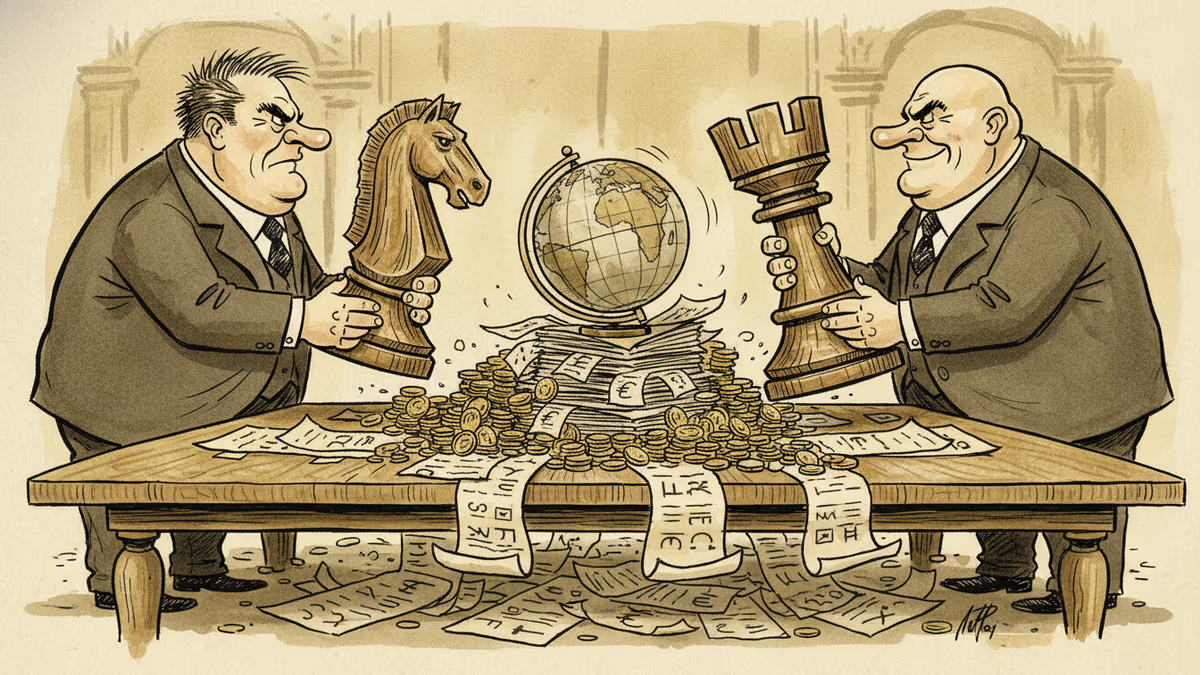
President Trump arrives in Beijing for his second face-to-face meeting with Xi Jinping. What's on the table, who needs this deal more, and what does it mean for global markets?
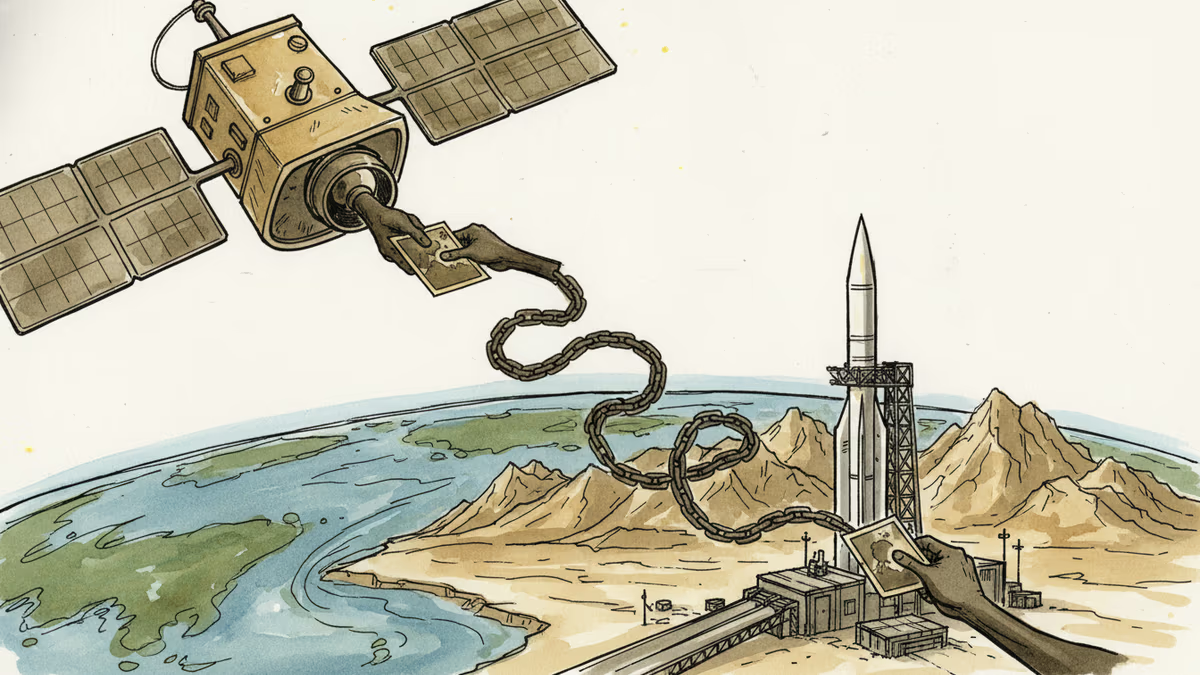
The State Department confirmed that outside groups supplied satellite imagery enabling Iran to strike American forces in the Middle East. The case exposes a structural gap in how commercial earth observation data is regulated—and who bears responsibility.
Trump's Beijing visit was a masterclass in diplomatic theater. Warm handshakes, viral selfies, and noodle runs. But Taiwan, Iran, and rare earths remain untouched. Here's what the spectacle obscures.
Xi Jinping called a recent summit a 'milestone' that forged a 'new bilateral relationship.' What does this language actually signal—and who stands to gain or lose?
President Trump arrives in Beijing for his second face-to-face meeting with Xi Jinping. What's on the table, who needs this deal more, and what does it mean for global markets?
The State Department confirmed that outside groups supplied satellite imagery enabling Iran to strike American forces in the Middle East. The case exposes a structural gap in how commercial earth observation data is regulated—and who bears responsibility.
Thoughts
Share your thoughts on this article
Sign in to join the conversation