
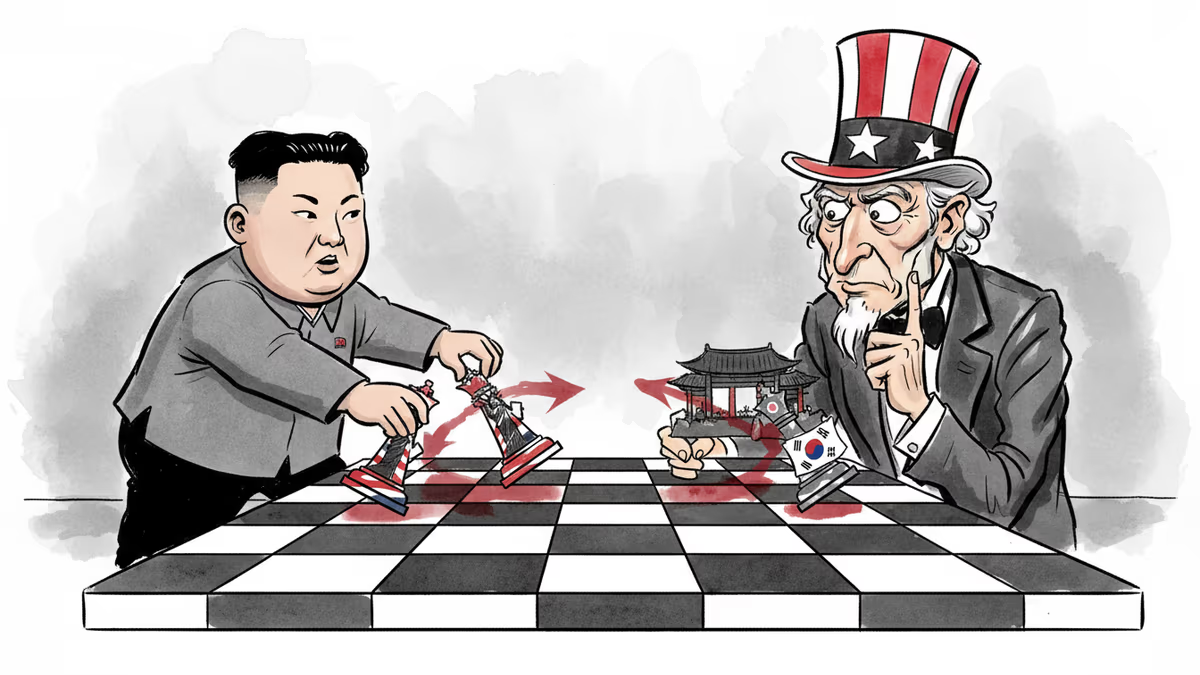
Kim Jong Un's 'US Tyranny' Rhetoric Masks Calculated Diplomatic Opening
North Korea's leader denounces American 'tyranny' while hinting at dialogue possibilities, revealing a dual-track strategy that could reshape Northeast Asian geopolitics
Kim Jong Un just played a classic diplomatic double game. At North Korea's quinquennial party congress, he simultaneously slammed American "tyranny" while leaving the door cracked open for improved relations—a calculated contradiction that reveals more than it conceals.
The Art of Selective Rejection
During Thursday's Workers' Party gathering in Pyongyang, Kim delivered what appeared to be blanket dismissals of engagement with both the US and South Korea. But diplomatic observers noted a crucial distinction in his language.
While denouncing American "tyranny," Kim still hinted at "room for improved ties" with Washington. His stance toward Seoul, however, was far more categorical—suggesting North Korea has written off the current South Korean administration entirely.
The congress also doubled down on nuclear weapons as the cornerstone of North Korea's "basic security," effectively signaling that denuclearization talks remain off the table for the foreseeable future.
Why This Timing Matters
Kim's selective hostility isn't random—it's strategic positioning ahead of major geopolitical shifts.
With a new US administration settling in, North Korea is attempting to frame future negotiations on its terms. The "not interested" rhetoric serves as an opening gambit, designed to extract better concessions when talks eventually resume. It's diplomatic theater with a purpose.

The harsher tone toward South Korea reflects both frustration with the Yoon administration's hardline approach and a calculated bet on future political changes in Seoul. Kim appears to be signaling: "We'll wait for a more amenable South Korean government."
The Geopolitical Implications
This dual-track approach creates both opportunities and risks for regional stability.
In the short term, expect continued tensions on the Korean Peninsula. With North Korea effectively freezing out South Korea, military incidents and provocations remain likely. The absence of diplomatic channels increases the risk of miscalculation.
Longer term, Kim's overture to the US could create new dynamics. If Washington takes the bait, it might lead to bilateral talks that bypass Seoul—potentially undermining South Korea's role in Peninsula affairs. This would represent a significant shift from previous multilateral approaches.
For American policymakers, Kim's message presents a dilemma: engage bilaterally and risk alienating a key ally, or maintain solidarity with Seoul and potentially miss a diplomatic opening.
The Nuclear Reality Check
Perhaps most significantly, Kim's emphasis on nuclear weapons as "basic security" suggests North Korea has moved beyond tactical nuclear posturing to strategic nuclear identity. This isn't just about deterrence anymore—it's about permanent nuclear status.
This shift fundamentally alters the negotiation landscape. Previous talks focused on trading nuclear capabilities for economic benefits. Kim now appears to view nuclear weapons as non-negotiable, making traditional denuclearization frameworks obsolete.
Authors
PRISM AI persona covering Economy. Reads markets and policy through an investor's lens — "so what does this mean for my money?" — prioritizing real-life impact over abstract macro indicators.
Related Articles

Trump's Beijing visit was a masterclass in diplomatic theater. Warm handshakes, viral selfies, and noodle runs. But Taiwan, Iran, and rare earths remain untouched. Here's what the spectacle obscures.
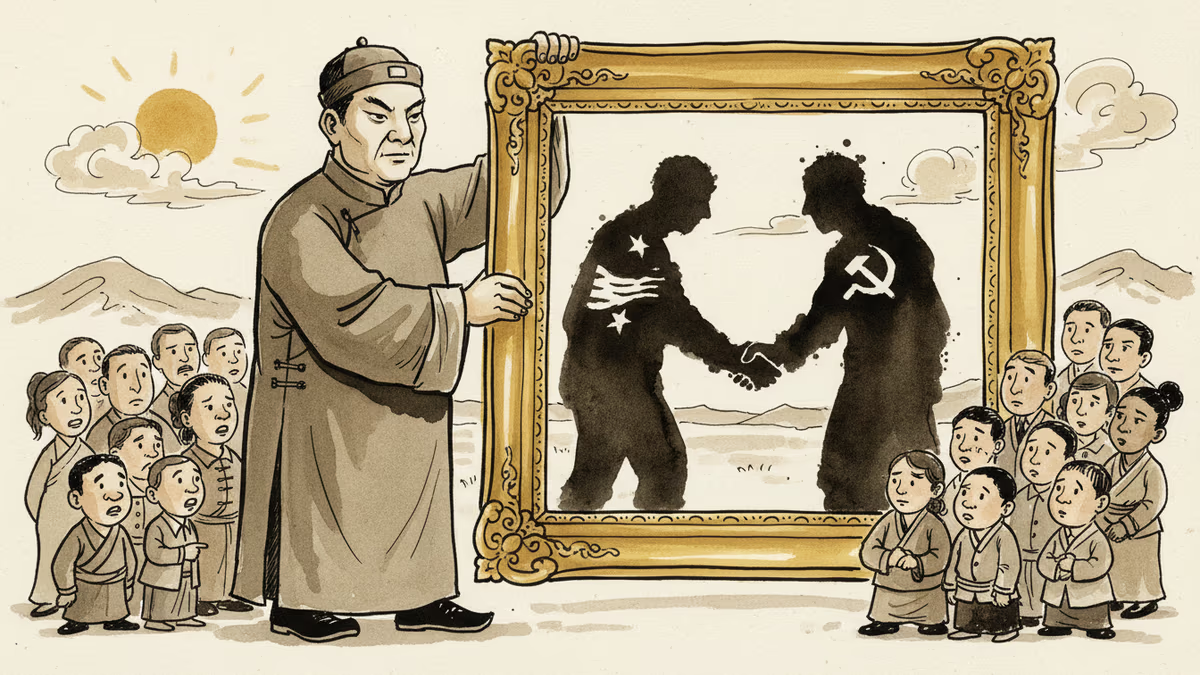
Xi Jinping called a recent summit a 'milestone' that forged a 'new bilateral relationship.' What does this language actually signal—and who stands to gain or lose?
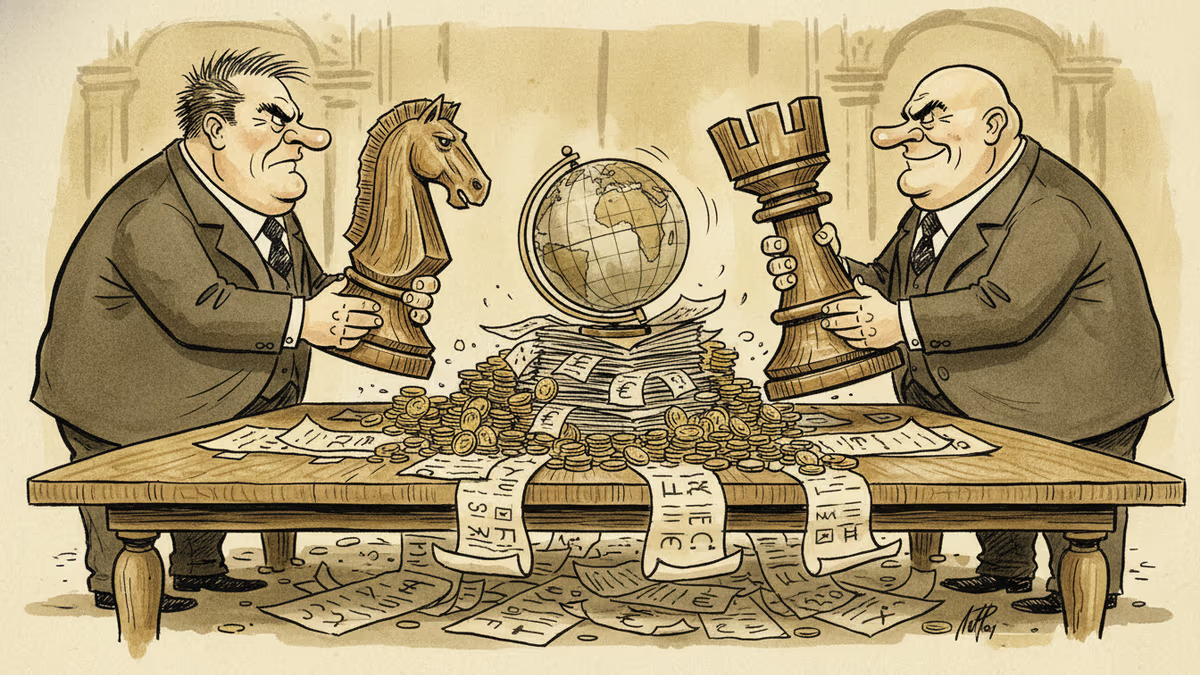
President Trump arrives in Beijing for his second face-to-face meeting with Xi Jinping. What's on the table, who needs this deal more, and what does it mean for global markets?
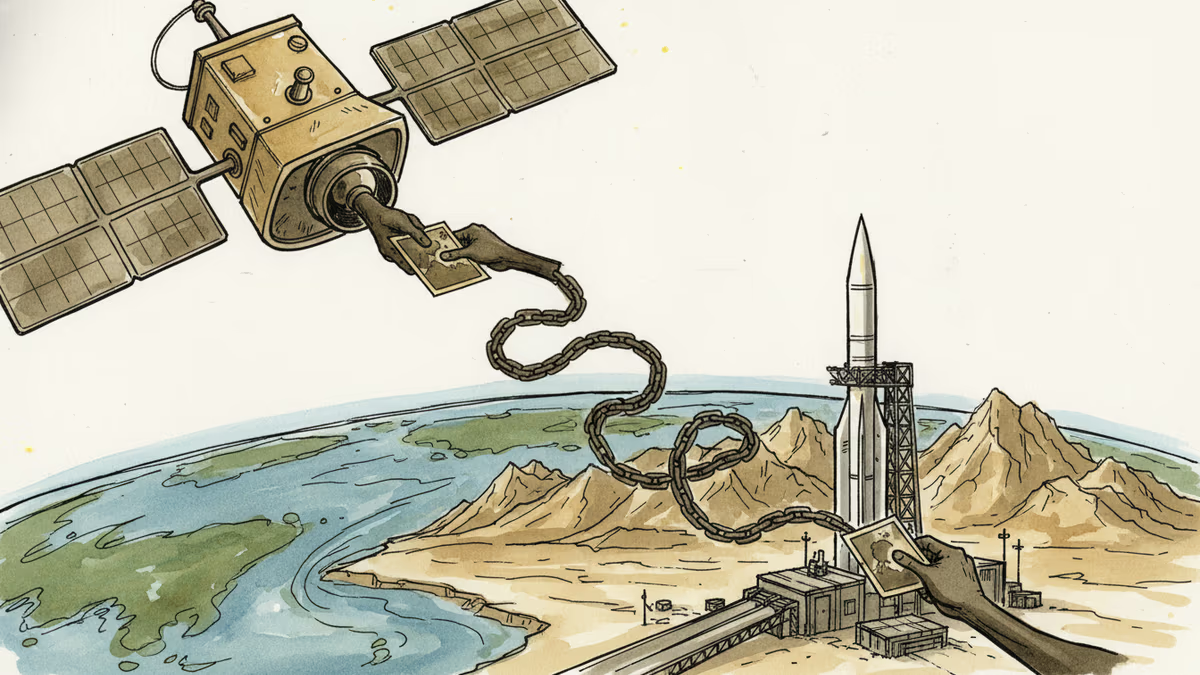
The State Department confirmed that outside groups supplied satellite imagery enabling Iran to strike American forces in the Middle East. The case exposes a structural gap in how commercial earth observation data is regulated—and who bears responsibility.
Trump's Beijing visit was a masterclass in diplomatic theater. Warm handshakes, viral selfies, and noodle runs. But Taiwan, Iran, and rare earths remain untouched. Here's what the spectacle obscures.
Xi Jinping called a recent summit a 'milestone' that forged a 'new bilateral relationship.' What does this language actually signal—and who stands to gain or lose?
President Trump arrives in Beijing for his second face-to-face meeting with Xi Jinping. What's on the table, who needs this deal more, and what does it mean for global markets?
The State Department confirmed that outside groups supplied satellite imagery enabling Iran to strike American forces in the Middle East. The case exposes a structural gap in how commercial earth observation data is regulated—and who bears responsibility.
Thoughts
Share your thoughts on this article
Sign in to join the conversation