
Walmart Pays $100M for Deceiving Gig Workers About Pay
Walmart settles FTC lawsuit over misleading Spark Driver earnings claims and tip theft. The case exposes transparency issues in platform economy labor practices.
The $100 Million Question: When Does a Promise Become a Lie?
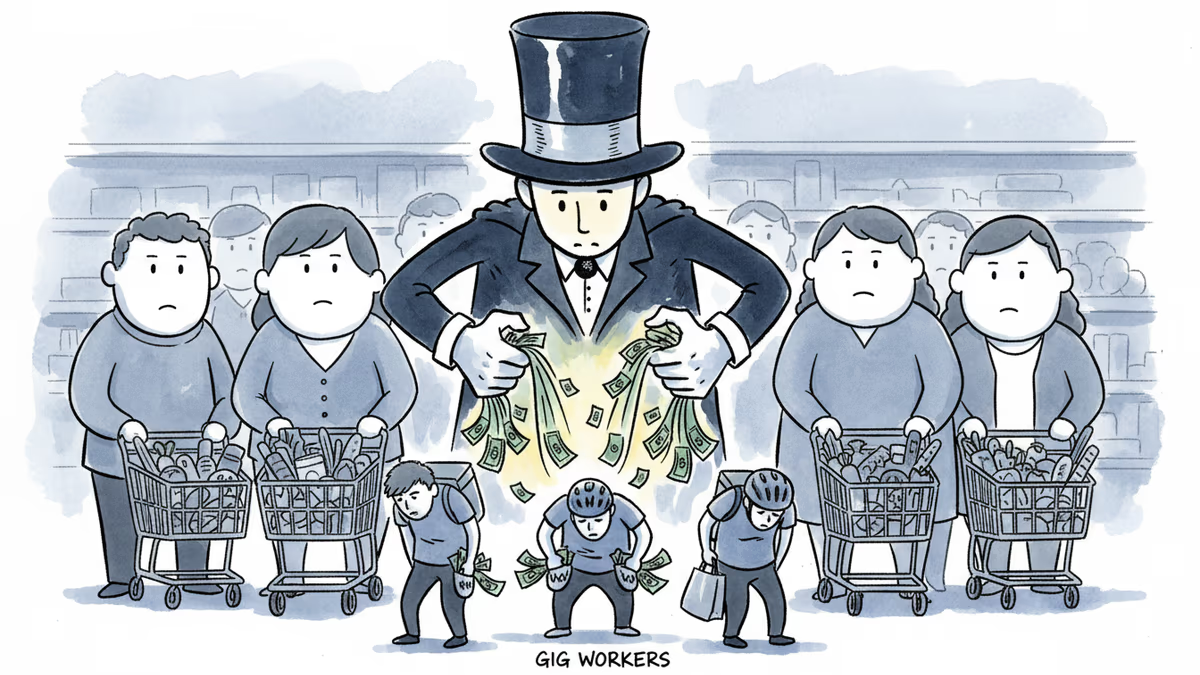
Walmart's$100 million settlement with the Federal Trade Commission isn't just about money—it's about trust. Since 2021, the retail giant allegedly told Spark Driver gig workers they'd earn certain amounts, then systematically found ways to pay them less.
The scheme was elegantly simple. Tell customers that 100% of tips go to drivers. Then split orders between multiple drivers, splitting the tip too—without telling anyone. Promise drivers full tips upfront, then fail to collect from customers. Reduce base pay after drivers had already accepted offers.
The result? Drivers lost millions in promised earnings, generating thousands of consumer complaints across 11 states.
The Platform's Invisible Hand
This case reveals how platforms can manipulate the flow of money and information between customers and workers. Walmart employed several tactics:
- Order splitting: Dividing customer orders among drivers while splitting tips (customers unaware)
- Silent tip removal: Eliminating tips from batch orders without driver notification
- Phantom promises: Guaranteeing tips that were never collected from customers
- Post-acceptance cuts: Reducing base pay after drivers accepted offers
Each practice exploited information asymmetries—drivers didn't know what customers paid, customers didn't know how tips were distributed, and the platform controlled both narratives.
Workers vs. Algorithms: An Uneven Fight

Gig workers operate in a unique labor market where algorithms, not managers, determine their pay. Unlike traditional employment with transparent wage structures, platform workers often discover their actual earnings only after completing work.
One Spark Driver described the frustration: "You see an offer for $15, spend an hour delivering, then find out half was a tip that never materialized." This information gap gives platforms enormous power over worker expectations and decisions.
Labor advocates argue this case represents a broader pattern where platforms use data advantages to extract value from both workers and customers.
The Settlement's Real Impact
Under the agreement, Walmart must implement an earnings verification program and is prohibited from adjusting pay, incentives, or tips after initial offers (except for service failures or cancellations). The company also cannot misrepresent future earnings.
But enforcement remains challenging. How do you monitor algorithmic decision-making across millions of transactions? The FTC's resources are limited, and platforms can easily modify practices to stay within legal boundaries while maintaining economic advantages.
Beyond Walmart: Industry Implications
This settlement arrives as regulators scrutinize gig economy practices more closely. DoorDash, Uber, and Instacart all use similar tip and pay structures. Will they face similar challenges?
The timing is significant. The Trump-Vance administration's FTC emphasizes "ensuring a healthy labor market for American workers." This suggests more aggressive enforcement against platforms that exploit information asymmetries.
Investors should note: platform companies built on opaque pay structures may face increasing regulatory costs. Transparency requirements could reduce profit margins but might also improve worker retention and customer trust.
Authors
Related Articles
Samsung Electronics' union branch revealed that 84% of survey respondents oppose the government's roughly $290 billion (₩400 trillion) semiconductor megaproject in Gwangju. Government, management, the union and shareholders are all reading the same national project in sharply different ways.
Nvidia shipped roughly a billion RISC-V cores in 2024, then announced it would run CUDA on the open standard. We break down how royalty-free instruction sets and open software stacks are trying to route around CUDA's lock-in. Part 2 of the Semiconductor Sovereignty series.
US AI-chip export controls split into three layers in the first half of 2026 — January easing, a May crackdown on circumvention, and a pending bill. Nvidia erased China from its guidance and still posted a record $81.6 billion quarter. A look at the export policy that both shields and cages it.
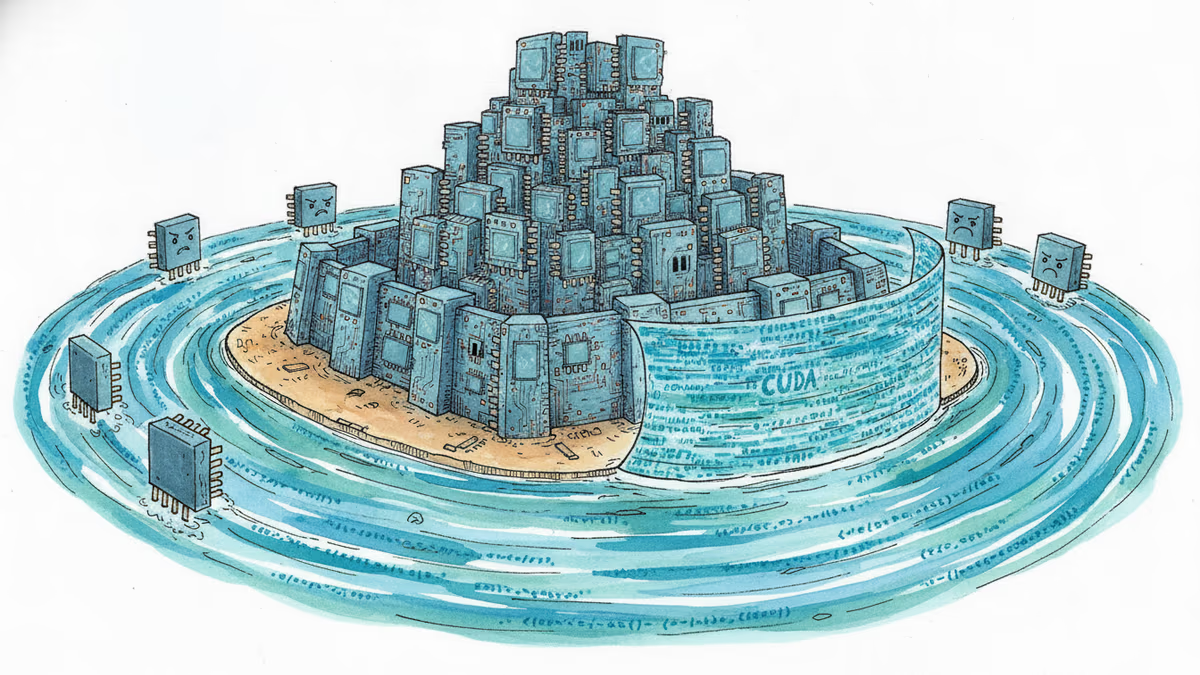
AMD's MI325X matches or beats Nvidia on memory and bandwidth — yet Nvidia's 86-92% share holds. The real moat is CUDA, 20 years in the making. Part 1 of 4.
Samsung Electronics' union branch revealed that 84% of survey respondents oppose the government's roughly $290 billion (₩400 trillion) semiconductor megaproject in Gwangju. Government, management, the union and shareholders are all reading the same national project in sharply different ways.
Nvidia shipped roughly a billion RISC-V cores in 2024, then announced it would run CUDA on the open standard. We break down how royalty-free instruction sets and open software stacks are trying to route around CUDA's lock-in. Part 2 of the Semiconductor Sovereignty series.
US AI-chip export controls split into three layers in the first half of 2026 — January easing, a May crackdown on circumvention, and a pending bill. Nvidia erased China from its guidance and still posted a record $81.6 billion quarter. A look at the export policy that both shields and cages it.
AMD's MI325X matches or beats Nvidia on memory and bandwidth — yet Nvidia's 86-92% share holds. The real moat is CUDA, 20 years in the making. Part 1 of 4.
Thoughts
Share your thoughts on this article
Sign in to join the conversation