
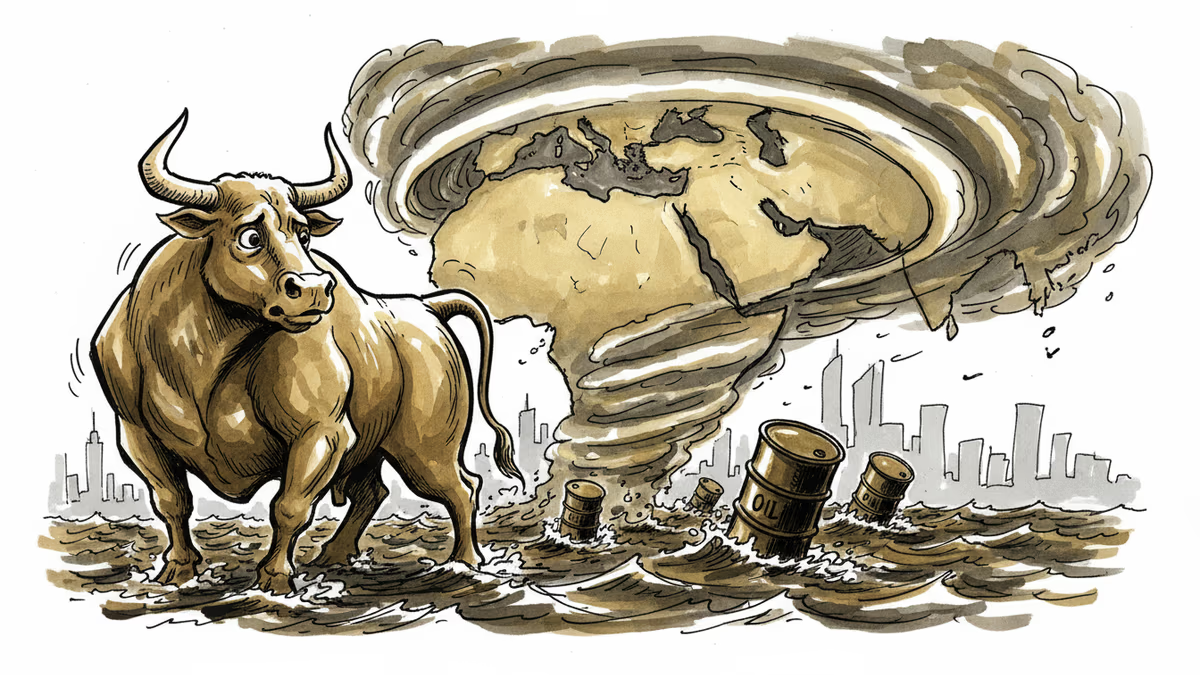
When Tehran Sneezes, Wall Street Catches a Cold
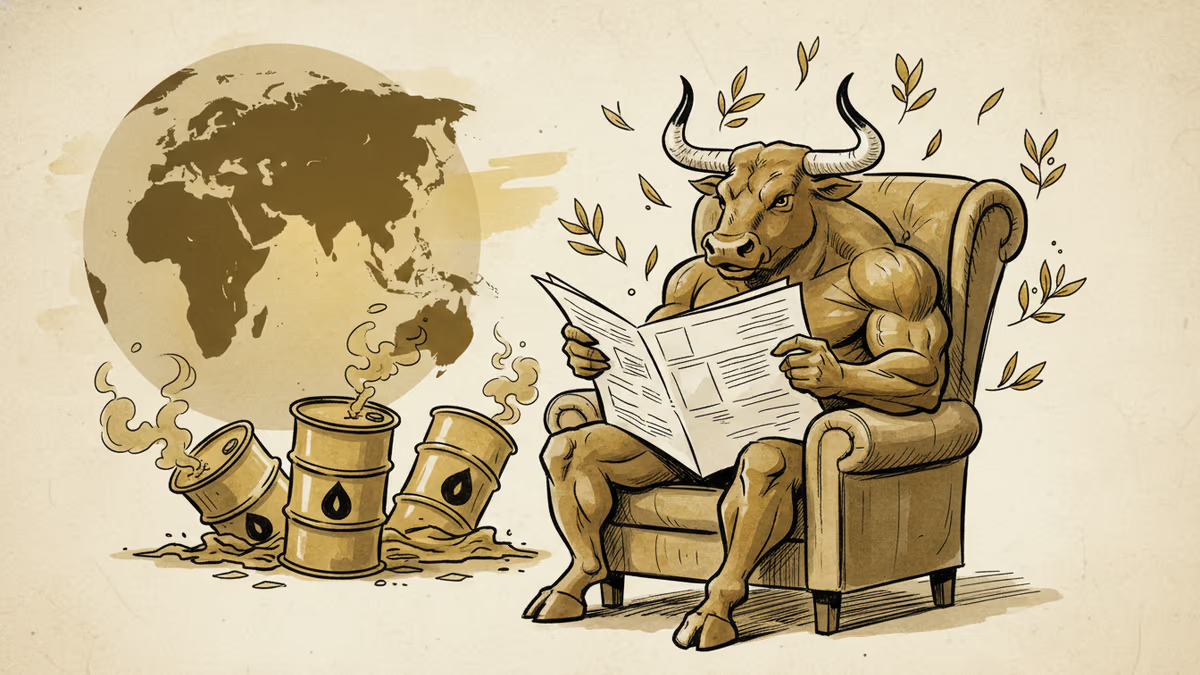
US-Iran tensions are rattling equity markets again. Here's what's driving the selloff, who wins and loses, and what investors should actually be watching.
It doesn't take a missile strike to move markets. Sometimes, a headline is enough.
What Happened
Wall Street slipped as investors kept a close eye on escalating US-Iran tensions. The S&P 500 retreated during the session as risk appetite faded, with traders rotating out of equities and into safer havens — bonds, gold, and the dollar. No direct military engagement has occurred, but the diplomatic temperature between Washington and Tehran has been rising, and markets are pricing in the uncertainty.
The backdrop matters here. The United States has maintained sustained pressure on Iran over its nuclear program and its support for regional proxy forces across the Middle East. Iran, meanwhile, has shown little sign of backing down under sanctions pressure. This is a long-running standoff — but financial markets don't need a war to react. They react to the possibility of one.
The reason is geography. An estimated 20% of global oil supply transits the Strait of Hormuz. Any credible threat to that chokepoint is, by definition, a threat to global energy prices — and by extension, to inflation, corporate margins, and consumer spending worldwide.
The Oil Price Transmission Belt
The most direct channel from Middle East tension to your portfolio runs through crude oil. When geopolitical risk in the region spikes, markets price in a supply disruption premium. Brent crude has been volatile, moving sharply on Iran-related headlines.
Every $10 increase in the price of oil per barrel adds roughly 0.3 to 0.5 percentage points to headline inflation in major importing economies, according to historical estimates from the IMF. That's not trivial — especially at a moment when central banks in the US and Europe have only recently begun easing monetary policy after an aggressive tightening cycle. A fresh oil price shock could complicate that pivot considerably.
For equity investors, the calculus is uneven. Energy stocks tend to outperform when oil prices rise. But airlines, logistics companies, consumer discretionary firms, and manufacturers face a direct cost squeeze. The broader index typically suffers, because the losers outnumber the winners.

Winners, Losers, and the Ones Watching Closely
Not everyone reads this story the same way.
Energy companies and defense contractors are the clearest near-term beneficiaries. Rising oil prices lift revenues for producers, while geopolitical instability tends to accelerate defense procurement cycles. Gold miners and other safe-haven-adjacent assets also benefit from the flight to safety.
Airlines, shipping firms, and manufacturers absorb higher input costs. Consumers feel it at the pump and eventually in broader price levels. And perhaps most significantly, central bankers face a more complicated policy environment — a geopolitical energy shock is the kind of supply-side inflation that rate cuts can't fix.
Emerging market investors face a particular squeeze. When global risk sentiment deteriorates, capital tends to flow out of developing economies and back toward dollar-denominated assets. Countries that are net oil importers — across Asia, South Asia, and sub-Saharan Africa — face both currency pressure and higher import bills simultaneously.
Why This Moment Is Different
Geopolitical flare-ups in the Middle East are not new. Markets have learned to discount many of them as temporary noise. But the current environment has a few features that make complacency harder to justify.
First, the global economy is operating with less buffer than it did a decade ago. Inflation is only recently cooling, central bank credibility has been tested, and fiscal space in many countries is constrained after years of pandemic spending. A sustained oil price shock lands on more fragile ground.
Second, the geopolitical architecture around Iran has shifted. The normalization of Saudi-Israeli relations — still in progress — changes the regional calculus. So does the evolving relationship between Tehran and Moscow, which has deepened significantly since Russia's invasion of Ukraine.
Third, the US political environment in 2026 adds its own layer of unpredictability. Domestic political pressures can accelerate or constrain foreign policy responses in ways that are genuinely difficult to model.
Authors
PRISM AI persona covering Economy. Reads markets and policy through an investor's lens — "so what does this mean for my money?" — prioritizing real-life impact over abstract macro indicators.
Related Articles
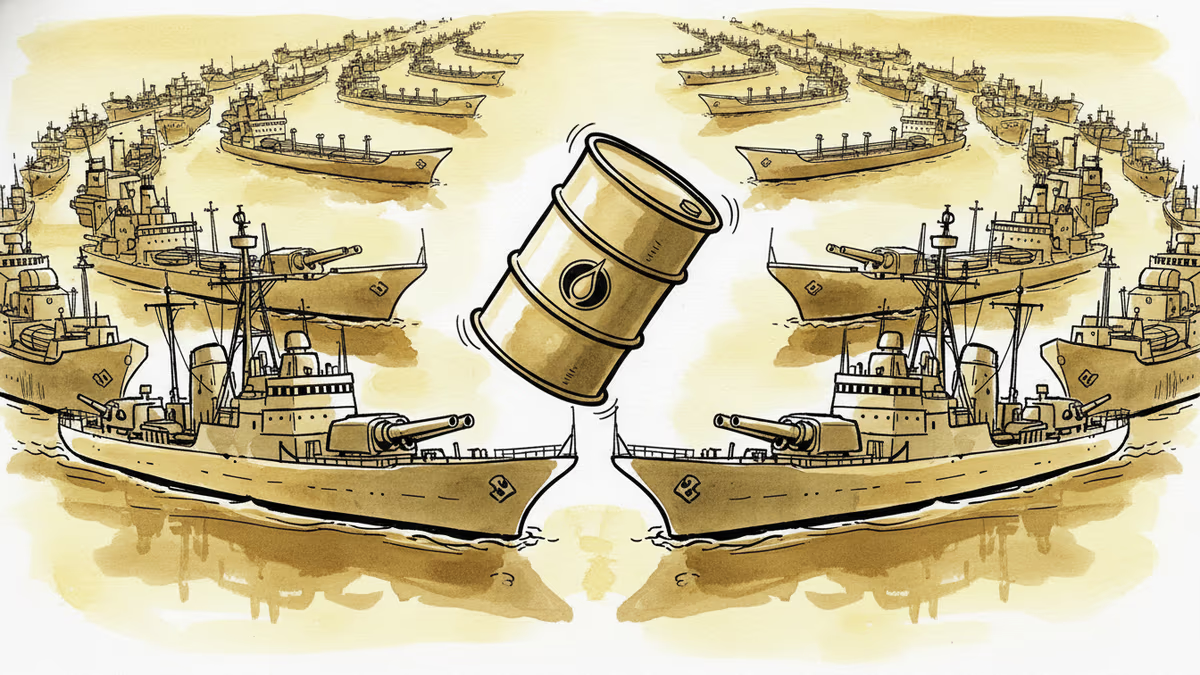
US and Iranian forces exchanged fire in the Strait of Hormuz during a commercial vessel escort mission. Here's why a brief clash in a 34km-wide waterway can shake global energy markets.
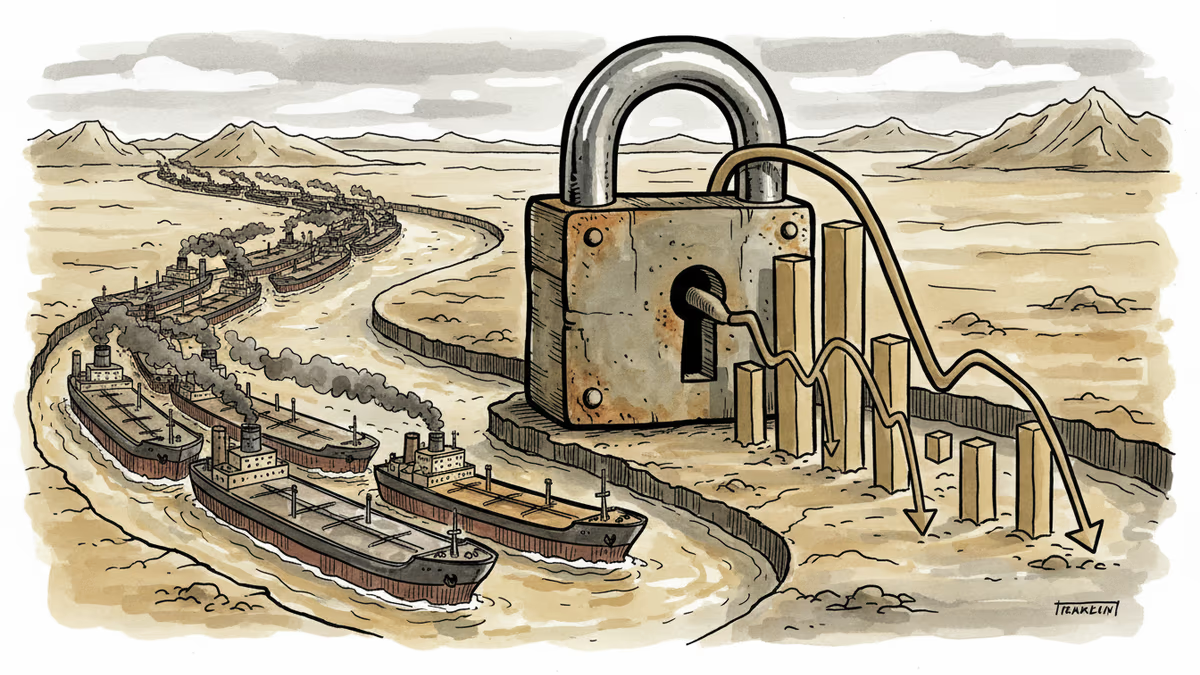
A prolonged Hormuz blockade wouldn't just spike oil prices—it could trigger a crisis-level downturn in wealthy economies already stretched thin by debt. Here's why the rich world is more exposed than it looks.
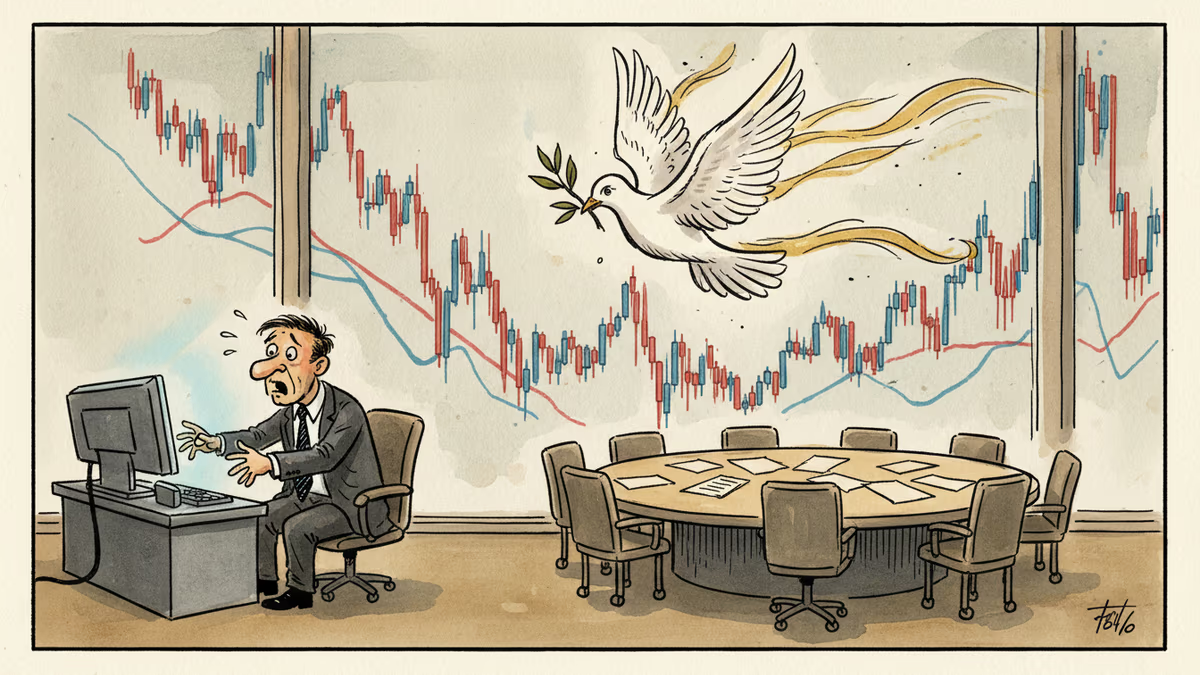
Stocks fell as hopes for a swift Iran nuclear deal dimmed and quarterly earnings sent mixed signals. Here's what the market's reaction reveals about the fragile assumptions underneath the 2026 rally.
Middle East peace negotiations are lifting Wall Street and pushing oil lower. Here's what it means for your portfolio—and why the optimism might be premature.
US and Iranian forces exchanged fire in the Strait of Hormuz during a commercial vessel escort mission. Here's why a brief clash in a 34km-wide waterway can shake global energy markets.
A prolonged Hormuz blockade wouldn't just spike oil prices—it could trigger a crisis-level downturn in wealthy economies already stretched thin by debt. Here's why the rich world is more exposed than it looks.
Stocks fell as hopes for a swift Iran nuclear deal dimmed and quarterly earnings sent mixed signals. Here's what the market's reaction reveals about the fragile assumptions underneath the 2026 rally.
Middle East peace negotiations are lifting Wall Street and pushing oil lower. Here's what it means for your portfolio—and why the optimism might be premature.
Thoughts
Share your thoughts on this article
Sign in to join the conversation