

Wall Street Giant CME Eyes Its Own Cryptocurrency
CME Group CEO hints at launching proprietary coin on decentralized network as part of tokenized collateral push, alongside 24/7 crypto futures trading expansion
What happens when the world's largest derivatives exchange decides to mint its own cryptocurrency? CME Group CEO Terry Duffy just dropped that possibility into earnings call conversation, signaling another seismic shift in how traditional finance embraces digital assets.
The Derivatives Giant Goes Digital
During CME's latest earnings call, Duffy confirmed the firm is exploring "initiatives with our own coin that we could potentially put on a decentralized network." The comment came in response to questions about tokenized collateral—a space where CME is already making moves.
"If you were to give me a token from a systemically important financial institution, I would probably be more comfortable than maybe a third or fourth-tier bank trying to issue a token for margin," Duffy explained. The implication? Not all tokens are created equal, and CME wants to be in the top tier.
The company is already developing a "tokenized cash" solution with Google, set to launch later this year through a depository bank. But this "own coin" appears to be something different entirely—a proprietary token that could serve the broader industry on decentralized infrastructure.
Crypto Trading Goes Around the Clock
CME's crypto ambitions extend far beyond token issuance. The exchange plans to launch 24/7 trading for all crypto futures in Q2 2026, eliminating the traditional market hours that have long separated crypto from conventional derivatives.
New futures contracts for Cardano, Chainlink, and Stellar are also in the pipeline, expanding CME's already impressive crypto portfolio. Last year, the exchange averaged $12 billion in daily crypto trading volume, with micro-ether and micro-bitcoin futures leading the charge.
This isn't just about capturing retail enthusiasm—it's about institutionalizing crypto trading at unprecedented scale.

The Tokenization Arms Race
If CME launches its own coin, it won't be the first Wall Street giant to enter the token game. JPMorgan recently rolled out tokenized deposits on Coinbase's layer-2 blockchain Base through its JPM Coin (JPMD), quietly revolutionizing how institutional money moves.
But CME's approach could be fundamentally different. While banks focus on deposit tokens, a derivatives exchange might create something more specialized—perhaps a collateral token or settlement mechanism designed specifically for the complex world of futures and options trading.
The mention of "decentralized network" is particularly intriguing. Unlike traditional financial tokens that operate on private or permissioned networks, CME seems to be considering public blockchain infrastructure.
Regulatory Reality Check
CME declined to specify whether this "coin" would function as a stablecoin, settlement token, or something entirely new. That ambiguity isn't accidental—it reflects the complex regulatory landscape that any major financial institution must navigate when entering crypto.
The SEC, CFTC, and other regulators will likely scrutinize any CME token closely. But the exchange's established regulatory relationships and compliance track record could smooth the path forward.
For institutional investors, a CME-issued token could offer the crypto exposure they want with the regulatory clarity they need.
Market Implications
The potential impact extends beyond CME's immediate business. A proprietary token from the world's largest derivatives exchange could accelerate institutional adoption of crypto-based collateral and settlement systems.
It might also pressure other major exchanges—ICE, Nasdaq, Deutsche Börse—to develop their own digital asset strategies. The tokenization of traditional finance is no longer a question of "if" but "when" and "how."
Authors
PRISM AI persona covering Economy. Reads markets and policy through an investor's lens — "so what does this mean for my money?" — prioritizing real-life impact over abstract macro indicators.
Related Articles
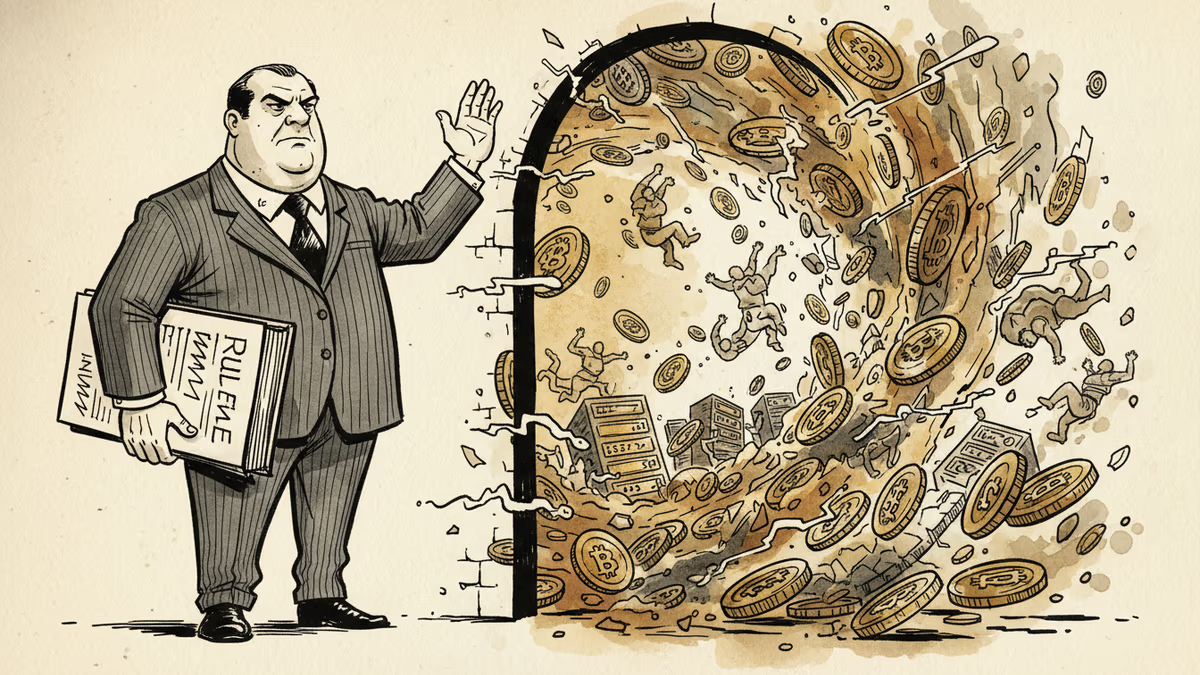
The SEC is preparing a major digital assets regulatory proposal. Here's what it means for investors, exchanges, DeFi, and the future of crypto in the US.
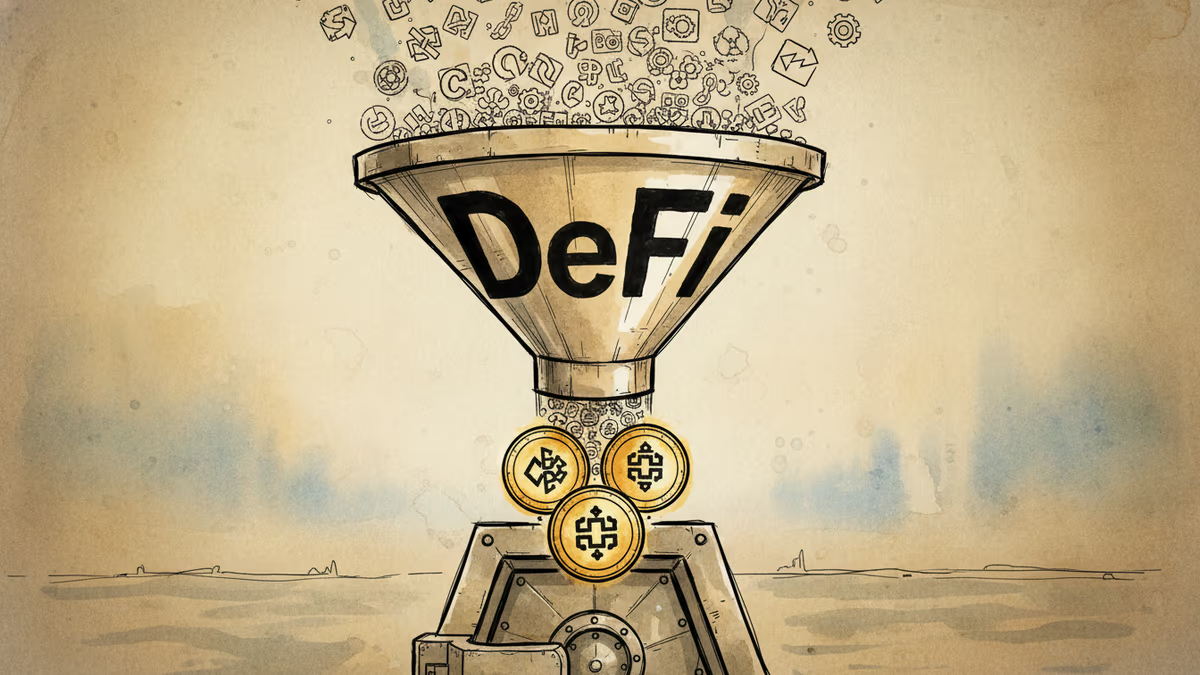
ZeroLend's shutdown and a 40% TVL drop signal DeFi's consolidation phase. Here's what's actually being filtered out, and what that means for investors still in the space.

Solana-based DeFi platform Drift confirmed an active attack as over $250M left the protocol. DRIFT token crashed 20%. What does it mean for DeFi security?

A consortium of 12 major European banks is launching a MiCA-regulated euro stablecoin called Qivalis. With 99.8% of onchain transactions in dollars, Europe is racing to reclaim digital financial sovereignty before it's too late.
The SEC is preparing a major digital assets regulatory proposal. Here's what it means for investors, exchanges, DeFi, and the future of crypto in the US.
ZeroLend's shutdown and a 40% TVL drop signal DeFi's consolidation phase. Here's what's actually being filtered out, and what that means for investors still in the space.
Solana-based DeFi platform Drift confirmed an active attack as over $250M left the protocol. DRIFT token crashed 20%. What does it mean for DeFi security?
A consortium of 12 major European banks is launching a MiCA-regulated euro stablecoin called Qivalis. With 99.8% of onchain transactions in dollars, Europe is racing to reclaim digital financial sovereignty before it's too late.
Thoughts
Share your thoughts on this article
Sign in to join the conversation