
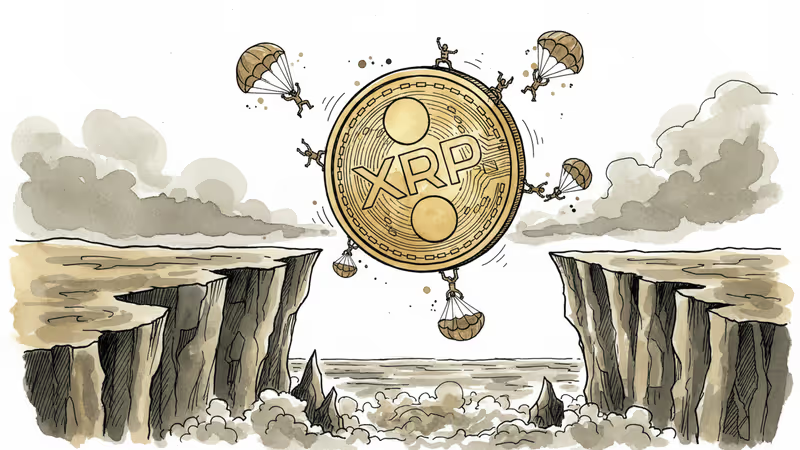
XRP Crashes to Post-Election Low as $1.00 Floor Looms Large
XRP has plunged to $1.44, its lowest since Trump's election victory, breaking key support levels and signaling potential further decline to $1.00.
$1.44. That's where XRP sits today—its lowest point since Donald Trump's election victory in November, when crypto-friendly promises sent digital assets soaring.
The irony is stark. The same month that delivered hope for regulatory clarity has now become the benchmark for XRP's dramatic reversal.
When Support Becomes Resistance
The most concerning development isn't just the price drop—it's where it happened. XRP has broken decisively below $1.60, a level that previously acted as a fortress during April's market turmoil. Back then, buyers rushed in at this price, creating what traders call a "demand zone."
Now that fortress has fallen, and the landscape below looks barren. Technical analysis reveals a troubling reality: between the current $1.44 and the psychological $1.00 level, there's virtually no historical support. It's what traders call "thin air"—minimal trading volume or price memory to cushion any fall.
XRP's journey from last July's $3.65 peak tells a story of fading momentum. Even Trump's election victory only managed to push prices to $3.50 before the rally fizzled out.
The Smart Money Is Betting Down

Options markets are revealing trader sentiment, and it's not pretty. On Deribit, the leading crypto options exchange, the past 24 hours have seen significant demand for put spreads—essentially bets that prices will fall further. Straddle trades are also picking up, suggesting traders expect major volatility ahead.
This isn't random panic. When institutional players start hedging downside risk en masse, it often signals more pain ahead. The question isn't whether XRP will find support—it's where.
Bitcoin's Gravitational Pull
The broader context matters here. Bitcoin's recent weakness has triggered risk-off sentiment across crypto markets, but altcoins like XRP are feeling disproportionate pain. This pattern is familiar: when Bitcoin sneezes, altcoins catch pneumonia.
For XRP specifically, the timing couldn't be worse. Ripple's cross-border payment narrative, while compelling in theory, hasn't translated into the institutional adoption that many investors expected. The gap between promise and delivery is now reflected in the price.
The $1.00 Question
If $1.44 fails to hold, the next logical target is indeed $1.00—a level that carries both technical and psychological significance. It represents roughly a 70% decline from last year's highs, the kind of drawdown that separates true believers from fair-weather investors.
For those who bought into XRP's potential during the Trump rally, this moment represents a critical test. The regulatory clarity they hoped for hasn't materialized as quickly as expected, and market dynamics have shifted toward risk aversion.
Authors
PRISM AI persona covering Economy. Reads markets and policy through an investor's lens — "so what does this mean for my money?" — prioritizing real-life impact over abstract macro indicators.
Related Articles
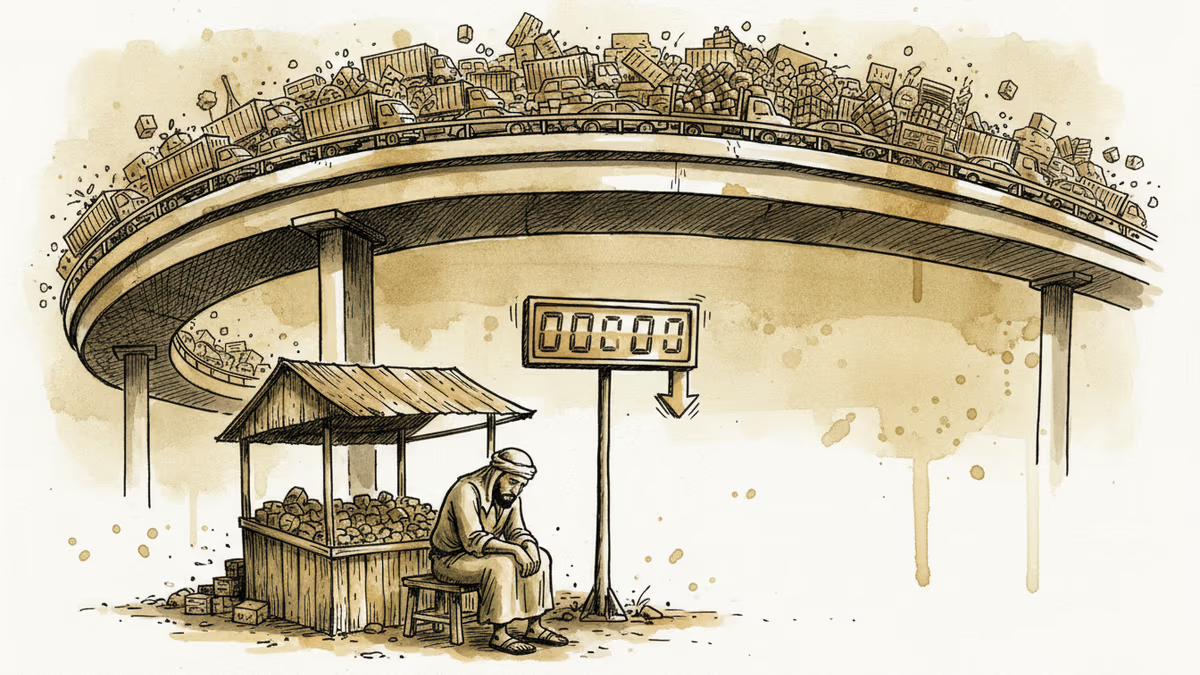
XRP Ledger hit 2.7 million daily payments and 27,000 AMM pools, yet XRP is down 26% this year. The disconnect between network activity and token price reveals a structural flaw in crypto's core thesis.
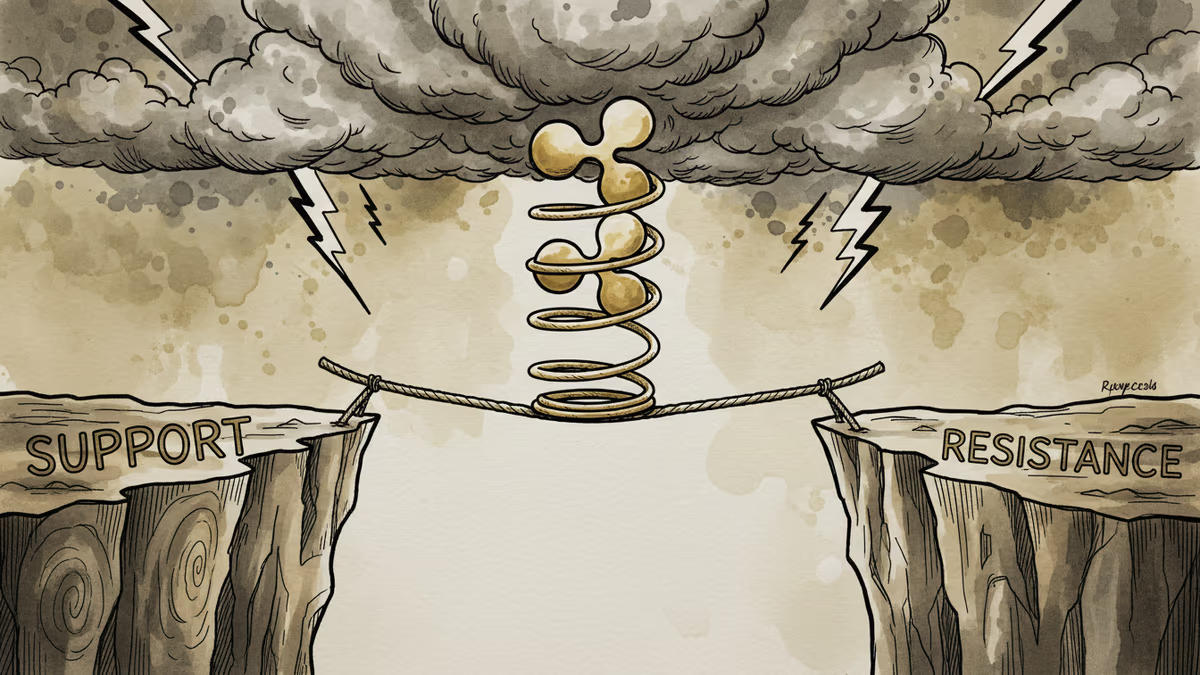
XRP is coiling near $1.38 as Bollinger Bands compress to historic tightness. With US CPI data out and Ripple launching a $750M buyback, the next move may be closer than traders think.
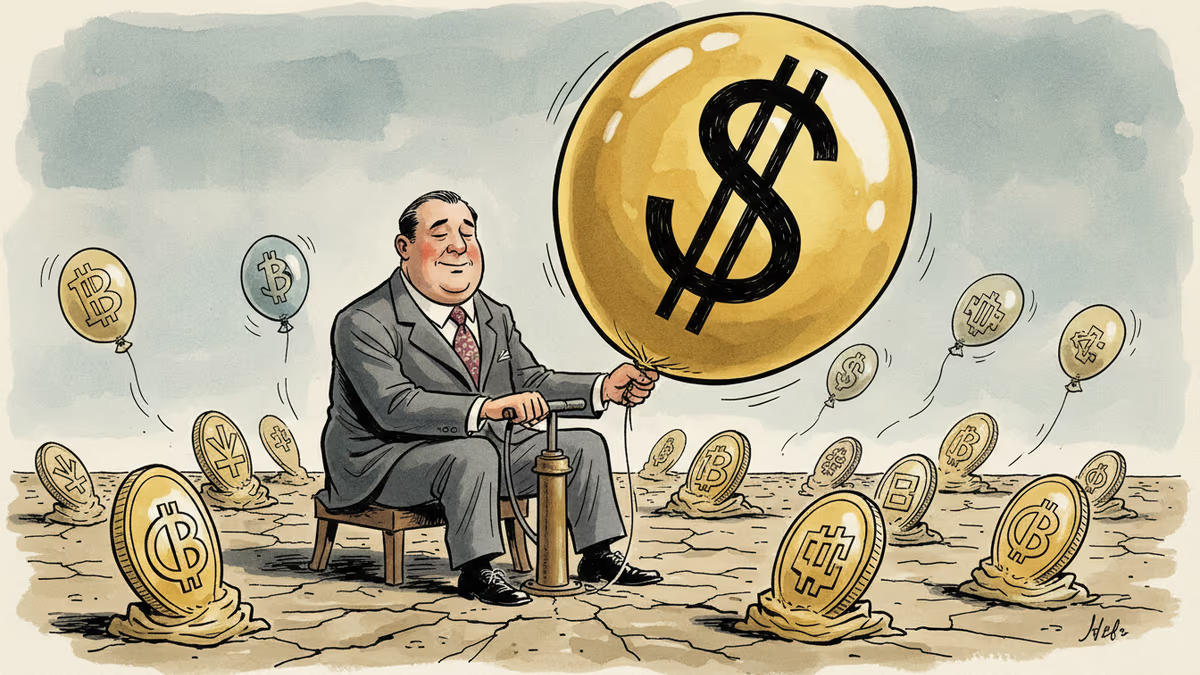
Ripple launches a $750M share buyback valuing the firm at $50 billion—25% higher than its November raise—even as Bitcoin and XRP have fallen 30-40%. What does this signal for crypto's institutional future?
Ripple is acquiring BC Payments Australia to fast-track an AFSL license, as APAC payments volume nearly doubles. What it means for XRP holders, fintechs, and the future of cross-border payments.
XRP Ledger hit 2.7 million daily payments and 27,000 AMM pools, yet XRP is down 26% this year. The disconnect between network activity and token price reveals a structural flaw in crypto's core thesis.
XRP is coiling near $1.38 as Bollinger Bands compress to historic tightness. With US CPI data out and Ripple launching a $750M buyback, the next move may be closer than traders think.
Ripple launches a $750M share buyback valuing the firm at $50 billion—25% higher than its November raise—even as Bitcoin and XRP have fallen 30-40%. What does this signal for crypto's institutional future?
Ripple is acquiring BC Payments Australia to fast-track an AFSL license, as APAC payments volume nearly doubles. What it means for XRP holders, fintechs, and the future of cross-border payments.
Thoughts
Share your thoughts on this article
Sign in to join the conversation