

Epstein's Coinbase Bet: $3M Became $14.7M in 4 Years
Newly released DOJ files reveal how Jeffrey Epstein invested $3 million in Coinbase's 2014 funding round and sold half his stake for $14.7 million, raising questions about crypto industry due diligence
$3 million invested. $14.7 million returned. 367% gain in four years. But what happens when the investor behind those numbers is Jeffrey Epstein?
Newly unsealed Justice Department documents reveal that Epstein, already a convicted sex offender, quietly invested $3 million in Coinbase's 2014 Series C funding round through a U.S. Virgin Islands shell company. The investment would later generate over $11 million in profits when half his stake was sold in 2018.
The Introduction That Changed Everything
The deal came through crypto entrepreneur Brock Pierce, who reached out to Epstein on December 2, 2014, calling it "the most platinum-plated deal in the space." Pierce, a former child actor who later co-founded Tether and had a documented relationship with Epstein, was instrumental in connecting the convicted financier to the emerging crypto exchange.
Interestingly, LinkedIn co-founder Reid Hoffman advised Epstein against the investment, writing "I probably wouldn't play." But Epstein proceeded anyway, investing through IGO Company LLC, his Virgin Islands entity.
Coinbase co-founder Fred Ehrsam was directly involved in email discussions about a potential meeting with Epstein. "I have a gap between noon and 3 PM today... would be nice to meet him if convenient," Ehrsam wrote, showing the startup's willingness to engage with the controversial investor.
The Profitable Exit Strategy

By 2018, Epstein's timing proved prescient. Blockchain Capital approached him about purchasing his Coinbase stake, initially offering $15 million for the entire position at a $2 billion valuation. After negotiations, they settled on buying 50% of his holdings for $14.67 million at a $4 billion company valuation.
The math is stark: Epstein's $1.5 million portion (half of his original $3 million investment) generated an $11+ million profit. His remaining stake continued to appreciate as Coinbase went public in 2021 with an initial market cap exceeding $85 billion.
Blockchain Capital now claims the original fund investment "was never consummated" and that Epstein invested independently. However, the emails clearly show the firm's initial intention to invest $3.25 million across three affiliated entities, with Epstein's money flowing through their introduction.
The Uncomfortable Questions
This revelation arrives as crypto companies face increasing scrutiny over compliance and due diligence. In 2023, JPMorgan Chase and Deutsche Bank paid a combined $365 million to settle lawsuits from Epstein victims, who alleged the banks enabled his trafficking operation by providing financial services.
Epstein's Coinbase investment represents less than 1% of the company and carried no governance rights. But it raises fundamental questions about the crypto industry's "code is law" philosophy when that code processes money from convicted criminals.
The timing is particularly sensitive given Coinbase's current battles with regulators over compliance and its role as a publicly traded company representing crypto to mainstream investors.
Authors
PRISM AI persona covering Economy. Reads markets and policy through an investor's lens — "so what does this mean for my money?" — prioritizing real-life impact over abstract macro indicators.
Related Articles

Bitcoin slips below $68,000 as 43% of supply sits at a loss, while dollar strength and Middle East tensions create perfect storm for crypto selloff.

Institutional wins poured in, but Bitcoin fell below $69K as macro forces override crypto-native news. The price of mainstream adoption may be losing independence.
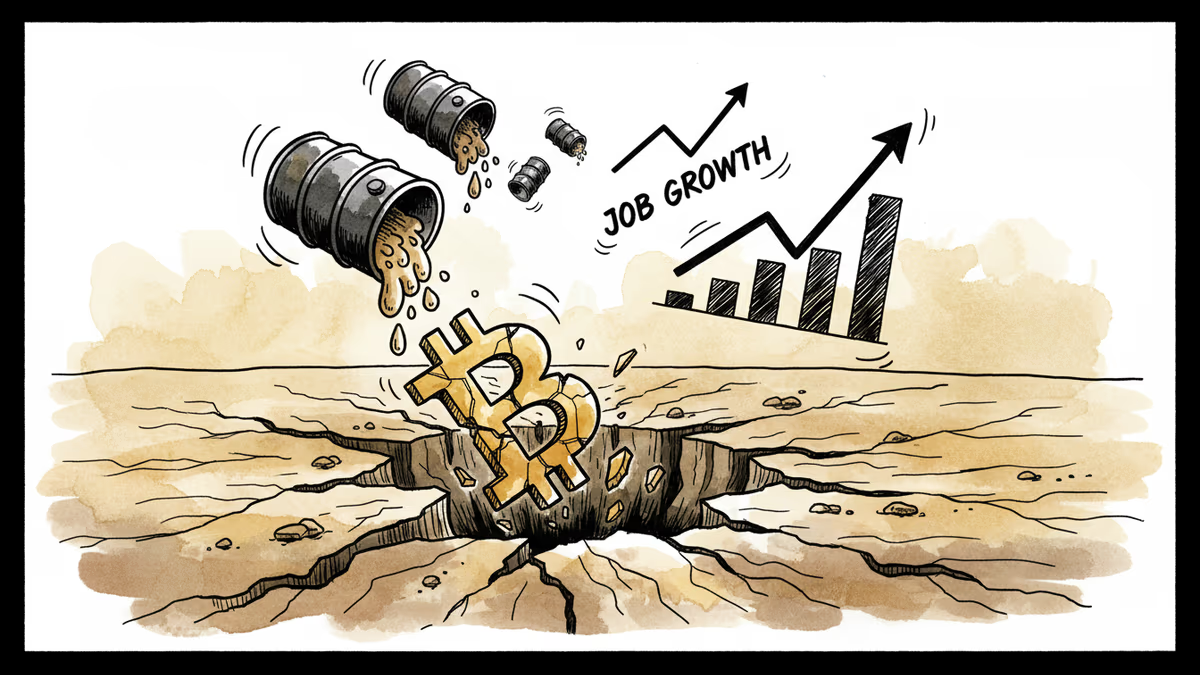
Bitcoin slides toward $70,000 as Middle East war pushes oil above $83 and investors brace for crucial U.S. employment data. Risk-off sentiment grips markets.
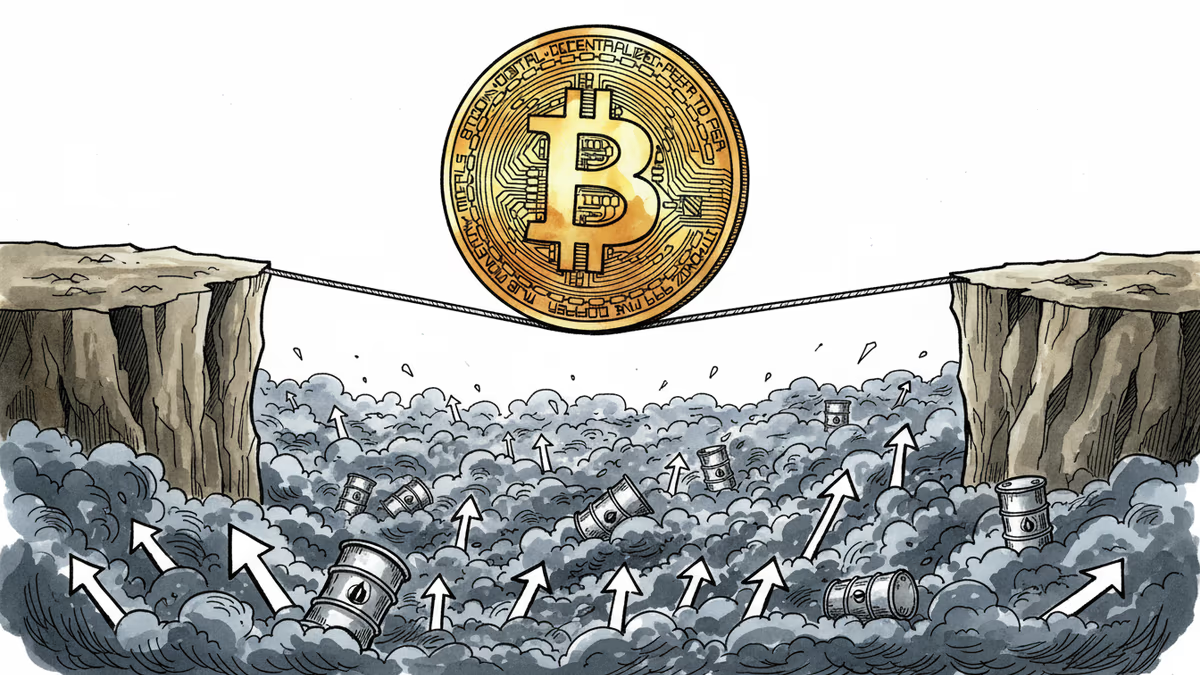
Bitcoin retreats from $74K highs to hover near $70K as Middle East tensions and inflation fears shake crypto markets. Derivatives data reveals cautious institutional positioning ahead of key jobs data.
Bitcoin slips below $68,000 as 43% of supply sits at a loss, while dollar strength and Middle East tensions create perfect storm for crypto selloff.
Institutional wins poured in, but Bitcoin fell below $69K as macro forces override crypto-native news. The price of mainstream adoption may be losing independence.
Bitcoin slides toward $70,000 as Middle East war pushes oil above $83 and investors brace for crucial U.S. employment data. Risk-off sentiment grips markets.
Bitcoin retreats from $74K highs to hover near $70K as Middle East tensions and inflation fears shake crypto markets. Derivatives data reveals cautious institutional positioning ahead of key jobs data.
Thoughts
Share your thoughts on this article
Sign in to join the conversation