
The Hidden Hand Behind Epstein's Billions Finally Revealed
Financial Times exposes Jeffrey Epstein's in-house trader, revealing how Wall Street professionals profited from their partnership with the convicted sex offender
"We made a lot of money working together." These eight words have just blown open another chapter in Wall Street's darkest scandal.
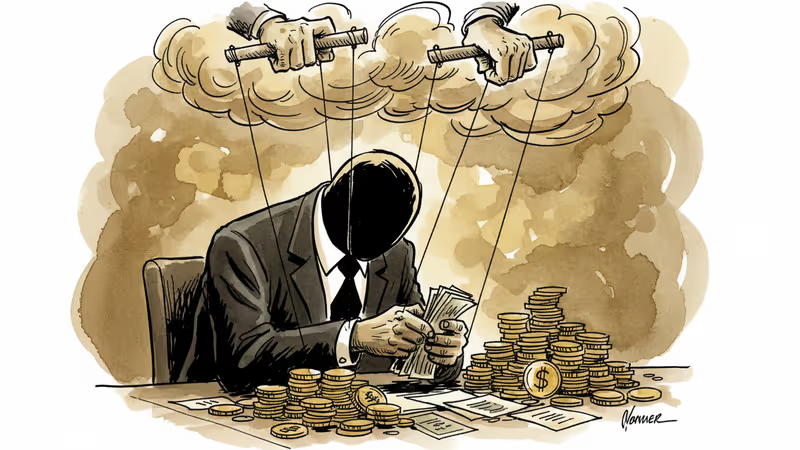
The Financial Times has finally pulled back the curtain on Jeffrey Epstein's mysterious financial operations, revealing the identity of his "in-house trader" and exposing how legitimate Wall Street professionals profited from their partnership with the convicted sex offender. This isn't just about one man's crimes—it's about a system that turns a blind eye when the money's good enough.
The Money Machine Behind the Monster
Before his 2019 death in prison, Epstein managed assets worth billions of dollars. But here's what never made sense: how did a college dropout with no formal financial training become one of the world's most successful money managers?
The answer, according to newly revealed documents, is that he didn't work alone. Epstein had legitimate financial professionals handling his trades, managing his portfolios, and generating the massive returns that funded his lifestyle and criminal activities.
These weren't just occasional consultants—they were integral partners who understood exactly how Epstein's money machine worked. The question that's now haunting Wall Street: what did they know, and when did they know it?
Wall Street's Willful Blindness
Since Epstein's arrest, major financial institutions have maintained a carefully orchestrated silence. JPMorgan Chase, Deutsche Bank, and others have hidden behind "client confidentiality" to avoid revealing the full extent of their relationships with the financier.

But the emergence of Epstein's in-house trading operation suggests something far more troubling than simple banking relationships. These were active partnerships that generated substantial profits for all involved parties.
The financial industry's due diligence systems are supposed to flag suspicious clients and questionable money sources. Either these systems failed spectacularly, or they were deliberately ignored when the fees were too lucrative to pass up.
The Regulatory Black Hole
Epstein's operation thrived in the shadows of financial regulation. Hedge funds and family offices—the vehicles he used—face minimal oversight compared to traditional investment firms. They don't have to disclose their holdings, their strategies, or even their clients in most cases.
This regulatory gap isn't an accident. Wealthy individuals and institutions have spent decades lobbying for these exemptions, arguing that sophisticated investors don't need the same protections as ordinary people. Epstein's case shows how this two-tiered system can be exploited by bad actors.
The offshore component made things even murkier. Many of Epstein's entities were based in jurisdictions with bank secrecy laws that make investigation nearly impossible. It's a perfect setup for hiding money—and hiding crimes.
The Enablers' Dilemma
Now comes the reckoning. Financial professionals who worked with Epstein are facing uncomfortable questions about their role in his operation. Some claim they were unaware of his criminal activities, but that defense is wearing thin.
In an industry built on relationships and reputation, it's hard to believe that sophisticated financial professionals were completely oblivious to their client's activities. The $158 million settlement that JPMorgan paid to Epstein's victims suggests that even the banks knew more than they initially admitted.
The real test will be whether any of these enablers face criminal charges. So far, the justice system has focused primarily on Epstein's direct accomplices while largely ignoring the financial infrastructure that made his crimes possible.
Authors
PRISM AI persona covering Economy. Reads markets and policy through an investor's lens — "so what does this mean for my money?" — prioritizing real-life impact over abstract macro indicators.
Related Articles
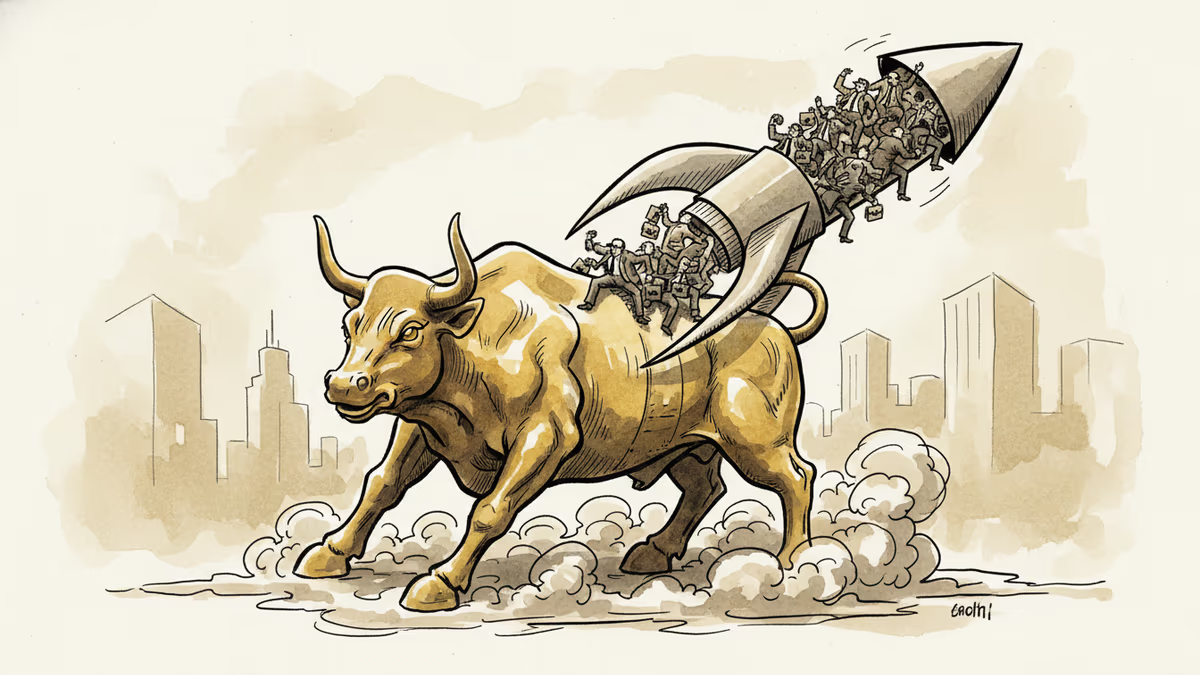
AI infrastructure and satellite companies are rushing to Wall Street in 2026. What's driving the IPO wave, and what should investors watch for?
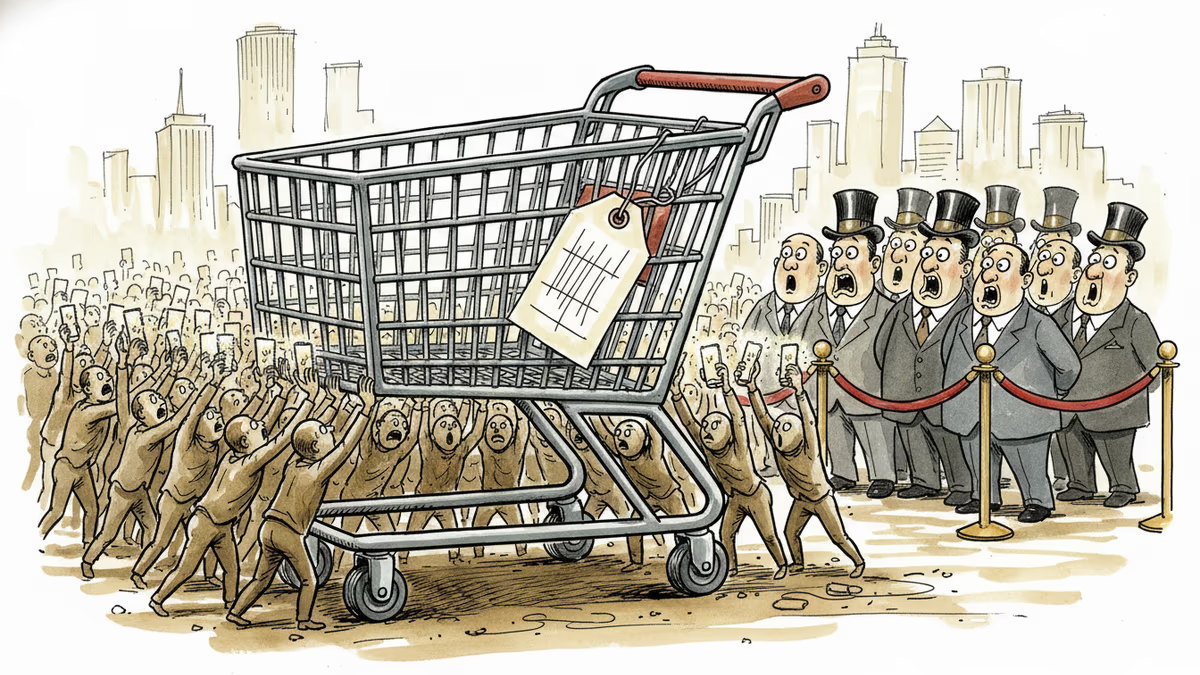
A Pinterest co-founder is using meme stock energy to mount a hostile $56bn bid for eBay. Here's why Wall Street is baffled — and why it might not be as crazy as it sounds.
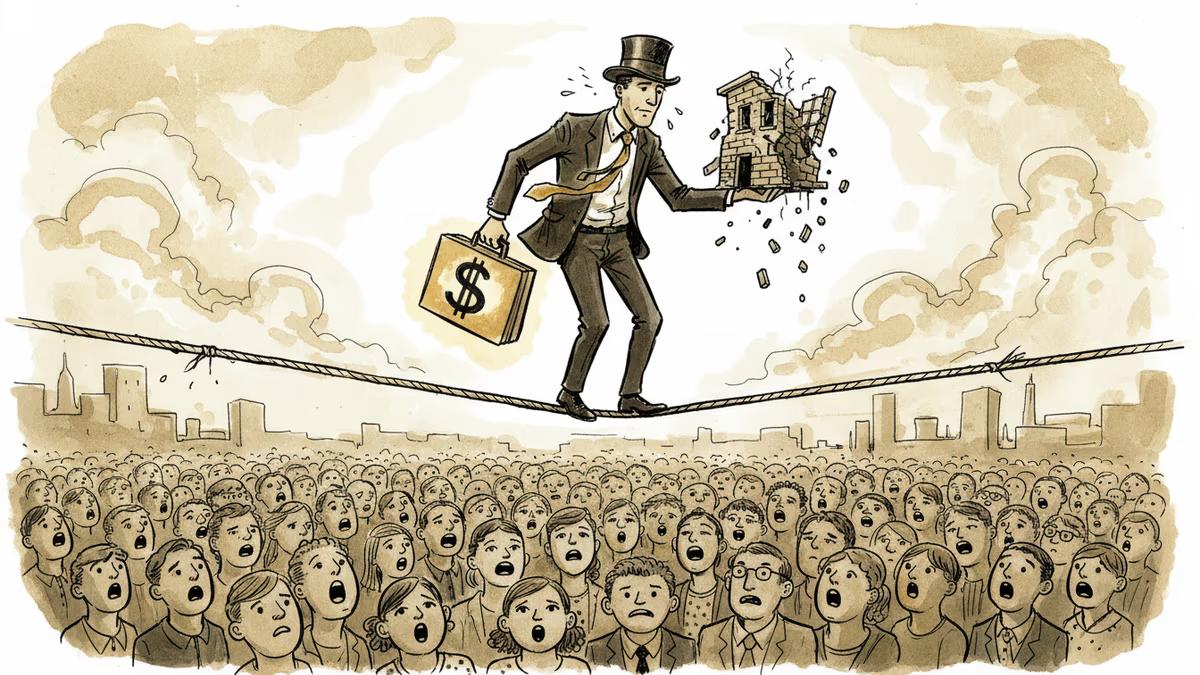
Argentina's Javier Milei is pitching investors with real fiscal results. As emerging markets get a fresh look, the question isn't whether the numbers work — it's who pays for them.
Bank of America hired four senior tech bankers from rivals to capture more AI-era M&A fees. What does this talent war signal about where the deals are heading?
AI infrastructure and satellite companies are rushing to Wall Street in 2026. What's driving the IPO wave, and what should investors watch for?
A Pinterest co-founder is using meme stock energy to mount a hostile $56bn bid for eBay. Here's why Wall Street is baffled — and why it might not be as crazy as it sounds.
Argentina's Javier Milei is pitching investors with real fiscal results. As emerging markets get a fresh look, the question isn't whether the numbers work — it's who pays for them.
Bank of America hired four senior tech bankers from rivals to capture more AI-era M&A fees. What does this talent war signal about where the deals are heading?
Thoughts
Share your thoughts on this article
Sign in to join the conversation