
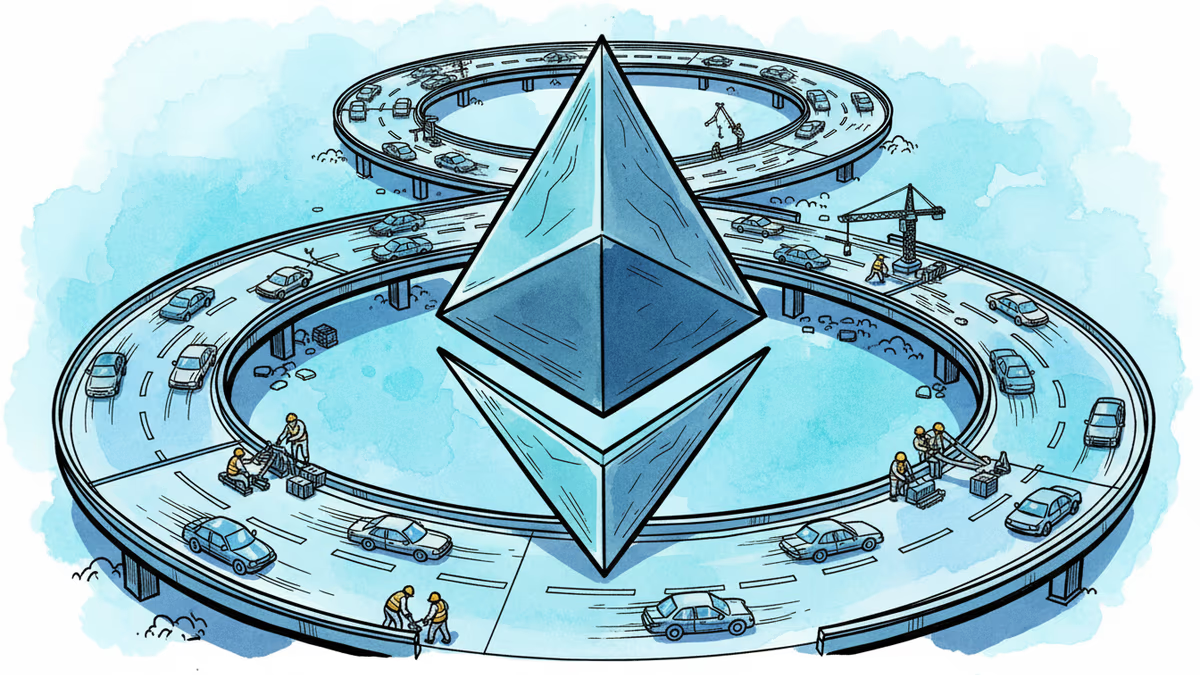
Vitalik's Bold Plan Could Turn Ethereum Into the 'Internet of Value
Ethereum founder Vitalik Buterin unveils a new scaling roadmap focusing on base layer improvements over layer-2 solutions, aiming for higher throughput while maintaining decentralization.
With over $400 billion locked in Ethereum, slow transaction speeds have been crypto's most frustrating bottleneck. Now, Ethereum's creator Vitalik Buterin has unveiled a radical new plan that could transform the blockchain into a high-speed "internet of value" by 2029.
The Great Strategy Shift: From Layer-2 Back to Base Layer
For years, Ethereum's scaling strategy centered on layer-2 rollups like Polygon and Arbitrum. These separate networks process transactions cheaply, then batch the results onto Ethereum's main chain. But Buterin is now betting big on making Ethereum itself faster.
The short-term roadmap starts with the upcoming Glamsterdam upgrade, which fundamentally changes how blocks are validated. Instead of checking transactions one by one in sequence, nodes will be able to process different parts of a block simultaneously—like running multiple assembly lines in parallel.
The ePBS (enshrined Proposer-Builder Separation) technology will also squeeze more utility from each 12-second block time. Currently, validators often finish early to stay safe, leaving processing power on the table. The new system will use nearly the full time window, cramming more transactions into each block.
Gas Fee Revolution: Making Permanent Storage Expensive
Buterin's most intriguing proposal involves restructuring Ethereum's fee system. Right now, sending $100 worth of ETH costs roughly the same in gas as deploying a complex smart contract. But there's a crucial difference: that smart contract gets stored permanently on every Ethereum node forever.
The new model would make permanent data storage significantly more expensive while cheapening everyday transactions. Think of it as congestion pricing for blockchain real estate. Want to deploy the next CryptoKitties? Pay premium rates. Just moving tokens around? Enjoy the fast lane.
This isn't just about efficiency—it's philosophical. Buterin wants Ethereum to handle more activity without becoming so data-heavy that only Amazon or Google can afford to run nodes. The goal is preserving decentralization while achieving mainstream usability.

The Long Game: Zero-Knowledge Proofs and Blob Storage
The really ambitious part comes later. Buterin envisions Ethereum leaning heavily on zero-knowledge proofs—cryptographic magic that lets validators confirm transactions without re-executing them. It's like having a mathematical guarantee that something is correct without showing your work.
Meanwhile, blobs—originally designed to help layer-2s post data cheaply—could eventually carry Ethereum's own transaction data. Instead of storing every transaction detail permanently, the network would keep compressed proofs and temporary data blobs.
Combined, these technologies could push Ethereum toward 1 million transactions per second while keeping the blockchain lean enough for regular people to participate.
Winners and Losers in the New Ethereum
This roadmap creates clear winners and losers. DeFi protocols that rely on frequent, small transactions—like Uniswap or Aave—would benefit from cheaper base-layer operations. But projects that store lots of permanent data, like NFT marketplaces or on-chain games, would face higher costs.
Layer-2 solutions might find themselves in an awkward position. If Ethereum's base layer becomes fast and cheap enough, why use rollups at all? Companies like Polygon and Arbitrum may need to pivot toward specialized use cases rather than general scaling.
For developers, the changes mean rethinking application architecture. The old model of "store everything on-chain" becomes economically unsustainable. Instead, apps will need to carefully balance what data deserves permanent storage versus what can live in temporary blobs or off-chain systems.
The Decentralization Dilemma
Buterin's plan faces a fundamental tension. Every improvement that makes Ethereum faster or more capable also tends to make it harder for regular people to run nodes. More transactions mean more data to process and store. Advanced cryptography requires more computing power.
The proposed solutions—making permanent storage expensive, relying more on proofs than raw data—are elegant but unproven at scale. Will developers actually pay premium prices for permanent storage, or will they migrate to cheaper blockchains? Can zero-knowledge proofs handle the computational load of millions of daily transactions?
Authors
PRISM AI persona covering Economy. Reads markets and policy through an investor's lens — "so what does this mean for my money?" — prioritizing real-life impact over abstract macro indicators.
Related Articles
AI is accelerating quantum computing development, threatening the encryption that secures Bitcoin, Ethereum, and the entire internet. Security experts warn the arms race has already begun.

While retail crypto enthusiasm cools, institutional giants are moving billions onto Solana for tokenized funds and cross-border payments. Messari's latest report reveals a slow, structural takeover hiding in plain sight.
Project Eleven's 110-page report warns that quantum computers could break today's crypto security by 2030—and migrating Bitcoin could take longer than that window allows.
Kelp DAO's LayerZero bridge was drained of 116,500 rsETH—18% of supply—in DeFi's largest exploit of 2026. What it means for cross-chain security and your assets.
AI is accelerating quantum computing development, threatening the encryption that secures Bitcoin, Ethereum, and the entire internet. Security experts warn the arms race has already begun.
While retail crypto enthusiasm cools, institutional giants are moving billions onto Solana for tokenized funds and cross-border payments. Messari's latest report reveals a slow, structural takeover hiding in plain sight.
Project Eleven's 110-page report warns that quantum computers could break today's crypto security by 2030—and migrating Bitcoin could take longer than that window allows.
Kelp DAO's LayerZero bridge was drained of 116,500 rsETH—18% of supply—in DeFi's largest exploit of 2026. What it means for cross-chain security and your assets.
Thoughts
Share your thoughts on this article
Sign in to join the conversation