
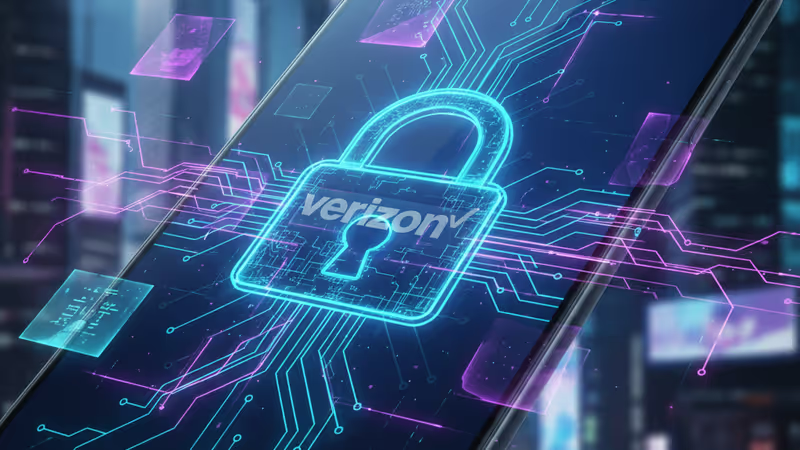
Verizon FCC Phone Unlocking Waiver: Why You Might Be Locked in Longer
The FCC has waived Verizon's 60-day phone unlocking mandate. Customers must now wait until contracts are paid off, or up to one year for prepaid devices.
The era of automatic 60-day freedom is ending for Verizon customers. Switching carriers just got a lot more complicated as the carrier moves to tighten its grip on device portability.
FCC Grants Verizon Phone Unlocking Waiver
As reported by Ars Technica, the Federal Communications Commission (FCC) has agreed to waive Verizon's longstanding 60-day unlocking requirement. Previously, Verizon was uniquely mandated to unlock all devices within two months of activation, a rule that stemmed from its 2008 spectrum purchase.
With this waiver, Verizon will now pivot to the more lenient guidelines set by the CTIA wireless trade group. These rules allow carriers to keep postpaid phones locked until the contract expires or the device is fully paid off. For prepaid users, the wait could be as long as one year after the initial activation.

The Impact on Consumer Choice
The shift follows a formal request from Verizon, which argued the change is necessary to combat fraud and identity theft. However, consumer advocates worry that this reduces competition by making it harder for users to switch to cheaper plans or different networks. According to The Verge, this decision could signal a broader regulatory trend toward favoring carrier-imposed restrictions over instant device portability.
Authors
Related Articles
Josh D'Amaro took over Disney with a bold Disney Plus vision. Days later, he's in a First Amendment fight with the Trump administration over The View. What does this mean for media freedom?
Elon Musk confirmed on Tesla's Q1 2026 earnings call that Hardware 3 vehicles will never receive unsupervised Full Self-Driving — locking out millions who paid for the feature.
The FCC has banned new foreign-made consumer routers, citing cyberattacks linked to China. Every major brand is affected. Here's what it means for your home, your wallet, and the future of internet hardware.
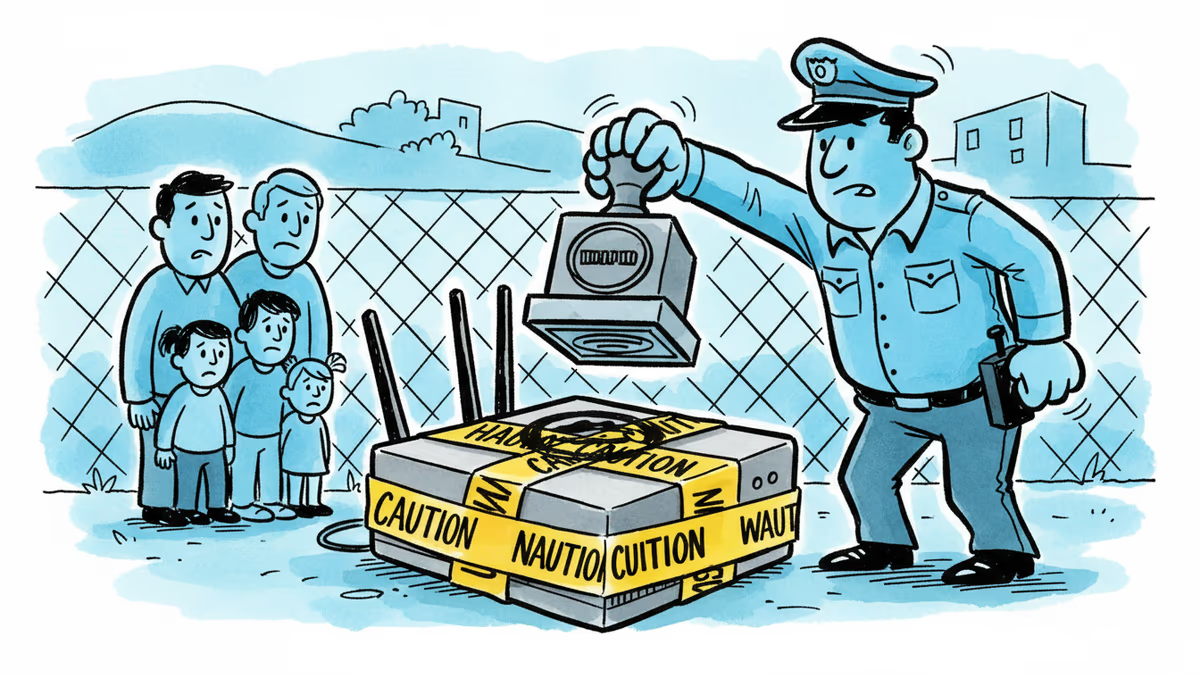
The FCC has banned new imports of foreign-made consumer networking gear, citing national security. After drones, routers are next. What this means for prices, competition, and the future of connected homes.
Josh D'Amaro took over Disney with a bold Disney Plus vision. Days later, he's in a First Amendment fight with the Trump administration over The View. What does this mean for media freedom?
Elon Musk confirmed on Tesla's Q1 2026 earnings call that Hardware 3 vehicles will never receive unsupervised Full Self-Driving — locking out millions who paid for the feature.
The FCC has banned new foreign-made consumer routers, citing cyberattacks linked to China. Every major brand is affected. Here's what it means for your home, your wallet, and the future of internet hardware.
The FCC has banned new imports of foreign-made consumer networking gear, citing national security. After drones, routers are next. What this means for prices, competition, and the future of connected homes.
Thoughts
Share your thoughts on this article
Sign in to join the conversation