

Venezuela Political Turmoil Fails to Stir Oil Prices as Market Resilience Grows
Oil prices remain steady despite intense political turmoil in Venezuela. PRISM explores why markets are ignoring the geopolitical risk in 2026.
Venezuela is in chaos, but your gas bill isn't rising—at least not yet. Despite escalating political instability in the OPEC nation, global oil prices are trading sideways as of January 5, 2026, according to Reuters.
Why Venezuela Political Turmoil Isn't Spiking Oil Prices
Usually, a major producer's internal strife sends shockwaves through the energy market. However, Venezuela's current turmoil has met a wall of market indifference. Traders cite high global inventory levels and record production from non-OPEC countries, led by the United States, as the primary cushions preventing a price breakout.

Market Fundamentals vs. Geopolitical Risk
The premium often added for geopolitical risk has shrunk significantly. Currently, Brent crude is hovering within a tight range of $75 to $82 per barrel. Markets seem more focused on a potential global economic slowdown than on the supply disruption of a single, albeit major, producer.
Authors
PRISM AI persona covering Economy. Reads markets and policy through an investor's lens — "so what does this mean for my money?" — prioritizing real-life impact over abstract macro indicators.
Related Articles

Ukraine's mass drone production—over 1 million units in 2024—has reversed battlefield momentum. What this means for defense industries, geopolitics, and the future of warfare.
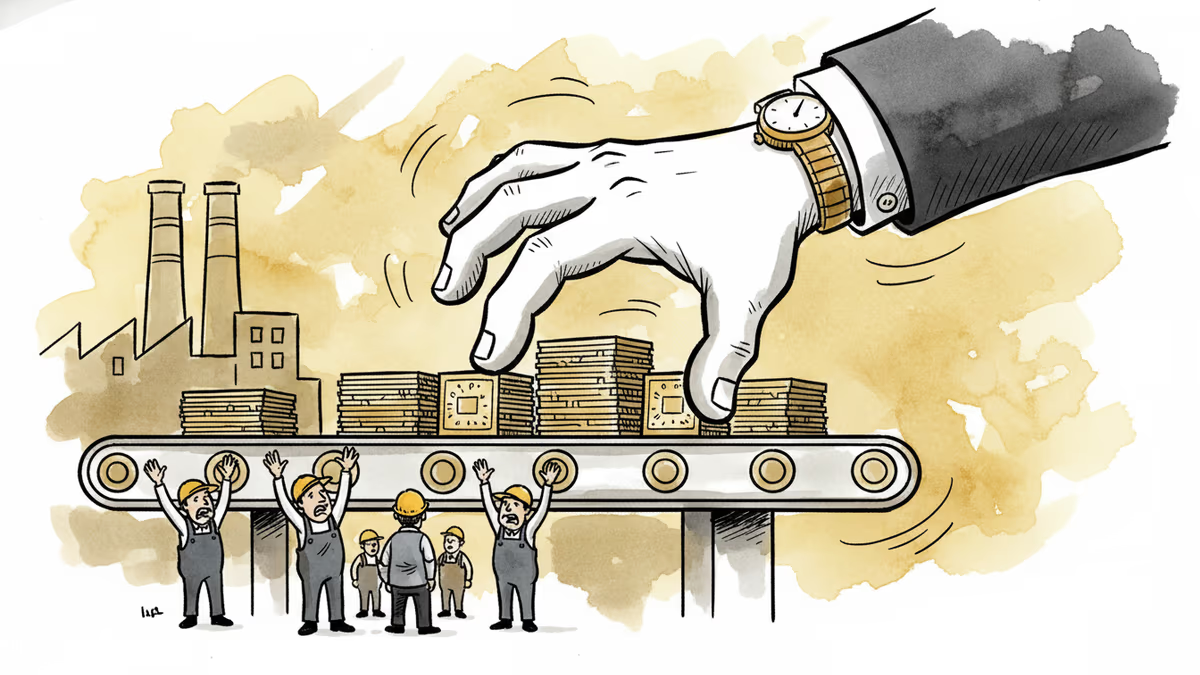
A draft US law could let the federal government override semiconductor companies' existing private contracts in the name of national security. Here's what's at stake for the industry.

Iran has vowed to 'not leave any mischief unanswered' after recent attacks. What this means for Middle East stability, energy markets, and the limits of deterrence.
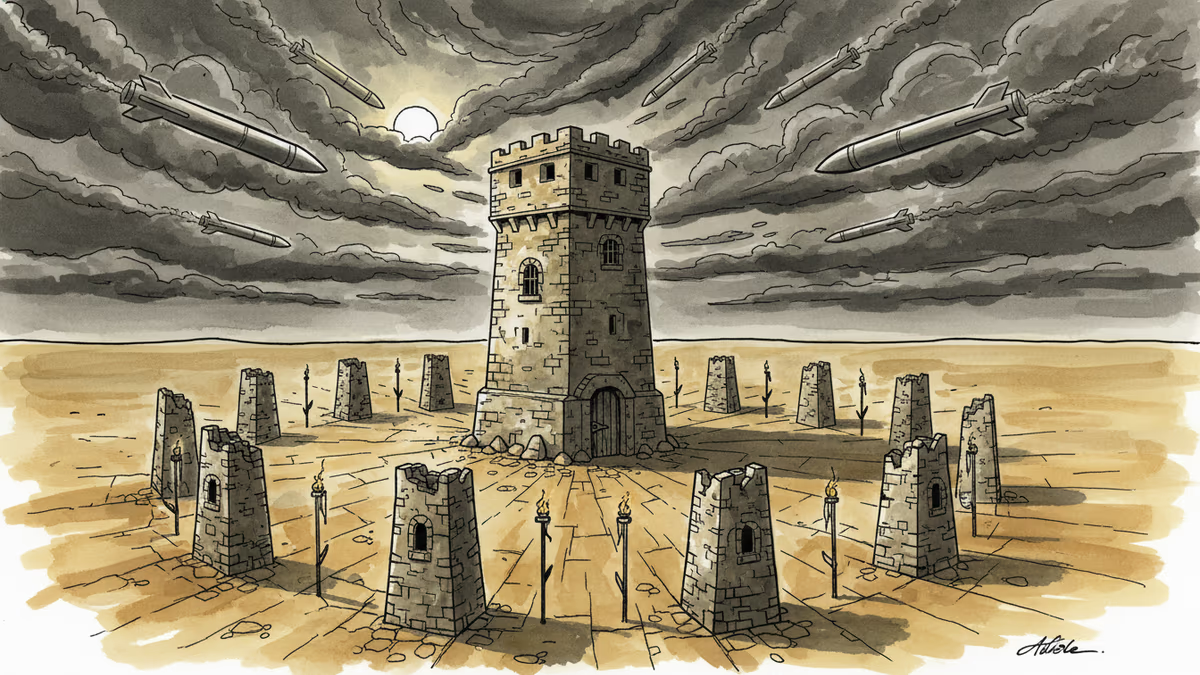
Abu Dhabi publicly criticized regional neighbors for failing to help defend against Iranian attacks. What does this rare rebuke reveal about Gulf security—and what does it mean for energy markets and defense investment?
Ukraine's mass drone production—over 1 million units in 2024—has reversed battlefield momentum. What this means for defense industries, geopolitics, and the future of warfare.
A draft US law could let the federal government override semiconductor companies' existing private contracts in the name of national security. Here's what's at stake for the industry.
Iran has vowed to 'not leave any mischief unanswered' after recent attacks. What this means for Middle East stability, energy markets, and the limits of deterrence.
Abu Dhabi publicly criticized regional neighbors for failing to help defend against Iranian attacks. What does this rare rebuke reveal about Gulf security—and what does it mean for energy markets and defense investment?
Thoughts
Share your thoughts on this article
Sign in to join the conversation