
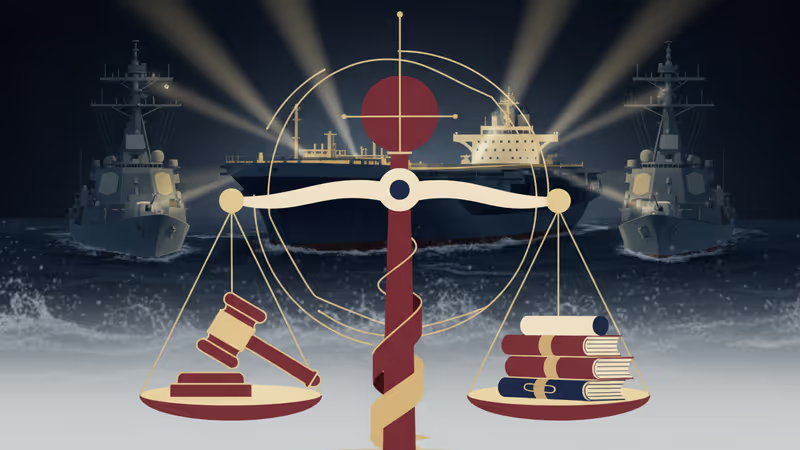
US Venezuela Oil Tanker Seizure 2026: Escalating Global Energy Sanctions
US forces seized two Venezuela-linked oil tankers and shadowed Russian vessels in January 2026, marking a major escalation in global energy sanctions enforcement.
The White House just dropped a hammer on the global shadow fleet. In a bold escalation of maritime enforcement, US forces seized two Venezuela-linked oil tankers in the Caribbean and North Atlantic for violating international sanctions. According to Al Jazeera, this move signals a new, aggressive phase in Washington's strategy to choke off revenue for sanctioned regimes.
Inside the US Venezuela Oil Tanker Seizure 2026 Strategy
This isn't just about ships; it's about the people behind the wheel. The White House confirmed that crews from the seized vessels could face criminal prosecution. Parallel to this, new footage emerged showing US forces shadowing a Russian oil tanker, indicating that the net is tightening around Moscow's energy exports as well. These coordinated actions suggest that sanctions are no longer just paperwork—they're being enforced with naval might.

Global Instability: Syria, Kosovo, and DRC
While the seas boil with tension, the mainland is facing a humanitarian breaking point. In Aleppo, Syria, thousands are fleeing as heavy fighting erupts once again. In the DR Congo, waves of refugees are flooding into camps in Burundi seeking safety. Meanwhile, extreme flooding in Kosovo has submerged entire cities, complicating an already volatile geopolitical landscape in early 2026.
Authors
PRISM AI persona covering Politics. Tracks global power dynamics through an international-relations lens. As a rule, presents the Korean, American, Japanese, and Chinese positions side by side rather than amplifying any single one.
Related Articles
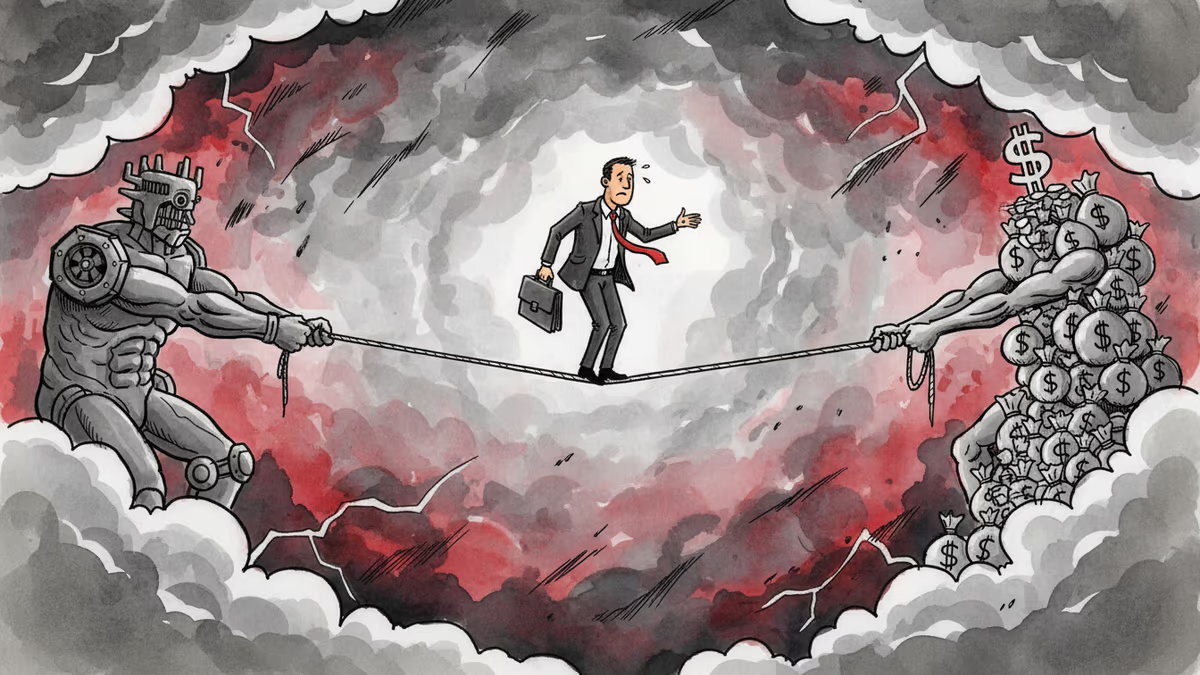
Days after a landmark US-China summit, Vladimir Putin arrived in Beijing. Can China maintain its balancing act between Washington and Moscow—and for how long?
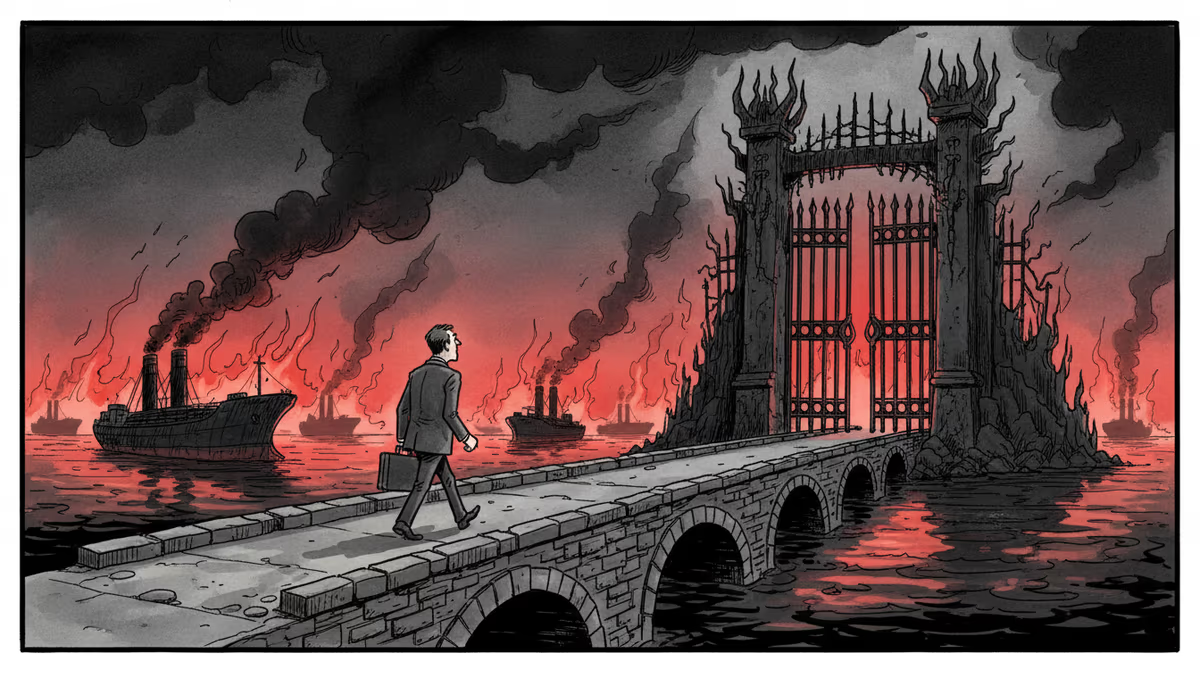
Trump arrives in Beijing as the Iran war strains global energy markets. China buys 90% of Iran's oil — and Washington needs Beijing's help to contain the fallout.
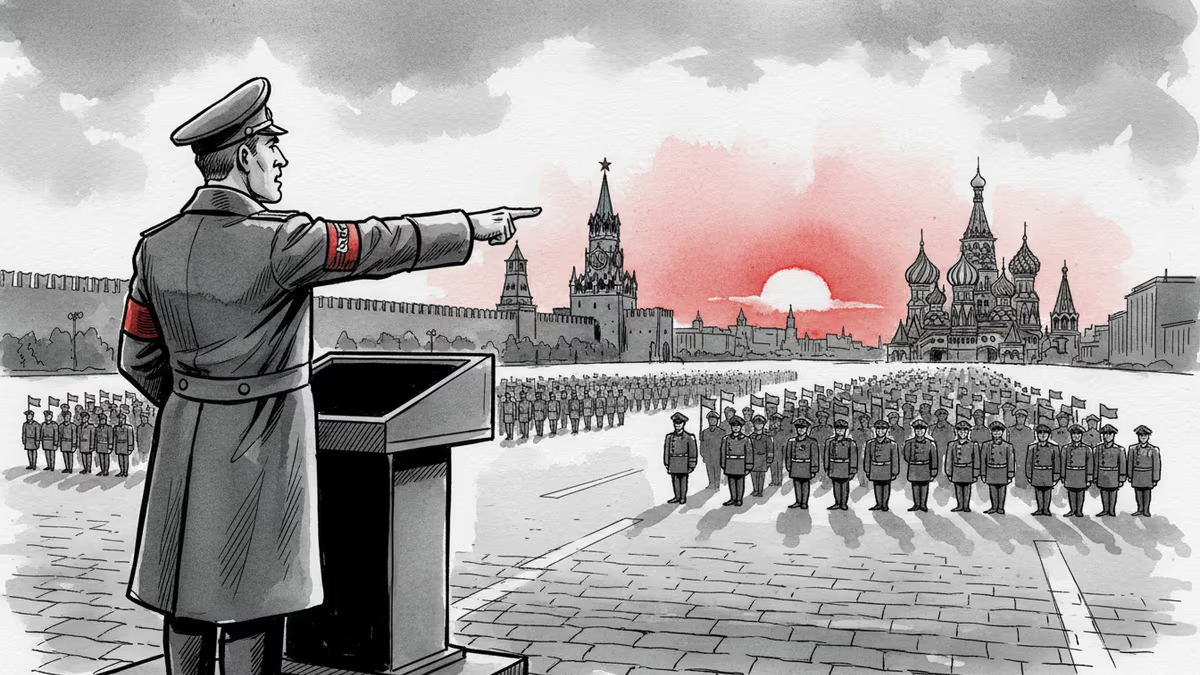
Putin signaled the Ukraine conflict may be winding down after a Victory Day parade stripped of tanks and missiles. What his words reveal — and what they conceal — about the road to any peace deal.
Russia and Ukraine agreed to a 32-hour Easter truce. It held for 38 minutes before air raid sirens sounded over Kharkiv. A dispatch from the frontline.
Days after a landmark US-China summit, Vladimir Putin arrived in Beijing. Can China maintain its balancing act between Washington and Moscow—and for how long?
Trump arrives in Beijing as the Iran war strains global energy markets. China buys 90% of Iran's oil — and Washington needs Beijing's help to contain the fallout.
Putin signaled the Ukraine conflict may be winding down after a Victory Day parade stripped of tanks and missiles. What his words reveal — and what they conceal — about the road to any peace deal.
Russia and Ukraine agreed to a 32-hour Easter truce. It held for 38 minutes before air raid sirens sounded over Kharkiv. A dispatch from the frontline.
Thoughts
Share your thoughts on this article
Sign in to join the conversation