
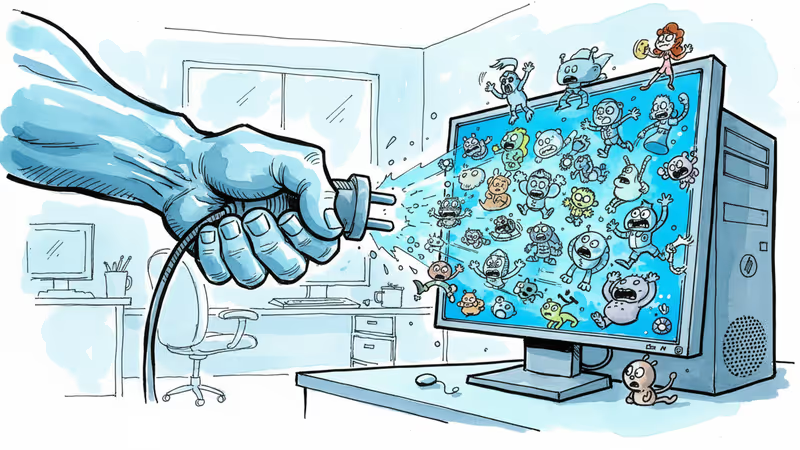
Why Adobe's Animate U-Turn Reveals a Bigger Problem
Adobe reversed its decision to discontinue Animate after just one day of backlash. But the real story isn't about the software—it's about who really owns your digital tools.
A decision reversed in 24 hours. Adobe pulled a dramatic U-turn on its plan to discontinue Animate, its 2D animation software, after facing an unexpected storm of user backlash.
On Monday, Adobe announced it would stop selling new Animate subscriptions starting March 1st, claiming the software had "served its purpose." Existing users could keep their licenses until March 1, 2027, with businesses getting until March 1, 2029. The kicker? Users would lose access to their project files and data when support ended. All this for a $23-per-month subscription.
By Tuesday night, Adobe was singing a different tune. "We've heard your feedback," the company said, announcing it would continue supporting Animate indefinitely.
What Went Wrong in 24 Hours
The reversal wasn't just about user complaints—it exposed a fundamental flaw in how subscription software treats user data. Adobe's plan to cut off access to project files struck a nerve with animators who'd built their careers on the platform.
Animate might seem like legacy software to Adobe, which has been pushing users toward After Effects and Character Animator. But for 2D animators, especially those working on web content, mobile games, and educational materials, Animate remains irreplaceable. Its Flash heritage and timeline-based workflow are deeply embedded in countless production pipelines.
The timing was particularly tone-deaf. As AI tools threaten traditional animation jobs, Adobe's move felt like another blow to an already anxious creative community. The company seemed to forget that "served its purpose" software often means "still paying our bills" software for working professionals.

The Subscription Trap Exposed
This incident reveals the darker side of software-as-a-service. When you "buy" Adobe software, you're really renting it. And when the landlord decides to renovate, your stuff might end up on the curb.
Adobe pioneered this model with Creative Cloud in 2012, ending perpetual licenses to secure predictable revenue streams. Users gained access to regular updates and cloud features, but lost ownership. The Animate scare reminded everyone what that trade-off actually means.
Competitors are taking notes. Blender continues gaining ground as a free alternative, while subscription-wary users increasingly explore tools like Toon Boom Harmony and Clip Studio Paint. Some offer perpetual licenses alongside subscriptions—a model that suddenly looks more appealing.
Beyond Adobe: A Pattern Emerges
This isn't Adobe's first controversial move. The company has previously discontinued Flash Professional, merged products without user consent, and raised subscription prices. Each time, the message is clear: adapt or leave.
But the Animate reversal suggests even Adobe has limits. When thousands of animators, educators, and studios collectively push back, even tech giants listen. The speed of the U-turn indicates the company underestimated both user attachment and potential revenue loss.
The broader question remains: as software becomes increasingly service-based, what happens to professional workflows built on tools that can vanish overnight?
Authors
Related Articles
Anthropic and OpenAI simultaneously launch AI agent team features as software stocks lose $285 billion. Analyzing the reality of AI workforce replacement.
Adobe cancels Animate discontinuation plans following creator outcry, shifting to maintenance mode instead. What this reveals about big tech's relationship with creative communities.
Adobe discontinues Animate after three decades, signaling major changes in animation software landscape. What this means for creators and the industry.
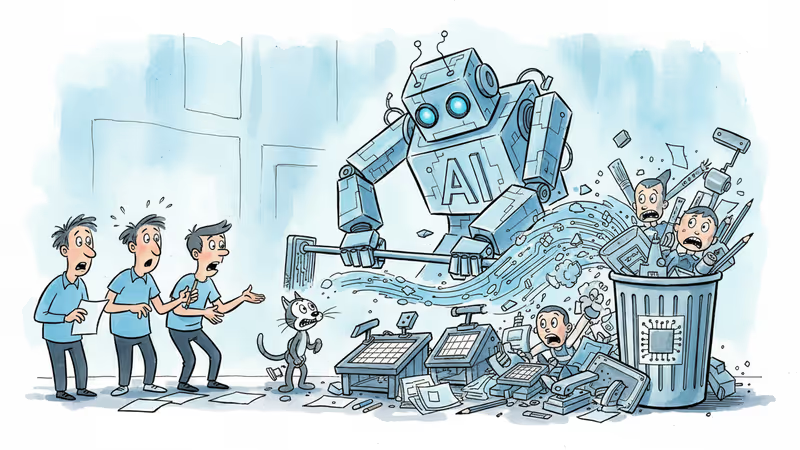
Adobe discontinues Animate after 25 years, leaving animators scrambling for alternatives as the company pivots to AI-focused products. Creative professionals express outrage over lack of replacement options.
Anthropic and OpenAI simultaneously launch AI agent team features as software stocks lose $285 billion. Analyzing the reality of AI workforce replacement.
Adobe cancels Animate discontinuation plans following creator outcry, shifting to maintenance mode instead. What this reveals about big tech's relationship with creative communities.
Adobe discontinues Animate after three decades, signaling major changes in animation software landscape. What this means for creators and the industry.
Adobe discontinues Animate after 25 years, leaving animators scrambling for alternatives as the company pivots to AI-focused products. Creative professionals express outrage over lack of replacement options.
Thoughts
Share your thoughts on this article
Sign in to join the conversation