
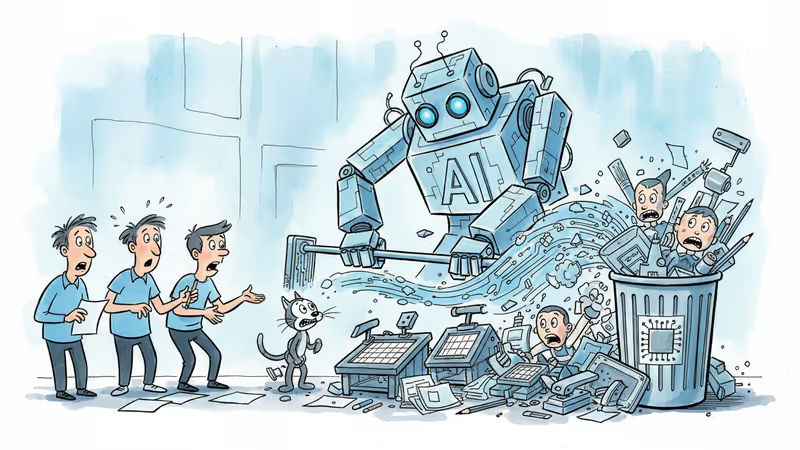
Adobe Kills 25-Year Animation Legacy for AI Dreams
Adobe discontinues Animate after 25 years, leaving animators scrambling for alternatives as the company pivots to AI-focused products. Creative professionals express outrage over lack of replacement options.
After 25 years of being the go-to tool for web animators and game developers, Adobe Animate is getting the axe. The reason? Adobe's betting everything on AI, and legacy software doesn't fit the narrative.
The Sudden Goodbye
Adobe dropped the bombshell on February 2nd through support site updates and customer emails: Animate will be discontinued on March 1, 2026. Enterprise customers get a grace period until March 2029 for technical support, while regular users have until March 2027.
The software, priced at $34.49 monthly (or $22.99 with annual commitment), has been the backbone of 2D animation for web and interactive content. It powered everything from educational animations to indie game cutscenes, filling a niche that no other Adobe product quite matched.
Adobe's official explanation reads like corporate speak: "Animate has existed for over 25 years and served its purpose well... As technologies evolve, new platforms and paradigms emerge that better serve users' needs."
Translation: AI is the future, and everything else is expendable.
Creative Community in Crisis
The announcement triggered an immediate backlash across social media. One developer pleaded on X: "Hey @Adobe open source this instead of ending it." The responses were visceral: "this is legit gonna ruin my life" and "literally what the hell are they doing? animate is the reason a good chunk of adobe users even subscribe in the first place."

Educators are particularly frustrated. Students who've spent entire semesters learning Animate now face an uncertain future. One user lamented: "we literally had a whole semester of adobe animate class and now they're discontinuing it."
The panic isn't unfounded. Adobe couldn't even suggest a proper replacement, instead offering piecemeal solutions: use After Effects for complex keyframe animation with the Puppet tool, or try Adobe Express for basic animation effects. It's like telling a novelist to replace their word processor with a calculator and a napkin.
Reading the AI Tea Leaves
This move isn't surprising when you connect the dots. Animate was conspicuously absent from Adobe's 2024 Max conference, and no 2025 version was released. The writing was on the wall, written in AI-generated text.
Adobe's pivot to AI tools like Firefly represents a fundamental shift in how the company views creative software. Why maintain niche tools when you can promise AI that does everything? The problem is that "everything" often means "nothing particularly well."
For professional animators, this represents more than inconvenience—it's career disruption. Many have built entire workflows, asset libraries, and client relationships around Animate's specific capabilities. Alternatives like Moho Animation and Toon Boom Harmony exist, but migration means starting over.
The Bigger Tech Trend
Adobe's decision reflects a broader Silicon Valley phenomenon: the ruthless prioritization of AI over established products. It's the same logic that led Google to kill Reader, Stadia, and countless other services that didn't align with current strategic priorities.
But there's something particularly troubling about abandoning creative tools. Unlike productivity software, creative applications become extensions of artistic expression. When you kill the tool, you're not just changing workflows—you're potentially ending careers and artistic practices that took years to develop.
The creative software market is already heavily consolidated. When one of the few major players decides a category isn't worth pursuing, entire creative communities can be left stranded. It raises questions about the responsibility tech companies have to the ecosystems they create.
Authors
Related Articles

Samsung and SK unveiled a chip and AI investment package worth thousands of trillions of won on June 29. The headline number swings wildly by outlet, but the real contest isn't capital — it's water and power.

Viral videos show 2026 graduates jeering executives who praise AI at commencement ceremonies. It's not just rudeness — it's a signal about who pays for technological optimism.
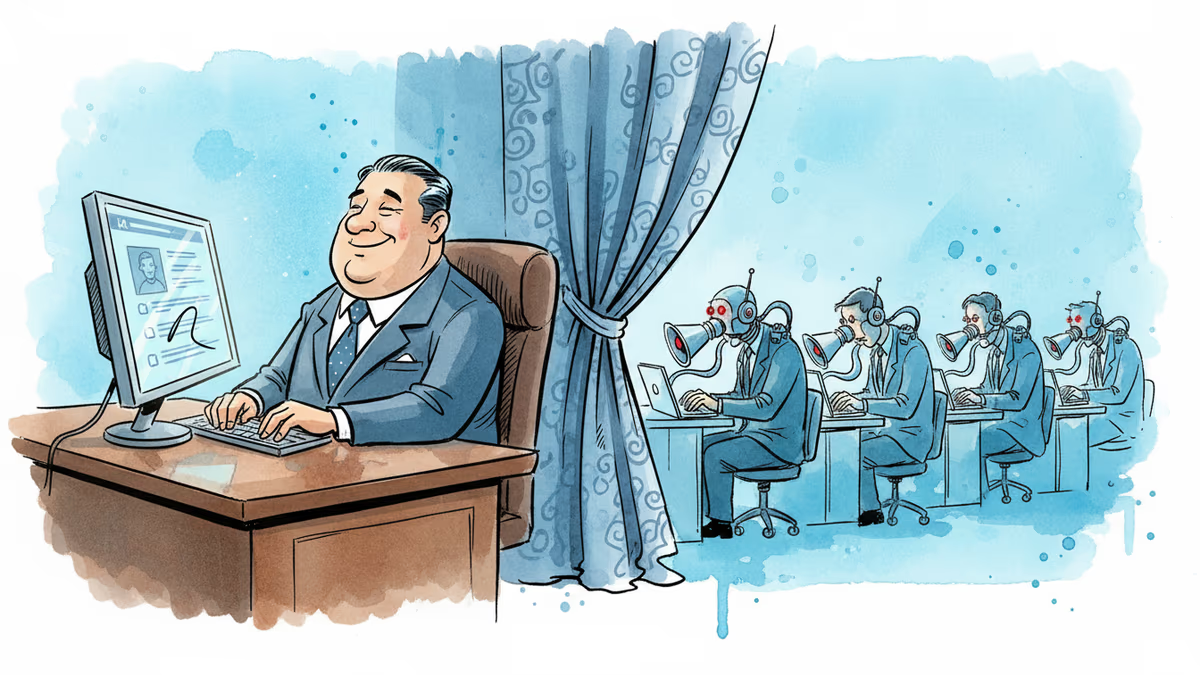
Filipino virtual assistants using AI to ghost-manage LinkedIn profiles for executives is now a structured industry. 30 comments a day, fake engagement rings, and a platform struggling to tell real from fabricated.
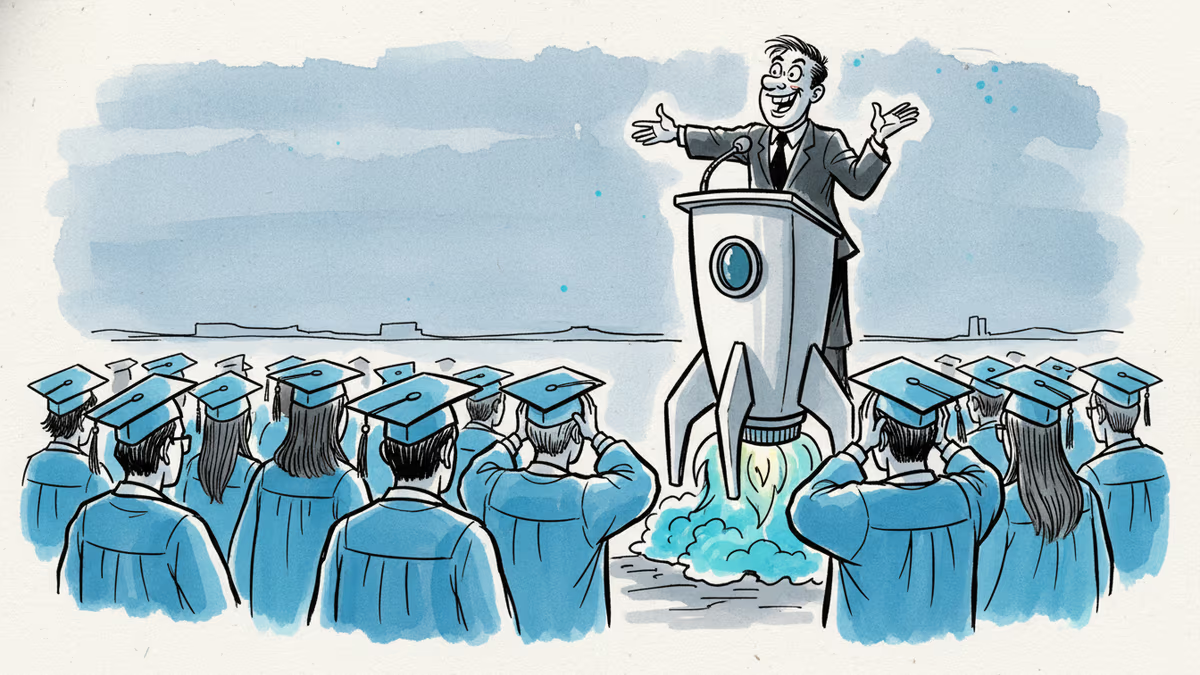
Two commencement speakers learned the hard way that AI enthusiasm doesn't land well with today's graduates. The backlash reveals a widening gap between tech optimism and Gen Z's economic reality.
Samsung and SK unveiled a chip and AI investment package worth thousands of trillions of won on June 29. The headline number swings wildly by outlet, but the real contest isn't capital — it's water and power.
Viral videos show 2026 graduates jeering executives who praise AI at commencement ceremonies. It's not just rudeness — it's a signal about who pays for technological optimism.
Filipino virtual assistants using AI to ghost-manage LinkedIn profiles for executives is now a structured industry. 30 comments a day, fake engagement rings, and a platform struggling to tell real from fabricated.
Two commencement speakers learned the hard way that AI enthusiasm doesn't land well with today's graduates. The backlash reveals a widening gap between tech optimism and Gen Z's economic reality.
Thoughts
Share your thoughts on this article
Sign in to join the conversation