
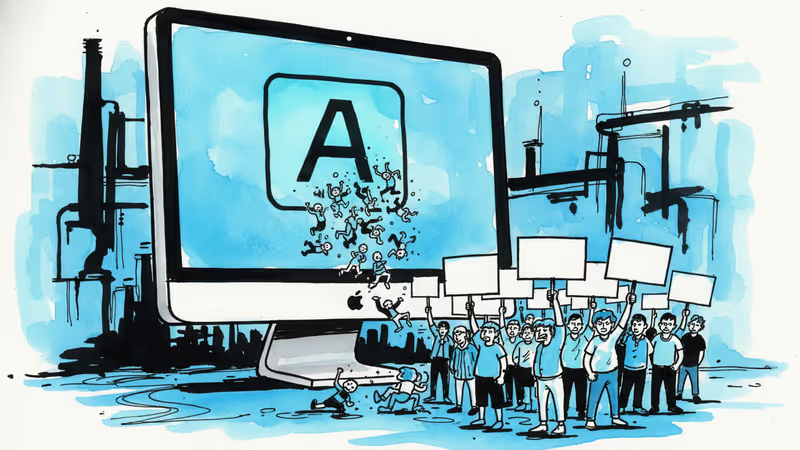
Adobe Reverses Animate Shutdown After Creator Backlash
Adobe cancels Animate discontinuation plans following creator outcry, shifting to maintenance mode instead. What this reveals about big tech's relationship with creative communities.
Three days. That's all it took for Adobe to completely reverse course on one of its most controversial decisions this year. The company announced it's scrapping plans to discontinue Animate on March 1st, instead shifting the software into maintenance mode with ongoing security updates and bug fixes.
When Creators Fight Back
Adobe's original plan seemed straightforward enough. Monday's announcement declared Animate would be fully discontinued, pushing users toward other tools in the company's ecosystem. But the backlash was swift and fierce.
Creators like David Firth, the mind behind the cult animated series Salad Fingers, led the charge. For these artists, Animate isn't just another piece of software—it's the foundation of their creative process, refined over decades of use. The prospect of losing access to their primary tool sparked genuine panic in the animation community.
The reversal shows Adobe recognized it had underestimated the loyalty and vocal power of Animate's user base. While the software won't receive new features, existing and new users can still access it indefinitely.
The Power Dynamic Shifts
This episode reveals something fascinating about the relationship between big tech companies and their creative communities. Even market-dominant players like Adobe aren't immune to user revolt when they threaten tools that creators depend on for their livelihoods.
The creative software market operates differently from typical consumer tech. Users aren't just customers—they're partners who build businesses, communities, and brand value around these tools. When Adobe threatened to pull Animate, it wasn't just discontinuing a product; it was potentially destroying years of workflow optimization and creative investment.

But let's be clear: this isn't a complete victory for creators. Animate is essentially in hospice care—alive but not growing. Users face an uncomfortable reality: they'll eventually need to migrate to alternatives, just not immediately.
The Broader Creative Tool Landscape
This situation highlights a critical vulnerability in today's creative ecosystem. Most digital artists, animators, and designers rely heavily on tools from just a few major companies. Adobe's Creative Suite dominates professional creative work, making creators vulnerable to unilateral corporate decisions.
The Animate controversy might accelerate interest in alternative tools. Open-source options like Blender for 3D work have gained massive traction partly because users know they can't be suddenly discontinued by corporate whim. Could we see similar momentum for 2D animation tools?
There's also a generational element here. Younger creators often gravitate toward newer, cloud-based tools, while established professionals stick with software they've mastered over years. Adobe's decision—and reversal—reflects this tension between innovation and continuity.
What This Means for Creative Professionals
The immediate lesson is clear: creator advocacy works, but only when it's loud and organized. The Animate community's quick mobilization forced Adobe to reconsider, demonstrating that even large corporations must listen when their user base speaks with one voice.
Longer-term, this episode should prompt creators to diversify their toolsets. Relying entirely on one company's ecosystem creates unnecessary risk. Learning alternative workflows might seem tedious now, but it could prove essential if similar situations arise.
For Adobe, the challenge is balancing innovation with legacy support. The company wants to push users toward newer, more profitable products, but it can't afford to alienate the creative communities that give its tools credibility and cultural relevance.
Authors
Related Articles
Adobe reversed its decision to discontinue Animate after just one day of backlash. But the real story isn't about the software—it's about who really owns your digital tools.
Adobe discontinues Animate after three decades, signaling major changes in animation software landscape. What this means for creators and the industry.
Adobe discontinues Animate after 25 years, leaving animators scrambling for alternatives as the company pivots to AI-focused products. Creative professionals express outrage over lack of replacement options.

Adobe's AI lawsuit over pirated books highlights a systemic risk. Our analysis explores the 'original sin' of training data and why data provenance is critical.
Adobe reversed its decision to discontinue Animate after just one day of backlash. But the real story isn't about the software—it's about who really owns your digital tools.
Adobe discontinues Animate after three decades, signaling major changes in animation software landscape. What this means for creators and the industry.
Adobe discontinues Animate after 25 years, leaving animators scrambling for alternatives as the company pivots to AI-focused products. Creative professionals express outrage over lack of replacement options.
Adobe's AI lawsuit over pirated books highlights a systemic risk. Our analysis explores the 'original sin' of training data and why data provenance is critical.
Thoughts
Share your thoughts on this article
Sign in to join the conversation