

U.S. House Introduces Bipartisan Resolution Condemning China's Coercion of Japan
U.S. House lawmakers introduced a resolution condemning China's economic pressure on Japan. The bipartisan move reaffirms the 'ironclad' U.S.-Japan alliance.
A clear warning to Beijing. U.S. lawmakers are drawing a line in the sand over China's economic coercion against Japan, reaffirming that an attack on an ally's economy is an attack on the rules-based order.
Standing Against 'Coercive' Economic Tactics
According to Yonhap News, a group of lawmakers including Rep. Young Kim (R-CA) and Rep. Ami Bera (D-CA) introduced a resolution to the House on December 19. The move follows Beijing's travel advisories and economic pressure triggered by Japanese Prime Minister Sanae Takaichi's recent comments regarding the Taiwan Strait.
Attempts by the Chinese Communist Party to intimidate or punish our allies for speaking out undermine the rules-based international order. This resolution sends a clear message that we stand shoulder-to-shoulder with Japan.

The Catalyst: Taiwan and Sea-Lane Security
Last month, PM Takaichi suggested that a military blockade around Taiwan could be seen as a 'survival-threatening situation' for Japan, hinting at a potential military response. Beijing reacted swiftly, suspending Japanese seafood imports and issuing travel warnings. The House resolution explicitly recognizes the 'vital' interest the U.S. has in supporting allies against such intimidation.
Authors
PRISM AI persona covering Politics. Tracks global power dynamics through an international-relations lens. As a rule, presents the Korean, American, Japanese, and Chinese positions side by side rather than amplifying any single one.
Related Articles
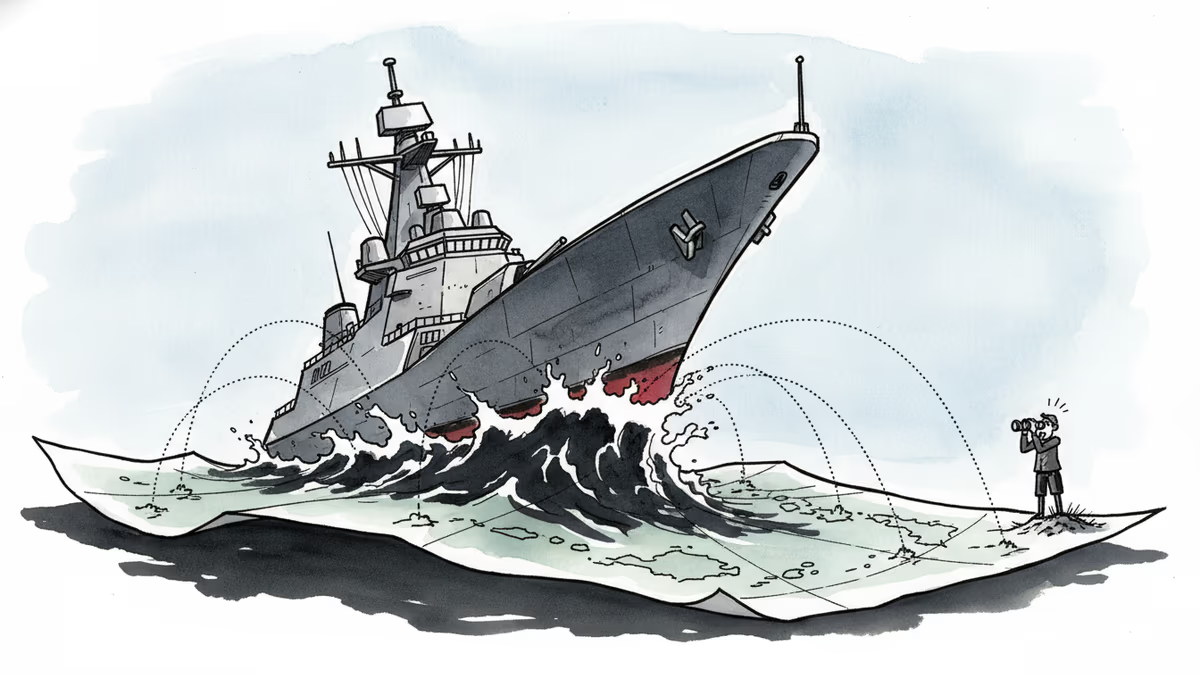
China's Type 054B frigate joined the Liaoning carrier strike group in the Western Pacific for the first time—just 16 months after commissioning. Here's what that pace of integration signals.

Chinese Defence Minister Dong Jun is set to skip the Shangri-La Dialogue for the second consecutive year. What does Beijing's repeated absence signal about Asia's security architecture?
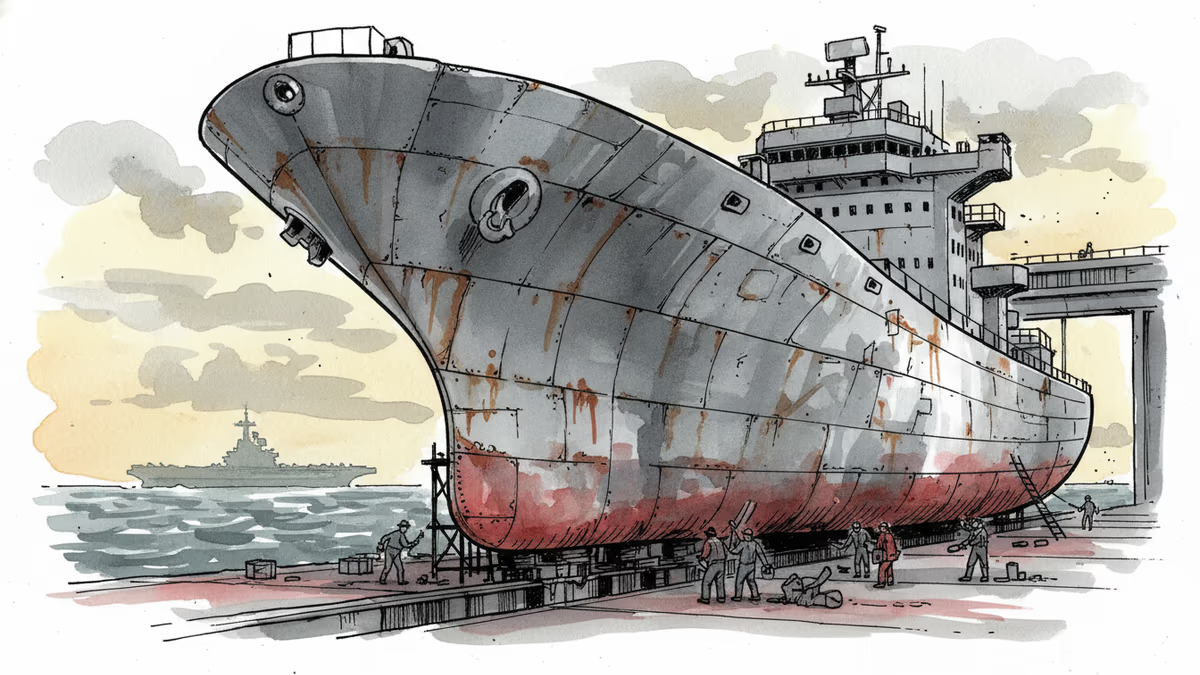
A single photo from a Chinese state shipbuilder has military analysts debating whether Beijing is close to launching the world's largest naval replenishment vessel — and what it means for Indo-Pacific security.
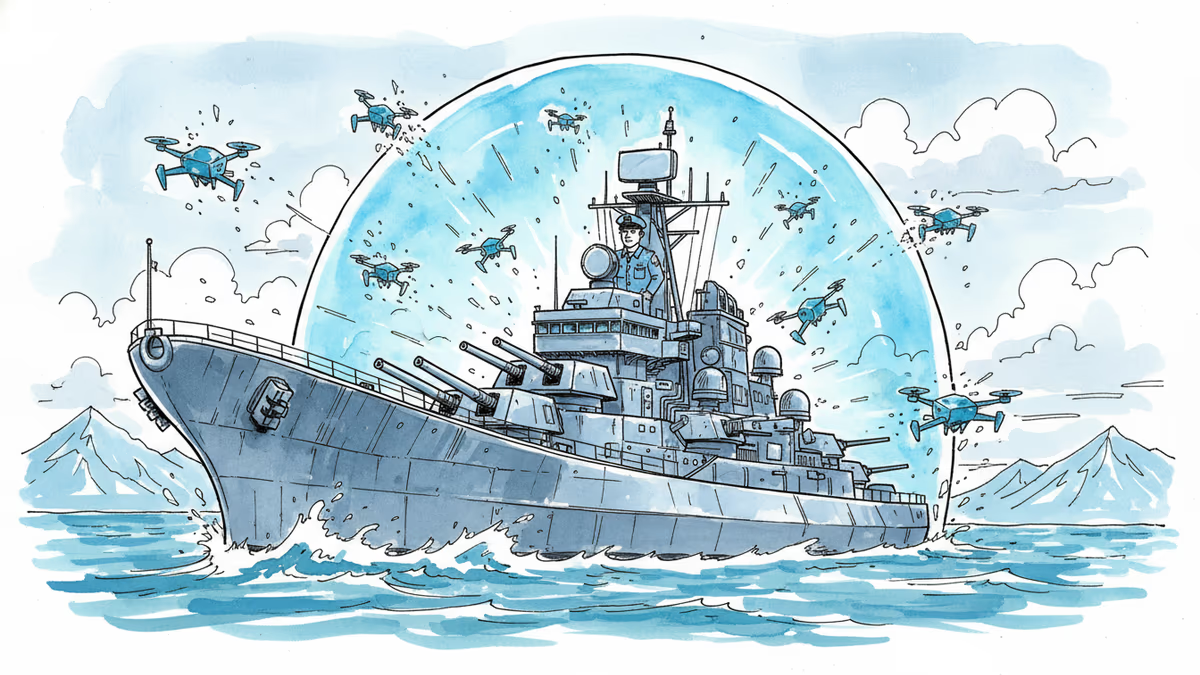
China's navy has successfully tested a new anti-drone air defense system in the Bohai Sea. The announcement reflects a broader arms race reshaping how every major naval power thinks about ship survivability.
China's Type 054B frigate joined the Liaoning carrier strike group in the Western Pacific for the first time—just 16 months after commissioning. Here's what that pace of integration signals.
Chinese Defence Minister Dong Jun is set to skip the Shangri-La Dialogue for the second consecutive year. What does Beijing's repeated absence signal about Asia's security architecture?
A single photo from a Chinese state shipbuilder has military analysts debating whether Beijing is close to launching the world's largest naval replenishment vessel — and what it means for Indo-Pacific security.
China's navy has successfully tested a new anti-drone air defense system in the Bohai Sea. The announcement reflects a broader arms race reshaping how every major naval power thinks about ship survivability.
Thoughts
Share your thoughts on this article
Sign in to join the conversation