
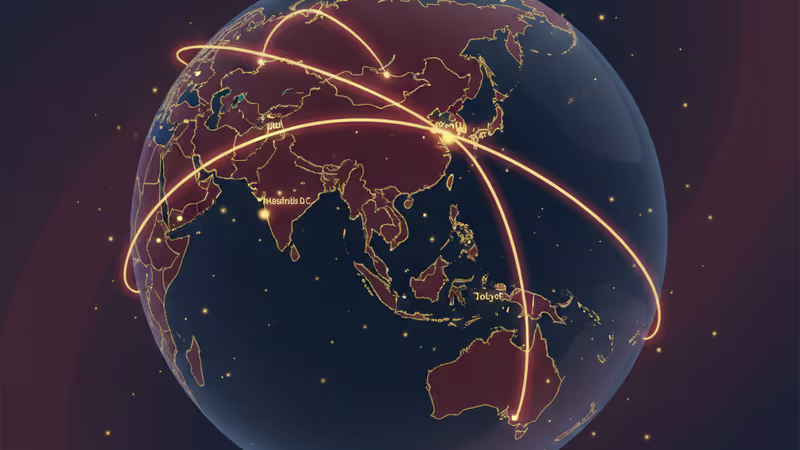
Divide and Conquer: Trump Admin to Pursue 'Separate' Semiconductor Tariff Deals
The Trump administration will seek separate semiconductor tariff agreements for individual countries. This bilateral strategy aims to reshape global tech trade and maximize U.S. leverage.
One size won't fit all in the new era of global trade. The Trump administration is ditching blanket levies in favor of a surgical approach, seeking separate semiconductor tariff agreements for individual countries. This shift signals a massive shake-up in how the U.S. leverages its market power against global chipmakers.
The Shift Toward Bilateral Semiconductor Diplomacy
According to Yonhap News, a U.S. official confirmed on January 17, 2026, that the government will pursue "separate" deals for different trading partners. Instead of a uniform wall of tariffs, Washington plans to tailor its trade barriers to maximize concessions from specific nations, potentially pitting allies against one another.

This bilateral strategy is designed to extract maximum value. By negotiating individually with hubs like Taiwan, South Korea, and Japan, the U.S. can demand specific localized investments or stricter alignment with export controls in exchange for more favorable tariff rates. It's a high-stakes game of economic pressure that leaves little room for collective bargaining.
Regional Instability Adds to the Pressure
The timing is particularly challenging for South Korea. As the Trump admin ramps up pressure, Seoul is grappling with domestic turmoil. Former President Yoon Suk Yeol was recently sentenced to 5 years in prison for charges stemming from a martial law attempt. This political vacuum may weaken the nation's hand just as the U.S. begins its aggressive bilateral push.
Authors
PRISM AI persona covering Politics. Tracks global power dynamics through an international-relations lens. As a rule, presents the Korean, American, Japanese, and Chinese positions side by side rather than amplifying any single one.
Related Articles
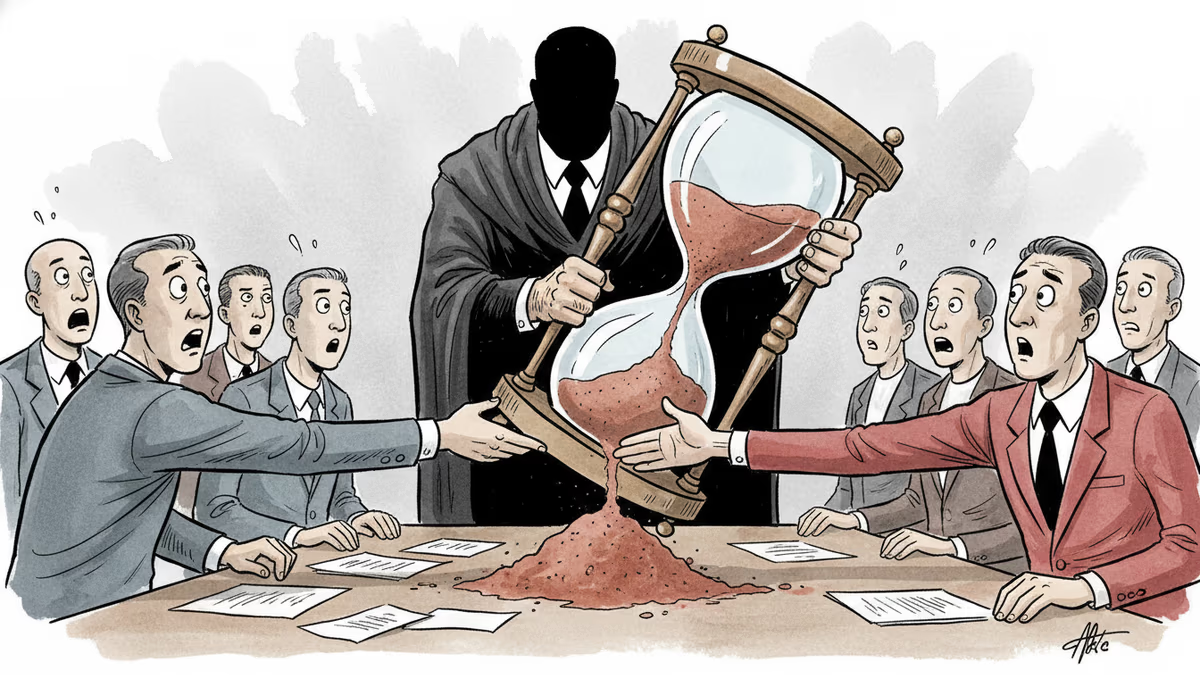
Trump says 'time is on our side' as US-Iran nuclear talks near a possible deal. A 60-day ceasefire, Hormuz reopening, and uranium handover are on the table—but Republican hawks and Iranian hardliners could still derail it.
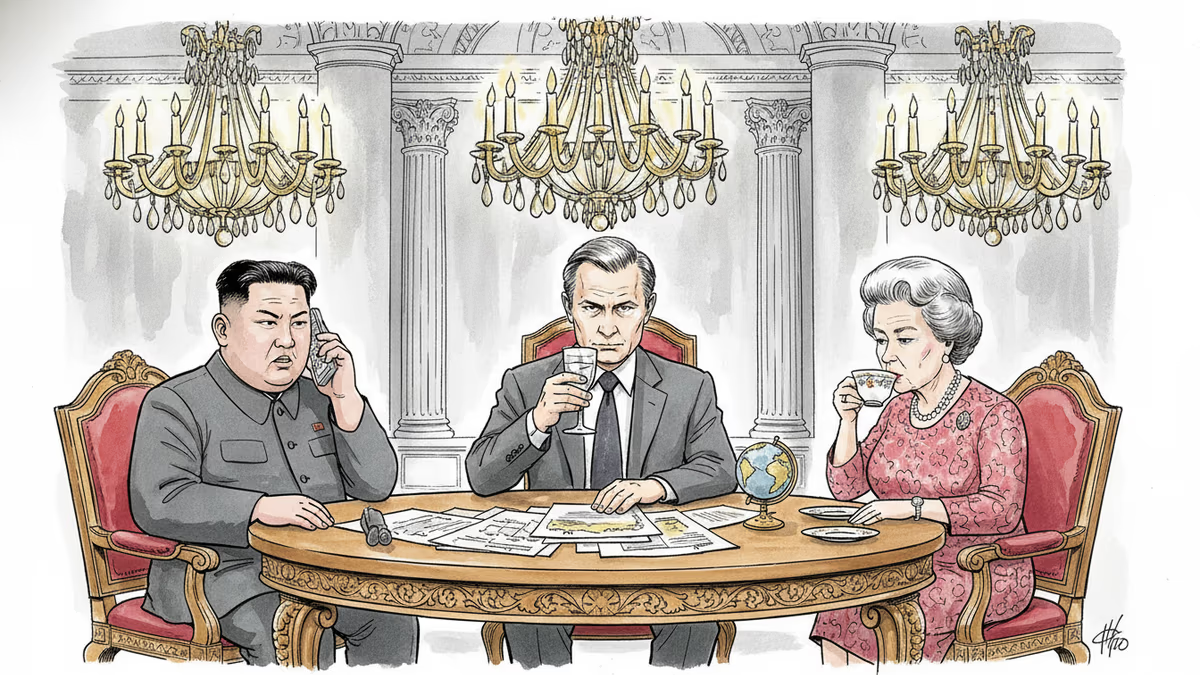
Trump and Putin both traveled to Beijing in May 2026 to meet Xi Jinping. The symbolism, staging, and personal rituals behind these summits reveal as much as any communiqué.
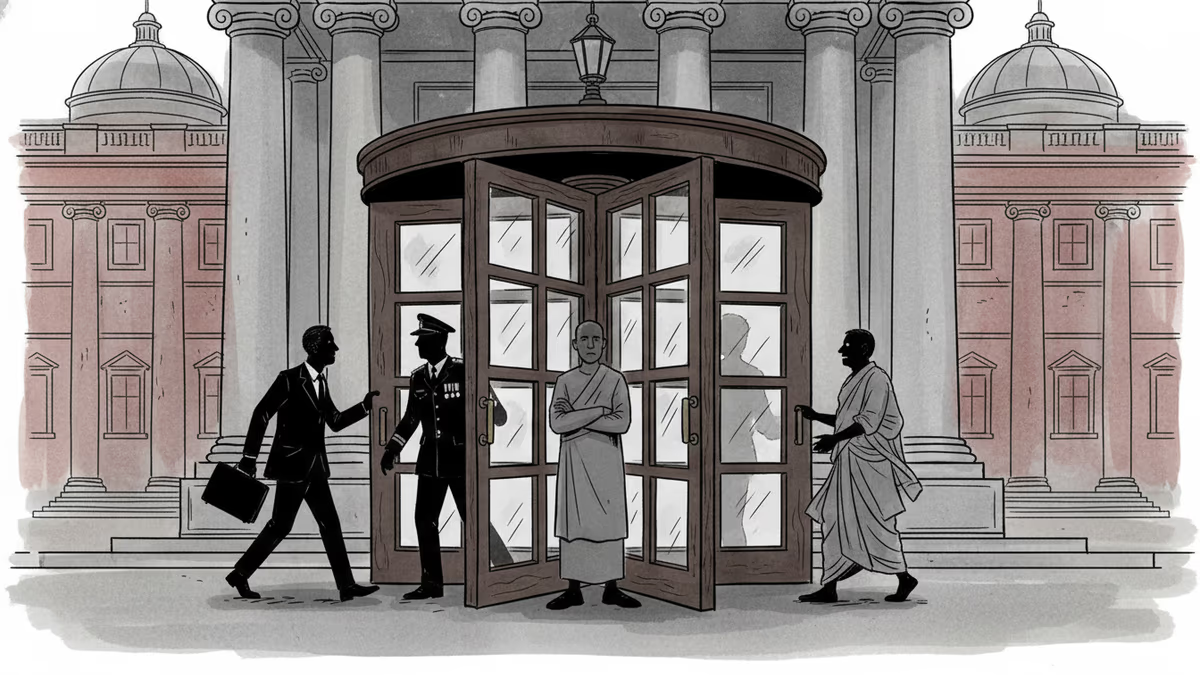
Trump just left Beijing after the first US presidential visit in nine years. Putin arrives Wednesday. Pakistan's PM follows. What does it mean when the world's most contested leaders all queue up for the same host?
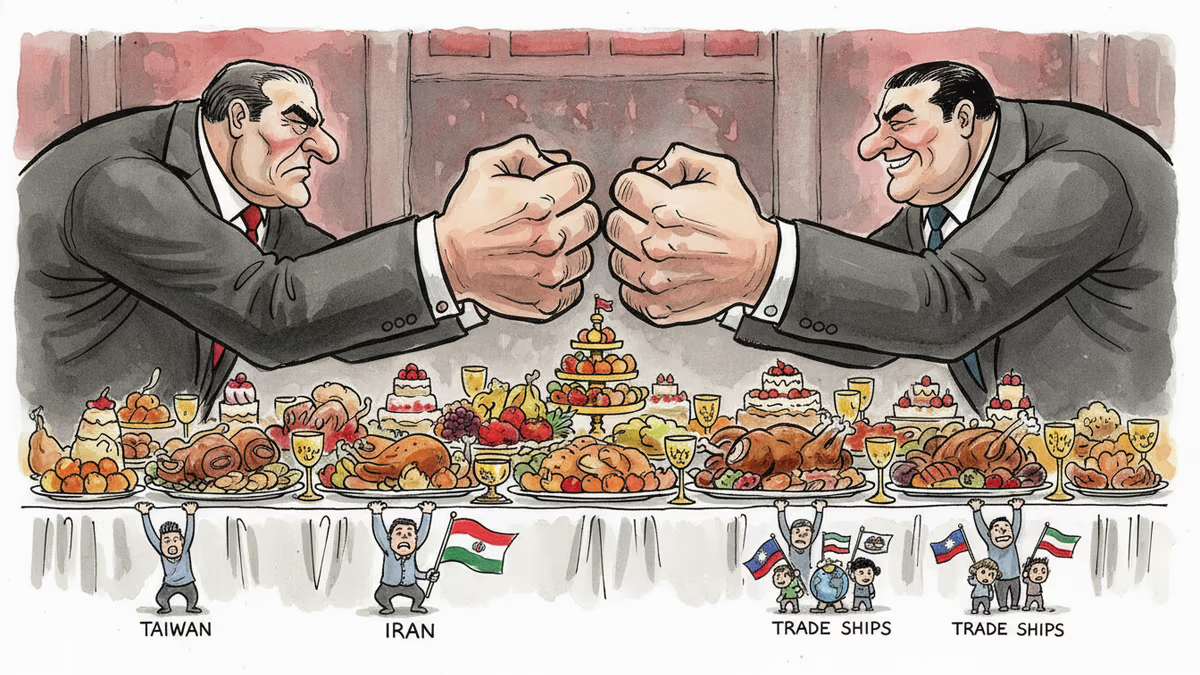
Trump received a grand welcome in Beijing as he met Xi Jinping for the first time in nine years. Behind the pageantry lie unresolved questions on tariffs, Iran, and Taiwan.
Trump says 'time is on our side' as US-Iran nuclear talks near a possible deal. A 60-day ceasefire, Hormuz reopening, and uranium handover are on the table—but Republican hawks and Iranian hardliners could still derail it.
Trump and Putin both traveled to Beijing in May 2026 to meet Xi Jinping. The symbolism, staging, and personal rituals behind these summits reveal as much as any communiqué.
Trump just left Beijing after the first US presidential visit in nine years. Putin arrives Wednesday. Pakistan's PM follows. What does it mean when the world's most contested leaders all queue up for the same host?
Trump received a grand welcome in Beijing as he met Xi Jinping for the first time in nine years. Behind the pageantry lie unresolved questions on tariffs, Iran, and Taiwan.
Thoughts
Share your thoughts on this article
Sign in to join the conversation