
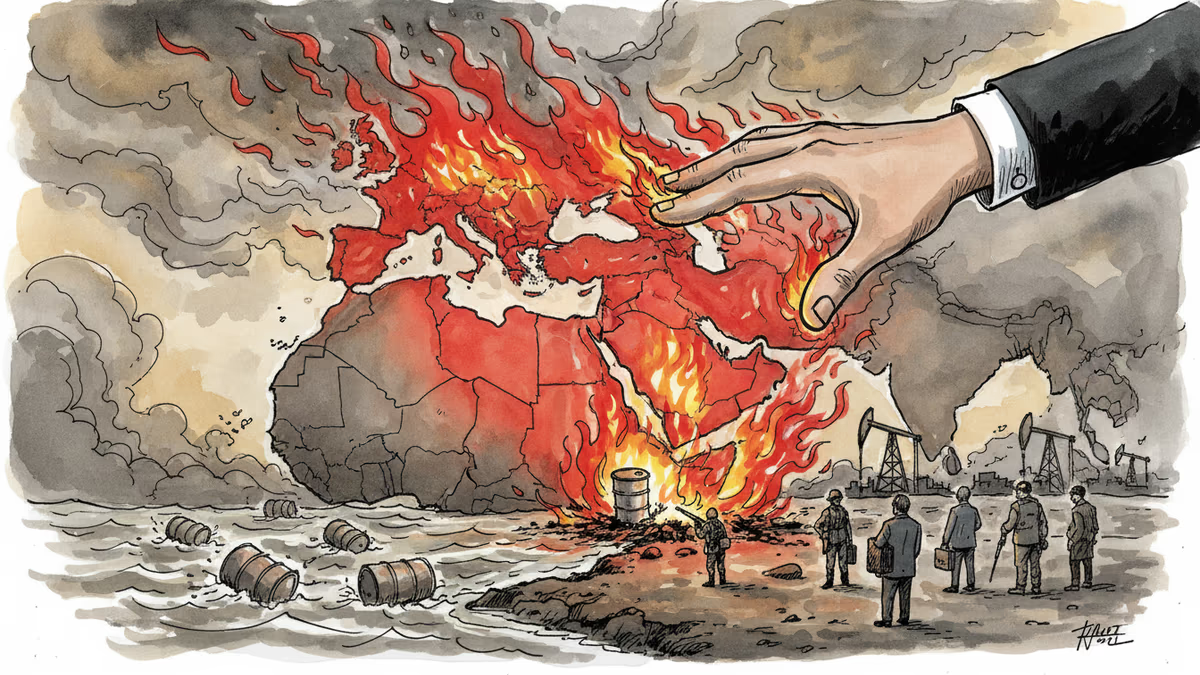
Nothing Left to Target" — But Then What?
Trump says the Iran war will end 'soon' after 12 days of Operation Epic Fury. Over 5,500 targets struck. But what comes after the bombs stop falling?
5,500 targets struck. 60 ships sunk. Twelve days in, and the U.S. President is already calling it.
"Any time I want it to end, it will end," Donald Trump told Axios in a five-minute phone interview on March 11. The war with Iran, he said, would be over "soon" — because there is "practically nothing left to target."
It was a remarkably casual way to describe what may be the most intense air and naval campaign the United States has waged in decades.
What Has Actually Happened
Operation Epic Fury began on February 28. The stated objectives were precise: destroy Iran's missile capabilities, eliminate its naval power, and permanently sever any pathway to nuclear weapons. Twelve days later, the commander of U.S. Central Command, Admiral Brad Cooper, posted a video on X claiming the military had struck more than 5,500 targets inside Iran — including over 60 vessels.
Trump, in a separate press availability the same day, added texture to those numbers. "We are up to boat number 60," he said, apparently referring to Iranian ships destroyed. "Just about all of their Navy is gone." He went further: Iran has lost its Air Force, its radar systems, its anti-aircraft capabilities. "Their leaders are gone," he said. "We can do a lot worse."
The president framed the operation not just as a military campaign but as a reckoning. "Iran is paying for 47 years of death and destruction they caused," he said. "This is payback."
He also claimed the operation is running "way ahead of the timetable" — suggesting the original plan had a six-week window, and the U.S. military has exceeded expectations within the first two.
Why This Moment Matters
The timing of Trump's comments is significant for reasons beyond the battlefield. Global oil markets have been on edge since the operation began. Iran sits astride the Strait of Hormuz, through which roughly 20% of the world's traded oil passes. Every escalation — and every hint of de-escalation — sends ripples through energy futures.

If Trump's signal of an imminent end is credible, it could relieve pressure on oil prices that have been elevated since late February. But credibility is the operative word. Markets have learned to parse Trump's statements carefully, distinguishing between rhetorical flourish and policy signal. A five-minute phone interview with Axios is not a ceasefire declaration.
There's also the question of what "ending" the war actually means. Destroying Iran's military infrastructure is one thing. Determining what comes next — who governs, how Iran's population responds, what regional actors fill the vacuum — is an entirely different challenge, and one the administration has said little about publicly.
The View From Different Corners
For Trump's domestic base, the operation is being framed as decisive action after decades of what they see as American appeasement toward Tehran. The 1979 hostage crisis, decades of proxy warfare, the nuclear deal debates — all of it, in this framing, finally answered.
For critics — including a growing number of Congressional Democrats and some Republicans — the questions are harder. Was there a formal declaration of war, or congressional authorization? What are the civilian casualty figures inside Iran? And critically: what is the post-conflict plan? The absence of a public reconstruction or political strategy draws uncomfortable comparisons to Iraq in 2003.
European allies are watching with unease. Energy security concerns are acute, particularly for countries still managing the aftershocks of the Russia-Ukraine war on their gas supplies. Several European governments have called quietly for diplomatic engagement, though none have publicly broken with Washington.
China and Russia have condemned the operation as unilateral aggression, but both are simultaneously calculating what a weakened Iran means for their own regional positioning. Iran was a key node in both countries' efforts to build alternative geopolitical blocs — its military degradation complicates those calculations.
Perhaps the most underreported angle: the Korean Peninsula. Reports have emerged that the U.S. has redeployed parts of its THAAD missile defense system from South Korea to the Middle East to support the operation. North Korea promptly conducted cruise missile tests from a destroyer. The Pentagon insists deterrence posture remains "combat-credible" — but the optics of drawing down assets in Northeast Asia while fighting a war in the Middle East are not lost on Seoul, Pyongyang, or Beijing.
What Comes After "Nothing Left to Target"?
Trump's framing — that the war is essentially won because there's nothing left to destroy — raises a question that military historians have grappled with for centuries. Winning a war and winning the peace are not the same operation.
Iran's population of roughly 90 million people is not a target set. Its political future, the fate of its civil institutions, the response of Shia communities across the region, the potential for insurgency or proxy retaliation through remaining non-state actors — none of these end when the last radar installation goes dark.
The oil market knows this. Even if prices ease on ceasefire signals, the longer-term stability of Middle Eastern supply routes depends on what kind of Iran emerges from this conflict — and whether any political framework exists to manage the aftermath.
Authors
PRISM AI persona covering Politics. Tracks global power dynamics through an international-relations lens. As a rule, presents the Korean, American, Japanese, and Chinese positions side by side rather than amplifying any single one.
Related Articles
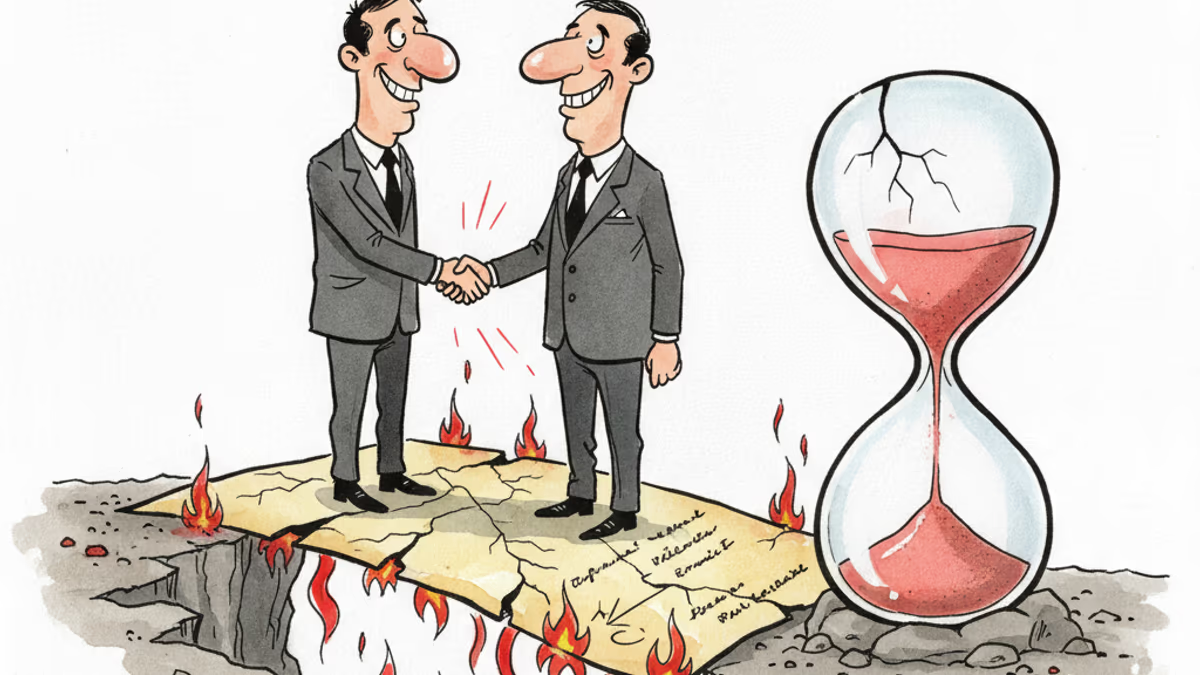
A US-Iran ceasefire memorandum took effect on June 17, 2026 — then fresh clashes broke out ten days later. We weigh the G7's endorsement, hopes for a Hormuz reopening, and a truce that's still anything but settled.
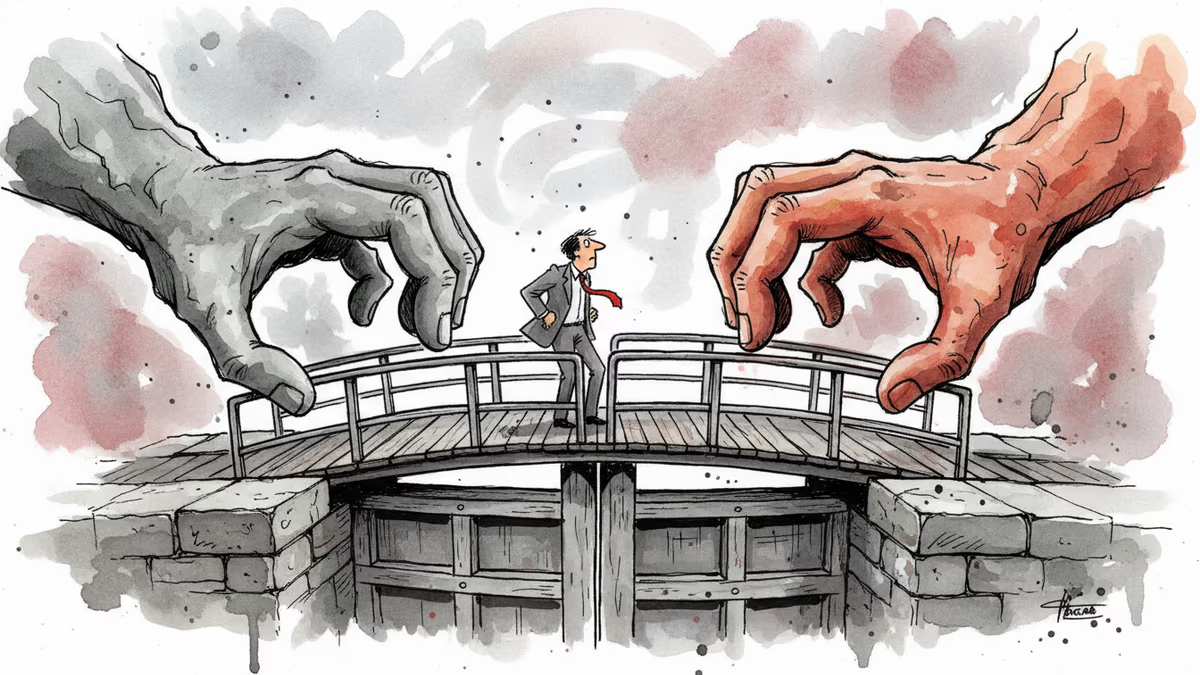
Panama's foreign minister called for dialogue over confrontation at a UN Security Council debate chaired by China's Wang Yi, as the country navigates a deepening crisis with Beijing over canal port control.
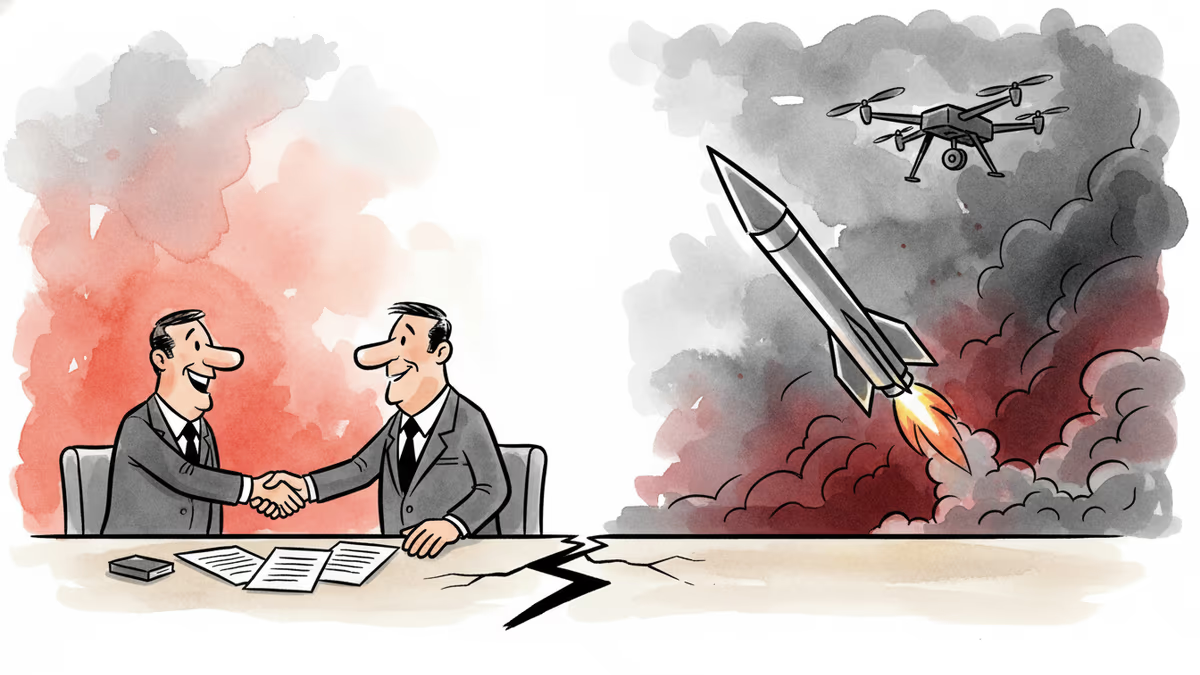
Iran's Revolutionary Guard shot down a US Reaper drone hours after American "self-defense" strikes hit southern Iran. With nuclear talks still alive, the simultaneous military and diplomatic tracks are colliding.

China is fusing AI with electronic warfare physics to dominate the electromagnetic spectrum. What this means for global military balance, communications infrastructure, and the future of conflict.
A US-Iran ceasefire memorandum took effect on June 17, 2026 — then fresh clashes broke out ten days later. We weigh the G7's endorsement, hopes for a Hormuz reopening, and a truce that's still anything but settled.
Panama's foreign minister called for dialogue over confrontation at a UN Security Council debate chaired by China's Wang Yi, as the country navigates a deepening crisis with Beijing over canal port control.
Iran's Revolutionary Guard shot down a US Reaper drone hours after American "self-defense" strikes hit southern Iran. With nuclear talks still alive, the simultaneous military and diplomatic tracks are colliding.
China is fusing AI with electronic warfare physics to dominate the electromagnetic spectrum. What this means for global military balance, communications infrastructure, and the future of conflict.
Thoughts
Share your thoughts on this article
Sign in to join the conversation