
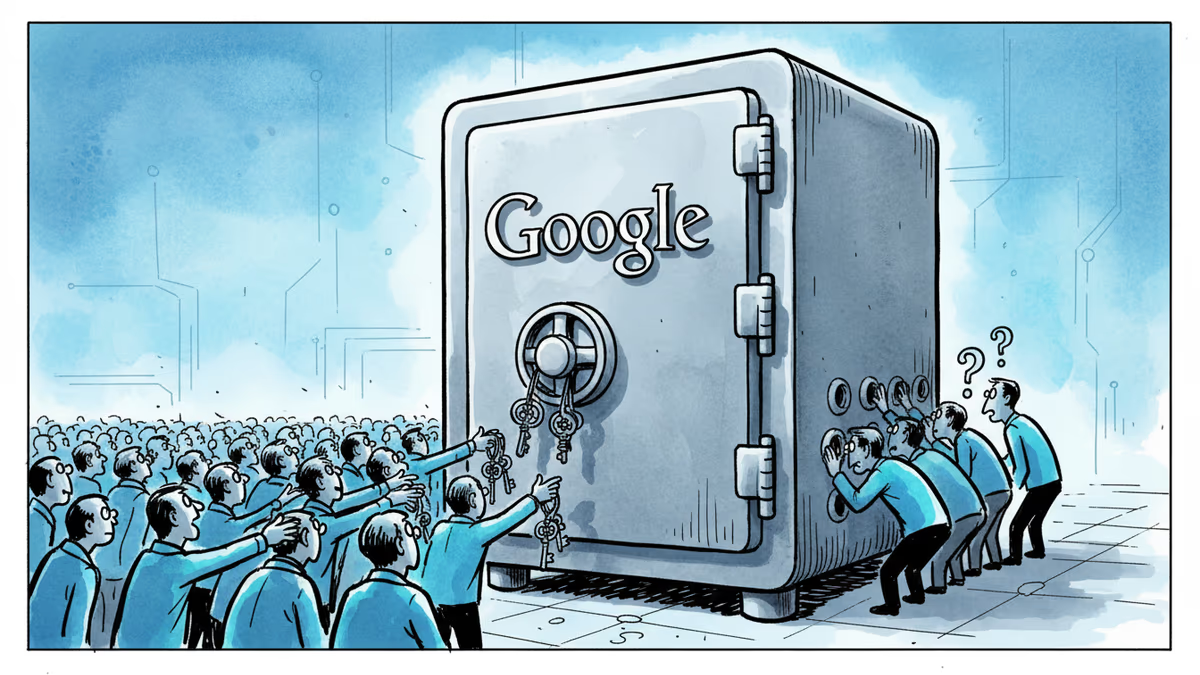
To Protect Your Privacy, Google Needs to Know Your Secrets First
Google upgraded its privacy tools to detect more personal information, but there's a catch - you must share your sensitive data with Google first to get protected from others online.
The Privacy Paradox: Trust Us to Protect You From Us
Google just upgraded its "Results About You" tool with a peculiar proposition: to protect your personal information from the internet, you first need to give that same information to Google. The enhanced tool can now detect and remove passport numbers, driver's license details, and Social Security numbers from web pages. There's just one small catch—Google needs to know these numbers first.
The process seems straightforward enough. Navigate to the ID numbers section in Results About You settings, input your sensitive details, and Google's algorithms will scour the web to find and request removal of matching information. For driver's licenses, they want the full number. For passports and SSNs, just the last four digits will suffice, Google claims.
When the Guardian Becomes the Gatekeeper
This creates an interesting trust equation. We're essentially asking the world's largest data collector to be our privacy guardian. Google promises to use this information "solely for detection and removal purposes," but that's still a significant leap of faith for privacy-conscious users.

Consumer advocacy groups have mixed reactions. The Electronic Frontier Foundation acknowledges the practical utility while questioning the concentration of sensitive data in a single corporate entity. Meanwhile, cybersecurity experts argue that proactive removal of already-exposed information represents a pragmatic approach to digital hygiene.
The tool's effectiveness depends entirely on Google's goodwill and technical competence. There's no independent oversight, no regulatory framework, and no guarantee that this data won't eventually serve other purposes within Google's vast ecosystem.
The NCEI Tool Gets Faster, But Questions Remain
Google also streamlined its non-consensual explicit imagery (NCEI) removal tool, making the reporting process faster and more efficient. This addresses a genuine crisis—digital intimate abuse affects millions, predominantly women, and removal tools can provide crucial relief.
Yet this improvement highlights another uncomfortable reality: victims of digital abuse increasingly depend on the discretion of tech platforms rather than robust legal frameworks. The speed of Google's response often matters more than law enforcement, creating an unofficial judicial system run by corporate algorithms.
Authors
Related Articles
In a post-Google I/O interview, Sundar Pichai acknowledged flawed search results, real AI anxiety, and an AGI timeline that makes the label irrelevant. Here's what he said — and what it means.

The FTC fined Cox Media and two ad firms $930,000 — not for actually eavesdropping on users, but for falsely claiming they could. The case raises uncomfortable questions about surveillance capitalism.
Google is building AI agents that search the web proactively, without user prompting. That's not just a product update — it's a fundamental shift in who controls the information you receive.
A Utah woman was sentenced to life in prison partly because of her Google searches and deleted texts. The Kouri Richins case reveals how digital footprints have become the courtroom's most reliable witness.
In a post-Google I/O interview, Sundar Pichai acknowledged flawed search results, real AI anxiety, and an AGI timeline that makes the label irrelevant. Here's what he said — and what it means.
The FTC fined Cox Media and two ad firms $930,000 — not for actually eavesdropping on users, but for falsely claiming they could. The case raises uncomfortable questions about surveillance capitalism.
Google is building AI agents that search the web proactively, without user prompting. That's not just a product update — it's a fundamental shift in who controls the information you receive.
A Utah woman was sentenced to life in prison partly because of her Google searches and deleted texts. The Kouri Richins case reveals how digital footprints have become the courtroom's most reliable witness.
Thoughts
Share your thoughts on this article
Sign in to join the conversation