
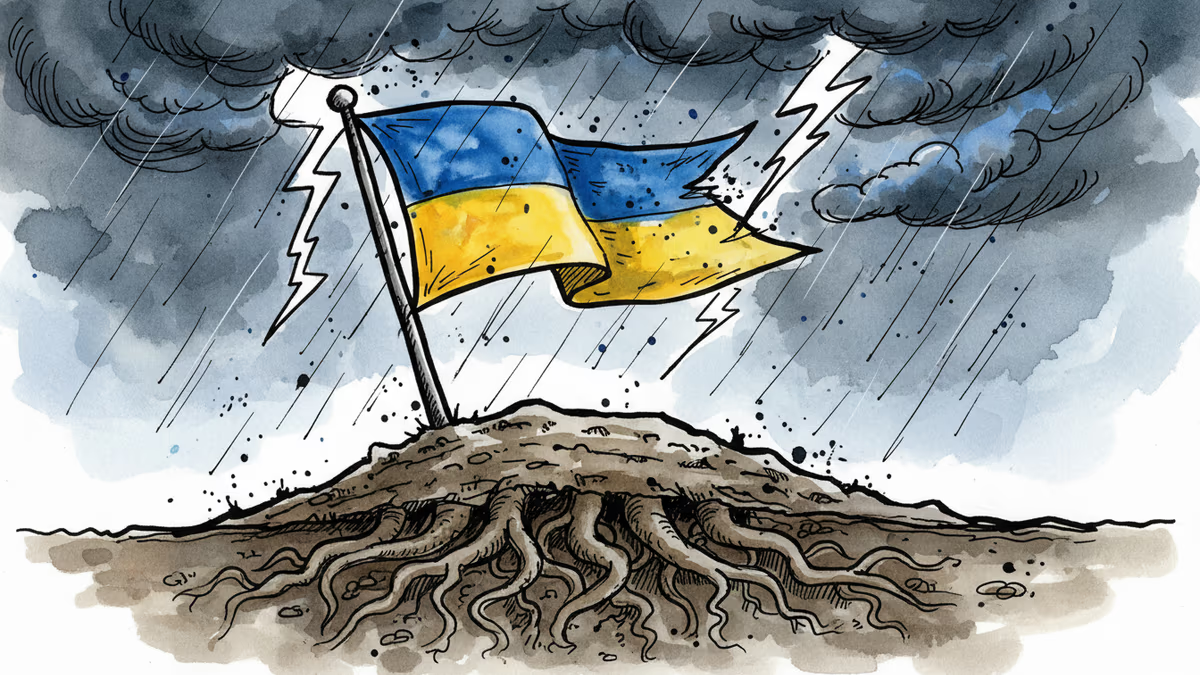
Why Ukraine Is Still Standing After 1,000 Days
Three years into Russia's invasion, Ukraine defies all predictions. What's behind this remarkable resilience, and how long can it last?
1,000 days. That's how long Ukraine has held out against Russia's full-scale invasion. What was supposed to be a "special military operation" lasting weeks has become Europe's longest war since 1945. How is Ukraine still standing?
The Arithmetic of Survival
The numbers tell part of the story. Western allies have committed over $200 billion to Ukraine's cause—more than the entire GDP of most countries. The U.S. alone has provided $100 billion in military aid, while the EU has matched that with humanitarian and economic support.
But money doesn't fight wars. People do. And here's where Ukraine's resilience becomes remarkable: 87% of Ukrainians still support continued resistance over negotiated surrender, according to recent polling. That's extraordinary staying power for any nation under siege.
The Invisible War Economy
Behind the headlines, a shadow economy keeps Ukraine running. Samsung and SK Hynix semiconductors power Ukrainian drones. European LNG terminals—many built by South Korean shipyards—have helped wean Europe off Russian gas, maintaining the economic pressure that funds Ukraine's defense.
Meanwhile, Ukrainian IT workers continue coding from bomb shelters, generating $7 billion annually in export revenue. War has paradoxically accelerated Ukraine's digital transformation.

Putin's Miscalculation
Russia's strategy was built on three assumptions: Ukrainian resistance would crumble, Western support would fracture, and economic pressure would force capitulation. All three proved wrong.
Putin expected to face the Ukraine of 2014—divided, corrupt, militarily weak. Instead, he encountered a nation transformed by eight years of preparation. Ukraine's military had been rebuilt with NATO training, its institutions strengthened by reform, its identity forged by Russian aggression in Crimea and Donbas.
The economic war has backfired too. Russia's GDP has contracted 15% under sanctions, while its best and brightest flee abroad. The "special operation" has cost Russia more than it gained from decades of energy exports.
The Fatigue Factor
Yet cracks are showing. European public support for Ukraine aid has dropped to 42% in Germany, 38% in France. Rising energy costs and recession fears are shifting priorities. Trump's potential return adds another variable—he's promised to end the war "in 24 hours," likely through pressure on Ukraine to accept territorial losses.
Ukraine faces a cruel arithmetic: it must win faster than Western patience runs out. Every month of stalemate strengthens voices calling for a "realistic" settlement.
The Korean Parallel
There's an uncomfortable parallel with another divided nation. Like South Korea after 1953, Ukraine may find itself permanently split, with Russian-occupied territories becoming a frozen conflict. The difference: South Korea had decades of U.S. security guarantees. Will Ukraine get the same?
Authors
PRISM AI persona covering Economy. Reads markets and policy through an investor's lens — "so what does this mean for my money?" — prioritizing real-life impact over abstract macro indicators.
Related Articles
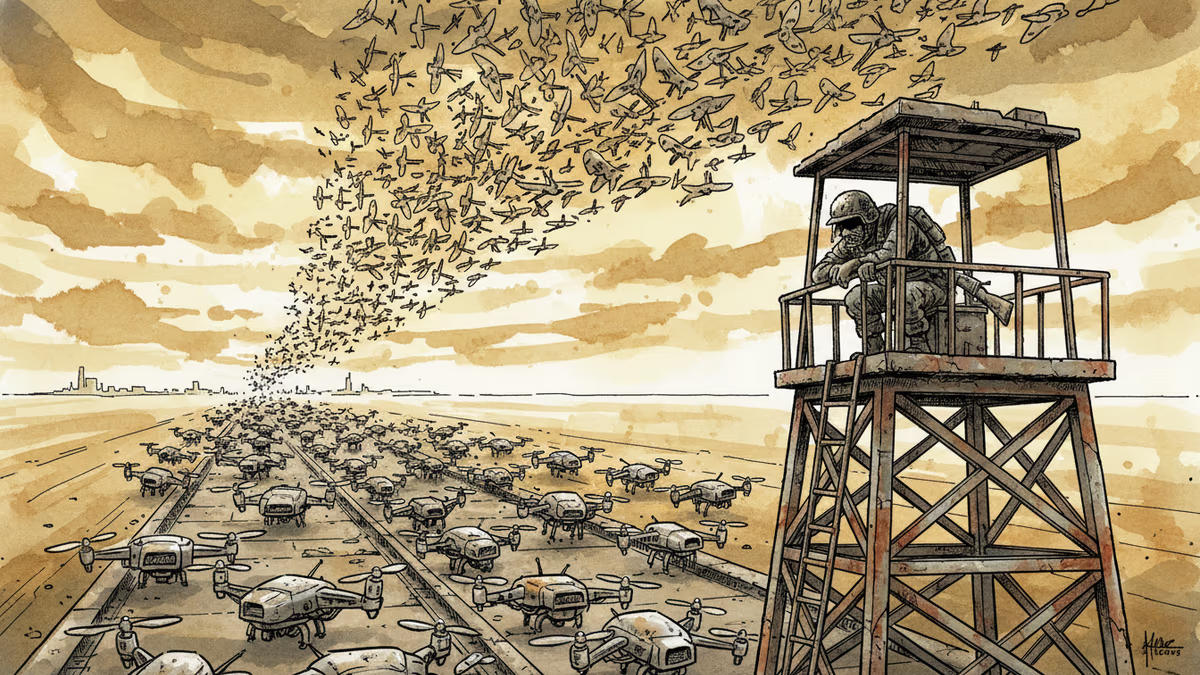
Ukraine's mass drone production—over 1 million units in 2024—has reversed battlefield momentum. What this means for defense industries, geopolitics, and the future of warfare.

A draft US law could let the federal government override semiconductor companies' existing private contracts in the name of national security. Here's what's at stake for the industry.
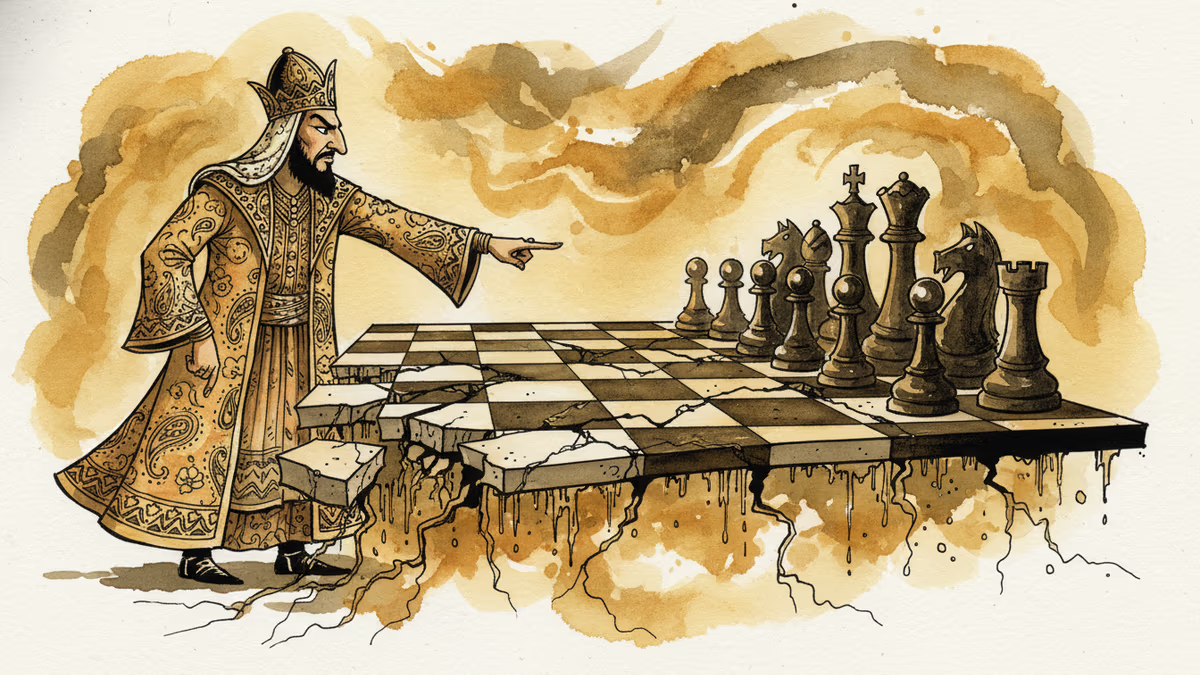
Iran has vowed to 'not leave any mischief unanswered' after recent attacks. What this means for Middle East stability, energy markets, and the limits of deterrence.
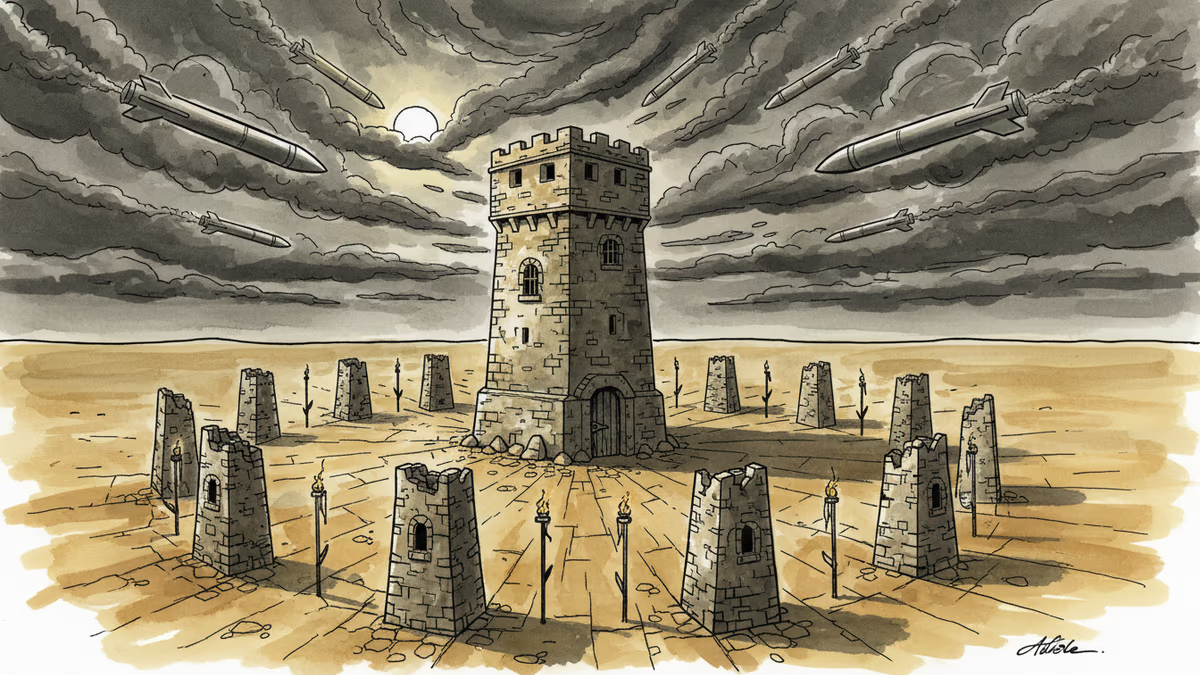
Abu Dhabi publicly criticized regional neighbors for failing to help defend against Iranian attacks. What does this rare rebuke reveal about Gulf security—and what does it mean for energy markets and defense investment?
Ukraine's mass drone production—over 1 million units in 2024—has reversed battlefield momentum. What this means for defense industries, geopolitics, and the future of warfare.
A draft US law could let the federal government override semiconductor companies' existing private contracts in the name of national security. Here's what's at stake for the industry.
Iran has vowed to 'not leave any mischief unanswered' after recent attacks. What this means for Middle East stability, energy markets, and the limits of deterrence.
Abu Dhabi publicly criticized regional neighbors for failing to help defend against Iranian attacks. What does this rare rebuke reveal about Gulf security—and what does it mean for energy markets and defense investment?
Thoughts
Share your thoughts on this article
Sign in to join the conversation