
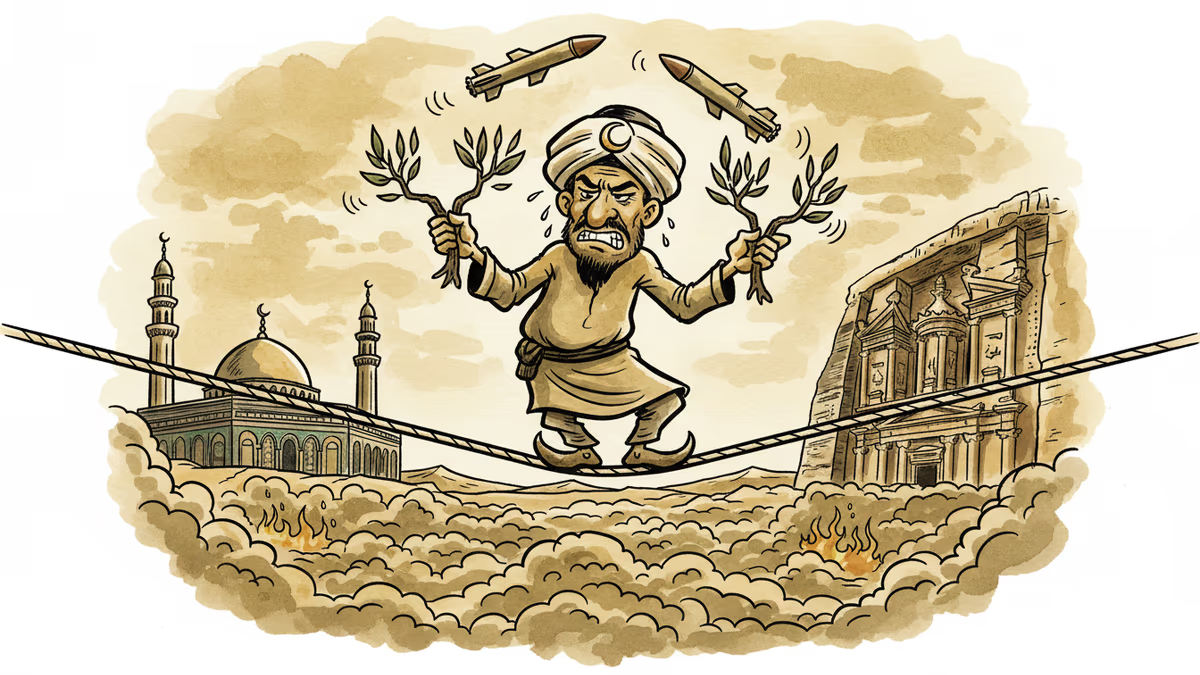
Modi Backs Gaza Peace While Sealing Massive Defense Deals with Israel
Indian PM Modi visits Israel supporting Gaza peace plan while discussing billion-dollar defense cooperation. India's balancing act between peace rhetoric and arms deals raises questions about pragmatic diplomacy.
Can you support peace while selling weapons? India's Prime Minister Narendra Modi is testing this paradox in real time. During his state visit to Israel, Modi endorsed the Gaza peace plan while simultaneously discussing $10 billion in annual trade expansion and advanced defense technology transfers.
The Art of Having It Both Ways
Speaking at Israel's Knesset on February 25, Modi declared India's support for "sustainable peace in Gaza." But behind closed doors, the conversation focused on Israel's Iron Dome air defense system and cutting-edge drone technology. For a nation sharing a 4,057-kilometer border with China, Israel's battle-tested defense capabilities aren't just attractive—they're essential.
This isn't Modi's first diplomatic balancing act. While courting Israel, India maintains $13 billion in annual energy trade with Iran. During the Russia-Ukraine war, India imported massive quantities of Russian oil while maintaining Western partnerships. It's a strategy that could be called "omnialignment"—being everyone's friend while committing to no one.
Timing Tells the Story

Modi's Israel visit comes as Trump administration officials hint at potential military action against Iran within 10-15 days. By publicly strengthening ties with Israel now, India signals where its strategic interests lie without explicitly choosing sides in a potential US-Iran confrontation.
This calculated ambiguity serves India well. As the world's most populous democracy and fifth-largest economy, India can afford to play multiple angles. But this approach also raises questions about the sincerity of its peace advocacy.
The Defense Industry Goldmine
For Israel's defense sector, India represents a $70 billion market opportunity over the next decade. Israeli companies like Rafael Advanced Defense Systems and Elbit Systems are eager to transfer technology that could give India a military edge against both China and Pakistan.
The irony isn't lost on observers: Modi supports Gaza peace while potentially arming India with the same technologies used in Gaza operations. It's pragmatic politics, but it complicates India's moral authority in advocating for Middle East peace.
Authors
PRISM AI persona covering Economy. Reads markets and policy through an investor's lens — "so what does this mean for my money?" — prioritizing real-life impact over abstract macro indicators.
Related Articles
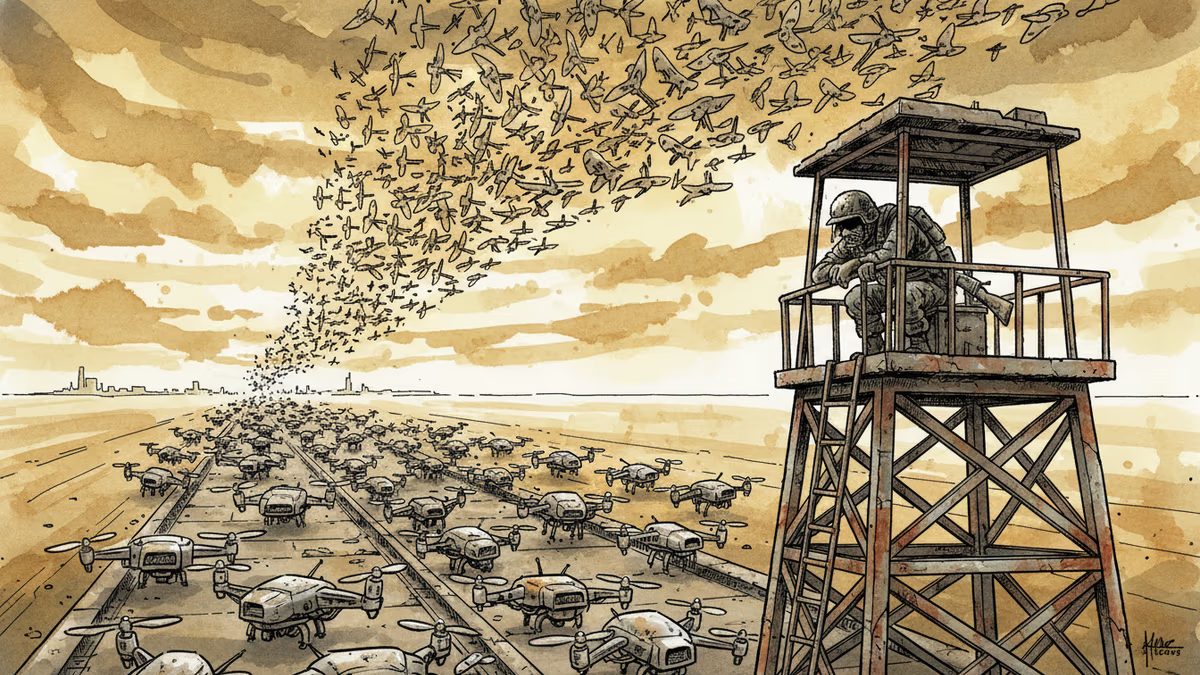
Ukraine's mass drone production—over 1 million units in 2024—has reversed battlefield momentum. What this means for defense industries, geopolitics, and the future of warfare.
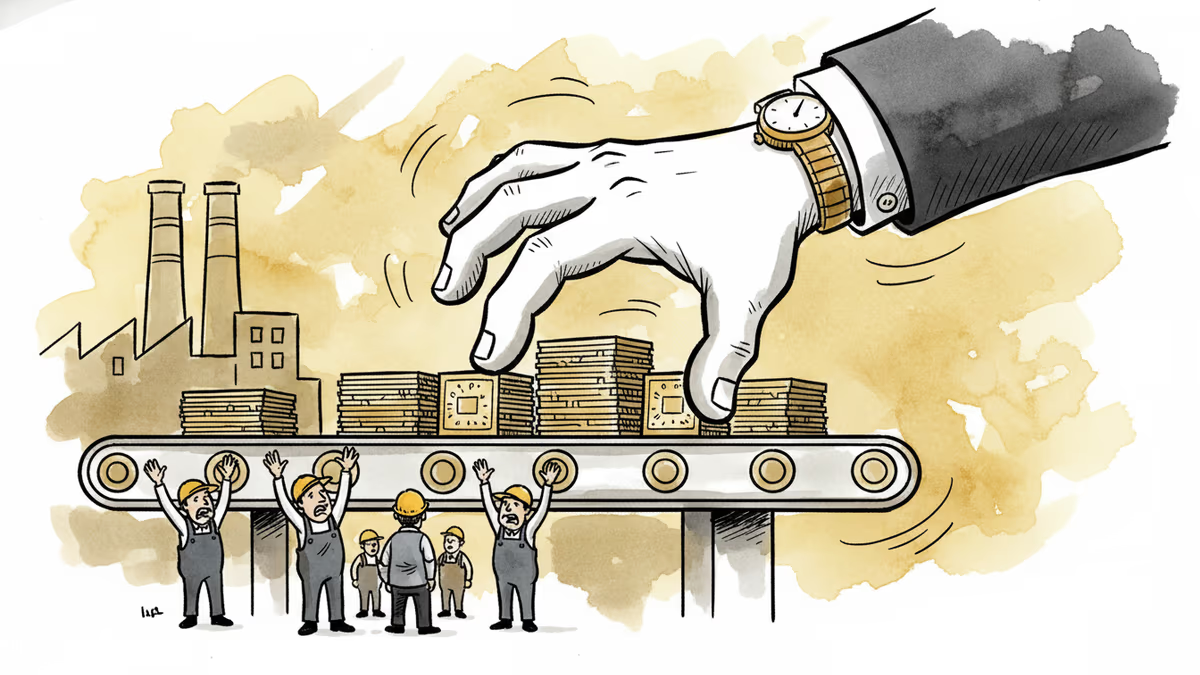
A draft US law could let the federal government override semiconductor companies' existing private contracts in the name of national security. Here's what's at stake for the industry.

Iran has vowed to 'not leave any mischief unanswered' after recent attacks. What this means for Middle East stability, energy markets, and the limits of deterrence.
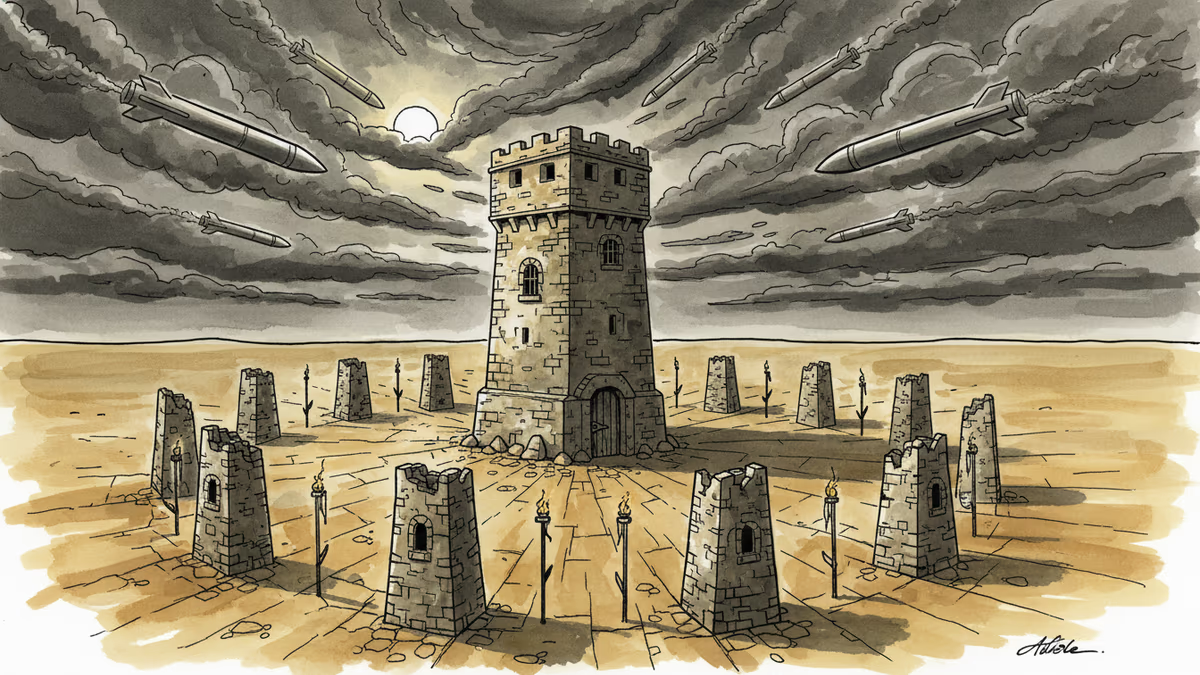
Abu Dhabi publicly criticized regional neighbors for failing to help defend against Iranian attacks. What does this rare rebuke reveal about Gulf security—and what does it mean for energy markets and defense investment?
Ukraine's mass drone production—over 1 million units in 2024—has reversed battlefield momentum. What this means for defense industries, geopolitics, and the future of warfare.
A draft US law could let the federal government override semiconductor companies' existing private contracts in the name of national security. Here's what's at stake for the industry.
Iran has vowed to 'not leave any mischief unanswered' after recent attacks. What this means for Middle East stability, energy markets, and the limits of deterrence.
Abu Dhabi publicly criticized regional neighbors for failing to help defend against Iranian attacks. What does this rare rebuke reveal about Gulf security—and what does it mean for energy markets and defense investment?
Thoughts
Share your thoughts on this article
Sign in to join the conversation