
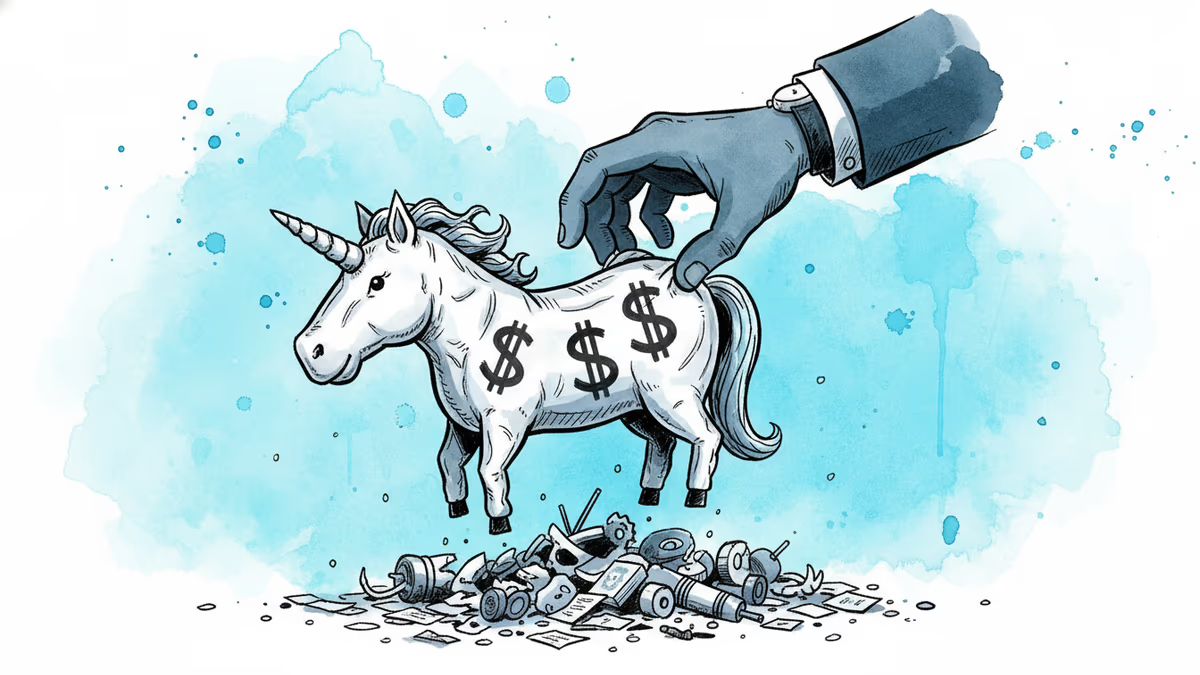
When a $12B Unicorn Sells for Scraps
Turkey's Getir, once valued at $12 billion, just sold to Uber for $435 million. The dramatic fall reveals harsh truths about pandemic-era startup valuations and expansion strategies.
The $11.6 Billion Question
How do you lose 96% of your value in five years? Ask Getir, Turkey's former darling startup that just agreed to sell to Uber for $435 million—a fraction of its $12 billion peak valuation in 2021.
The deal breaks down to $335 million upfront for Getir's food delivery business, plus $100 million for a 15% stake in its grocery and retail operations. Uber says it'll acquire the remaining stake over the coming years, essentially picking up the pieces of what was once Europe's most valuable delivery startup.
The Pandemic Mirage
Getir's story reads like a cautionary tale of pandemic-era excess. Founded in 2015, the company rode the lockdown wave to spectacular heights, raising $2.4 billion total while aggressively expanding across the U.S. and Europe through acquisitions and organic growth.
But when lockdowns ended, reality hit hard. Consumer demand for rapid delivery wavered, and Getir's international dreams turned into nightmares. The company shut down operations in the U.S., U.K., and Europe in 2024, laying off thousands and retreating to its Turkish home base.
The most telling detail? Court documents filed last year valued Getir's group assets at just $374 million—barely covering this acquisition price.
The Sovereign Fund's Exit Strategy

Behind the scenes, this deal represents more than just a startup's fall from grace. The sale was orchestrated by Getir's largest shareholder, UAE sovereign wealth fund Mubadala, which had been seeking an exit since last year.
The move sparked internal drama, with one co-founder filing suit against what he called an "illegal coup." A Dutch court ultimately rejected his appeals, clearing the way for Monday's announcement.
"This transaction reflects the strength of the business and the progress it has made, particularly over the last year," said Waleed Al Mokarrab Al Muhairi, Mubadala's deputy group CEO. The numbers suggest otherwise.
Uber's Strategic Consolidation
For Uber, this acquisition represents a calculated bet on Middle Eastern and Asian markets. The company reported that Getir's food delivery business alone generated over $1 billion in gross bookings in 2025, up 50% year-over-year.
The deal follows Uber's $700 million acquisition of Turkey's Trendyol Go last May, signaling a broader strategy to dominate delivery markets outside its traditional Western strongholds. With its own delivery business posting $4.89 billion in Q4 revenue (up 30% annually), Uber has the financial muscle to absorb distressed competitors.
The Valuation Reality Check
Getir's collapse illuminates the dangerous disconnect between pandemic-era valuations and sustainable business fundamentals. The company's peak $12 billion valuation assumed permanent behavioral shifts that proved temporary.
Investors poured money into rapid grocery delivery on the assumption that convenience-obsessed consumers would pay premium prices indefinitely. But as inflation rose and discretionary spending tightened, the unit economics never materialized at scale.
Authors
Related Articles
Lucra Sports CEO Dylan Robbins landed Cathie Wood's ARK Invest as a Series B lead without building AI. The story behind his unconventional fundraising playbook.

Indian venture capital has quietly displaced Silicon Valley in its own backyard. Only one American VC made India's top 10 investor list last year. Here's why that matters beyond India.

E-commerce fintech Parker filed for Chapter 7 bankruptcy on May 7, despite raising over $200M. The YC-backed startup's abrupt shutdown left small business customers scrambling—and exposed the fragility of vertical fintech models.

Factory just raised $150M at a $1.5B valuation to build AI coding agents for enterprises. In a market already crowded with Cursor, Claude Code, and Cognition, investors say there's still room. Here's why that bet might make sense — and why it might not.
Lucra Sports CEO Dylan Robbins landed Cathie Wood's ARK Invest as a Series B lead without building AI. The story behind his unconventional fundraising playbook.
Indian venture capital has quietly displaced Silicon Valley in its own backyard. Only one American VC made India's top 10 investor list last year. Here's why that matters beyond India.
E-commerce fintech Parker filed for Chapter 7 bankruptcy on May 7, despite raising over $200M. The YC-backed startup's abrupt shutdown left small business customers scrambling—and exposed the fragility of vertical fintech models.
Factory just raised $150M at a $1.5B valuation to build AI coding agents for enterprises. In a market already crowded with Cursor, Claude Code, and Cognition, investors say there's still room. Here's why that bet might make sense — and why it might not.
Thoughts
Share your thoughts on this article
Sign in to join the conversation