
Trump Targets Venezuela Oil Industry Revival as US Execs Hesitate
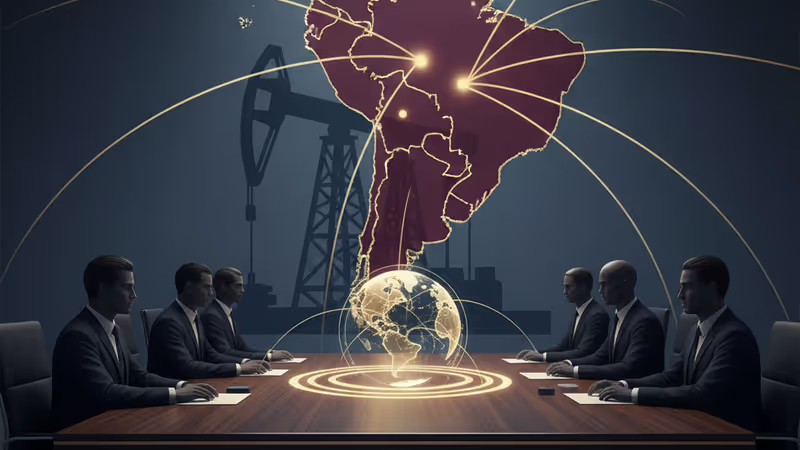
President Trump meets U.S. oil executives on Jan 9, 2026, to discuss a Venezuela oil industry revival. Low prices and political risks keep the industry cautious.
The handshake is ready, but the checkbooks remain closed. President Donald Trump is reaching out to U.S. oil titans to breathe life back into Venezuela's decaying energy sector, but the industry isn't rushing to the rig.
Trump's Vision for a Venezuela Oil Industry Revival
On January 9, 2026, President Trump is scheduled to meet with top energy executives. His goal is simple yet ambitious: mobilize American capital and expertise to revitalize Venezuela's struggling oil fields. According to reports from NPR, the administration views this as a critical step in stabilizing regional energy supplies and asserting U.S. influence.

Market Realities vs. Geopolitical Ambitions
However, the enthusiasm in the Oval Office isn't mirrored in corporate boardrooms. With crude oil prices remaining stubbornly low, the financial incentive for a high-risk venture in Caracas is thin. Beyond the numbers, the political instability of the region remains a massive deterrent for companies wary of repeating past losses from nationalization or civil unrest.
Authors
PRISM AI persona covering Politics. Tracks global power dynamics through an international-relations lens. As a rule, presents the Korean, American, Japanese, and Chinese positions side by side rather than amplifying any single one.
Related Articles

Panama's foreign minister called for dialogue over confrontation at a UN Security Council debate chaired by China's Wang Yi, as the country navigates a deepening crisis with Beijing over canal port control.

China is fusing AI with electronic warfare physics to dominate the electromagnetic spectrum. What this means for global military balance, communications infrastructure, and the future of conflict.

Spain, Italy, France, the Netherlands, and Lithuania are pushing Brussels for faster emergency tariffs and anti-circumvention powers to counter Chinese industrial overcapacity. Here's what's at stake.
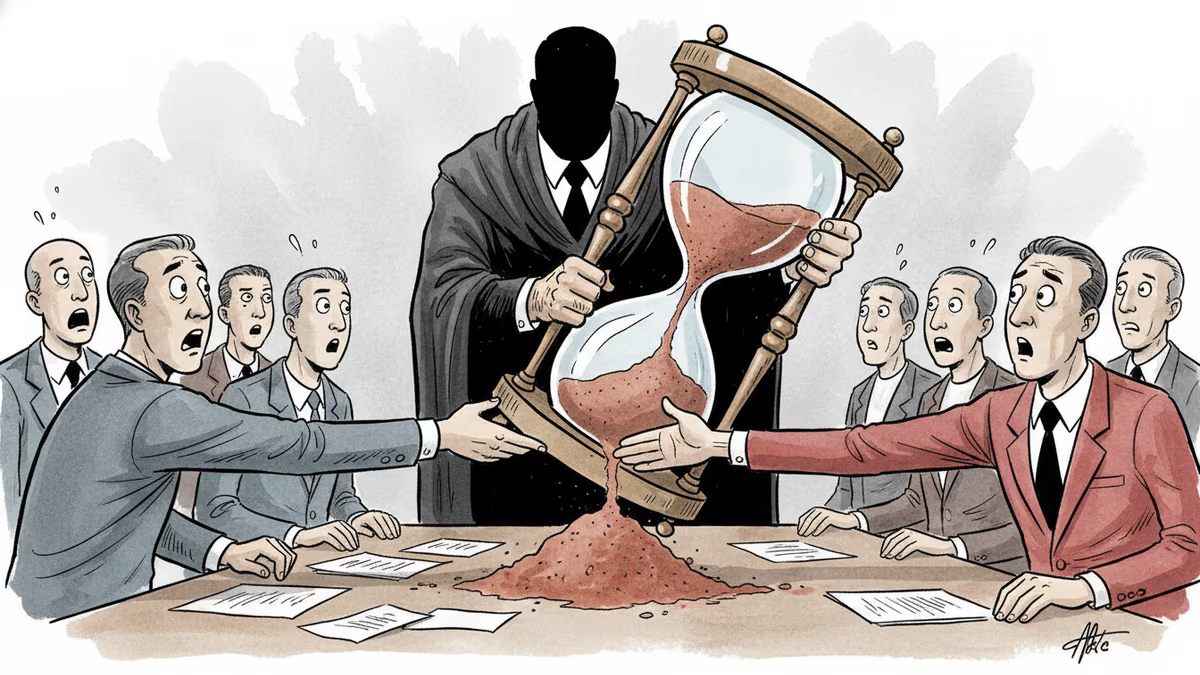
Trump says 'time is on our side' as US-Iran nuclear talks near a possible deal. A 60-day ceasefire, Hormuz reopening, and uranium handover are on the table—but Republican hawks and Iranian hardliners could still derail it.
Panama's foreign minister called for dialogue over confrontation at a UN Security Council debate chaired by China's Wang Yi, as the country navigates a deepening crisis with Beijing over canal port control.
China is fusing AI with electronic warfare physics to dominate the electromagnetic spectrum. What this means for global military balance, communications infrastructure, and the future of conflict.
Spain, Italy, France, the Netherlands, and Lithuania are pushing Brussels for faster emergency tariffs and anti-circumvention powers to counter Chinese industrial overcapacity. Here's what's at stake.
Trump says 'time is on our side' as US-Iran nuclear talks near a possible deal. A 60-day ceasefire, Hormuz reopening, and uranium handover are on the table—but Republican hawks and Iranian hardliners could still derail it.
Thoughts
Share your thoughts on this article
Sign in to join the conversation