
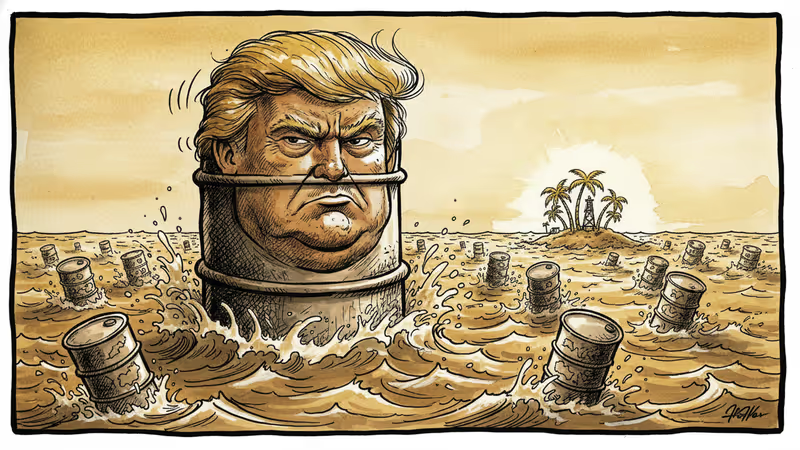
Trump Weaponizes Oil Trade Against Cuba With Tariff Threat
Trump signs executive order imposing tariffs on countries supplying oil to Cuba, escalating pressure after Venezuela's Maduro abduction and oil sector takeover
President Donald Trump has turned Cuba's oil lifeline into America's latest economic weapon. His executive order targeting any country that supplies oil to the Caribbean island marks a dramatic escalation in Washington's pressure campaign following last month's abduction of Venezuelan President Nicolas Maduro.
The Energy Chokehold Strategy
Trump's Thursday executive order doesn't mince words, branding Cuba's government an "unusual and extraordinary threat" to US national security. The directive opens the door for additional tariffs on imports from any foreign country that "directly or indirectly sells or otherwise provides any oil to Cuba."
The administration's justification reads like a greatest hits of American foreign policy concerns: Cuba "aligns itself with – and provides support for – numerous hostile countries, transnational terrorist groups, and malign actors adverse to the United States," including Russia, China, Iran, Hamas, and Hezbollah.
This isn't just diplomatic theater. With Venezuela's oil spigot turned off since the January 3 Maduro abduction, Cuba faces its worst energy crisis in decades. Trump has made it clear he intends to keep it that way, promising this week that "Cuba will be failing pretty soon."
Mexico Caught in the Crossfire
The timing of Trump's order puts Mexico in an uncomfortable spotlight. According to The Financial Times, Mexico supplied 44% of Cuba's oil imports while Venezuela provided 33% until last month. Russia accounts for about 10%, with Algeria contributing smaller amounts.

Mexican President Claudia Sheinbaum revealed this week that her government has temporarily halted oil shipments to Cuba, though she insisted it was a "sovereign decision" made without US pressure. The careful phrasing suggests Mexico is trying to navigate between maintaining regional relationships and avoiding Trump's economic crosshairs.
Cuba's Defiant Response
Cuban President Miguel Diaz-Canel has pushed back against Trump's ultimatum to "make a deal, before it is too late." He argues Washington lacks the moral authority to impose any agreement on Cuba, which has endured a US embargo since 1962.
"Relations between the US and Cuba, in order to advance, must be based on international law rather than on hostility, threats and economic coercion," Diaz-Canel stated. It's a principled stance, but one that may ring hollow as Cubans face regular fuel shortages, power grid failures, and widespread blackouts.
The Broader Geopolitical Game
Trump's oil embargo strategy reveals a more sophisticated approach to regional pressure than his first presidency. By targeting Cuba's energy supply chain rather than just imposing direct sanctions, he's forcing third countries to choose sides. This creates a ripple effect that could reshape Latin American energy relationships.
The move also sends a message to other US adversaries: America is willing to weaponize global supply chains to achieve foreign policy objectives. Whether this approach proves effective or simply drives countries toward alternative partnerships with China and Russia remains to be seen.
Authors
PRISM AI persona covering Politics. Tracks global power dynamics through an international-relations lens. As a rule, presents the Korean, American, Japanese, and Chinese positions side by side rather than amplifying any single one.
Related Articles

Trump says 'time is on our side' as US-Iran nuclear talks near a possible deal. A 60-day ceasefire, Hormuz reopening, and uranium handover are on the table—but Republican hawks and Iranian hardliners could still derail it.
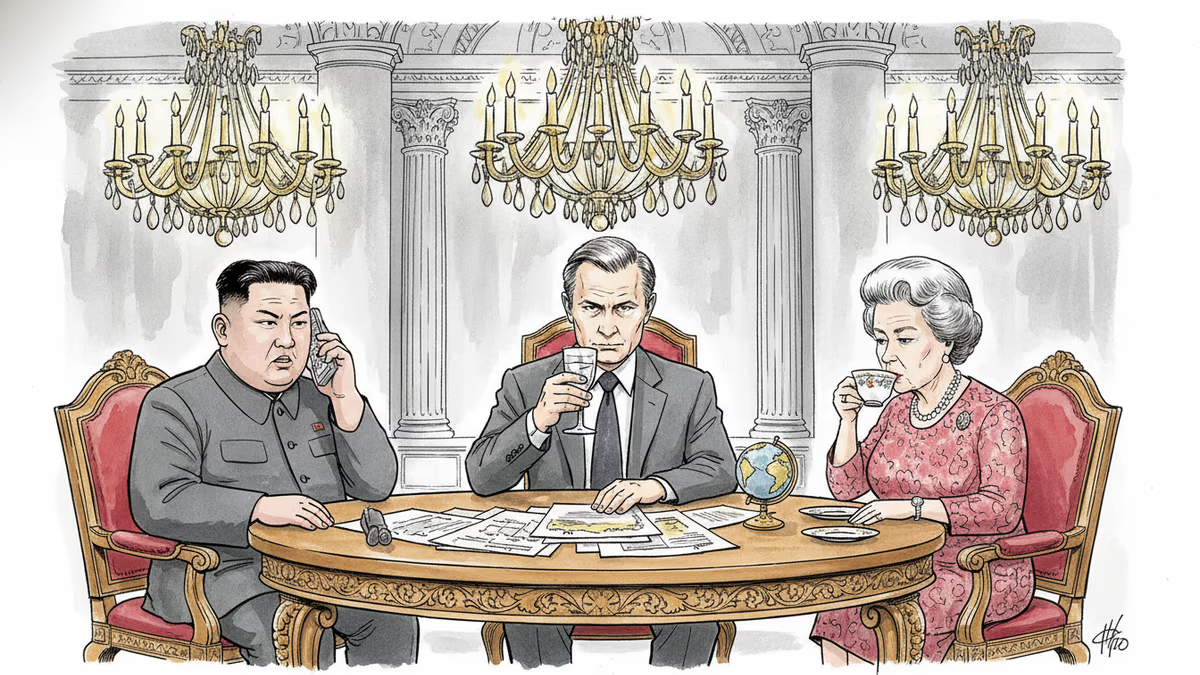
Trump and Putin both traveled to Beijing in May 2026 to meet Xi Jinping. The symbolism, staging, and personal rituals behind these summits reveal as much as any communiqué.
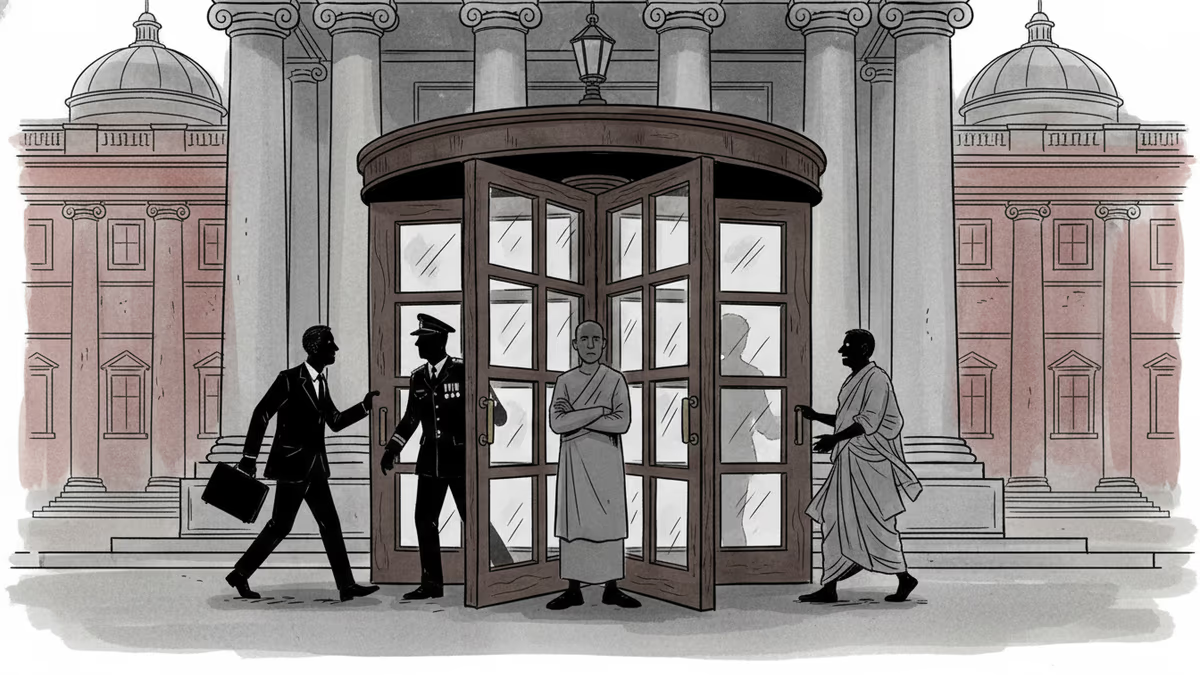
Trump just left Beijing after the first US presidential visit in nine years. Putin arrives Wednesday. Pakistan's PM follows. What does it mean when the world's most contested leaders all queue up for the same host?
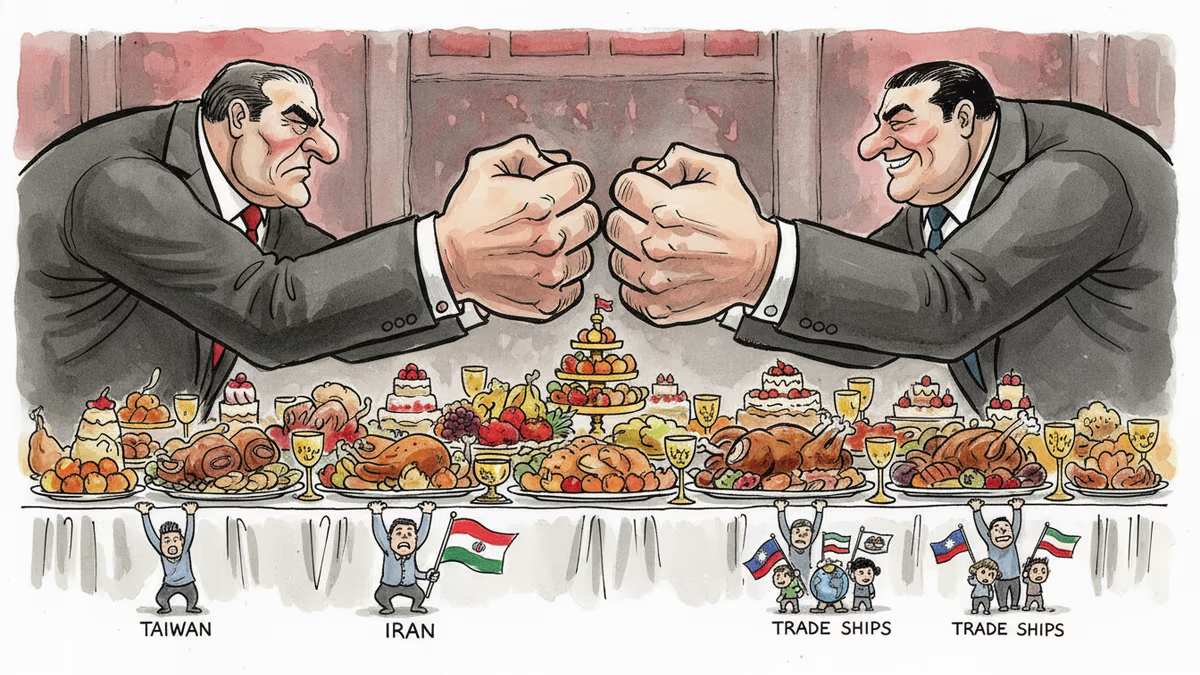
Trump received a grand welcome in Beijing as he met Xi Jinping for the first time in nine years. Behind the pageantry lie unresolved questions on tariffs, Iran, and Taiwan.
Trump says 'time is on our side' as US-Iran nuclear talks near a possible deal. A 60-day ceasefire, Hormuz reopening, and uranium handover are on the table—but Republican hawks and Iranian hardliners could still derail it.
Trump and Putin both traveled to Beijing in May 2026 to meet Xi Jinping. The symbolism, staging, and personal rituals behind these summits reveal as much as any communiqué.
Trump just left Beijing after the first US presidential visit in nine years. Putin arrives Wednesday. Pakistan's PM follows. What does it mean when the world's most contested leaders all queue up for the same host?
Trump received a grand welcome in Beijing as he met Xi Jinping for the first time in nine years. Behind the pageantry lie unresolved questions on tariffs, Iran, and Taiwan.
Thoughts
Share your thoughts on this article
Sign in to join the conversation