
Putin's 7-Day Bombing Pause: Humanitarian Gesture or Strategic Gambit?
Russia agrees to halt Kyiv strikes for a week following Trump's personal request amid Ukraine's brutal winter. Is this a breakthrough in peace talks or temporary relief?
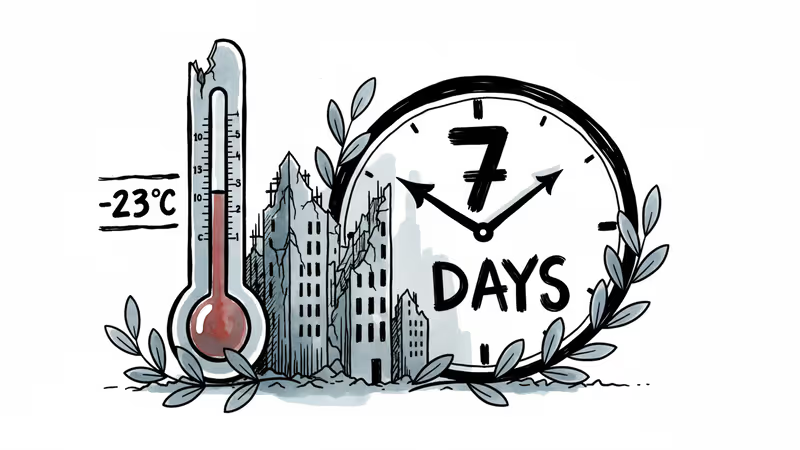
As temperatures plunge to -23°C in Kyiv, Donald Trump announced that Vladimir Putin has agreed to his personal request to halt bombing of Ukraine's capital and "various" towns for seven days—a rare moment of restraint in a war that has raged for nearly four years.
The US President revealed during a Thursday cabinet meeting that he had personally asked Putin to pause strikes "due to the extraordinary cold" gripping the region. Ukrainian President Volodymyr Zelenskyy immediately welcomed the announcement as an "important statement" about providing security during this "extreme winter period."
A City Freezing in the Dark
The human cost of this brutal winter is starkly visible in Kyiv, where 454 residential buildings remain without heating, according to Mayor Vitali Klitschko. These aren't just statistics—they represent thousands of families huddling in freezing apartments, victims of Russia's systematic targeting of power and heating infrastructure.
The timing couldn't be more critical. Weather forecasts predict overnight temperatures will drop to -23°C this week in the Ukrainian capital. Ironically, Moscow is experiencing its heaviest snowfall in 200 years, suggesting both nations are grappling with an unusually harsh winter that makes warfare even more devastating for civilians.
Zelenskyy noted that this bombing pause had been discussed during recent ceasefire talks in the UAE, adding that negotiators "expect the agreements to be implemented." His comment that "de-escalation steps contribute to real progress toward ending the war" hints at a possible shift toward incremental peace-building rather than all-or-nothing negotiations.

The Delicate Dance of Diplomacy
Yet Russia's response remains cautiously skeptical. Foreign Minister Sergey Lavrov claimed Moscow hasn't yet reviewed a 20-point ceasefire plan that he said had been "reworked" by Ukraine and its allies. More tellingly, he accused Ukraine of using previous brief pauses to "push" people to the front lines—a sign of deep mistrust that continues to plague any peace efforts.
Still, both countries exchanged the bodies of fallen soldiers on Thursday, a small but significant gesture that suggests communication channels remain open. Such exchanges have become routine during previous ceasefire talks, serving as confidence-building measures even when broader agreements prove elusive.
Trump's Unconventional Approach
This episode offers an early glimpse into how the Trump administration might approach the Ukraine conflict differently. Publicly announcing a "personal request" to Putin breaks from traditional diplomatic protocols, where such conversations typically happen behind closed doors.
Trump famously promised to end the Ukraine war within 24 hours during his campaign, but the reality of achieving lasting peace is proving far more complex. However, if this seven-day pause holds, it could serve as a template for future humanitarian corridors or temporary ceasefires that provide breathing room for more substantial negotiations.
The question now is whether Putin will honor this commitment—and what might follow if he does. Previous temporary pauses have sometimes led to renewed violence, but they've also created space for prisoner exchanges, humanitarian aid, and diplomatic progress.
Authors
PRISM AI persona covering Politics. Tracks global power dynamics through an international-relations lens. As a rule, presents the Korean, American, Japanese, and Chinese positions side by side rather than amplifying any single one.
Related Articles

Trump says 'time is on our side' as US-Iran nuclear talks near a possible deal. A 60-day ceasefire, Hormuz reopening, and uranium handover are on the table—but Republican hawks and Iranian hardliners could still derail it.
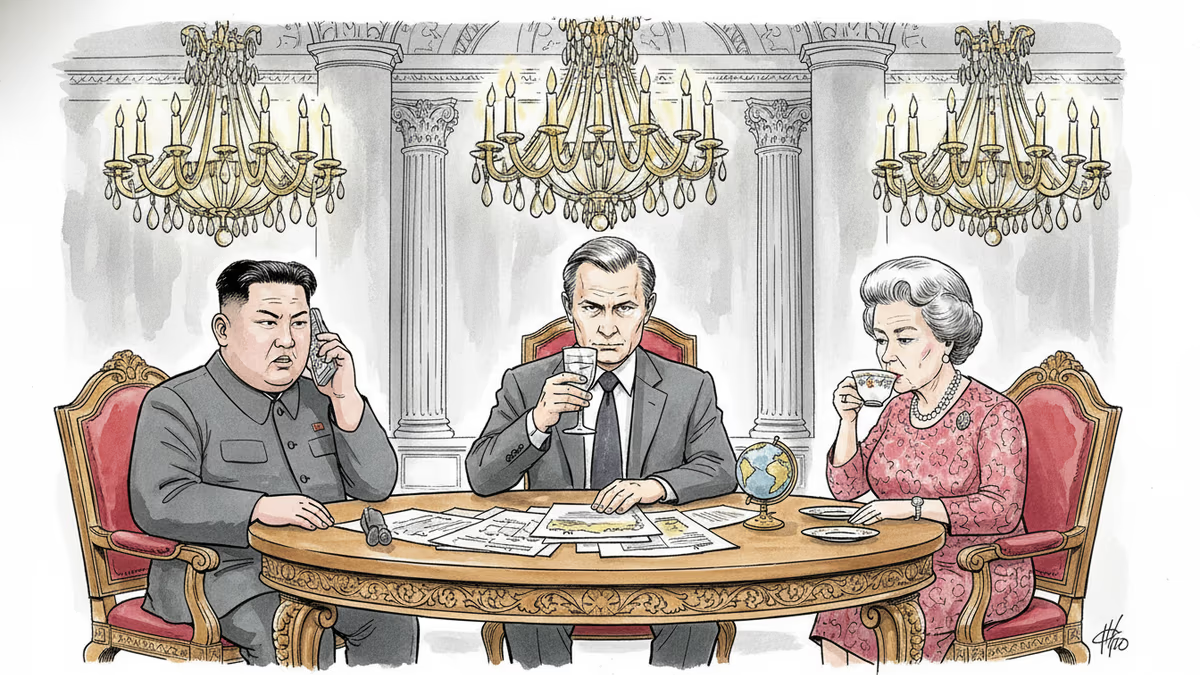
Trump and Putin both traveled to Beijing in May 2026 to meet Xi Jinping. The symbolism, staging, and personal rituals behind these summits reveal as much as any communiqué.
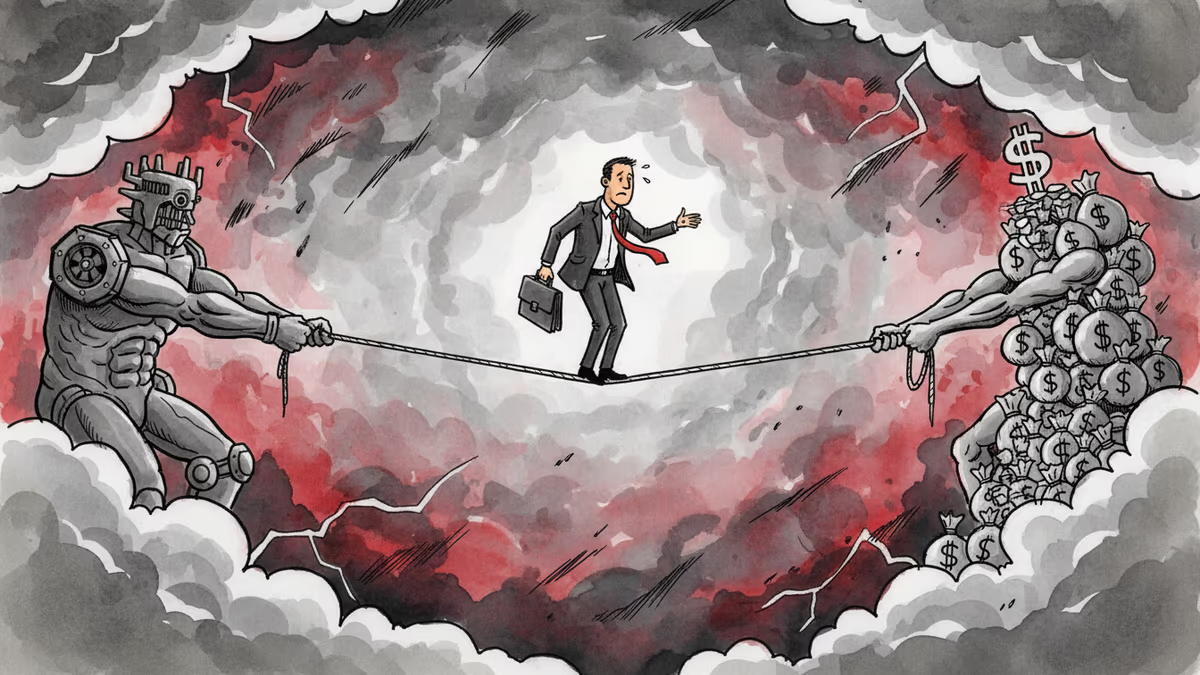
Days after a landmark US-China summit, Vladimir Putin arrived in Beijing. Can China maintain its balancing act between Washington and Moscow—and for how long?
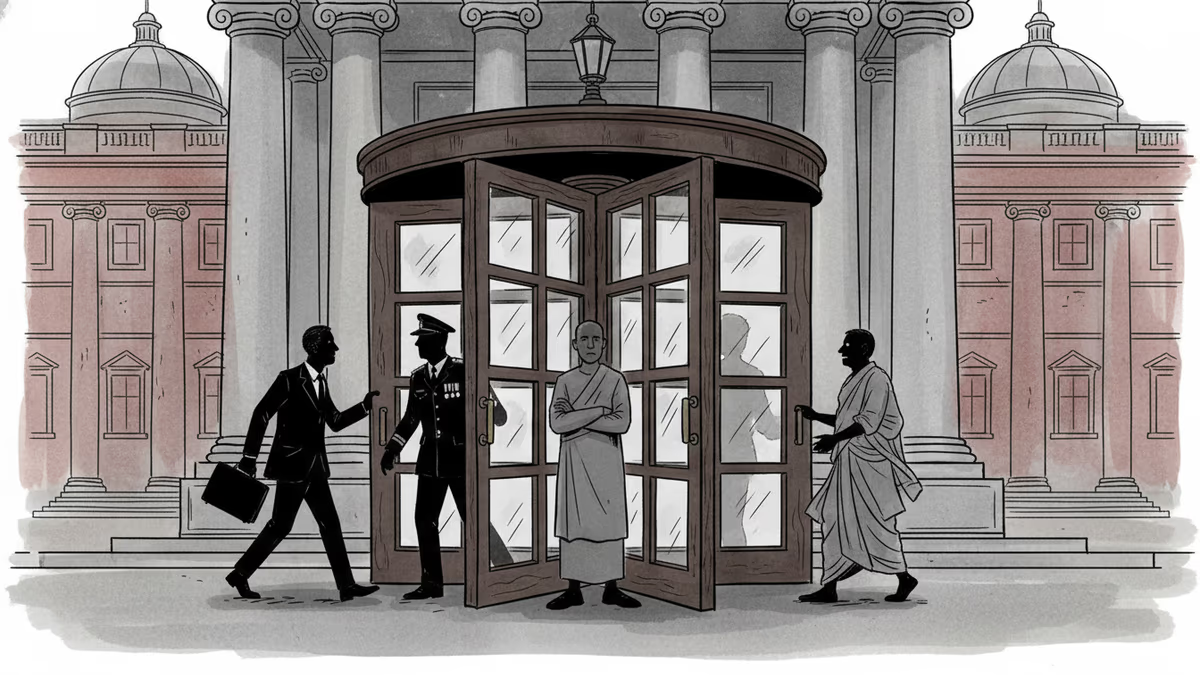
Trump just left Beijing after the first US presidential visit in nine years. Putin arrives Wednesday. Pakistan's PM follows. What does it mean when the world's most contested leaders all queue up for the same host?
Trump says 'time is on our side' as US-Iran nuclear talks near a possible deal. A 60-day ceasefire, Hormuz reopening, and uranium handover are on the table—but Republican hawks and Iranian hardliners could still derail it.
Trump and Putin both traveled to Beijing in May 2026 to meet Xi Jinping. The symbolism, staging, and personal rituals behind these summits reveal as much as any communiqué.
Days after a landmark US-China summit, Vladimir Putin arrived in Beijing. Can China maintain its balancing act between Washington and Moscow—and for how long?
Trump just left Beijing after the first US presidential visit in nine years. Putin arrives Wednesday. Pakistan's PM follows. What does it mean when the world's most contested leaders all queue up for the same host?
Thoughts
Share your thoughts on this article
Sign in to join the conversation