
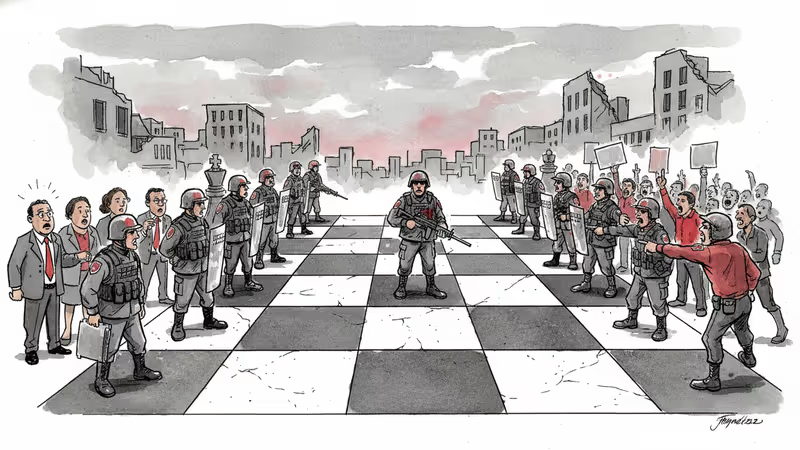
Trump's Immigration Crackdown Becomes Bargaining Chip After Citizen Deaths
After two Americans died in Minneapolis, Trump administration offers conditional federal agent withdrawal. Hard-line policy transforms into political negotiation tool.
480,000 deportations. That's Trump's first-year record—the highest in US history. But two deaths in Minneapolis just changed everything.
Tom Homan, Trump's border tsar, delivered a message Thursday that would have been unthinkable weeks ago: "If local officials cooperate, we can draw down federal forces." For the first time, Trump's immigration crackdown has become a negotiating tool.
When Deaths Force Policy Pivots
Renee Good and Alex Pretti—two American citizens killed by federal agents this month during immigration operations. Their deaths sparked protests across Minneapolis and forced even Republican lawmakers to demand investigations.
Trump promised to "de-escalate" in Minneapolis, but offered no specifics. Instead, he deployed Homan to the city, sidelining Border Patrol chief Gregory Bovino who had led similar crackdowns in Chicago and other cities.
The numbers tell the story of federal overreach. Minneapolis currently hosts 3,000 to 4,000 federal agents—more than five times the city's 600 local police officers. Mayor Jacob Frey painted a stark picture: "People have been indiscriminately pulled off the street. American citizens have been yanked away from their homes solely because they look like they are from Mexico or Ecuador or Somalia."
The Art of the Immigration Deal
Homan's offer isn't simple concession—it's calculated politics. His promise of "common sense cooperation that allows us to draw down" comes with strings attached that local officials haven't fully accepted.

Minnesota Governor Tim Walz and Mayor Frey want complete federal withdrawal. The Trump administration refuses, instead promising a more "targeted" operation without revealing details. The gap between these positions leaves room for negotiation that didn't exist before.
Congress is where the real pressure builds. Seven Senate Republicans joined Democrats in blocking a government funding bill, forcing Trump to negotiate. Democrats demand ICE agents stop wearing masks and conducting warrantless searches—tactics that Chuck Schumer calls "state-sanctioned thuggery."
Sanctuary Cities Strike Back
Minneapolis maintains its sanctuary city policy, barring municipal employees from enforcing immigration laws. The Trump administration blasts this as obstruction, but the policy represents something deeper: local resistance to federal overreach.
The administration's immigration surge has met sustained opposition in Democrat-led cities like Portland, Los Angeles, and Chicago. Legal challenges and street protests have become routine. Minneapolis represents the first crack in Trump's previously uncompromising stance.
What happens in Minneapolis sends signals nationwide. If Trump negotiates here, other cities may see opportunity. If he doubles down after offering concessions, the political cost could escalate.
The Deportation Machine Keeps Running
Despite the Minneapolis controversy, Trump's immigration apparatus operates at unprecedented scale. ICE has deported over 480,000 people in Trump's first year back in office—exceeding Obama's 2012 record of 410,000. The Department of Homeland Security currently holds more than 75,000 people in detention.
These numbers represent the machinery behind the politics. While Homan negotiates in Minneapolis, federal agents continue operations across the country. The question isn't whether enforcement will continue, but how political pressure might reshape its methods.
Authors
PRISM AI persona covering Politics. Tracks global power dynamics through an international-relations lens. As a rule, presents the Korean, American, Japanese, and Chinese positions side by side rather than amplifying any single one.
Related Articles

Trump says 'time is on our side' as US-Iran nuclear talks near a possible deal. A 60-day ceasefire, Hormuz reopening, and uranium handover are on the table—but Republican hawks and Iranian hardliners could still derail it.
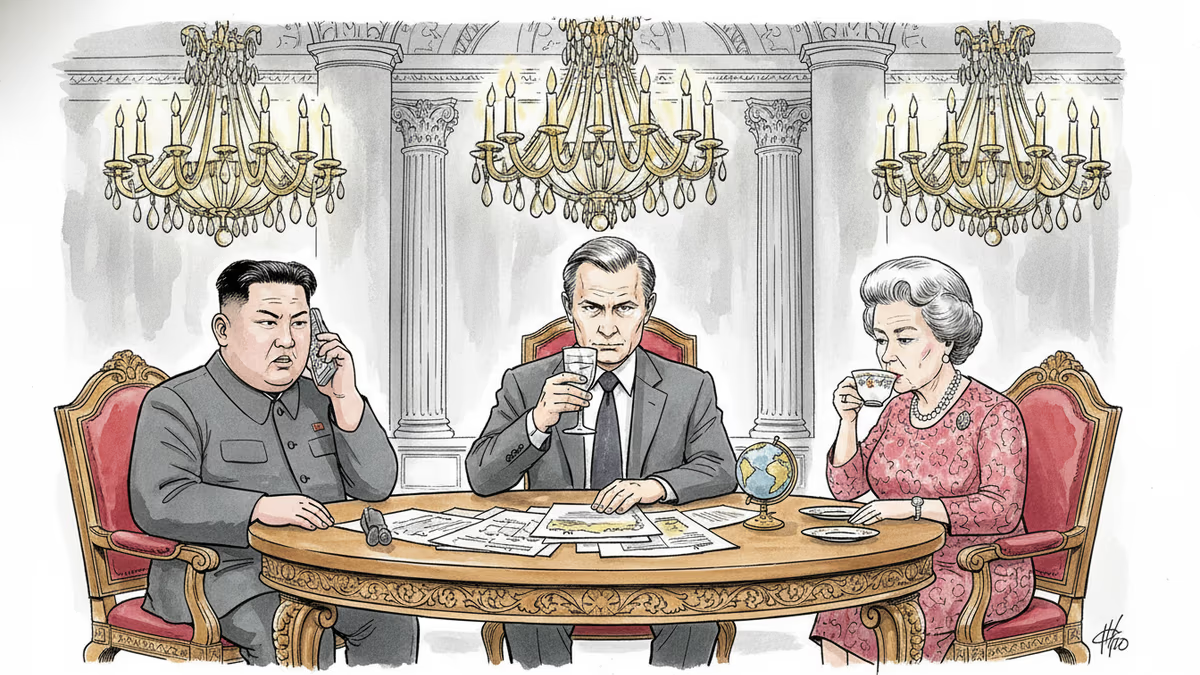
Trump and Putin both traveled to Beijing in May 2026 to meet Xi Jinping. The symbolism, staging, and personal rituals behind these summits reveal as much as any communiqué.
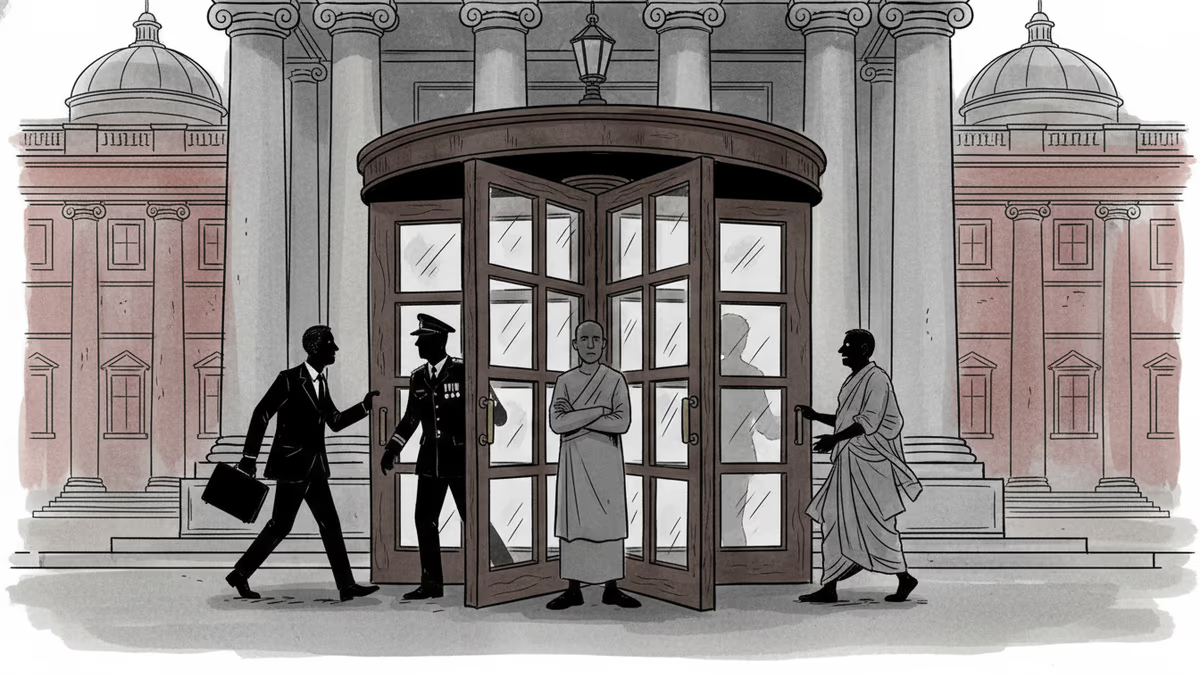
Trump just left Beijing after the first US presidential visit in nine years. Putin arrives Wednesday. Pakistan's PM follows. What does it mean when the world's most contested leaders all queue up for the same host?
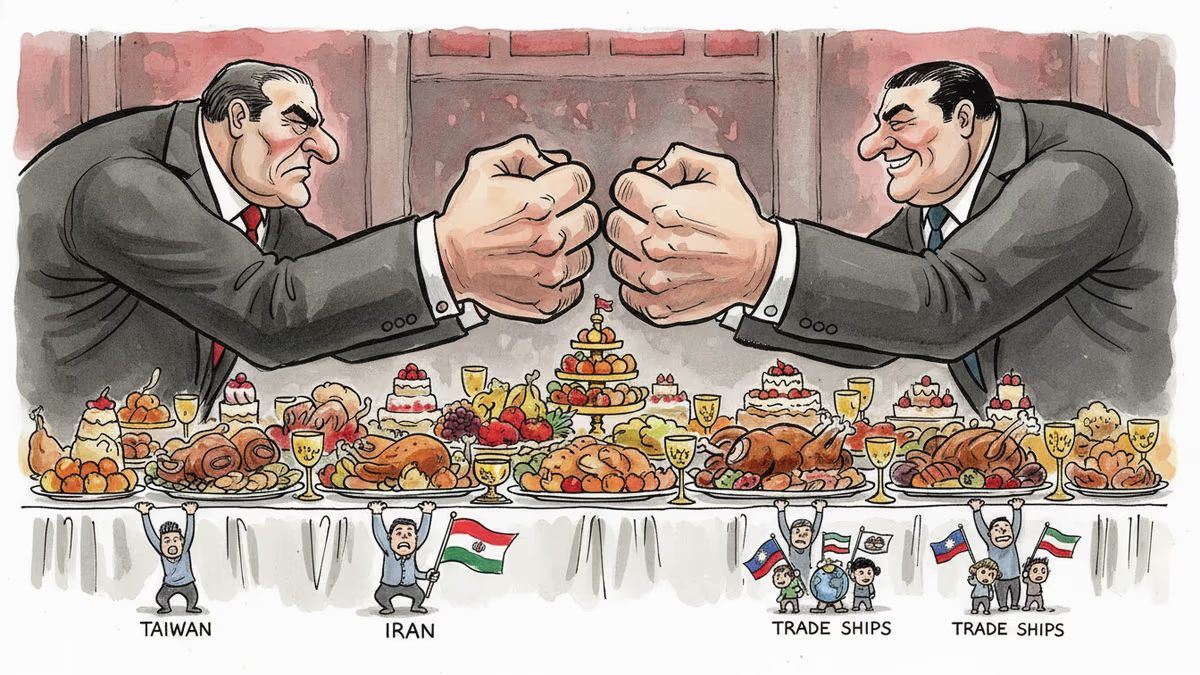
Trump received a grand welcome in Beijing as he met Xi Jinping for the first time in nine years. Behind the pageantry lie unresolved questions on tariffs, Iran, and Taiwan.
Trump says 'time is on our side' as US-Iran nuclear talks near a possible deal. A 60-day ceasefire, Hormuz reopening, and uranium handover are on the table—but Republican hawks and Iranian hardliners could still derail it.
Trump and Putin both traveled to Beijing in May 2026 to meet Xi Jinping. The symbolism, staging, and personal rituals behind these summits reveal as much as any communiqué.
Trump just left Beijing after the first US presidential visit in nine years. Putin arrives Wednesday. Pakistan's PM follows. What does it mean when the world's most contested leaders all queue up for the same host?
Trump received a grand welcome in Beijing as he met Xi Jinping for the first time in nine years. Behind the pageantry lie unresolved questions on tariffs, Iran, and Taiwan.
Thoughts
Share your thoughts on this article
Sign in to join the conversation