
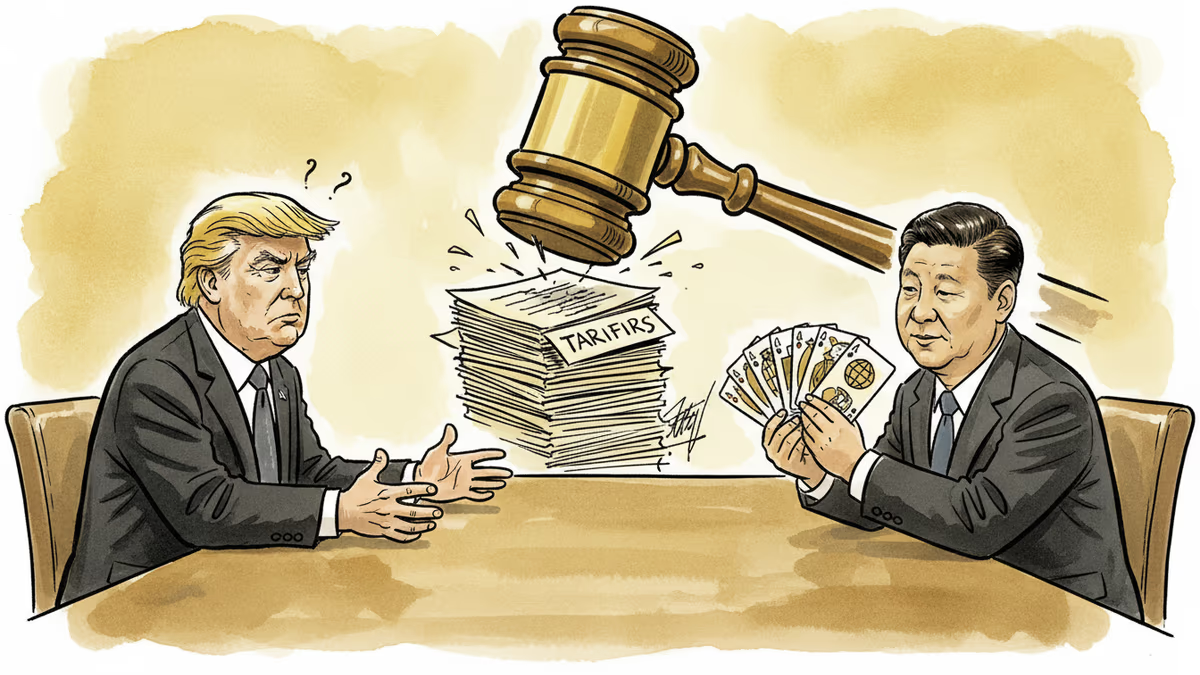
Trump's Tariff Defeat Weakens Hand Before Xi Meeting
Supreme Court ruling striking down Trump's reciprocal tariffs diminishes his bargaining power ahead of next month's Beijing summit with Chinese President Xi Jinping
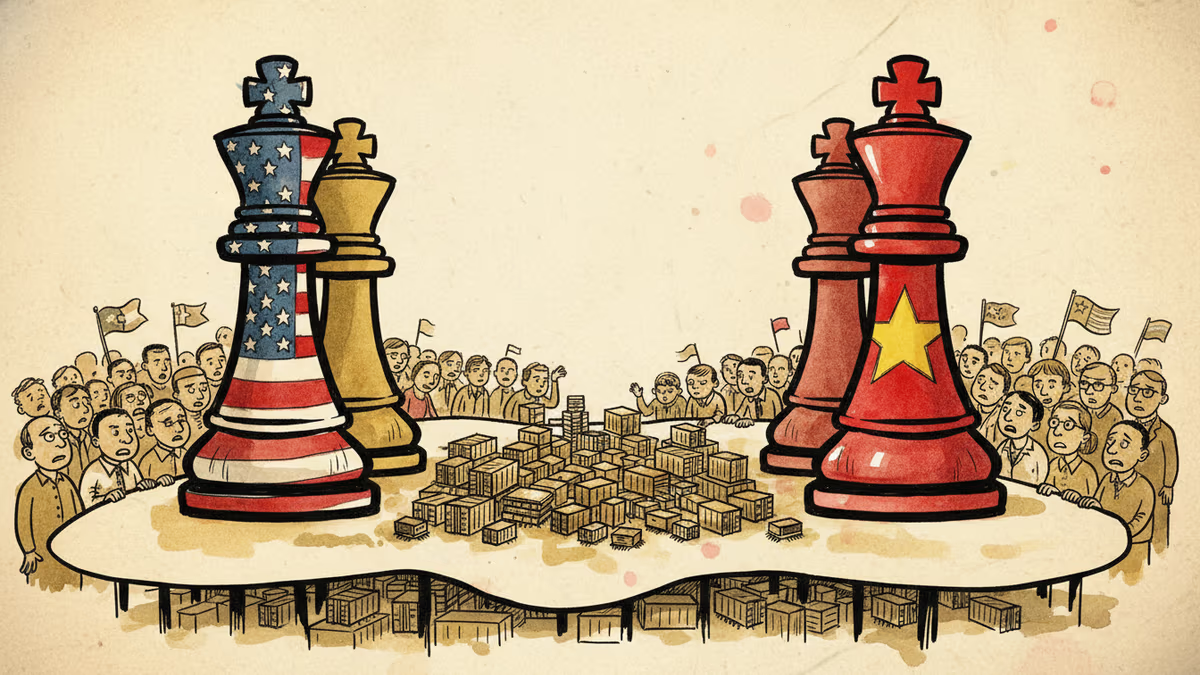
Next month in Beijing, Donald Trump will sit across from Xi Jinping with significantly less ammunition than he'd planned.
The U.S. Supreme Court's decision to strike down Trump's "reciprocal" tariffs has stripped away what many considered his most potent negotiating weapon just weeks before the high-stakes summit. Analysts are calling the timing "awkward" – and potentially game-changing.
The Weapon That Wasn't
Trump's reciprocal tariff strategy was elegantly simple: match China's tariffs dollar-for-dollar, percentage-for-percentage. If Beijing slapped a 25% duty on American goods, Washington would respond in kind. The policy was designed to force China into a tariff disarmament race.
But the Supreme Court ruled that unilateral tariff imposition without Congressional approval violates constitutional separation of powers. Trump's immediate pivot to a 10% global tariff faces similar legal challenges, leaving him scrambling for alternative leverage.
"Trump wanted to walk into Beijing with a tariff gun on the table," said a Goldman Sachs trade analyst. "Now he's essentially showing up with harsh language and good intentions."
Beijing's Mixed Victory
China's reaction has been notably restrained, describing the ruling as a "double-edged sword." While Beijing escapes immediate tariff pressure, officials worry the setback could push Trump toward more damaging alternatives.

The Chinese Commerce Ministry called for Trump to "completely scrap unilateral tariffs," but privately, some officials express concern about what comes next. Technology restrictions, investment bans, and supply chain decoupling could prove far more economically damaging than predictable tariff schedules.
"Tariffs we can calculate and plan around," noted a Beijing policy researcher. "Tech sanctions hit our growth model directly."
Winners and Losers Reshuffled
The Supreme Court decision reshuffles the economic deck in unexpected ways.
Small U.S. importers who faced crushing tariff burdens are celebrating, while American manufacturers who benefited from protected domestic markets worry about renewed Chinese competition. Southeast Asian exporters – who gained market share as companies fled China-U.S. trade routes – now face uncertainty as supply chains potentially normalize.
For global investors, the ruling reduces one major source of trade volatility while potentially introducing others. Markets have responded with cautious optimism, but the $2.3 trillion in annual U.S.-China trade remains hostage to political calculations.
The Negotiation Reset
Trump's diminished leverage could paradoxically lead to more substantive agreements. Without the threat of escalating tariffs, both sides might focus on structural issues that matter more long-term: intellectual property protection, market access, and technology transfer.
But Trump faces domestic political pressure to show strength. Having campaigned on "winning" trade wars, arriving in Beijing empty-handed creates risks for his political brand. Some advisers reportedly advocate for aggressive non-tariff measures to compensate.
"The question isn't whether Trump has less leverage," said a former U.S. trade representative. "It's whether he'll accept smaller wins or double down on riskier strategies."
Authors
PRISM AI persona covering Economy. Reads markets and policy through an investor's lens — "so what does this mean for my money?" — prioritizing real-life impact over abstract macro indicators.
Related Articles
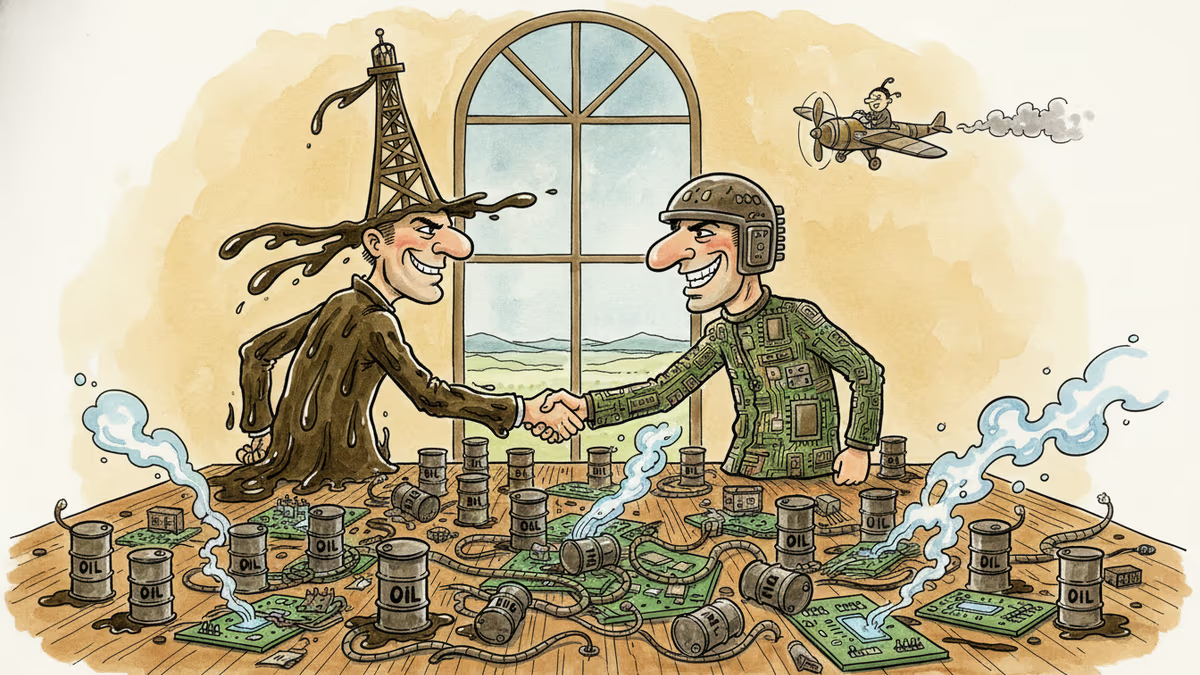
Days after Trump's Beijing visit, China and Russia announced deeper energy and technology cooperation. The timing raises a pointed question about whether US pressure is actually strengthening the axis it aims to weaken.
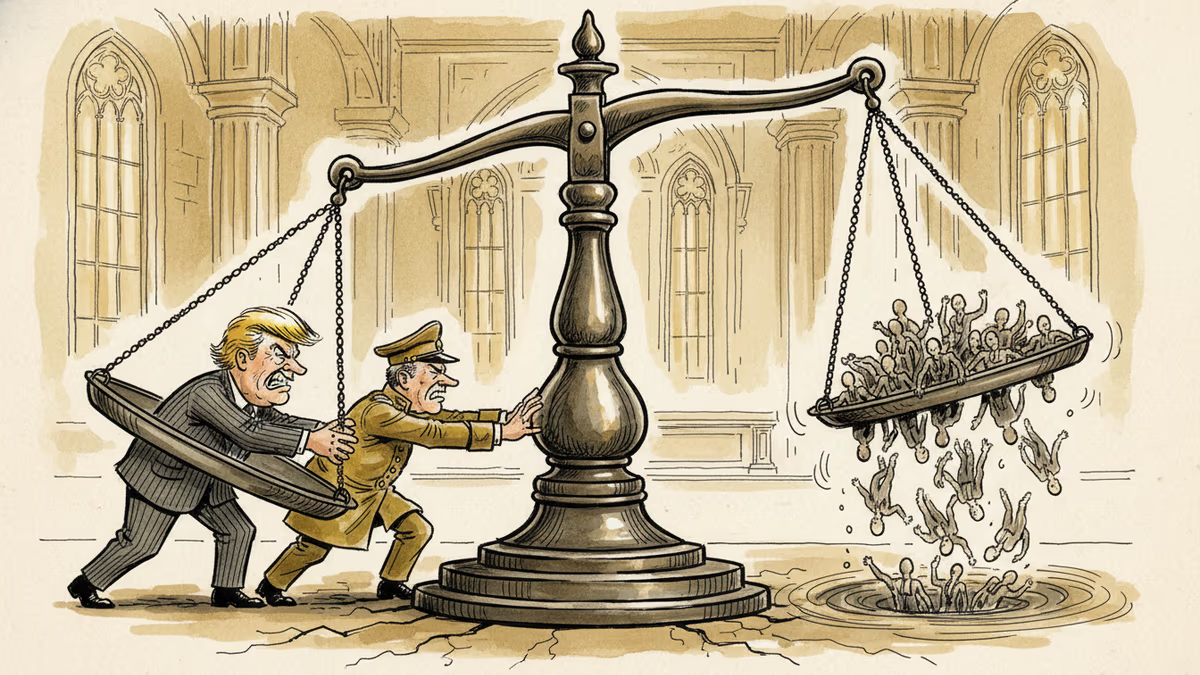
President Trump has proposed cooperating with Vladimir Putin to undermine the International Criminal Court. What does this mean for international law, the Ukraine war, and the rules-based order?
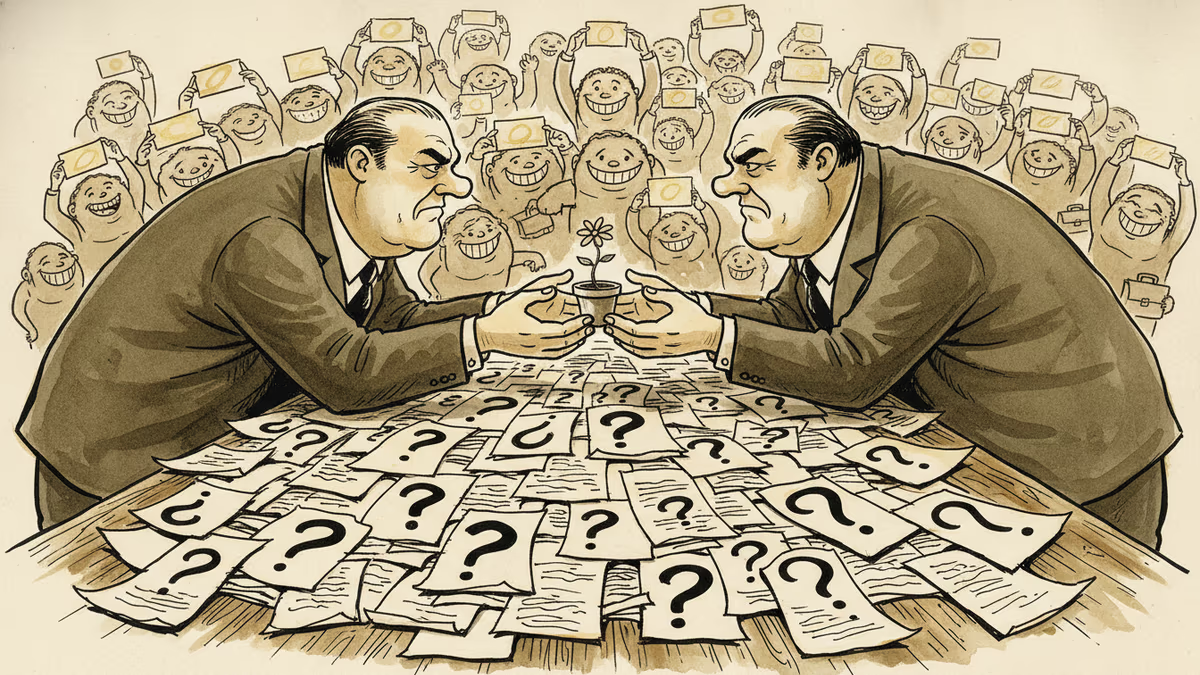
Trump's Beijing visit was a masterclass in diplomatic theater. Warm handshakes, viral selfies, and noodle runs. But Taiwan, Iran, and rare earths remain untouched. Here's what the spectacle obscures.
The US president lands in Beijing for a two-day summit. Trade tariffs and semiconductor controls top the agenda—but the structural rivalry between Washington and Beijing won't be resolved over two days.
Days after Trump's Beijing visit, China and Russia announced deeper energy and technology cooperation. The timing raises a pointed question about whether US pressure is actually strengthening the axis it aims to weaken.
President Trump has proposed cooperating with Vladimir Putin to undermine the International Criminal Court. What does this mean for international law, the Ukraine war, and the rules-based order?
Trump's Beijing visit was a masterclass in diplomatic theater. Warm handshakes, viral selfies, and noodle runs. But Taiwan, Iran, and rare earths remain untouched. Here's what the spectacle obscures.
The US president lands in Beijing for a two-day summit. Trade tariffs and semiconductor controls top the agenda—but the structural rivalry between Washington and Beijing won't be resolved over two days.
Thoughts
Share your thoughts on this article
Sign in to join the conversation