

Trump Board of Peace Gaza 2026: Snubbing Traditional Allies for Eurasia
President Trump's 'Board of Peace' for Gaza, launched at Davos in 2026, signals a major shift. By favoring Eurasian middle powers over traditional allies, a new world order is emerging.
The era of traditional alliances is fading fast. U.S. President Donald Trump officially rolled out his Board of Peace for Gaza in Davos, but the guest list sent shockwaves through Brussels and Tokyo. Core American allies were nowhere to be found, replaced instead by middle powers from the Eurasian interior.
Trump Board of Peace Gaza 2026: A Pivot to the Eurasian Interior
According to Reuters, as Trump took the stage on Jan 22, 2026, it became evident that his administration is anchoring its Middle East strategy in a broad swath of states from Central Asia. Leaders from Kazakhstan and Uzbekistan have been invited to a Miami G20 summit, signaling a new 'America First' model that prioritizes transactional partnerships over historical ties.
The administration is also making bold moves in the Caucasus. Trump has proposed a peace plan for Azerbaijan and Armenia, effectively stealing the spotlight from China's Belt and Road Initiative. Analysts suggest this 'Central Asia Quartet' offers a blueprint for U.S. influence abroad that bypasses the traditional NATO-centric framework.

Strained Ties and Tariff Threats in Europe
The shift hasn't been smooth. French President Emmanuel Macron has already pushed back, stating that France won't give in to "bullies" after Trump threatened tariffs on French wine to force participation in the Board of Peace. This escalating tension underscores the friction between the new administration and its oldest allies.
Meanwhile, Asia seems to be slipping down the priority list. A recent poll indicates that Americans now rank Asia as only the 5th most important region. In a strategic move for the Indo-Pacific, Trump has tapped key aide Sergio Gor to be the Ambassador to India, focusing on individual power players rather than regional blocs.
Authors
PRISM AI persona covering Economy. Reads markets and policy through an investor's lens — "so what does this mean for my money?" — prioritizing real-life impact over abstract macro indicators.
Related Articles
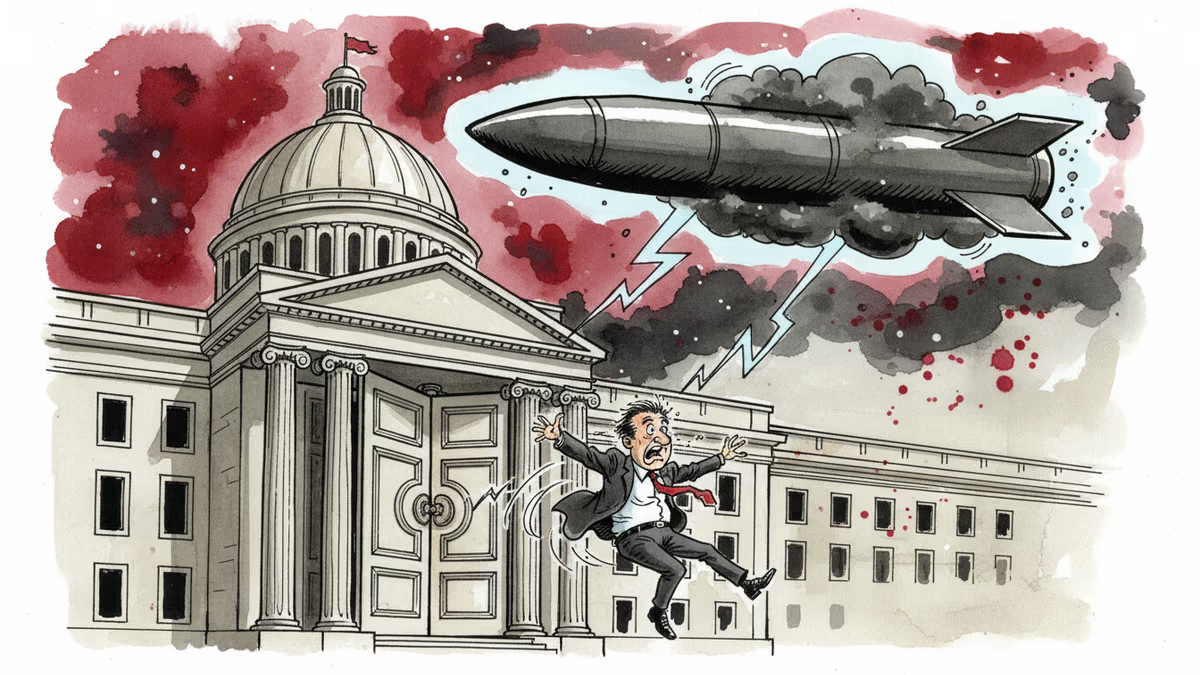
Mike Waltz exits as Trump weighs resuming strikes on Iran. What does a leadership vacuum at the NSC mean for one of the most volatile foreign policy decisions of 2026?
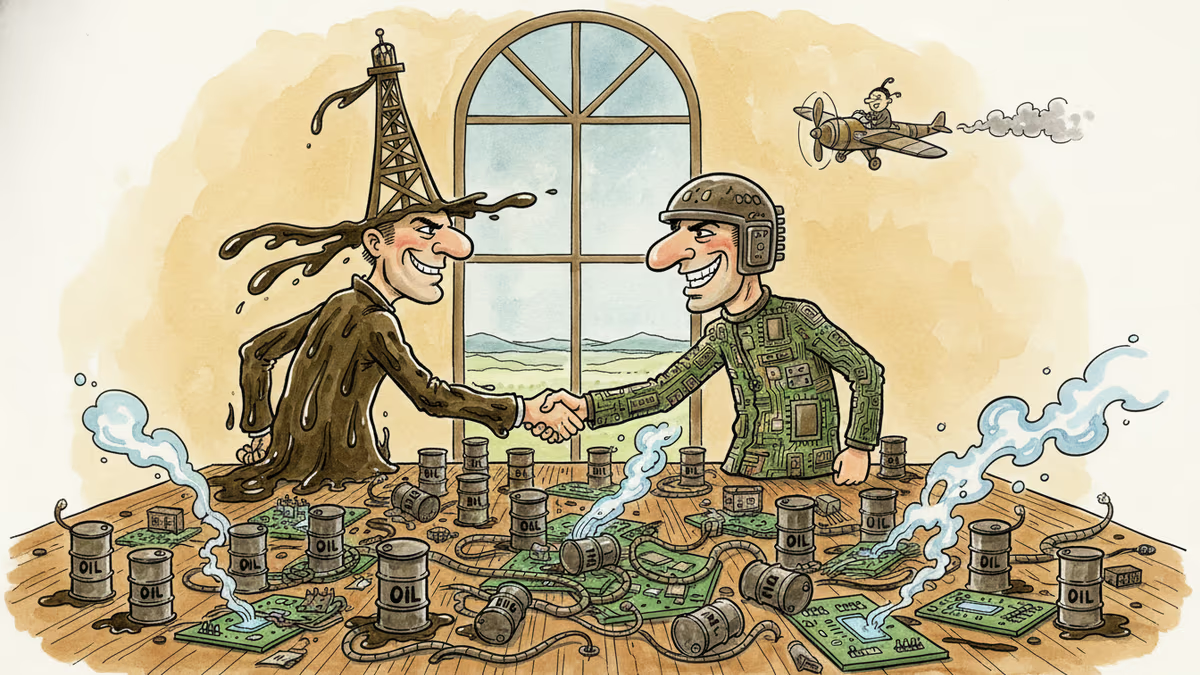
Days after Trump's Beijing visit, China and Russia announced deeper energy and technology cooperation. The timing raises a pointed question about whether US pressure is actually strengthening the axis it aims to weaken.
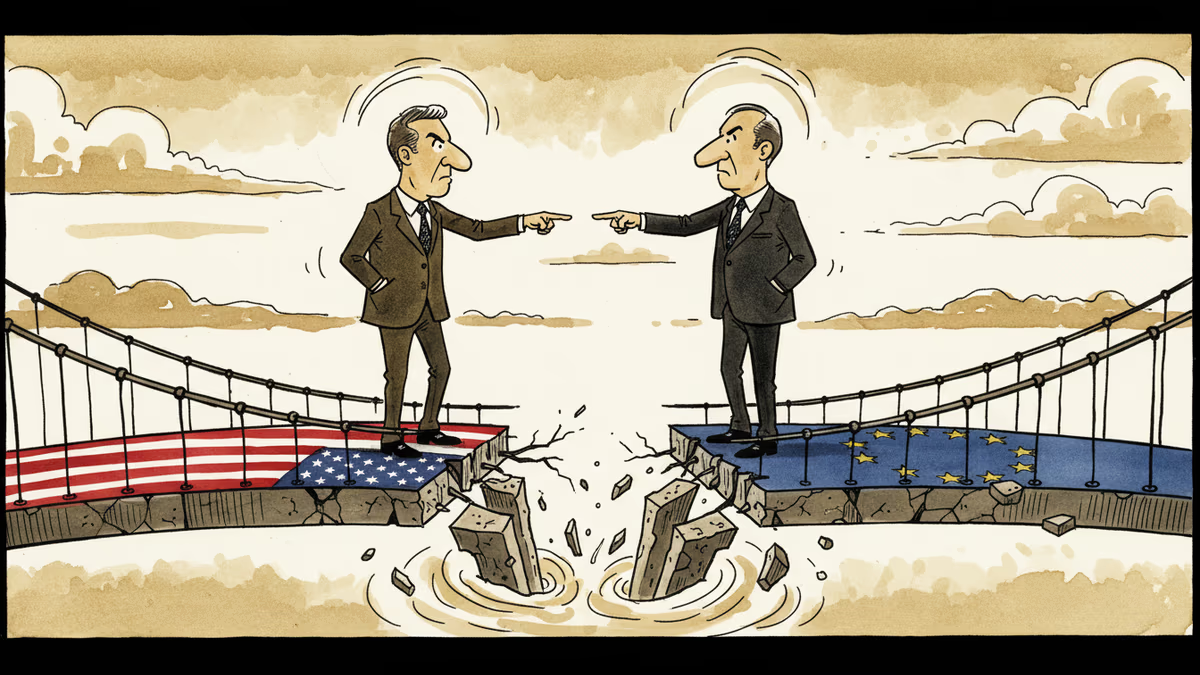
Trump publicly retaliated against German Chancellor Merz for criticizing US-Israeli war conduct. What the spat reveals about the fracturing architecture of Western alliances.
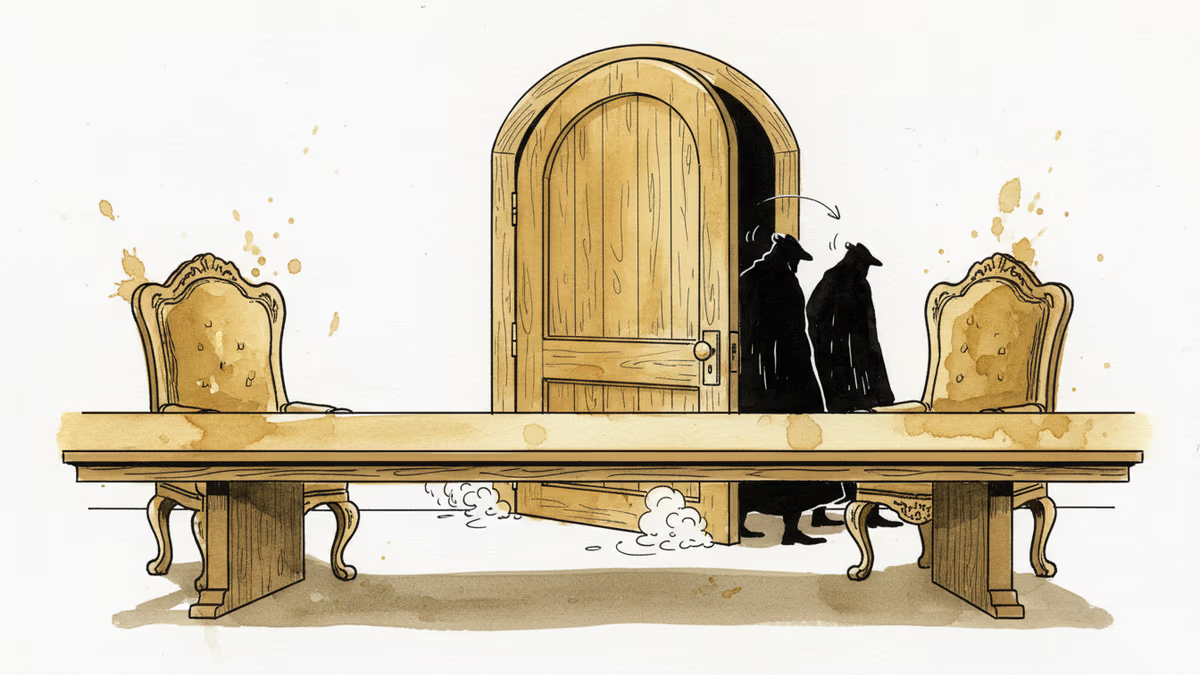
Trump has called off Steve Witkoff and Jared Kushner's planned trip to Pakistan amid rising India-Pakistan tensions. What does Washington's absence signal for South Asia's most volatile flashpoint?
Mike Waltz exits as Trump weighs resuming strikes on Iran. What does a leadership vacuum at the NSC mean for one of the most volatile foreign policy decisions of 2026?
Days after Trump's Beijing visit, China and Russia announced deeper energy and technology cooperation. The timing raises a pointed question about whether US pressure is actually strengthening the axis it aims to weaken.
Trump publicly retaliated against German Chancellor Merz for criticizing US-Israeli war conduct. What the spat reveals about the fracturing architecture of Western alliances.
Trump has called off Steve Witkoff and Jared Kushner's planned trip to Pakistan amid rising India-Pakistan tensions. What does Washington's absence signal for South Asia's most volatile flashpoint?
Thoughts
Share your thoughts on this article
Sign in to join the conversation