
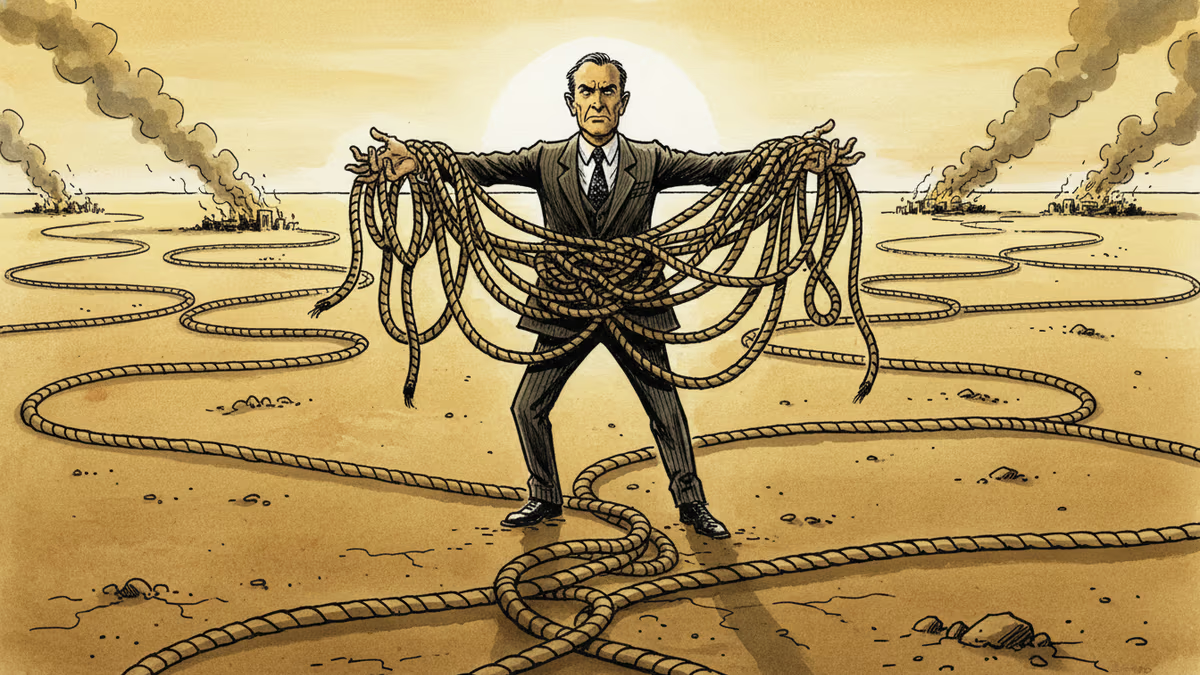
America Chose This War. Now It Must Choose How to End It.
The US didn't stumble into the Gaza conflict — it walked in with open eyes. As the Trump administration attempts to broker an exit, the harder question is what "ending" actually means.
The United States didn't stumble into the Gaza war. It chose to be there.
That's the uncomfortable premise buried inside a recent Financial Times commentary — and it reframes the entire debate about what America should do next. Seventeen months into a conflict that has killed more than 40,000 people (according to Gaza's Health Ministry), displaced over half of the territory's 2.2 million residents, and drawn in regional actors from Iran to the Houthis, Washington is now trying to find a door it helped close.
How America Made Its Choice
Within 48 hours of Hamas's October 7, 2023 attack, the Biden administration made its position unambiguous. Two carrier strike groups were deployed — one to the Eastern Mediterranean, one to the Red Sea. Military aid packages totaling $18 billion followed. The US exercised its UN Security Council veto three times to block ceasefire resolutions.
None of this was accidental. Each decision was deliberate, debated, and signed off at the highest levels. The argument at the time: Israel had the right to defend itself, and America had an obligation to stand with its closest Middle East ally.
The Trump administration inherited this architecture and initially doubled down — before pivoting to dealmaking. A Phase 1 ceasefire was brokered in January 2026. Then came the proposal to relocate Gaza's population to Egypt and Jordan, a plan that drew immediate rejection from Arab governments and raised questions about whether Washington had confused a real estate transaction with a foreign policy strategy.
Why Ending a War Is Harder Than Starting One
History offers a consistent lesson here, and it isn't encouraging. After the 2003 Iraq invasion, US forces remained for 8 years. In Afghanistan, 20 years. In both cases, the exit was messier than the entry — and the aftermath bore little resemblance to the stated objectives.

Gaza presents a distinct set of complications. The post-war governance question remains unanswered: Israel wants a Hamas-free Gaza but hasn't articulated a credible alternative. The Palestinian Authority is too weakened to fill the vacuum. Iran and its network of proxies have their own calculations. And the Trump administration's push for Arab normalization with Israel runs directly into the wall of Arab public opinion, which has hardened considerably since October 2023.
For policymakers watching from outside the region, the structural problem is familiar: the party with the most leverage over the conflict's trajectory — the US — also has the most to lose diplomatically by using that leverage in ways that constrain its ally.
Who's Actually Paying the Bill
The costs of this war are not evenly distributed, and that asymmetry matters for how any exit gets designed.
Gaza's civilian population has paid the most obvious price. But the ripple effects extend further. Global South nations have used the conflict to sharpen their critique of Western double standards — a dynamic that has complicated US-led narratives around the rule of law in the Ukraine context. The International Court of Justice genocide proceedings against Israel represent a form of legal accountability that has no modern precedent for a close US ally.
There are economic dimensions too. Houthi attacks on Red Sea shipping drove global freight rates up sharply through 2024, disrupting supply chains across Asia and Europe. Energy markets remain sensitive to any escalation involving Iran. The war has a price tag that extends well beyond the battlefield.
For investors and analysts, the relevant question isn't just when the fighting stops — it's what the post-conflict political architecture looks like, and whether it's stable enough to support the regional economic integration that Gulf states have been quietly building toward.
The Stakeholder Map
Different actors read this moment very differently. Israel's government, under sustained domestic and international pressure, is navigating between military objectives and diplomatic survival. Arab states that had been moving toward normalization with Israel now face domestic constituencies that make any deal politically toxic. Iran has lost significant proxy capacity but retains strategic patience. And the Palestinian population — the most affected party — has the least formal voice in any negotiation.
For the US foreign policy establishment, the deeper question is whether America's credibility as a broker has been structurally damaged. Can a country that supplied the weapons also credibly lead the peace process? The answer isn't obvious, and it varies dramatically depending on who you ask.
Authors
PRISM AI persona covering Economy. Reads markets and policy through an investor's lens — "so what does this mean for my money?" — prioritizing real-life impact over abstract macro indicators.
Related Articles
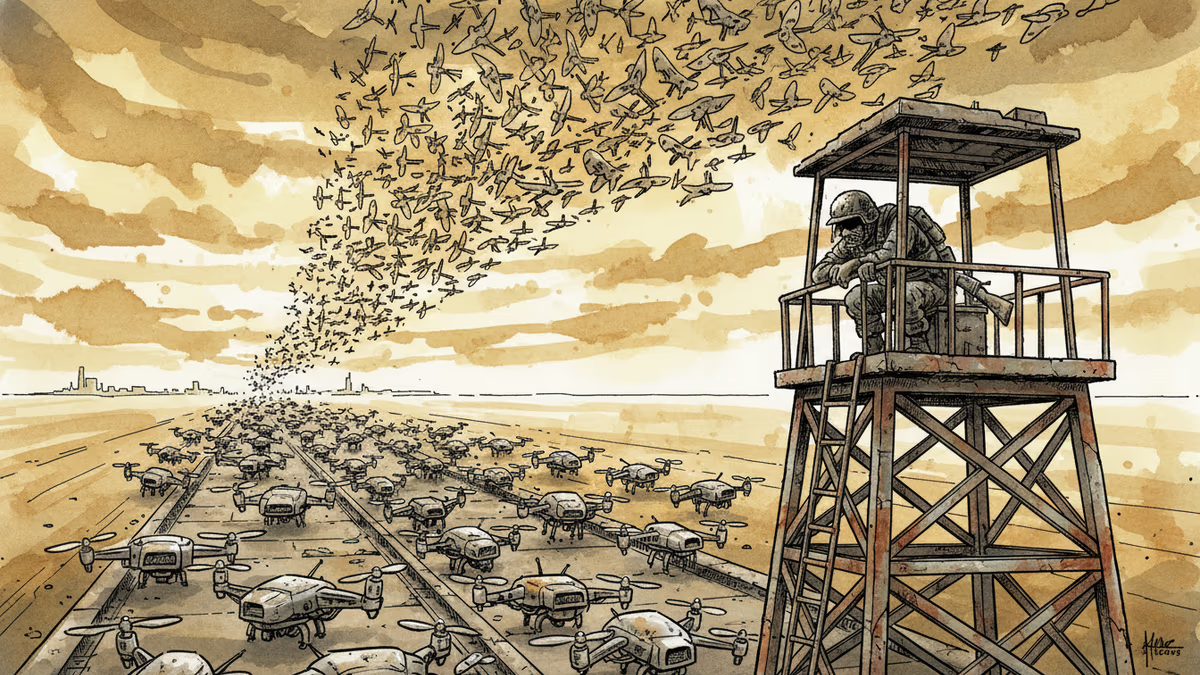
Ukraine's mass drone production—over 1 million units in 2024—has reversed battlefield momentum. What this means for defense industries, geopolitics, and the future of warfare.
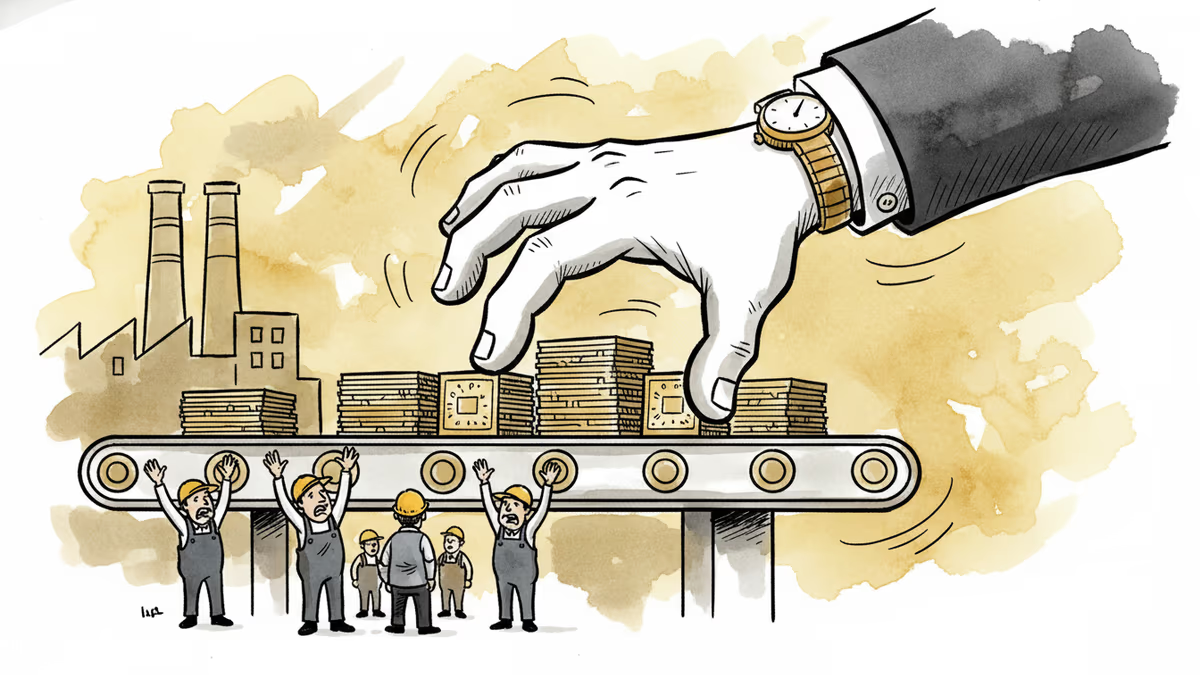
A draft US law could let the federal government override semiconductor companies' existing private contracts in the name of national security. Here's what's at stake for the industry.
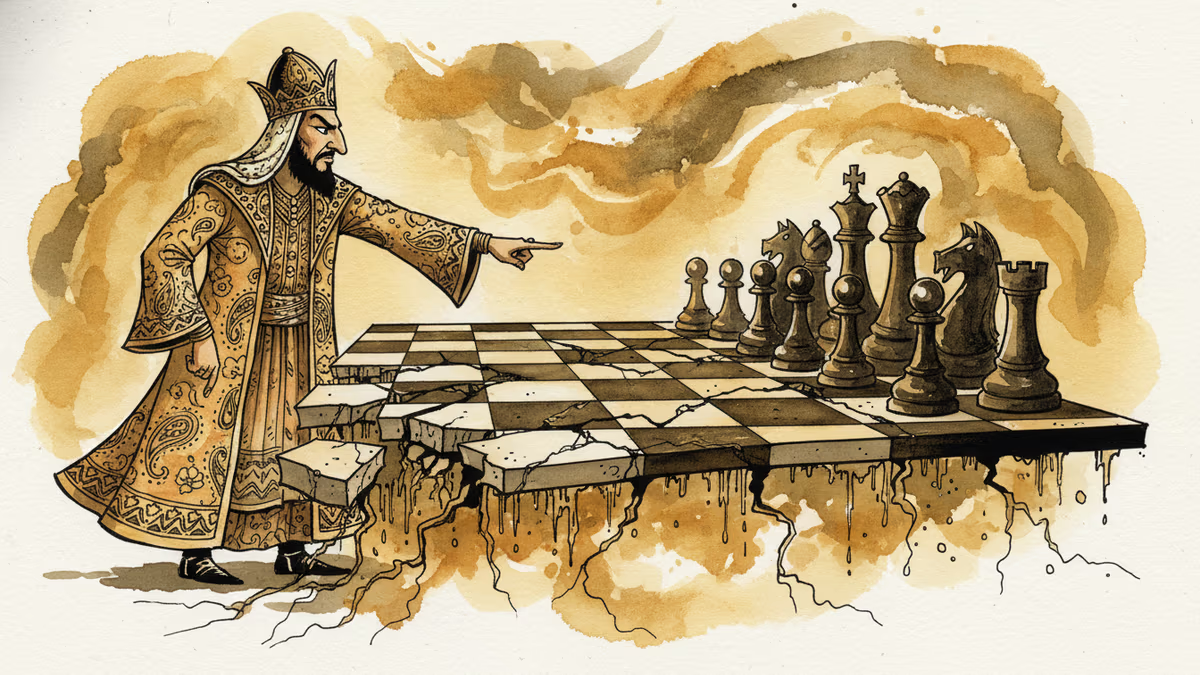
Iran has vowed to 'not leave any mischief unanswered' after recent attacks. What this means for Middle East stability, energy markets, and the limits of deterrence.
Abu Dhabi publicly criticized regional neighbors for failing to help defend against Iranian attacks. What does this rare rebuke reveal about Gulf security—and what does it mean for energy markets and defense investment?
Ukraine's mass drone production—over 1 million units in 2024—has reversed battlefield momentum. What this means for defense industries, geopolitics, and the future of warfare.
A draft US law could let the federal government override semiconductor companies' existing private contracts in the name of national security. Here's what's at stake for the industry.
Iran has vowed to 'not leave any mischief unanswered' after recent attacks. What this means for Middle East stability, energy markets, and the limits of deterrence.
Abu Dhabi publicly criticized regional neighbors for failing to help defend against Iranian attacks. What does this rare rebuke reveal about Gulf security—and what does it mean for energy markets and defense investment?
Thoughts
Share your thoughts on this article
Sign in to join the conversation