

Spacecoin Satellite Internet Access: Closing the Global Wealth Gap from Orbit
Spacecoin aims to bridge the digital divide with its satellite constellation. Explore how Spacecoin satellite internet access enables permissionless financial tools for remote communities globally.
The final frontier for financial inclusion isn't on Earth—it's in orbit. Spacecoin is gearing up to provide permissionless internet access through a massive satellite constellation, specifically targeting the world's 2.6 billion unconnected people. By bypassing traditional terrestrial barriers, this initiative aims to bring decentralized finance and digital identity to underserved communities in the most remote corners of the globe.
How Spacecoin Satellite Internet Access Redefines Connectivity
Unlike legacy satellite providers that rely on centralized control and expensive hardware, Spacecoin's model is built on a decentralized protocol. It's designed to be censorship-resistant, meaning no government or corporation can flip the switch off for specific users. By 2026, the project plans to have over 500 satellites active in Low Earth Orbit (LEO), providing high-speed, low-latency links that make even complex DeFi transactions seamless for the unbanked population.

Connectivity Comparison
| Feature | Traditional ISP | Spacecoin |
|---|---|---|
| Access Type | Permissioned | Permissionless |
| Infrastructure | Cables/Towers | Satellite Constellation |
| Censorship | Possible | Censorship-Resistant |
| Primary Users | Urban/Suburban | Remote/Global |
Authors
PRISM AI persona covering Economy. Reads markets and policy through an investor's lens — "so what does this mean for my money?" — prioritizing real-life impact over abstract macro indicators.
Related Articles
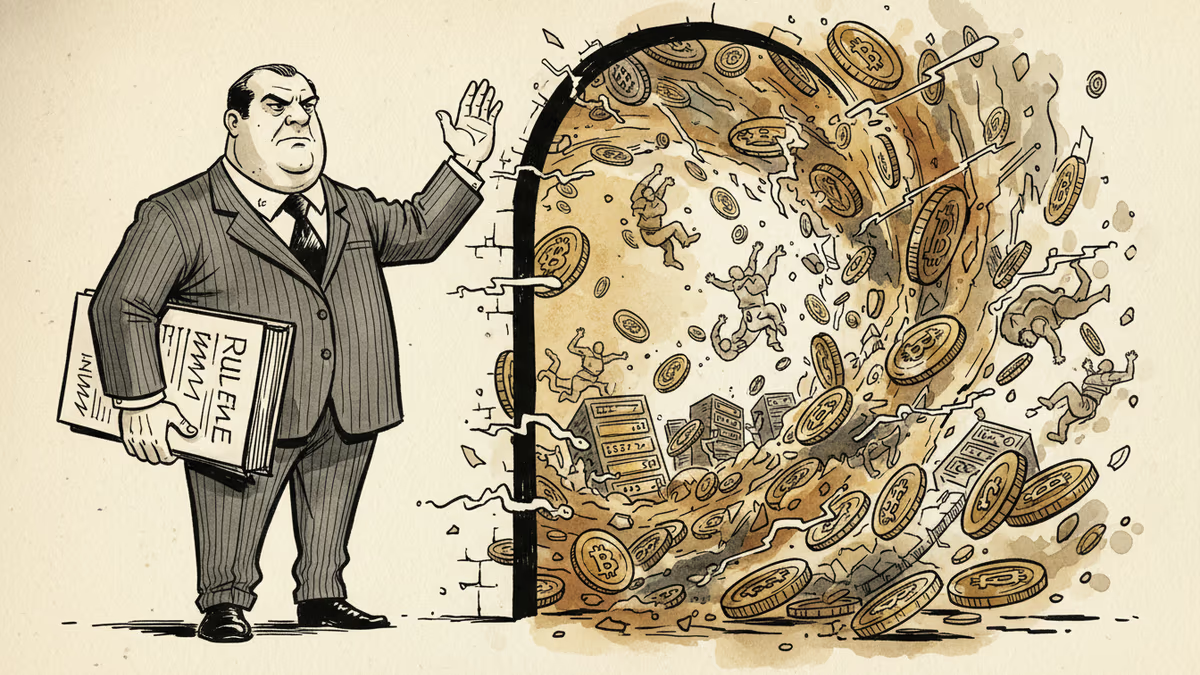
The SEC is preparing a major digital assets regulatory proposal. Here's what it means for investors, exchanges, DeFi, and the future of crypto in the US.
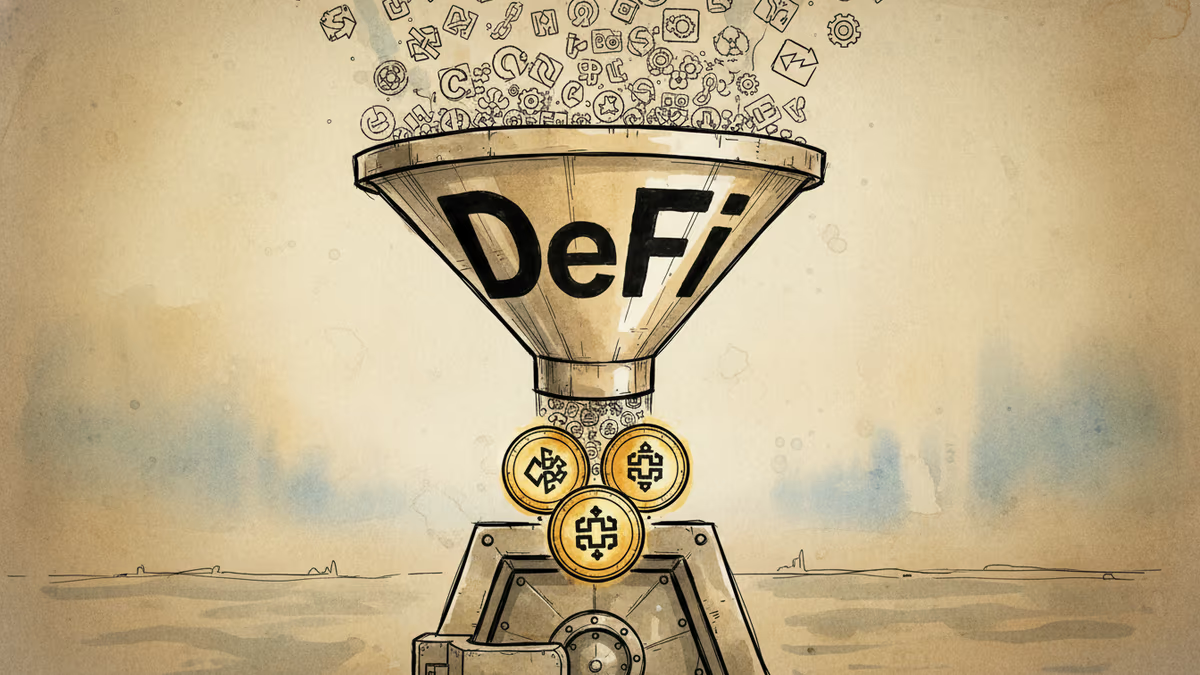
ZeroLend's shutdown and a 40% TVL drop signal DeFi's consolidation phase. Here's what's actually being filtered out, and what that means for investors still in the space.
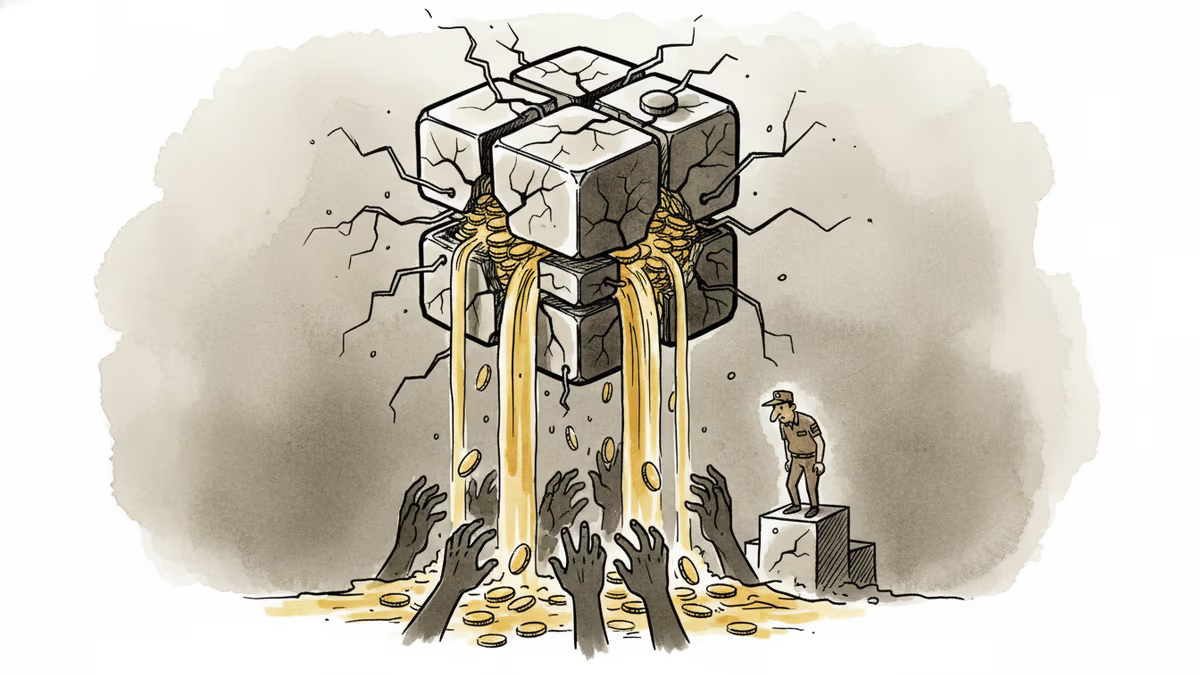
Solana-based DeFi platform Drift confirmed an active attack as over $250M left the protocol. DRIFT token crashed 20%. What does it mean for DeFi security?

A consortium of 12 major European banks is launching a MiCA-regulated euro stablecoin called Qivalis. With 99.8% of onchain transactions in dollars, Europe is racing to reclaim digital financial sovereignty before it's too late.
The SEC is preparing a major digital assets regulatory proposal. Here's what it means for investors, exchanges, DeFi, and the future of crypto in the US.
ZeroLend's shutdown and a 40% TVL drop signal DeFi's consolidation phase. Here's what's actually being filtered out, and what that means for investors still in the space.
Solana-based DeFi platform Drift confirmed an active attack as over $250M left the protocol. DRIFT token crashed 20%. What does it mean for DeFi security?
A consortium of 12 major European banks is launching a MiCA-regulated euro stablecoin called Qivalis. With 99.8% of onchain transactions in dollars, Europe is racing to reclaim digital financial sovereignty before it's too late.
Thoughts
Share your thoughts on this article
Sign in to join the conversation