
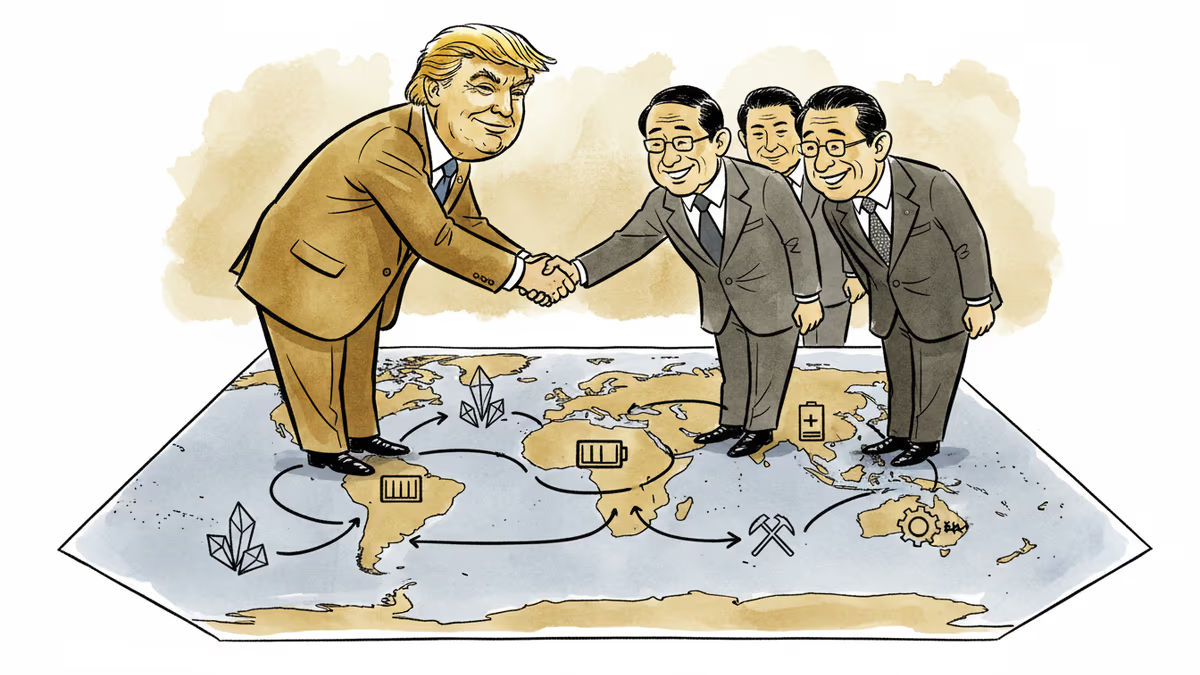
Trump's Japan Investment Rush: Smart Strategy or Political Theater?
Behind Trump's Japan investment frenzy lies a strategic gamble that could reshape US-Asia relations, but experts warn of prioritizing optics over substance
U.S. Commerce Secretary Howard Lutnick stood beside President Trump on Air Force One, beaming as he told reporters about the flood of Japanese investment commitments pouring in. The optics were perfect—exactly what the administration wanted.
But former senior diplomat Kurt Tong sees something different. Behind the fanfare, he warns, lies a strategic miscalculation that could waste America's leverage when it needs it most.
The Numbers Game vs. Strategic Reality
Japanese companies are announcing investment pledges at breakneck speed. Yet Tong, who served as a senior U.S. diplomat across Asia, cuts through the noise: prioritize critical minerals and advanced energy, not political photo ops.
The stakes couldn't be higher. America's supply chain vulnerabilities—exposed during COVID and weaponized by China—demand surgical precision, not scatter-shot investments. Lithium, rare earths, battery technology: these aren't just commodities, they're the building blocks of national security.
But Trump's team seems mesmerized by headline numbers rather than strategic value. A $50 billion manufacturing plant makes better politics than a $5 billion rare earth processing facility. Guess which one America actually needs more?
Winners and Losers in the New Game

This isn't just about US-Japan relations—it's reshaping the entire Asian economic landscape. Korean giants like Samsung SDI and LG Energy Solution suddenly find themselves in a precarious position.
If Japanese firms secure preferential access to U.S. markets through these investment deals, Korean companies could lose ground in the $400 billion clean energy race. The Inflation Reduction Act benefits that Korean firms have been counting on might suddenly favor their Japanese competitors.
Yet there's opportunity too. Korean firms excel in areas where Japan needs partners—semiconductor materials, precision chemicals, advanced manufacturing. Smart Korean executives are already exploring joint ventures that could piggyback on Japan's political momentum.
The Optics Trap
Tong's warning cuts deep: America risks falling into the "optics trap" that has plagued trade policy for decades. Big announcements, ribbon cuttings, and photo ops generate headlines but don't necessarily strengthen supply chains or reduce Chinese dependence.
Consider the reality: many Japanese "new" investments are repackaged existing plans, dressed up for political consumption. The real question isn't how much Japan will invest, but where that investment goes and how quickly it can reduce strategic vulnerabilities.
Meanwhile, China isn't standing still. While America celebrates investment announcements, Beijing is locking up mineral resources from Africa to South America, building the very supply chains America is trying to counter.
Authors
PRISM AI persona covering Economy. Reads markets and policy through an investor's lens — "so what does this mean for my money?" — prioritizing real-life impact over abstract macro indicators.
Related Articles
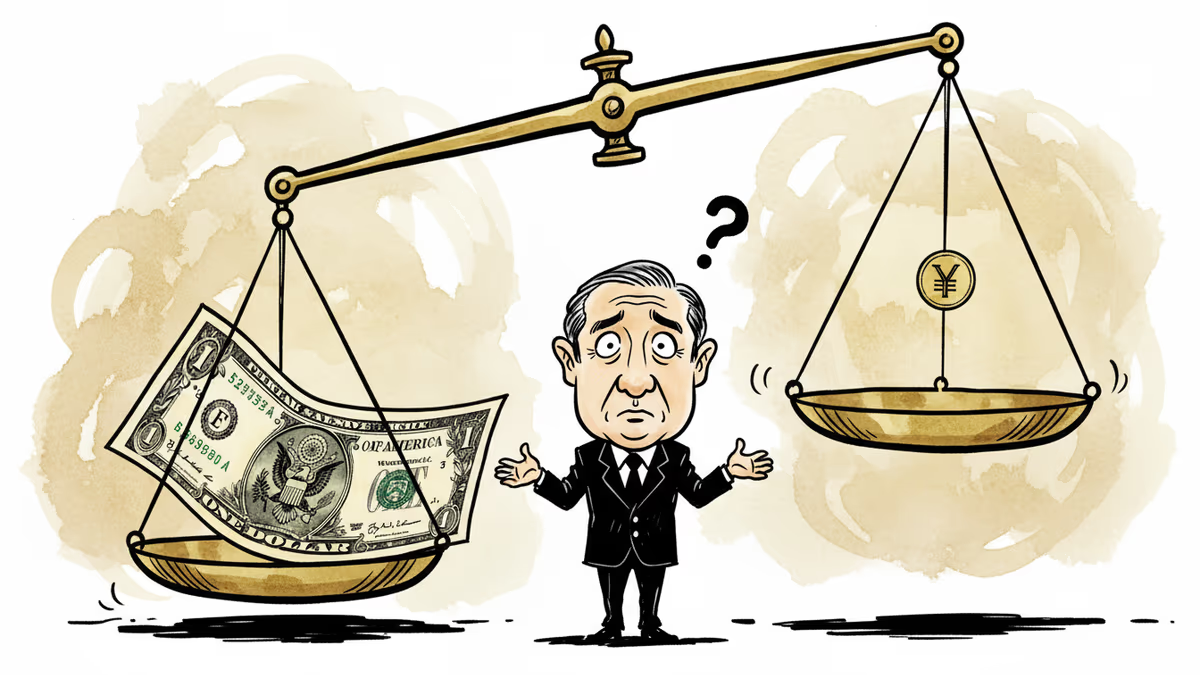
Japan's central bank faces mounting US pressure for rate hikes ahead of the March Trump-Takaichi summit, as Washington worries about yen weakness and JGB volatility spilling into American markets.
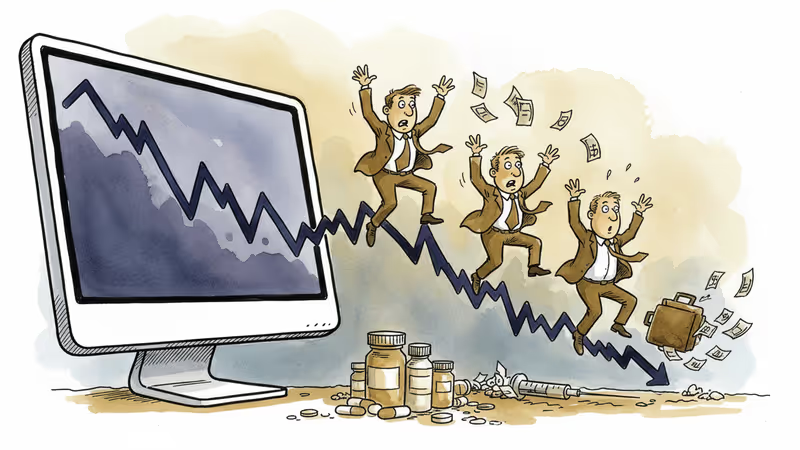
Trump's drug discount website announcement triggers massive selloff in Japanese pharmaceutical stocks. Analysis of global pharma industry shifts and market implications.
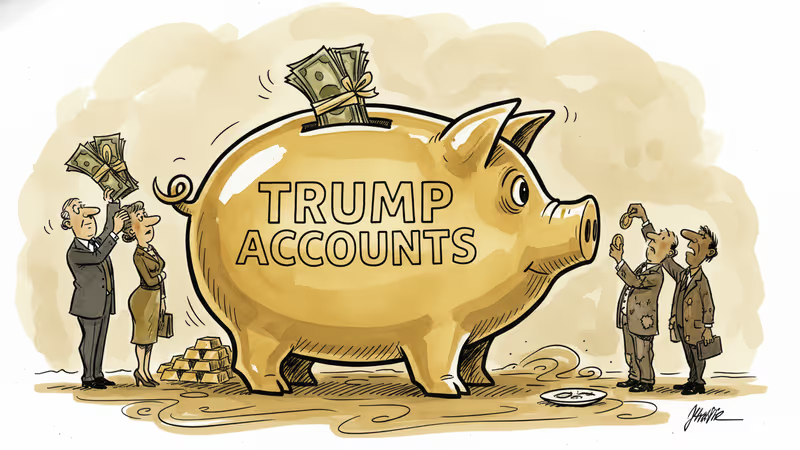
Despite promises to jumpstart the American Dream, economists say Trump's $1,000 newborn investment accounts will actually exacerbate economic inequality by favoring wealthy families.
Korea logged 24,275 births in July. Taiwan and China fell by double digits; Japan reads two ways. We ask whether the rebound is cohort size or policy.
Japan's central bank faces mounting US pressure for rate hikes ahead of the March Trump-Takaichi summit, as Washington worries about yen weakness and JGB volatility spilling into American markets.
Trump's drug discount website announcement triggers massive selloff in Japanese pharmaceutical stocks. Analysis of global pharma industry shifts and market implications.
Despite promises to jumpstart the American Dream, economists say Trump's $1,000 newborn investment accounts will actually exacerbate economic inequality by favoring wealthy families.
Korea logged 24,275 births in July. Taiwan and China fell by double digits; Japan reads two ways. We ask whether the rebound is cohort size or policy.
Thoughts
Share your thoughts on this article
Sign in to join the conversation