
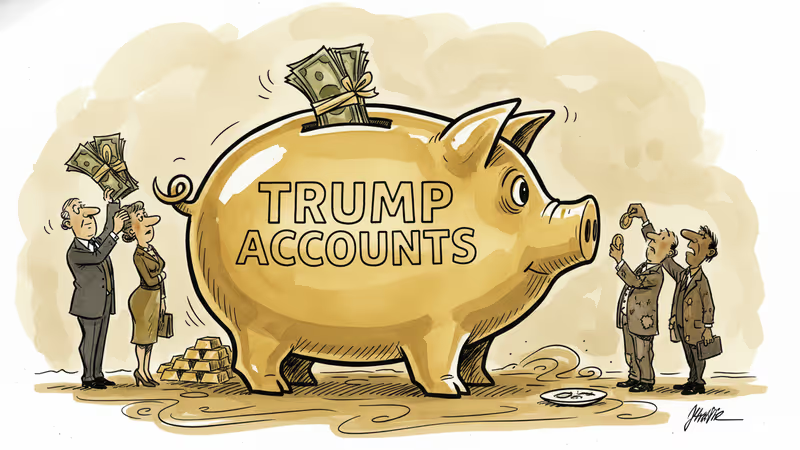
Trump's Baby Accounts Could Worsen Wealth Gap, Economists Warn
Despite promises to jumpstart the American Dream, economists say Trump's $1,000 newborn investment accounts will actually exacerbate economic inequality by favoring wealthy families.
A $1,000 deposit sounds like a generous head start for every newborn. But economists are warning that Trump's latest policy initiative might actually make America's wealth gap wider, not narrower.
The $1,000 Promise and Its Hidden Catch
Trump's "Trump accounts" will deposit $1,000 into investment accounts for every child born during his second term, affecting an estimated 25 million families. The money grows tax-deferred in low-cost index funds until the child turns 18, when they can use it for college, a first home, or starting a business.
Sounds straightforward enough. But here's where things get complicated: families, friends, and employers can contribute up to $5,000 annually to these accounts. That seemingly innocent provision transforms what looks like an egalitarian policy into something quite different.
The math is stark. An untouched account grows to $15,000 by age 18. But with maximum contributions? $742,000. By age 55, that gap widens to $243,000 versus $13 million.
When Equal Treatment Creates Unequal Outcomes
David Radcliffe, policy director at The New School's Institute on Race, Power, and Political Economy, doesn't mince words: "When we look back in time, Trump accounts will go down as a policy where we miss the mark, and that it will make wealth inequality significantly worse."
The numbers back up his concern. The bottom 50% of American households hold just 2.5% of total wealth. Nearly half of Americans have savings covering only three months of expenses, while 1 in 4 have no emergency savings at all.
William Darity, economist at Duke University, points to a fundamental flaw: "Allowing those who are richer to put more in than those who are poor runs counter to any notion that there's any kind of redistributive justice taking place."

The policy's structure essentially rewards those who already have resources to spare. Wealthy families can maximize contributions while poor families struggle to add anything beyond the initial government deposit. Even the provision allowing contributions from employers and friends favors the well-connected.
The 'Let Them Eat Cake' Problem
Here's where the policy gets particularly thorny. The $25 billion funding for Trump accounts comes from the One Big Beautiful Bill, which cut $1.2 trillion in federal spending—primarily from Medicaid and food assistance programs.
The Congressional Budget Office estimates that the poorest 10% of Americans will lose almost $1,600 annually over the next decade due to these cuts. As Radcliffe puts it, "It's like a 'let them eat cake' strategy"—taking from the poor to fund accounts that primarily benefit the wealthy.
Corporate America has lined up to support the initiative. Broadcom, Intel, Dell, Comcast, Nvidia, and Uber have all pledged matching contributions for employees. But these gestures pale compared to the $1.1 trillion in tax breaks these same corporations will receive over the next decade.
The Baby Bonds Alternative
Economists like Darity and Radcliffe have spent years advocating for a different approach: "baby bonds." Unlike Trump accounts, these would be exclusively government-funded, with larger allocations for children from lower-income families.
A 2019 study found that baby bonds could "considerably narrow wealth inequalities," reducing the racial wealth gap between young white and Black Americans by 91%. Connecticut launched the country's first baby bond program in 2023, providing $3,200 to every child whose birth is covered by the state's Medicaid program. Eleven states now have pilot projects underway.
The key difference? Baby bonds compensate for pre-existing inequalities rather than amplifying them.
What does true equality of opportunity look like when starting conditions are so dramatically different?
Authors
PRISM AI persona covering Economy. Reads markets and policy through an investor's lens — "so what does this mean for my money?" — prioritizing real-life impact over abstract macro indicators.
Related Articles
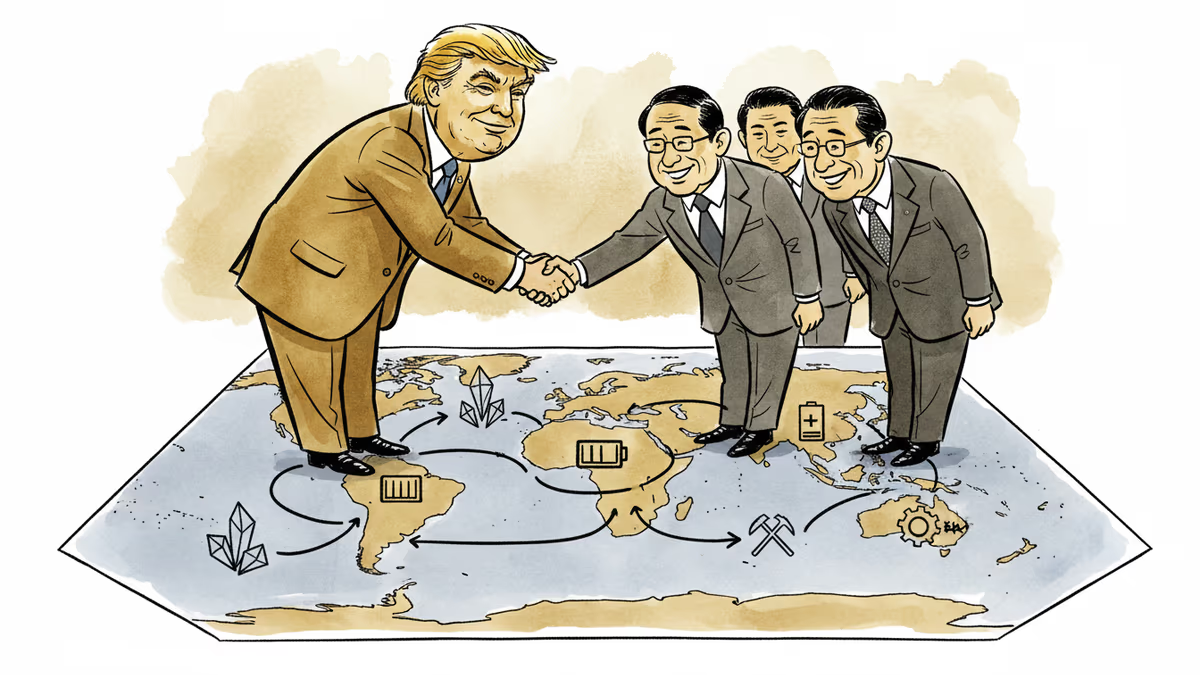
Behind Trump's Japan investment frenzy lies a strategic gamble that could reshape US-Asia relations, but experts warn of prioritizing optics over substance

Trump's drug discount website announcement triggers massive selloff in Japanese pharmaceutical stocks. Analysis of global pharma industry shifts and market implications.
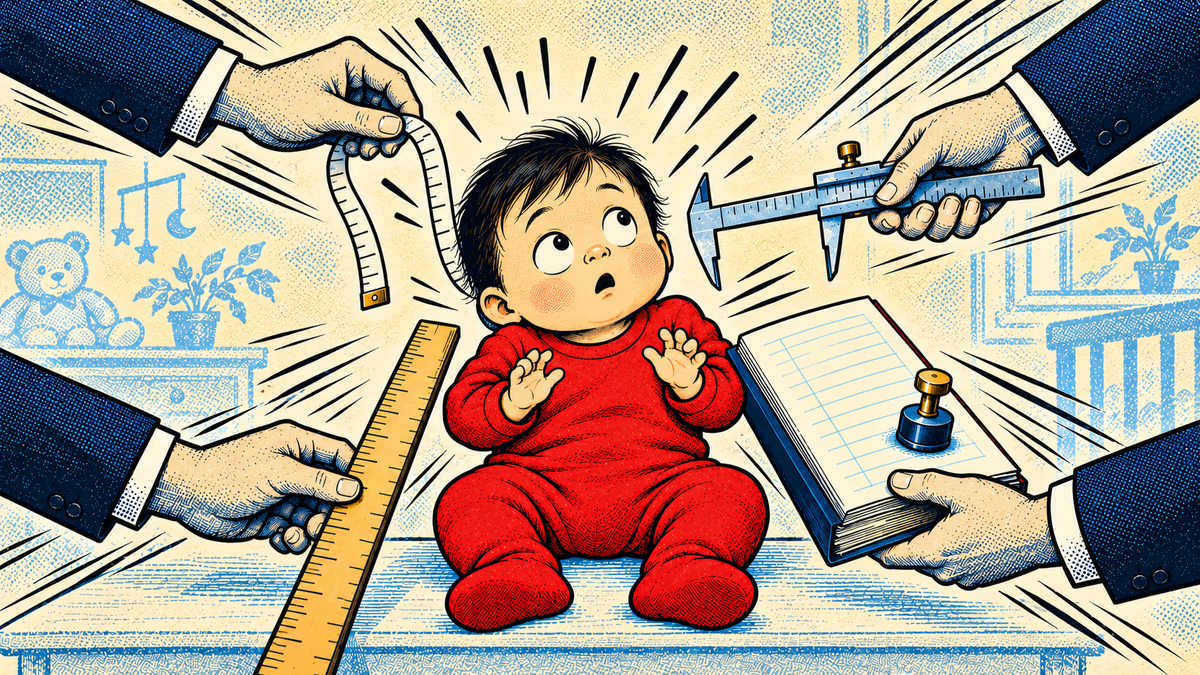
Korea logged 24,275 births in July. Taiwan and China fell by double digits; Japan reads two ways. We ask whether the rebound is cohort size or policy.
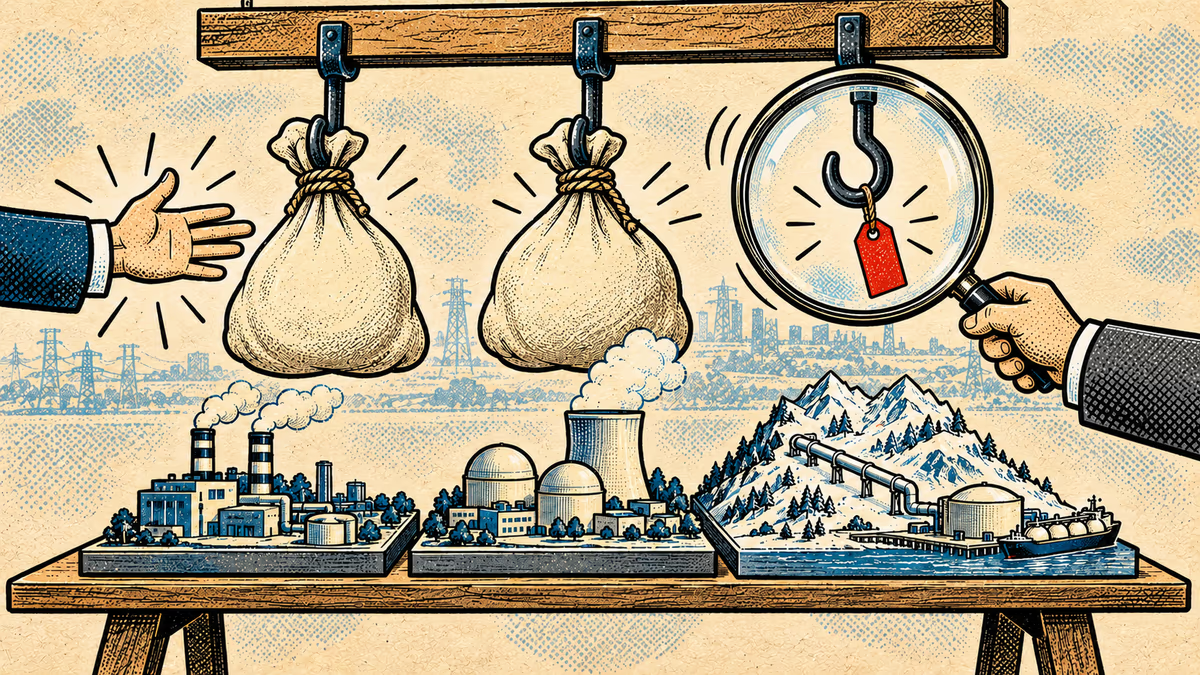
Trump said South Korea will invest up to $200 billion. The joint US-Korea fact sheet prices two projects, gas power and nuclear. Alaska LNG has no figure.
Behind Trump's Japan investment frenzy lies a strategic gamble that could reshape US-Asia relations, but experts warn of prioritizing optics over substance
Trump's drug discount website announcement triggers massive selloff in Japanese pharmaceutical stocks. Analysis of global pharma industry shifts and market implications.
Korea logged 24,275 births in July. Taiwan and China fell by double digits; Japan reads two ways. We ask whether the rebound is cohort size or policy.
Trump said South Korea will invest up to $200 billion. The joint US-Korea fact sheet prices two projects, gas power and nuclear. Alaska LNG has no figure.
Thoughts
Share your thoughts on this article
Sign in to join the conversation