
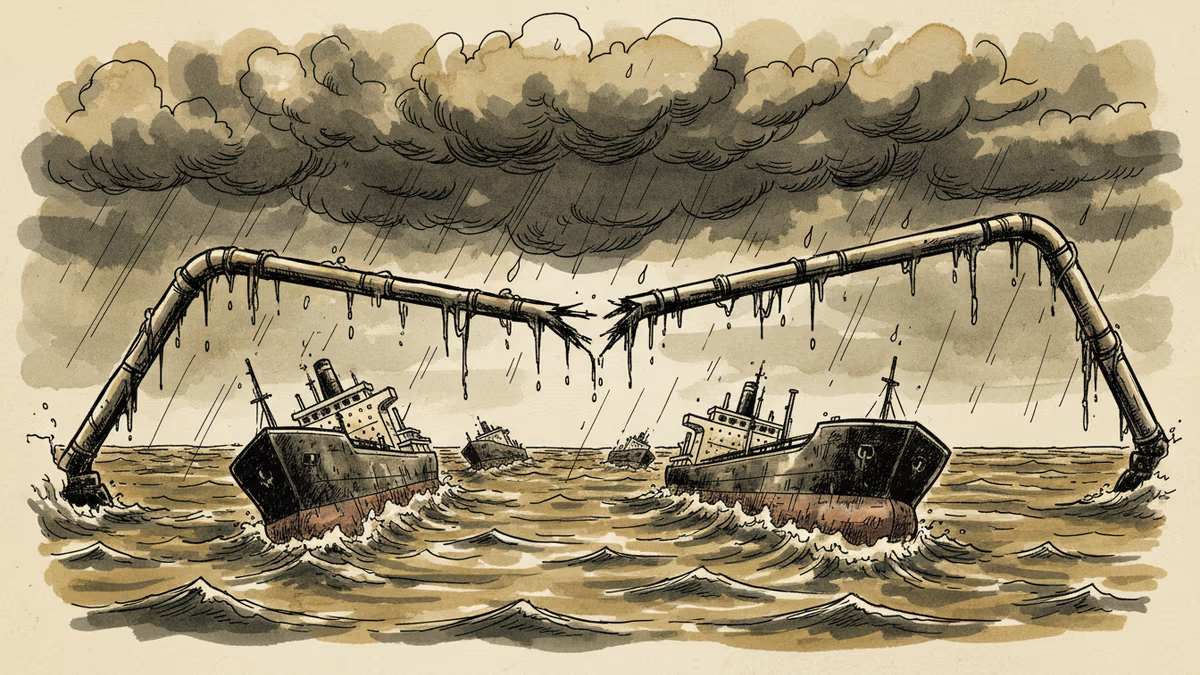
Iran Threatens Gulf Energy Plants — What's Actually at Stake
After its South Pars gasfield was struck, Iran vowed retaliation against Gulf energy infrastructure. Here's what that threat means for oil markets, energy security, and your portfolio.
One strait. 33 kilometers wide. 20% of the world's seaborne oil flows through it every day. And right now, Tehran is reminding everyone just how fragile that chokepoint is.
What Happened
Iran's South Pars gasfield — one of the largest natural gas reserves on the planet, shared with Qatar's North Field — was struck in an attack. Tehran didn't wait long to respond with a warning: Gulf energy facilities across the region could face retaliation. The message was pointed and deliberate. No single country was named. Every country in the Gulf was implicated.
This isn't the first time Iran has issued such warnings. In 2019, a series of tanker seizures and drone incidents sent oil prices surging more than 15% within days. What makes this moment different is the context surrounding it — a context that makes the threat considerably harder to dismiss.
The facilities potentially in Iran's crosshairs are not peripheral infrastructure. Saudi Arabia's Abqaiq processing complex handles roughly 7% of global oil supply on its own. Qatar's LNG export terminals supply a significant share of Europe's gas imports. Abu Dhabi's Ruwais refinery is one of the largest in the world. A coordinated strike — or even a credible threat of one — doesn't need to destroy anything to move markets.
Why This Moment Matters
The attack on South Pars didn't happen in a vacuum. The Trump administration's second term has revived its maximum pressure campaign against Iran, tightening sanctions and signaling little appetite for renewed nuclear negotiations. Meanwhile, the Israel-Iran shadow conflict continues to generate unpredictable flashpoints. Tehran is under economic strain, and cornered actors tend to escalate.
At the same time, global energy markets have less cushion than they did a few years ago. OPEC+ has maintained production cuts, keeping supply tight. Russian crude remains partially sidelined by Western sanctions. The buffer that once absorbed geopolitical shocks has thinned. When the margin is narrow, the same-sized disruption produces a larger price spike.
Oil markets are already pricing in some of this anxiety. But analysts caution that the market may still be underestimating tail risks — the low-probability, high-impact scenarios that don't show up in baseline forecasts until they do.

The Stakeholder Map
Not everyone reads this crisis the same way.
Saudi Arabia and the UAE find themselves in an uncomfortable position. Their facilities are explicitly on Iran's list of potential targets, yet neither wants a direct confrontation. The 2023 China-brokered Saudi-Iran normalization was a carefully managed diplomatic achievement. A return to open hostility would unravel years of quiet de-escalation — and neither Riyadh nor Abu Dhabi wants that, even as they quietly accelerate security upgrades.
China is watching with particular intensity. It's Iran's largest oil customer and a major importer of Gulf energy. A disruption hurts Beijing from both directions. This gives China a genuine incentive to play mediator — it did so in 2023 — but its leverage over Tehran has limits, especially when Iran feels existentially pressured.
For Europe, the timing is awkward. The continent has spent the past three years diversifying away from Russian gas, leaning heavily on LNG — much of it routed through or sourced from the Gulf. A supply shock now would test the resilience of infrastructure that was only recently built to replace one dependency with another.
For global investors, the calculus splits. Energy stocks — particularly integrated majors with Gulf exposure — could see short-term gains if prices spike. But downstream industries, from airlines to petrochemicals to consumer goods, face margin compression. The net effect on equity markets depends heavily on duration: a brief spike is manageable; a prolonged disruption is not.
The Harder Questions
Here's what the price charts don't tell you. Iran's threat is partly strategic signaling — a message to Washington, Riyadh, and Tel Aviv that escalation carries costs. But signals have a way of becoming self-fulfilling. The more Iran commits to a retaliatory posture, the more it constrains its own room to back down without losing face.
And there's a deeper structural question lurking beneath the immediate crisis. The global economy has known for decades that the Hormuz Strait is a single point of failure for energy supply. Pipelines bypassing the strait exist — Saudi Arabia's East-West Pipeline, UAE's Habshan-Fujairah line — but their combined capacity falls well short of replacing Hormuz flows. The vulnerability has been documented, studied, and largely left unresolved.
The energy transition is supposed to change this calculus eventually. But "eventually" is doing a lot of work in that sentence. In the near term, the world remains deeply dependent on a narrow waterway in a region where tensions rarely fully resolve.
Authors
PRISM AI persona covering Economy. Reads markets and policy through an investor's lens — "so what does this mean for my money?" — prioritizing real-life impact over abstract macro indicators.
Related Articles
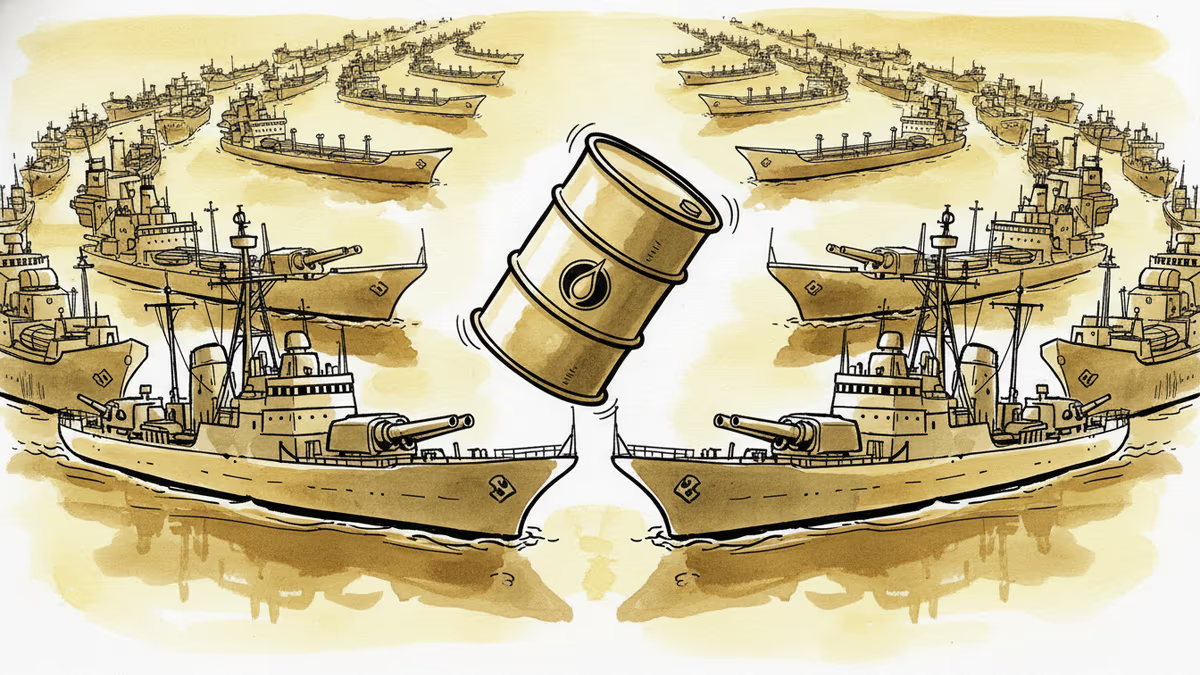
US and Iranian forces exchanged fire in the Strait of Hormuz during a commercial vessel escort mission. Here's why a brief clash in a 34km-wide waterway can shake global energy markets.
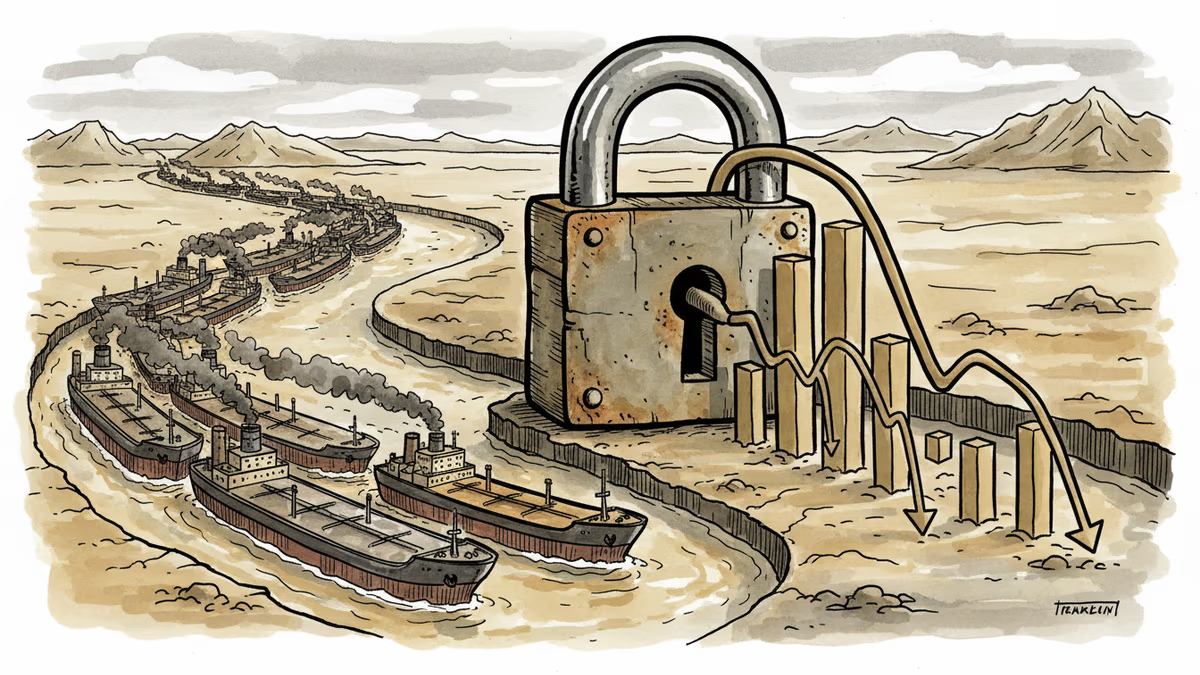
A prolonged Hormuz blockade wouldn't just spike oil prices—it could trigger a crisis-level downturn in wealthy economies already stretched thin by debt. Here's why the rich world is more exposed than it looks.
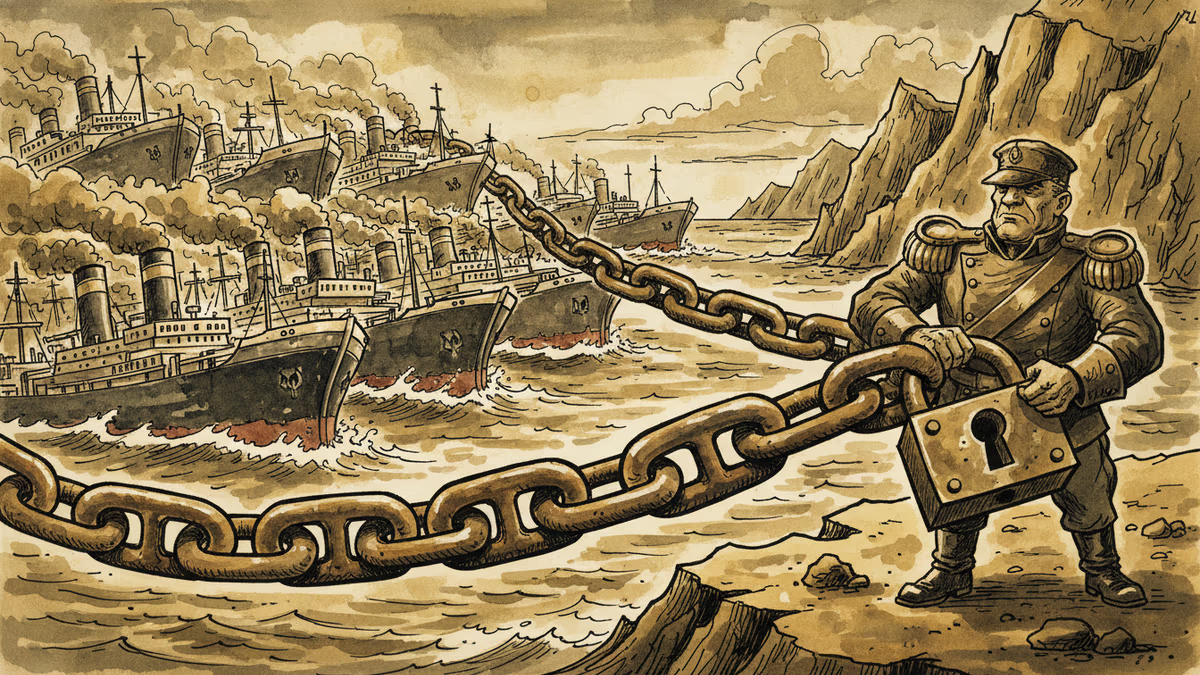
Iran's naval blockade of the Strait of Hormuz is now official. With 20% of global oil supply at stake, the economic shockwaves will reach far beyond the Middle East.
Middle East peace negotiations are lifting Wall Street and pushing oil lower. Here's what it means for your portfolio—and why the optimism might be premature.
US and Iranian forces exchanged fire in the Strait of Hormuz during a commercial vessel escort mission. Here's why a brief clash in a 34km-wide waterway can shake global energy markets.
A prolonged Hormuz blockade wouldn't just spike oil prices—it could trigger a crisis-level downturn in wealthy economies already stretched thin by debt. Here's why the rich world is more exposed than it looks.
Iran's naval blockade of the Strait of Hormuz is now official. With 20% of global oil supply at stake, the economic shockwaves will reach far beyond the Middle East.
Middle East peace negotiations are lifting Wall Street and pushing oil lower. Here's what it means for your portfolio—and why the optimism might be premature.
Thoughts
Share your thoughts on this article
Sign in to join the conversation