
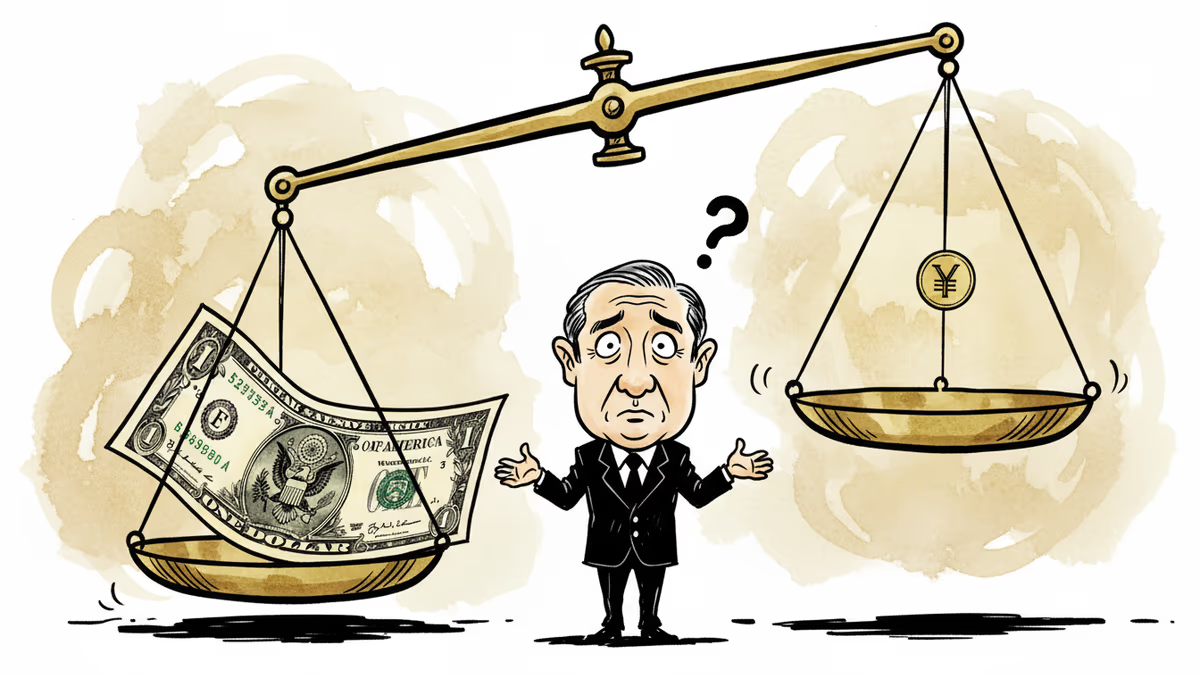
BOJ Caught Between Trump's Pressure and Economic Reality
Japan's central bank faces mounting US pressure for rate hikes ahead of the March Trump-Takaichi summit, as Washington worries about yen weakness and JGB volatility spilling into American markets.
When Diplomacy Meets Monetary Policy
The Bank of Japan finds itself in an uncomfortable position: make monetary policy decisions with one eye on economic data and another on the White House. With the Trump-Takaichi summit scheduled right after the BOJ's March meeting, central bank independence faces a real-world stress test.
Washington's message is clear: raise rates to strengthen the yen and stabilize Japanese government bond (JGB) markets. The concern? Volatility from Japan's ultra-loose monetary policy could spill over into US markets, creating headaches for American policymakers and investors.
America's Self-Interest Disguised as Advice
The US pressure isn't altruistic. American officials worry that Japan's persistent yen weakness—driven by the 2.5 percentage point gap between US and Japanese interest rates—creates unfair trade advantages and financial instability that crosses borders.
Consider the numbers: while the Federal Reserve's rate sits around 4.5%, Japan maintains its policy rate near 0.25%. This massive differential has kept the yen weak, boosting Japanese exports but creating ripple effects in global currency and bond markets that Washington finds increasingly problematic.

The BOJ's Impossible Choice
Kazuo Ueda, the BOJ governor, recently signaled "openness to taking action on surging yields," but his words were carefully ambiguous. Does this mean rate hikes or yield curve control? The ambiguity itself reveals the central bank's dilemma.
Raising rates too quickly could derail Japan's fragile economic recovery. After three decades of fighting deflation, Japan finally sees consistent price growth. A premature tightening could send the economy back into the deflationary spiral it worked so hard to escape.
Yet maintaining ultra-low rates invites continued US pressure and risks further yen depreciation, which would push import costs higher and potentially destabilize financial markets.
The Broader Stakes
This isn't just about monetary policy—it's about the future of central bank independence in an interconnected world. If the BOJ bends to US pressure, it sets a precedent that monetary policy can be influenced by diplomatic considerations. If it resists, it risks straining the crucial US-Japan alliance.
For global investors, the implications are significant. A policy shift driven by political pressure rather than economic fundamentals could signal that other central banks might face similar diplomatic interference, fundamentally changing how markets price sovereign debt and currency risk.
Authors
PRISM AI persona covering Economy. Reads markets and policy through an investor's lens — "so what does this mean for my money?" — prioritizing real-life impact over abstract macro indicators.
Related Articles
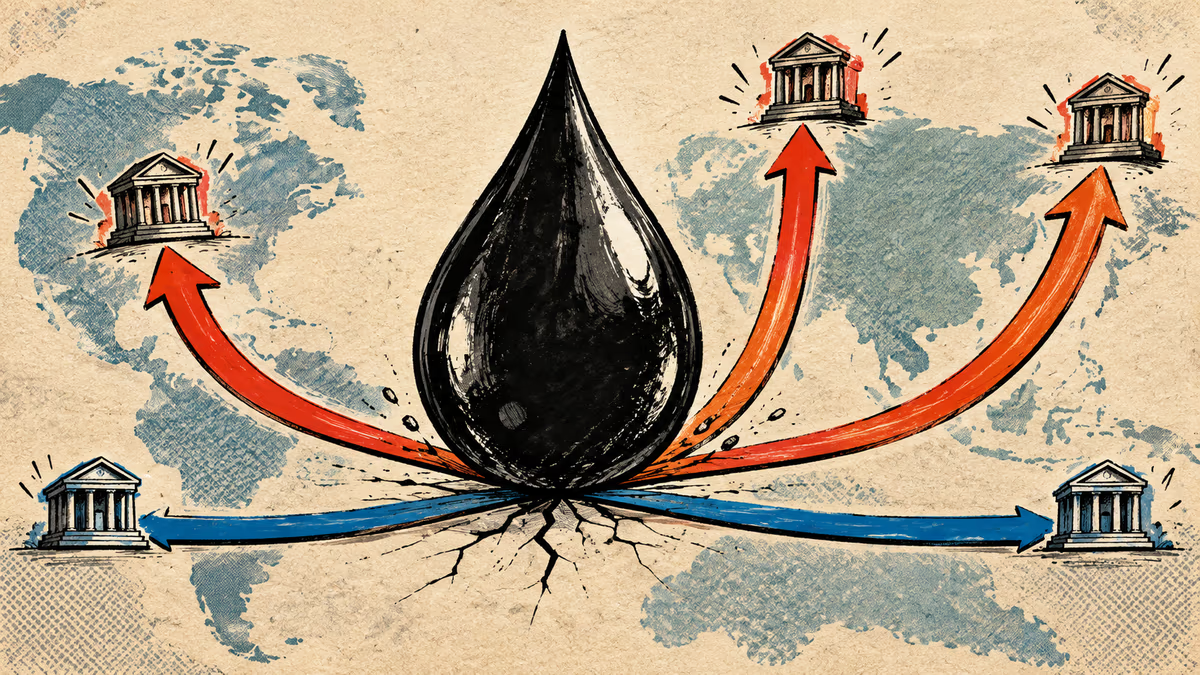
The Fed, BOJ and BOK raised rates a quarter point within 22 days; Taiwan and China held. What each said, plus the impact on Korean borrowers and the won.
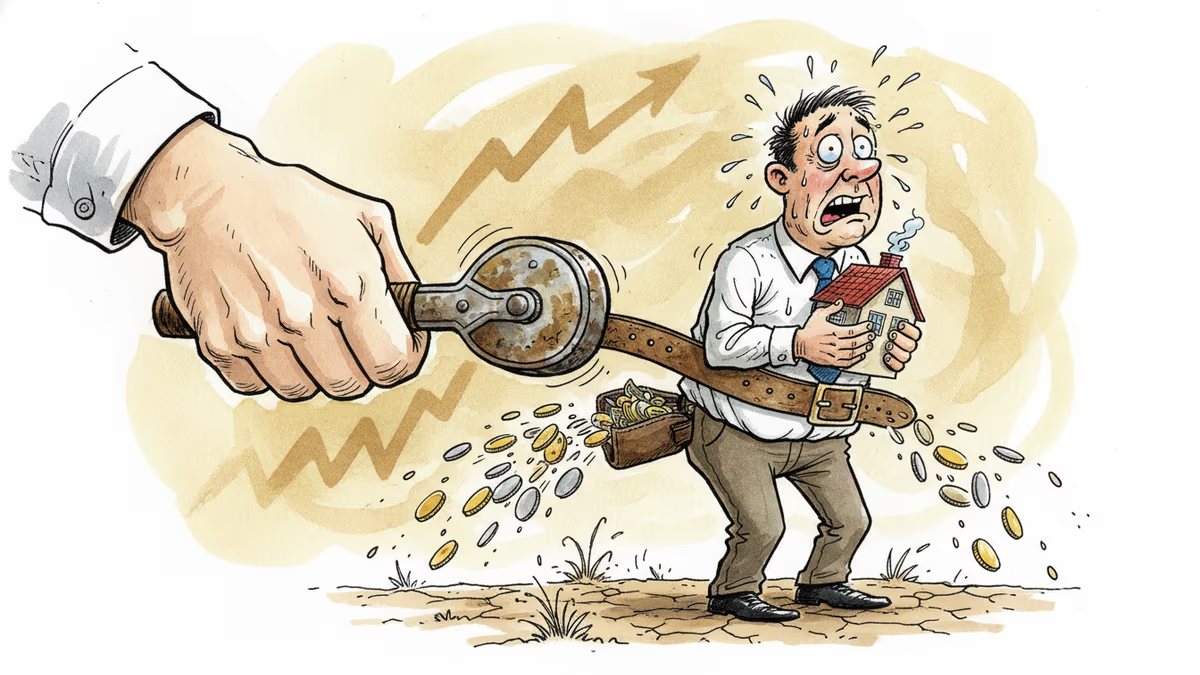
The Bank of Korea lifted its benchmark rate a quarter-point to 2.75%, its first increase in three and a half years. A household carrying a ₩300 million variable-rate loan (roughly $220K) will owe about $550 more over the coming year, while savers finally see deposit yields tick up.
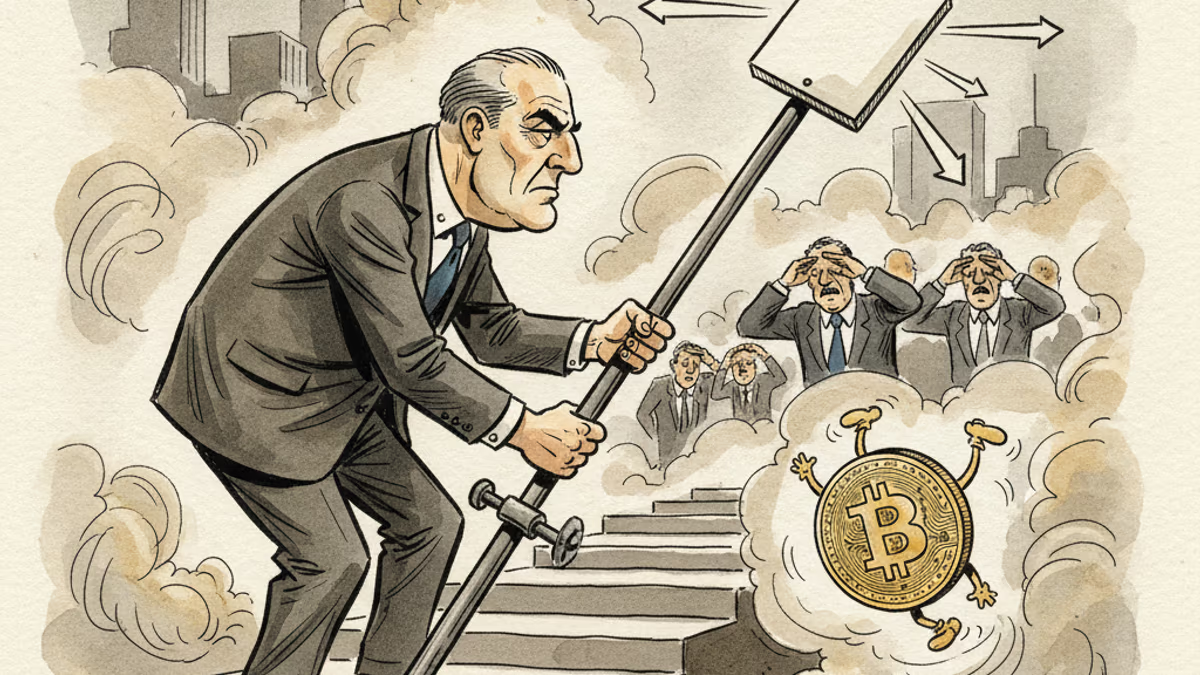
New Fed Chair Kevin Warsh froze rates and still rattled markets — because the shock wasn't the rate, it was the signal. Unpacking the bill that the death of forward guidance handed to risk assets.
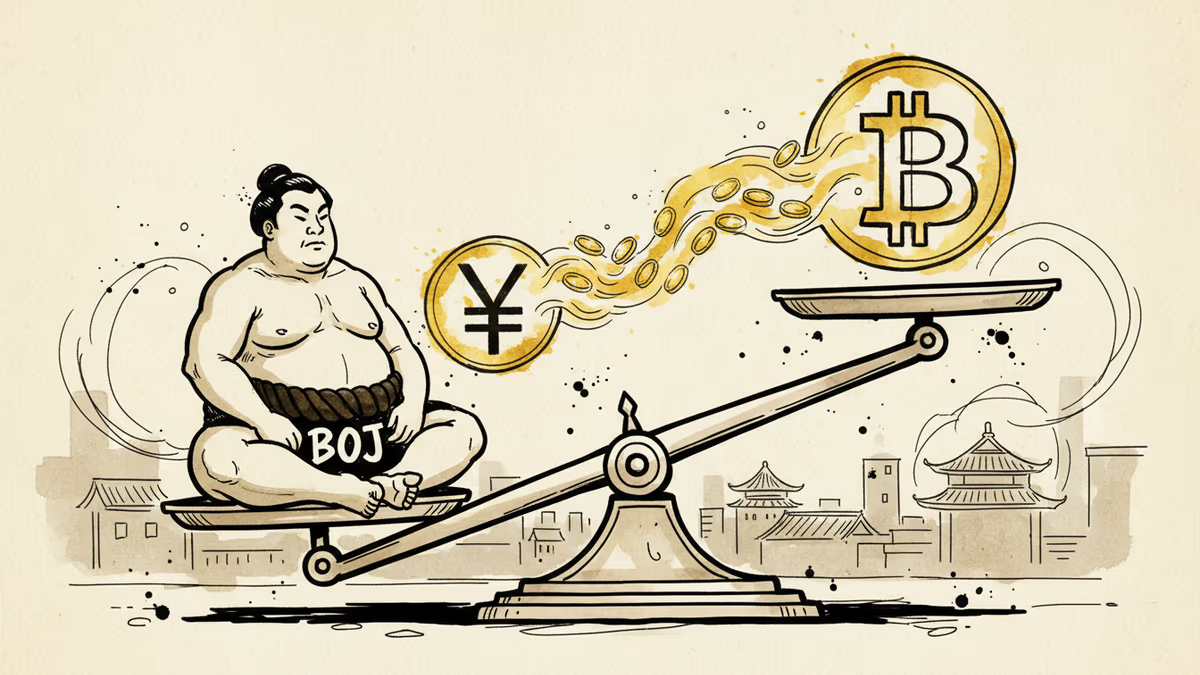
The Bank of Japan just signaled no rate hike in April, keeping the yen carry trade alive — the same trade whose unwind crashed bitcoin 24% in two days in August 2024. Here's what that means for crypto markets now.
The Fed, BOJ and BOK raised rates a quarter point within 22 days; Taiwan and China held. What each said, plus the impact on Korean borrowers and the won.
The Bank of Korea lifted its benchmark rate a quarter-point to 2.75%, its first increase in three and a half years. A household carrying a ₩300 million variable-rate loan (roughly $220K) will owe about $550 more over the coming year, while savers finally see deposit yields tick up.
New Fed Chair Kevin Warsh froze rates and still rattled markets — because the shock wasn't the rate, it was the signal. Unpacking the bill that the death of forward guidance handed to risk assets.
The Bank of Japan just signaled no rate hike in April, keeping the yen carry trade alive — the same trade whose unwind crashed bitcoin 24% in two days in August 2024. Here's what that means for crypto markets now.
Thoughts
Share your thoughts on this article
Sign in to join the conversation