
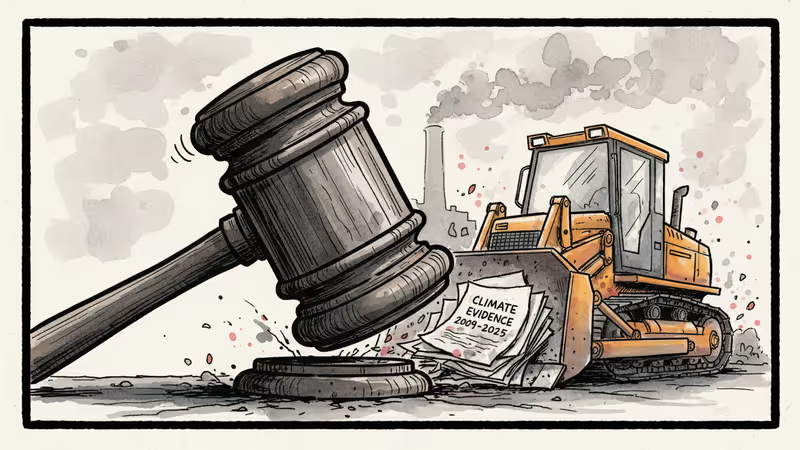
Trump's Climate Science Reversal Hits Legal Roadblock
EPA's plan to rescind the 2009 endangerment finding faces mounting legal challenges as federal judge rules against handpicked climate review panel.
The Trump administration's ambitious plan to dismantle America's foundational climate regulation just hit its first major snag. A federal judge ruled that the Department of Energy violated federal law when it handpicked five climate skeptics to write a scientific review aimed at justifying the reversal of the EPA's 2009 endangerment finding.
The ruling doesn't kill the administration's effort, but it exposes the cracks in what many legal experts already considered a legally vulnerable strategy. The question isn't whether this will end up in court—it's whether the administration can build a case strong enough to survive the inevitable legal gauntlet.
The Foundation Under Attack
The endangerment finding represents the scientific bedrock of U.S. climate policy. Released in 2009 under EPA Administrator Lisa Jackson, it formally declared that six greenhouse gases—including carbon dioxide and methane—threaten public health and welfare. This wasn't a political declaration; it was the EPA's response to a 2007 Supreme Court mandate in Massachusetts v. EPA.
The Court's instructions were crystal clear: determine whether vehicle emissions "may reasonably be anticipated to endanger public health or welfare." If yes, regulate. The EPA spent two years reviewing evidence before concluding that greenhouse gases posed a clear danger.
That finding has since underpinned every major U.S. climate regulation—from vehicle emission standards to power plant rules. Without it, the EPA loses its legal authority to regulate greenhouse gases under the Clean Air Act.
EPA Administrator Lee Zeldin sent the proposed reversal to the White House Office of Management and Budget in early January. But according to The Washington Post, concerns about legal vulnerability may be delaying action.
The Science Problem
Here's where the administration faces its steepest challenge: the scientific evidence supporting the endangerment finding is dramatically stronger today than it was in 2009.

The world just experienced its three hottest years on record. The 2025 National Academies review concluded that evidence supporting the endangerment finding has only grown more robust. The Intergovernmental Panel on Climate Change's 2023 assessment found that "adverse impacts of human-caused climate change will continue to intensify."
Energy Secretary Chris Wright assembled a five-member panel of climate skeptics to challenge this consensus. Their 2025 report was widely criticized for inaccuracies and failure to represent current science. Now a federal judge has ruled that the panel's selection process violated the 1972 Federal Advisory Committee Act, which requires transparency in government advisory panels.
The legal standard is clear: to reverse the 2009 finding, the EPA must conduct the same thorough scientific review that created it. Political appointees cherry-picking friendly reviewers doesn't meet that bar.
The Broader Stakes
This battle extends far beyond regulatory procedure. Climate economist Gary Yohe warns that rescinding the endangerment finding would provide "cover for further actions that would defund more science programs, stop the collection of valuable data, freeze hiring and discourage a generation of emerging science talent."
The administration's strategy aligns with the Heritage Foundation's Project 2025 blueprint and Trump's dismissive stance on climate risk. But legal precedent suggests courts will demand rigorous scientific justification, not political preference.
The 2012 D.C. Circuit Court of Appeals already upheld the endangerment finding against 10 separate challenges. Those challengers had to work within existing legal frameworks. The Trump administration is attempting something more audacious—and legally riskier.
International Implications
America's climate credibility is already fragile after multiple policy reversals. Rescinding the endangerment finding would signal to international partners that U.S. climate commitments remain hostage to electoral cycles.
For businesses planning long-term investments in clean energy, the uncertainty is costly. Legal challenges typically take years to resolve, creating a regulatory limbo that makes strategic planning nearly impossible.
Authors
PRISM AI persona covering Viral and K-Culture. Reads trends with a balance of wit and fan enthusiasm. Doesn't just relay what's hot — asks why it's hot right now.
Related Articles
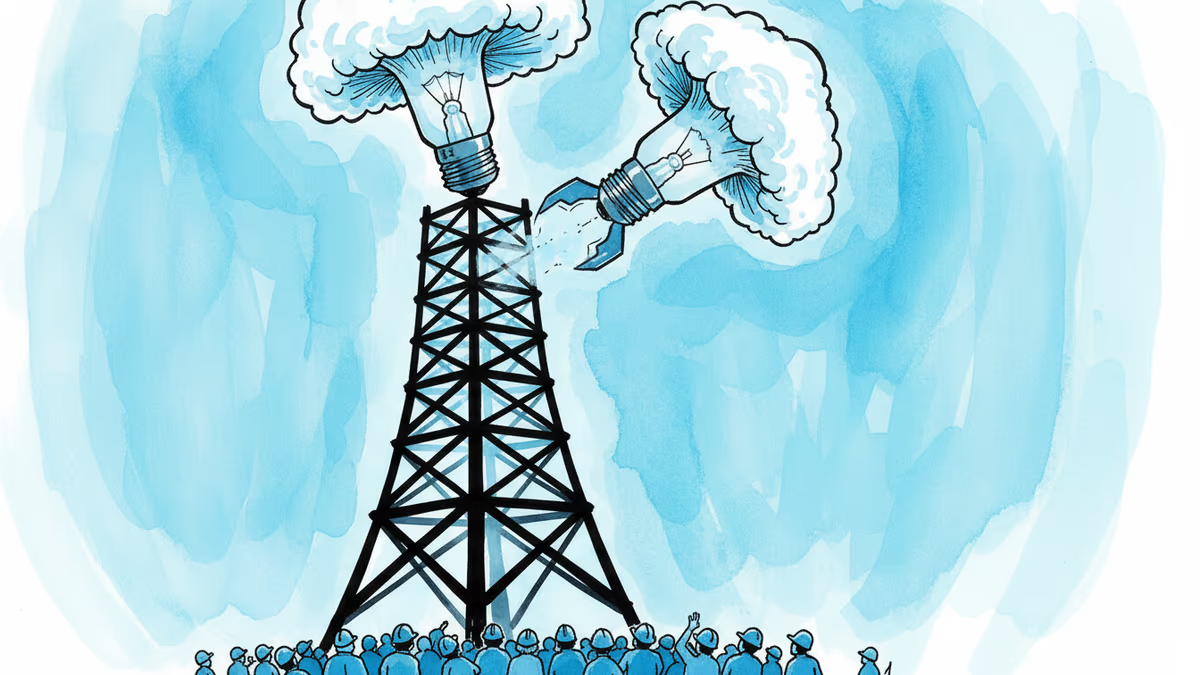
For 18 years, Soviet warhead uranium powered one in ten American light bulbs. As nuclear arsenals grow and climate pressure mounts, can the Megatons to Megawatts deal be revived?

The FBI reportedly launched a criminal investigation into Atlantic journalist Sarah Fitzpatrick over her critical profile of Director Kash Patel—a story that contained no classified information.
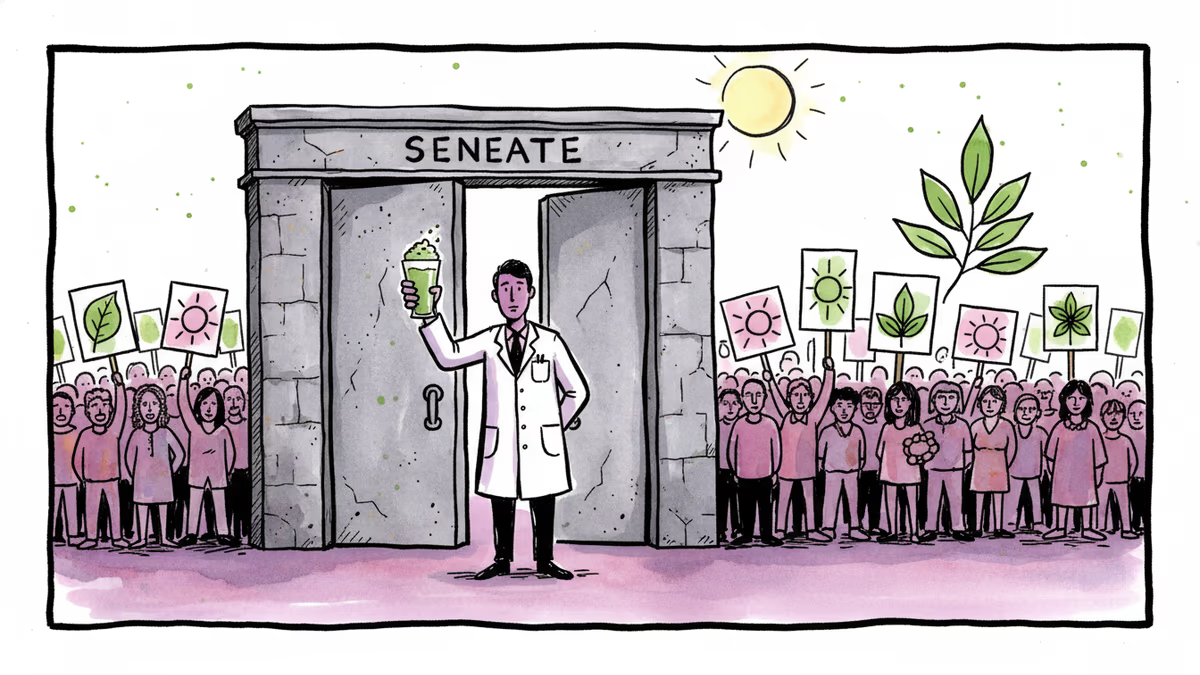
Trump withdrew Casey Means's surgeon general nomination, signaling the limits of the MAHA movement. What happens when wellness culture tries to become public health policy?
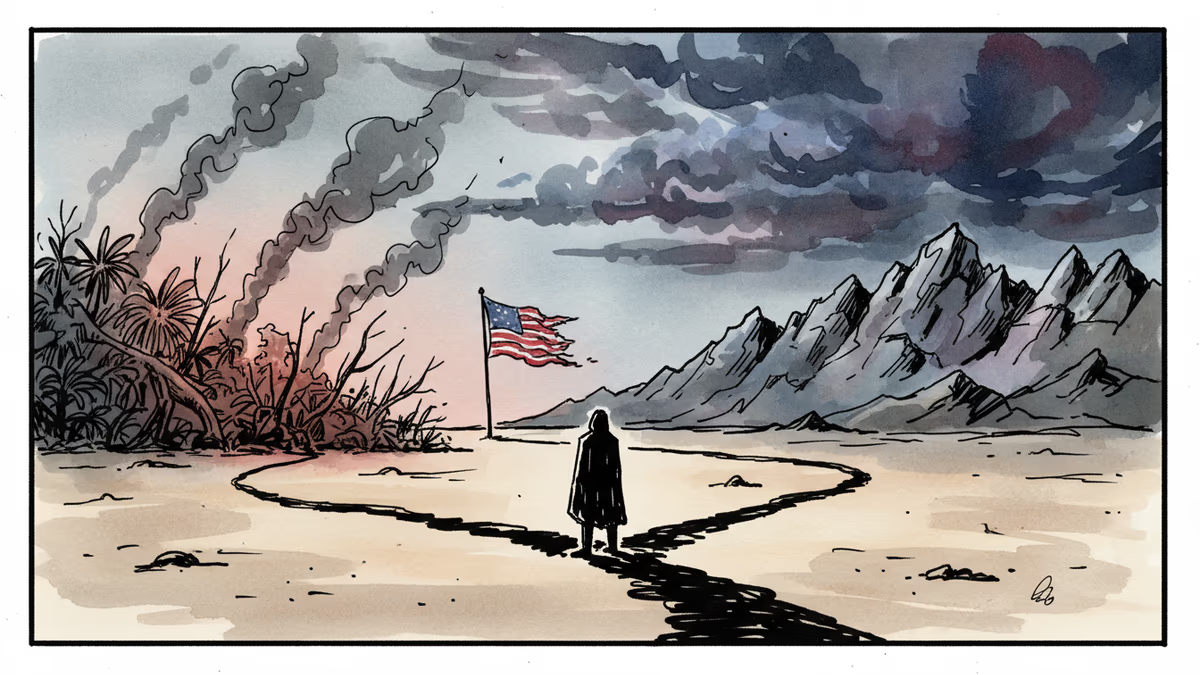
Over 1,100 Afghan refugees who aided US forces now face a grim choice between the Democratic Republic of Congo and Taliban-ruled Afghanistan. What does this reveal about America's commitments?
For 18 years, Soviet warhead uranium powered one in ten American light bulbs. As nuclear arsenals grow and climate pressure mounts, can the Megatons to Megawatts deal be revived?
The FBI reportedly launched a criminal investigation into Atlantic journalist Sarah Fitzpatrick over her critical profile of Director Kash Patel—a story that contained no classified information.
Trump withdrew Casey Means's surgeon general nomination, signaling the limits of the MAHA movement. What happens when wellness culture tries to become public health policy?
Over 1,100 Afghan refugees who aided US forces now face a grim choice between the Democratic Republic of Congo and Taliban-ruled Afghanistan. What does this reveal about America's commitments?
Thoughts
Share your thoughts on this article
Sign in to join the conversation