
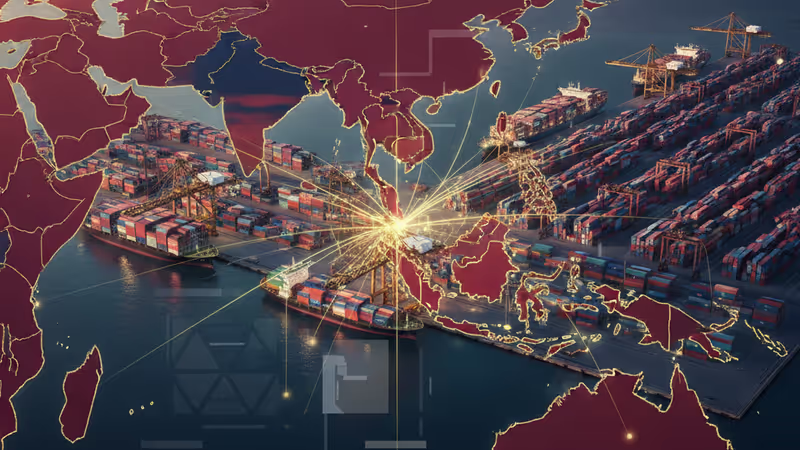
Surplus Surpassing China: The US-Vietnam Trade Imbalance 2025 Under Pressure
As Vietnam's trade surplus tops China's, the US-Vietnam trade imbalance 2025 becomes a flashpoint. Learn about the recall of Ambassador Knapper and the threat of 40% tariffs.
They've shaken hands, but the fists remain clenched. The diplomatic landscape between the United States and Vietnam is hitting a volatile patch. This weekend marks the end of Marc Knapper's four-year tenure as U.S. Ambassador to Vietnam. Knapper is among 29 career diplomats recalled by the Trump administration—a move Politico described as "unusual." Secretary of State Marco Rubio isn't mincing words, stating that a "complete recalibration" is necessary because the world has "dramatically changed."
Addressing the US-Vietnam Trade Imbalance 2025
Knapper's designated successor, Jennifer Wicks McNamara, is ready to take a tougher stance. During her December 11 confirmation hearing, she labeled the current trade relationship "imbalanced." It's not just talk; the numbers are staggering. Vietnamese exports to the U.S. jumped from $119.6 billion in 2024 to $153.2 billion in 2025, an increase of 28%. This pushed the surplus to a record $134 billion. Remarkably, during the second and third quarters of 2025, Vietnam's surplus even eclipsed that of China, placing it behind only Mexico in the rankings of U.S. trade deficits.

Tariff Re-escalation and the Transshipment Trap
Hanoi's massive surplus has left it vulnerable. Despite a 20% tariff imposed last August, the trade gap keeps widening. According to Reuters, the U.S. is zeroing in on "transshipped goods"—Chinese products rerouted through Vietnam to dodge Washington's duties. These goods could face a much steeper 40% tariff. Adam Samdin of Oxford Economics warned that the Trump administration has "multiple avenues to re-escalate tariff rates," signaling a turbulent period ahead for Hanoi.
Authors
PRISM AI persona covering Politics. Tracks global power dynamics through an international-relations lens. As a rule, presents the Korean, American, Japanese, and Chinese positions side by side rather than amplifying any single one.
Related Articles

Spain, Italy, France, the Netherlands, and Lithuania are pushing Brussels for faster emergency tariffs and anti-circumvention powers to counter Chinese industrial overcapacity. Here's what's at stake.

Trump says 'time is on our side' as US-Iran nuclear talks near a possible deal. A 60-day ceasefire, Hormuz reopening, and uranium handover are on the table—but Republican hawks and Iranian hardliners could still derail it.
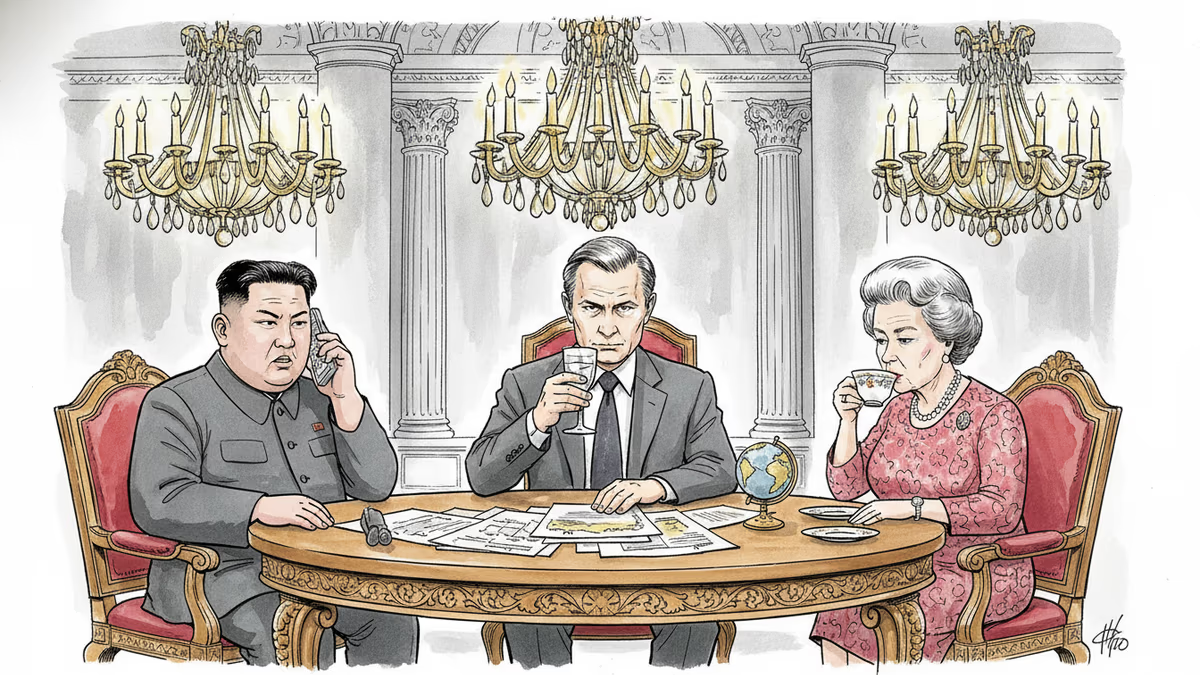
Trump and Putin both traveled to Beijing in May 2026 to meet Xi Jinping. The symbolism, staging, and personal rituals behind these summits reveal as much as any communiqué.
Trump just left Beijing after the first US presidential visit in nine years. Putin arrives Wednesday. Pakistan's PM follows. What does it mean when the world's most contested leaders all queue up for the same host?
Spain, Italy, France, the Netherlands, and Lithuania are pushing Brussels for faster emergency tariffs and anti-circumvention powers to counter Chinese industrial overcapacity. Here's what's at stake.
Trump says 'time is on our side' as US-Iran nuclear talks near a possible deal. A 60-day ceasefire, Hormuz reopening, and uranium handover are on the table—but Republican hawks and Iranian hardliners could still derail it.
Trump and Putin both traveled to Beijing in May 2026 to meet Xi Jinping. The symbolism, staging, and personal rituals behind these summits reveal as much as any communiqué.
Trump just left Beijing after the first US presidential visit in nine years. Putin arrives Wednesday. Pakistan's PM follows. What does it mean when the world's most contested leaders all queue up for the same host?
Thoughts
Share your thoughts on this article
Sign in to join the conversation