

Trump Administration Offshore Wind Lawsuit: Developers Fight for $25B in Assets
Three major developers are suing over the Trump administration offshore wind lawsuit involving $25 billion in halted projects. National security and radar issues are at the heart of the conflict.
A $25 billion clean energy gamble is heading to court. Three offshore wind giants have sued the Trump administration after a sudden halt froze five massive projects late last year.
The Trump Administration Offshore Wind Lawsuit: Security vs. Sustainability
According to TechCrunch, developers including Ørsted, Equinor, and Dominion Energy filed legal challenges on Thursday and Friday. This follows the Department of the Interior's December 22 decision to stop construction on projects intended to generate 6 gigawatts of electricity. The halt is proving costly, with Dominion reporting losses of $5 million per day.

The administration cited national security, specifically the potential for wind turbine blades to interfere with radar systems. While this has been a known technical challenge, researchers have spent over a decade developing mitigation strategies. Experts suggest that modern adaptive algorithms and precise site selection can effectively de-conflict these concerns, making the administration's sweeping stop-work order a point of intense legal contention.
At a Glance: Impacted Offshore Projects
| Project | Developer | Capacity | Progress |
|---|---|---|---|
| Revolution Wind | Ørsted | 704MW | 90% |
| Empire Wind | Equinor | 2GW | 60% |
| Coastal Virginia | Dominion | 2.6GW | 60% |
Authors
Related Articles
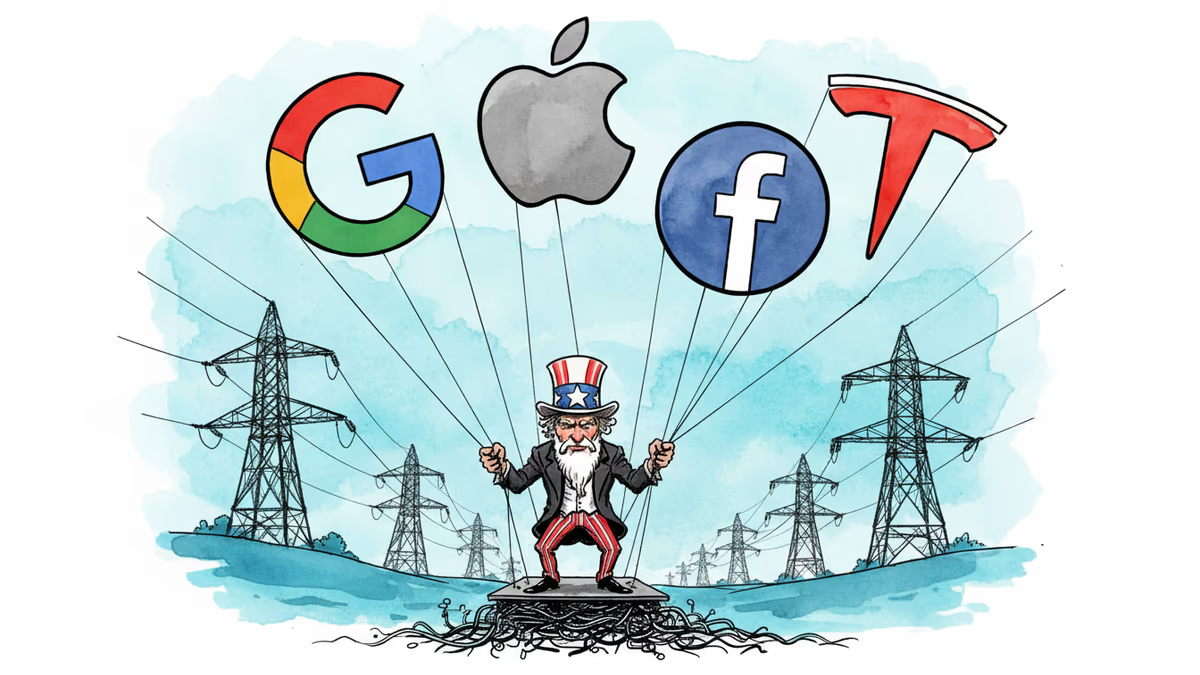
Trump administration secures nonbinding pledge from tech giants to protect consumers from data center electricity costs, but experts doubt meaningful impact
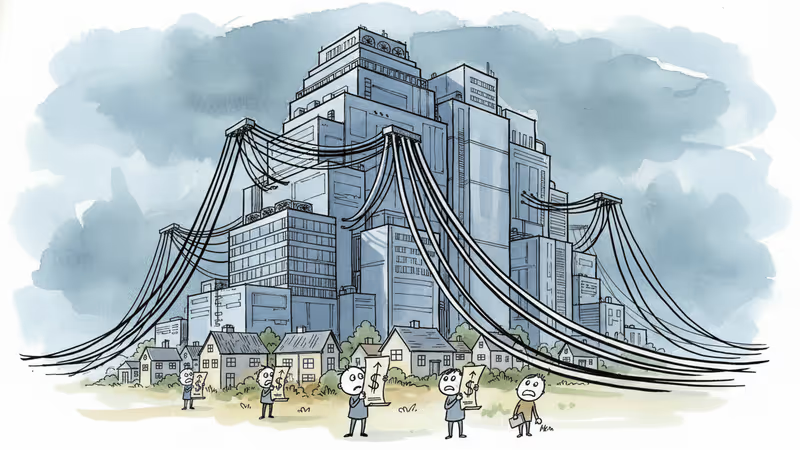
New York joins five other states proposing data center moratoriums as bipartisan concerns mount over AI's hidden costs - soaring energy bills, grid strain, and environmental impact.

Federal judges have blocked the Trump administration's halt on 6GW of offshore wind projects. Major developments like Empire Wind are set to resume construction.
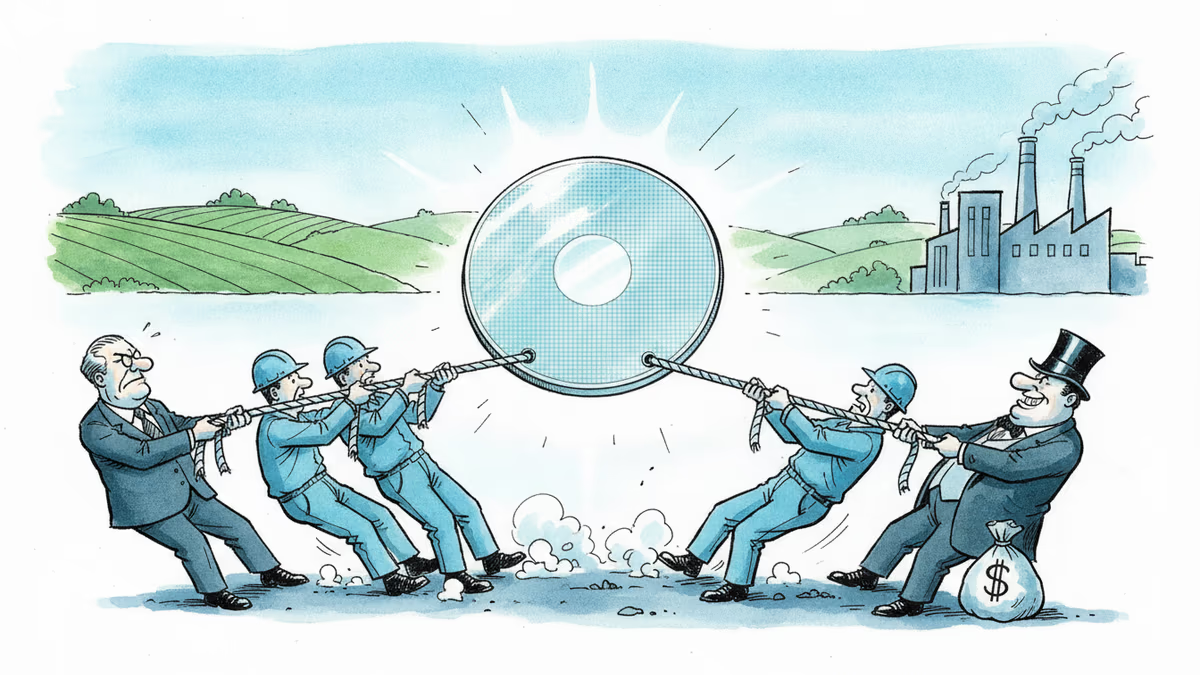
Samsung Electronics' union branch revealed that 84% of survey respondents oppose the government's roughly $290 billion (₩400 trillion) semiconductor megaproject in Gwangju. Government, management, the union and shareholders are all reading the same national project in sharply different ways.
Trump administration secures nonbinding pledge from tech giants to protect consumers from data center electricity costs, but experts doubt meaningful impact
New York joins five other states proposing data center moratoriums as bipartisan concerns mount over AI's hidden costs - soaring energy bills, grid strain, and environmental impact.
Federal judges have blocked the Trump administration's halt on 6GW of offshore wind projects. Major developments like Empire Wind are set to resume construction.
Samsung Electronics' union branch revealed that 84% of survey respondents oppose the government's roughly $290 billion (₩400 trillion) semiconductor megaproject in Gwangju. Government, management, the union and shareholders are all reading the same national project in sharply different ways.
Thoughts
Share your thoughts on this article
Sign in to join the conversation