

Trump OKs Nvidia H200 China Export with 25% Government Revenue Cut
President Trump has approved the export of Nvidia H200 AI chips to China. The deal includes a 25% government cut of all sales and strict requirements for domestic supply priority.
The U.S. government is taking a 25% slice of the pie. President Donald Trump confirmed on Wednesday, January 14, 2026, that the White House will approve China sales of Nvidia's H200 AI chips, provided the government receives a quarter of the sales value.
Conditions of the Nvidia H200 China Export Deal
Unlike the previous H20 model, which was specifically slowed down for the Chinese market, the H200 is a standard member of the Hopper generation sold globally. Trump justified the move by noting that the H200 has already been surpassed by two generations of chips, specifically Blackwell and Rubin. "It's not the highest level, but it's a pretty good level," Trump remarked during the signing.

Stringent Security and Supply Requirements
The Department of Commerce has laid out strict ground rules for these exports. Companies must certify a sufficient supply of H200 chips for U.S. customers before shipping abroad. Furthermore, shipments to China are capped at 50% of the total volume sent to domestic buyers. The chips must also undergo independent third-party testing within the U.S. to verify specs, a process that will incur an additional 25% import tariff for the testing cycle.
| Feature | H20 (Previous) | H200 (New Approval) |
|---|---|---|
| Performance | Slowed down for China | Standard Hopper specs |
| U.S. Gov Cut | Standard Taxes | 25% of sales value |
| Testing | Standard | Mandatory 3rd-party in U.S. |
Authors
Related Articles
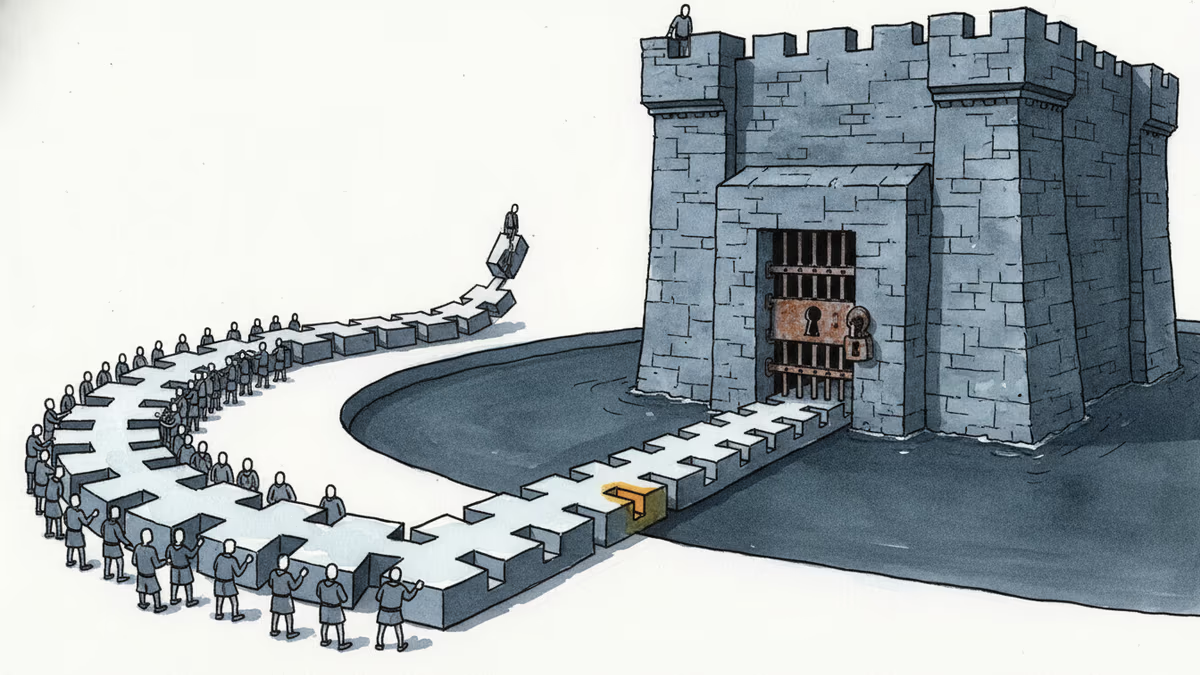
Nvidia shipped roughly a billion RISC-V cores in 2024, then announced it would run CUDA on the open standard. We break down how royalty-free instruction sets and open software stacks are trying to route around CUDA's lock-in. Part 2 of the Semiconductor Sovereignty series.
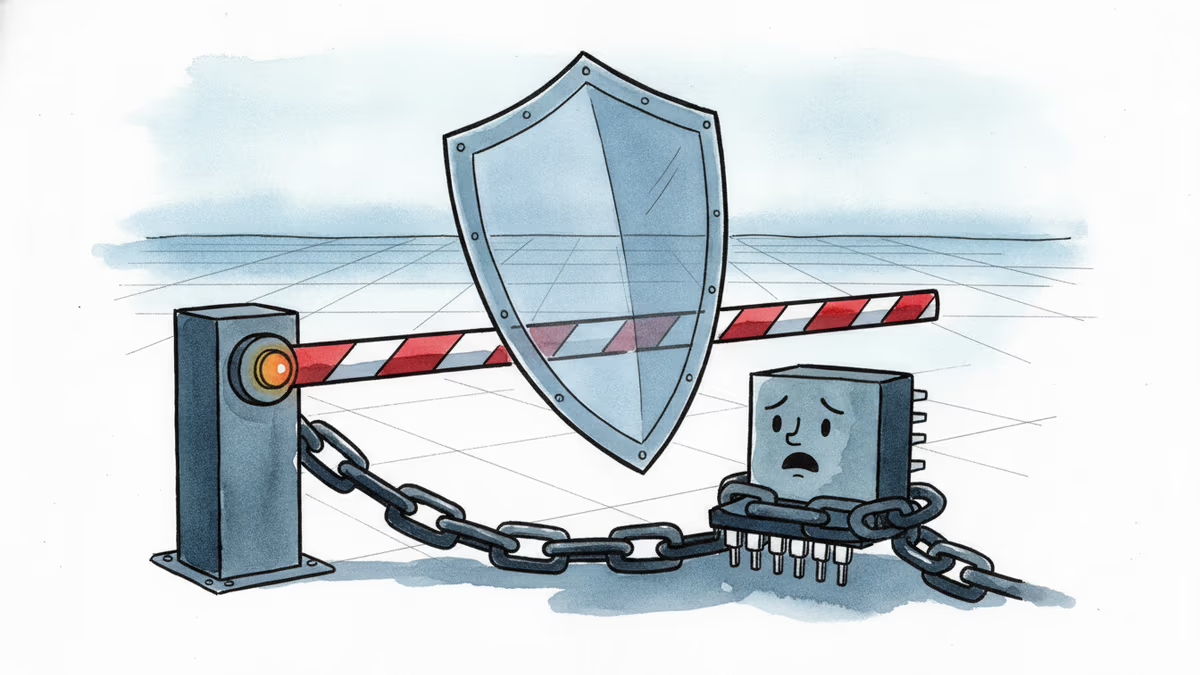
US AI-chip export controls split into three layers in the first half of 2026 — January easing, a May crackdown on circumvention, and a pending bill. Nvidia erased China from its guidance and still posted a record $81.6 billion quarter. A look at the export policy that both shields and cages it.
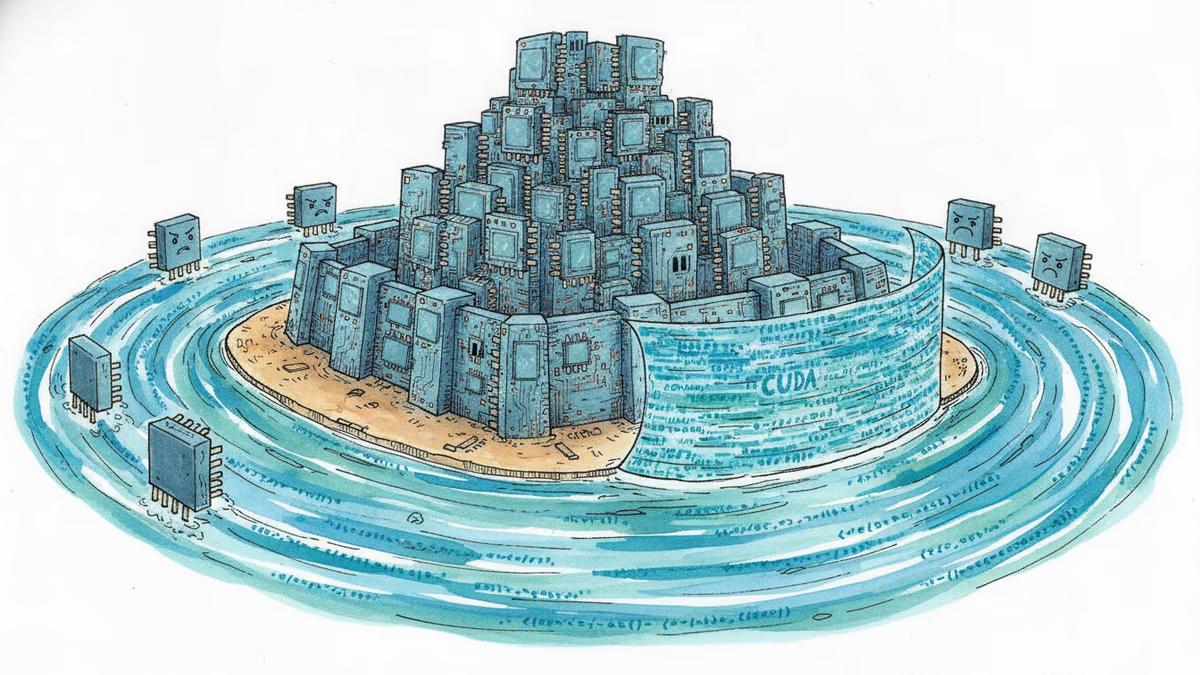
AMD's MI325X matches or beats Nvidia on memory and bandwidth — yet Nvidia's 86-92% share holds. The real moat is CUDA, 20 years in the making. Part 1 of 4.

Snowflake's new $6 billion AWS contract is about more than cloud spending. It signals a shift in AI infrastructure—away from Nvidia GPUs and toward cheaper, homegrown chips for the agent era.
Nvidia shipped roughly a billion RISC-V cores in 2024, then announced it would run CUDA on the open standard. We break down how royalty-free instruction sets and open software stacks are trying to route around CUDA's lock-in. Part 2 of the Semiconductor Sovereignty series.
US AI-chip export controls split into three layers in the first half of 2026 — January easing, a May crackdown on circumvention, and a pending bill. Nvidia erased China from its guidance and still posted a record $81.6 billion quarter. A look at the export policy that both shields and cages it.
AMD's MI325X matches or beats Nvidia on memory and bandwidth — yet Nvidia's 86-92% share holds. The real moat is CUDA, 20 years in the making. Part 1 of 4.
Snowflake's new $6 billion AWS contract is about more than cloud spending. It signals a shift in AI infrastructure—away from Nvidia GPUs and toward cheaper, homegrown chips for the agent era.
Thoughts
Share your thoughts on this article
Sign in to join the conversation