
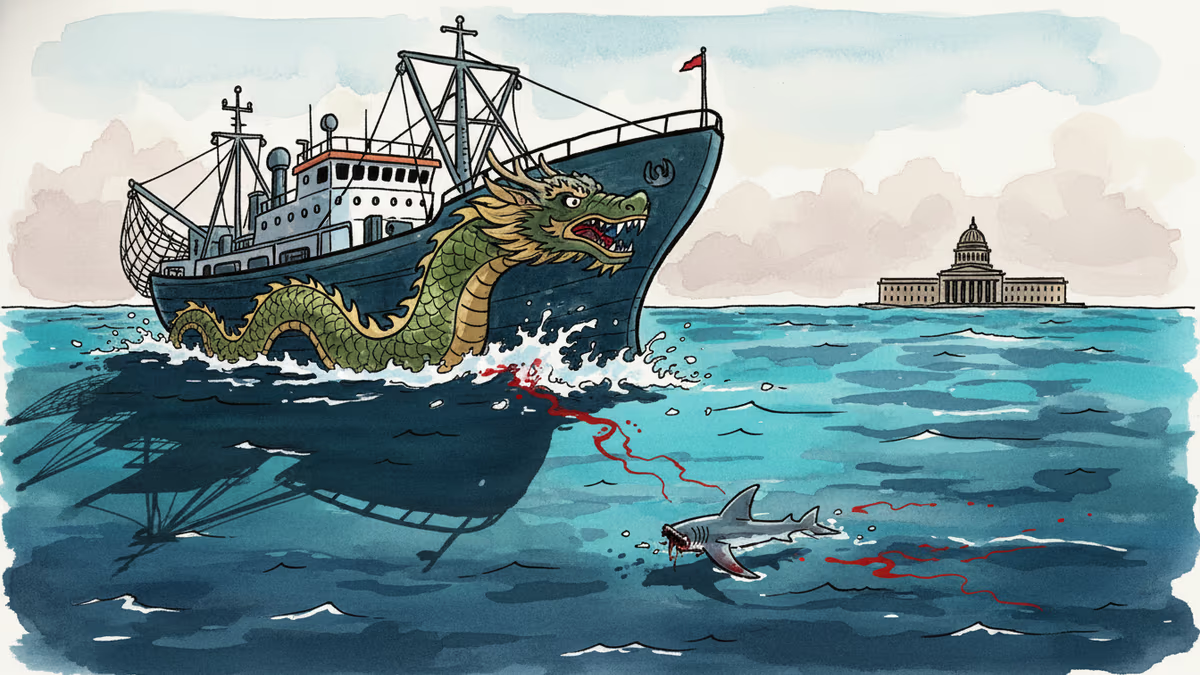
A Shark's Fin and a $1.5 Billion Trade Threat
A U.S. nonprofit has petitioned the federal government to sanction China over shark finning. If upheld, it could trigger a ban on all Chinese seafood imports worth $1.5 billion annually.
What does a bowl of shark fin soup have to do with a bilateral trade war? More than Beijing would like to admit.
This month, the Center for Biological Diversity, a U.S.-based nonprofit focused on protecting endangered species, filed a formal petition asking the federal government to consider sanctioning China for failing to meet American shark conservation standards. The mechanism is the US Moratorium Protection Act — a law that gives the president authority to restrict imports from countries engaged in fishing practices that the U.S. itself prohibits. If the National Marine Fisheries Service confirms China's violations, President Trump would have legal grounds to ban all Chinese seafood imports, a market worth $1.5 billion annually.
The Numbers Behind the Fins
Shark populations have fallen by more than 70% since 1970. More than a third of all shark and ray species are now classified as threatened with extinction. The primary driver isn't bycatch or habitat loss — it's targeted, deliberate harvest.
Chinese-flagged distant-water fishing fleets operate across the Indian Ocean and beyond, catching sharks, slicing off their fins while the animals are still alive, and discarding the bodies overboard. The fins are processed into shark fin soup, a luxury dish deeply embedded in Chinese culinary tradition. The offshore supply chain this practice sustains is estimated at over $500 million per year. According to the petitioners, Beijing has tacitly enabled the trade while helping conceal it from port inspectors worldwide.
This isn't a fringe accusation. Investigative journalists and human rights organizations have documented the practice extensively over the past decade, including reports of migrant workers from Indonesia, the Philippines, and Myanmar being coerced into participating under exploitative labor contracts aboard these vessels.

Why This Petition, Why Now
The timing matters. The U.S. and China are navigating an uneasy truce in their broader tariff conflict. Environmental enforcement has historically been a low-priority lever in trade disputes, but the legal architecture of the Moratorium Protection Act makes this petition structurally significant — it doesn't require new legislation, just a regulatory finding.
For the environmental movement, this represents a strategic shift: rather than waiting for international bodies to act, advocates are routing conservation goals through the one mechanism that reliably gets attention in Beijing — market access. If you want to sell to American consumers, meet American standards. The logic is simple. The implications are not.
Three Ways to Read This
From the conservation side, this is long overdue enforcement of existing law. Sharks are apex predators; their collapse cascades through coral reef ecosystems in ways that affect fisheries far beyond China's fleets. The petition frames this as a species survival issue, not a diplomatic one.
From Beijing's perspective, the framing will almost certainly be different. China has consistently positioned its distant-water fishing industry as a food security and rural livelihood issue. A U.S. sanction will be read as selective pressure dressed up in environmental language — especially given that the petition lands amid broader bilateral tensions.
From the supply chain's interior, the picture is more complicated still. The migrant workers aboard these vessels are rarely the architects of the practices being condemned. They are, in many documented cases, among the most vulnerable people in the entire chain. Whether a trade sanction improves their conditions or simply shifts the fleet's operating territory is an open empirical question.
This content is AI-generated based on source articles. While we strive for accuracy, errors may occur. We recommend verifying with the original source.
Related Articles
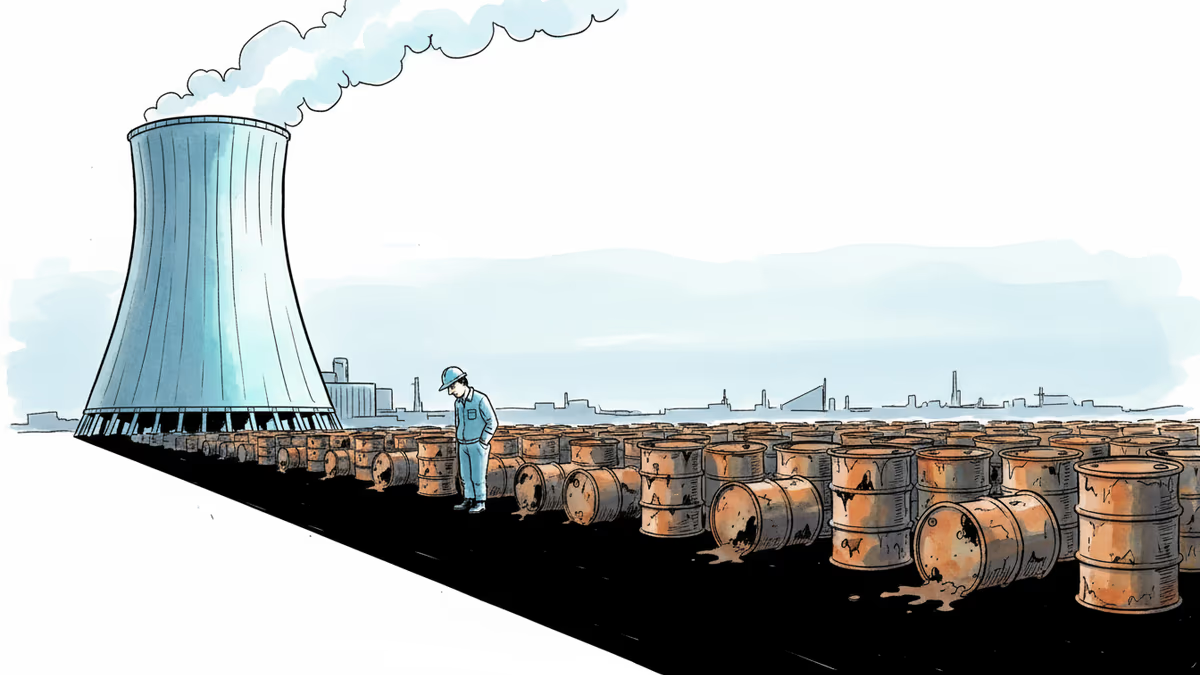
Nuclear power is winning fans across the political spectrum—and Big Tech is pouring billions in. But America still has no permanent home for the 2,000 metric tons of high-level waste its reactors produce every single year.
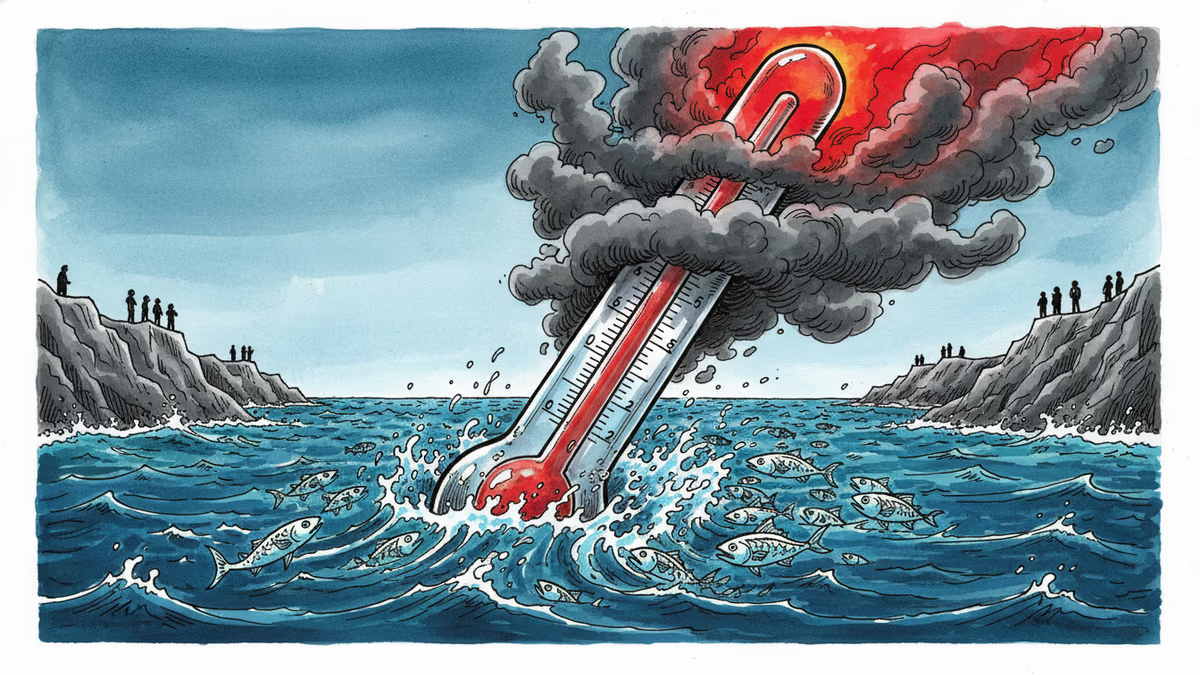
Scientists warn a strong El Niño could push Earth past the 1.5°C warming threshold within 12-18 months. What that means for weather, food, energy—and the politics of climate action.

Studded snow tires offer unmatched grip on ice, but they're banned or restricted in many countries due to road damage and air quality concerns. What's the real trade-off?
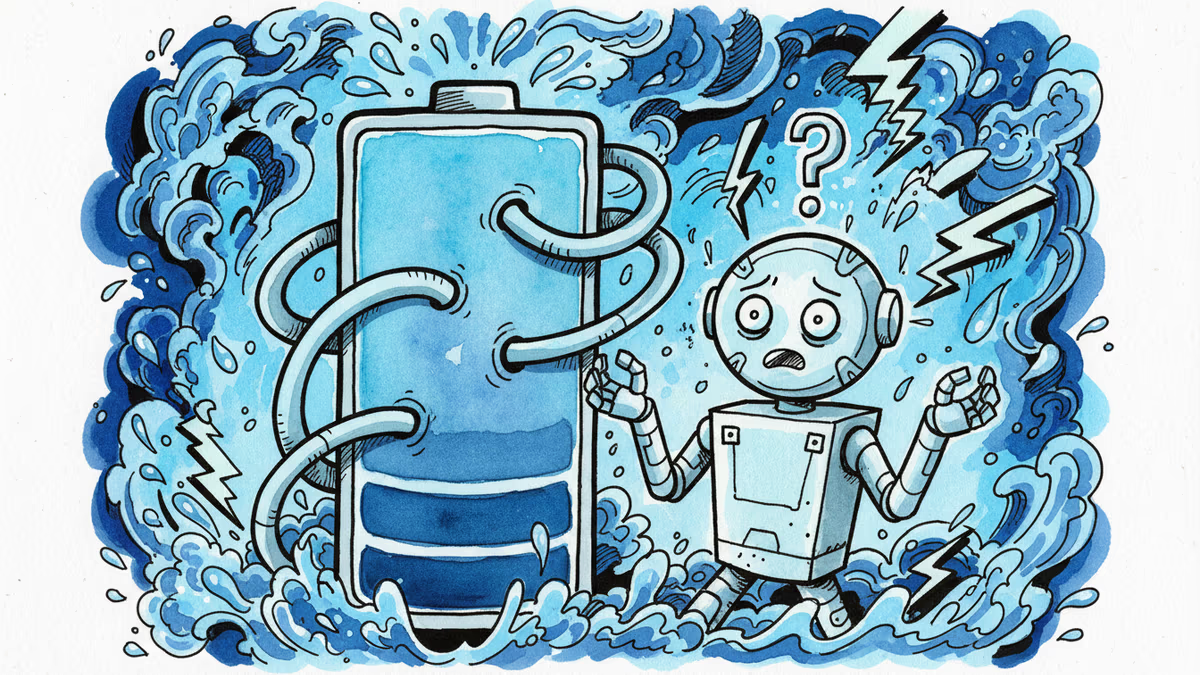
OpenAI's CEO dismisses claims about AI's environmental impact as 'totally fake' and 'insane,' while acknowledging the real energy challenge ahead.
Nuclear power is winning fans across the political spectrum—and Big Tech is pouring billions in. But America still has no permanent home for the 2,000 metric tons of high-level waste its reactors produce every single year.
Scientists warn a strong El Niño could push Earth past the 1.5°C warming threshold within 12-18 months. What that means for weather, food, energy—and the politics of climate action.
Studded snow tires offer unmatched grip on ice, but they're banned or restricted in many countries due to road damage and air quality concerns. What's the real trade-off?
OpenAI's CEO dismisses claims about AI's environmental impact as 'totally fake' and 'insane,' while acknowledging the real energy challenge ahead.
Thoughts
Share your thoughts on this article
Sign in to join the conversation