
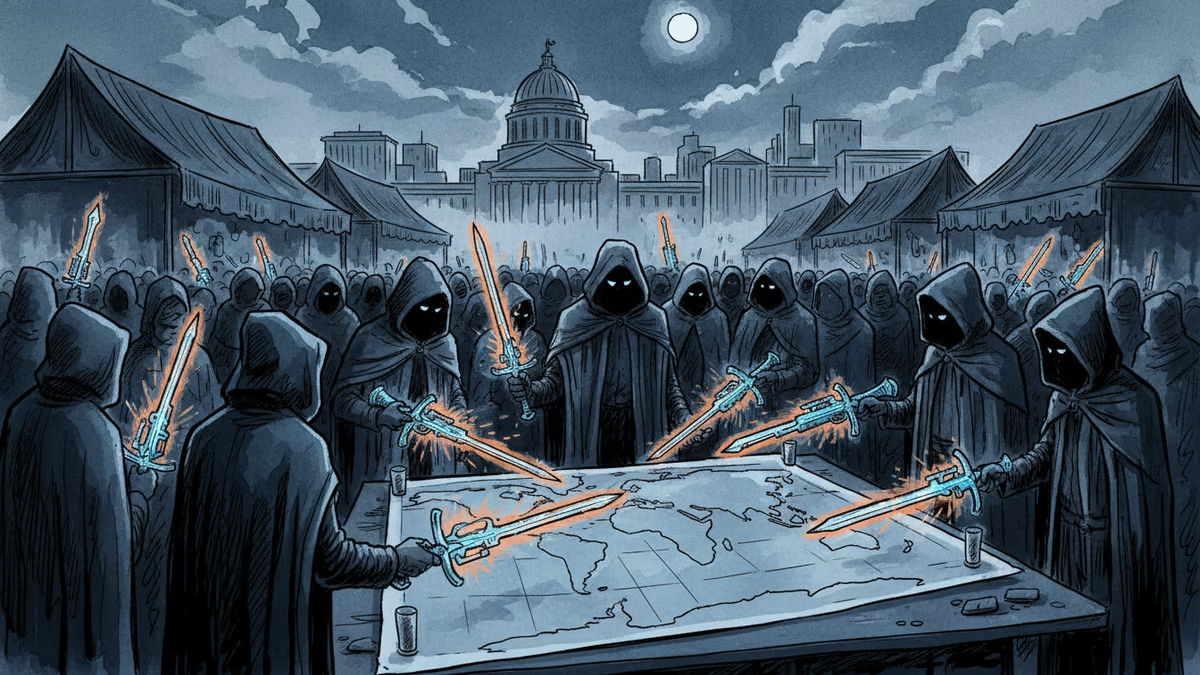
Why the US Just Sanctioned the iPhone Hacking Market
US Treasury sanctions Russian zero-day broker Operation Zero and UAE affiliates for stealing government cyber tools. Analysis of the underground market threatening national security.
$20 Million for a Text That Breaks Any Phone
When Operation Zero offered $20 million for iPhone and Android exploits in 2023, the cybersecurity world took notice. The Russian company wasn't shy about its clientele: exclusively the Russian government and "local organizations." What seemed like brazen marketing was actually a glimpse into a shadow economy that the US government finally decided to dismantle.
On Tuesday, the Treasury Department sanctioned Operation Zero, its founder Sergey Zelenyuk, and five associates across a network spanning Russia to the UAE. But this isn't just about one company selling hacking tools. It's about how America's own cyber weapons ended up in enemy hands—and what that means for digital warfare.
The Inside Job That Changed Everything
The most damaging revelation wasn't Operation Zero's public bounties. It was what happened behind closed doors. According to Treasury officials, the company acquired "at least eight proprietary cyber tools, which were created for the exclusive use of the U.S. government and select allies" and sold them to unauthorized users.
Those tools came from Trenchant, a subsidiary of defense contractor L3Harris that develops surveillance technology for the US and Five Eyes intelligence agencies. The thief was Peter Williams, Trenchant's general manager, who pleaded guilty in October to selling at least eight company exploits to what prosecutors called "a Russian broker."
The Treasury now confirms that broker was Operation Zero—connecting the dots in what amounts to one of the most significant cyber espionage cases in recent years.
This isn't corporate espionage. This is America's digital weapons falling into the hands of adversaries.
A Global Underground Economy

The sanctions reveal a sophisticated network extending far beyond Russia. Special Technology Services in the UAE served as an affiliate, while Advance Security Solutions—also UAE-based—offered $20 million for "zero-click" smartphone exploits that could hack any device through a simple text message.
The web gets more complex. Oleg Kucherov, one of the sanctioned individuals, is suspected of ties to the Trickbot ransomware gang. Azizjon Mamashoyev, allegedly behind Advance Security Solutions, represents how zero-day brokers operate across multiple jurisdictions to evade detection.
This ecosystem shows how modern cyber threats operate: exploit developers, brokers, and end users (governments, criminal organizations) form an interconnected underground economy worth hundreds of millions of dollars.
The Price of Digital Weapons
The economics are staggering. The same vulnerability might earn a security researcher $10,000 through a legitimate bug bounty program, $1 million from a government agency, or $10 million from criminal buyers. This price differential creates perverse incentives that funnel discoveries away from defensive purposes toward offensive ones.
Operation Zero's public pricing—up to $20 million for mobile exploits, $4 million for Telegram vulnerabilities—represents the high end of this market. But it also signals how valuable these capabilities have become to nation-states willing to pay premium prices for digital superiority.
Beyond Sanctions: The Enforcement Challenge
While symbolically important, these sanctions face practical limitations. Sanctioned entities can rebrand and relocate—a common pattern in cybercrime. When TechCrunch contacted Advance Security Solutions, a representative claimed without evidence that Mamashoyev wasn't the company's founder, suggesting the kind of obfuscation that makes enforcement difficult.
The challenge extends beyond individual bad actors. The zero-day market operates in legal gray areas where legitimate security research blends with weapons development. Companies like Zerodium and Crowdfense operate openly, serving government clients while maintaining they follow legal guidelines.
A New Kind of Arms Control
This case highlights the urgent need for cyber weapons treaties analogous to nuclear non-proliferation agreements. But digital weapons present unique challenges: they're easily copied, difficult to trace, and recognize no borders. Traditional arms control mechanisms—built for physical weapons with clear ownership chains—struggle with code that can be replicated infinitely.
The US action represents a shift toward treating cyber capabilities as weapons of mass destruction, subject to export controls and international sanctions. But without broader international cooperation, unilateral measures may simply push the market further underground.
Authors
Related Articles
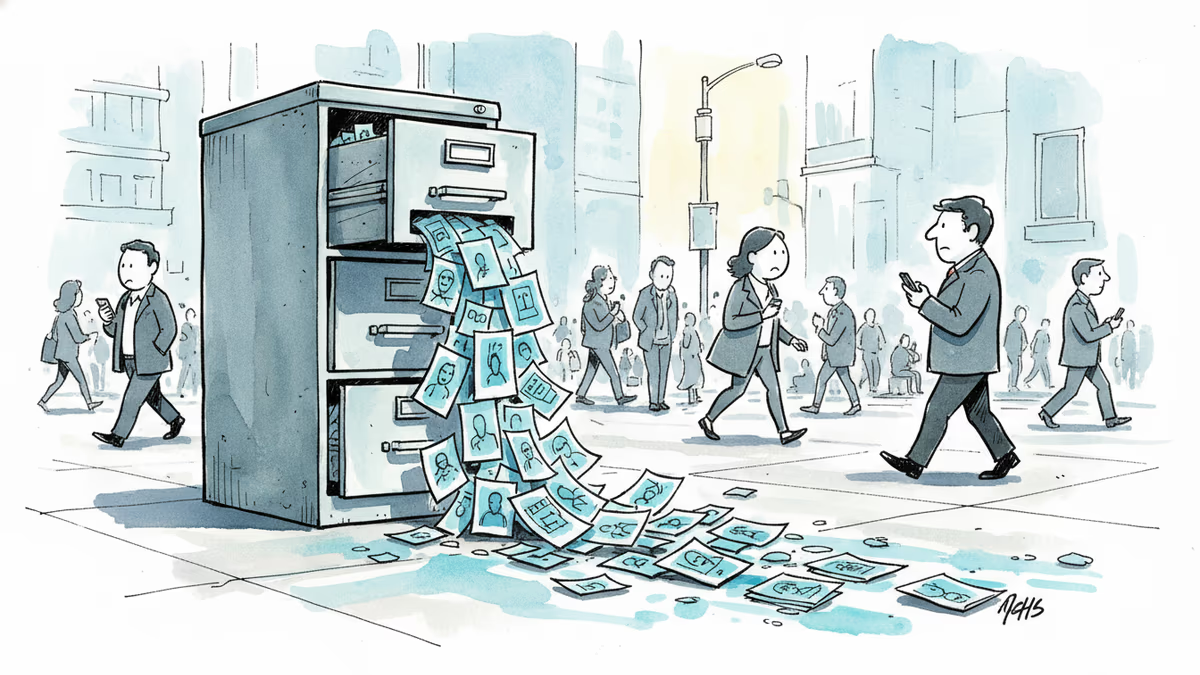
UK Visa Portal, a private immigration service mistaken for an official government site, has been exposing passport scans and selfies of over 100,000 applicants. The breach remains unpatched.
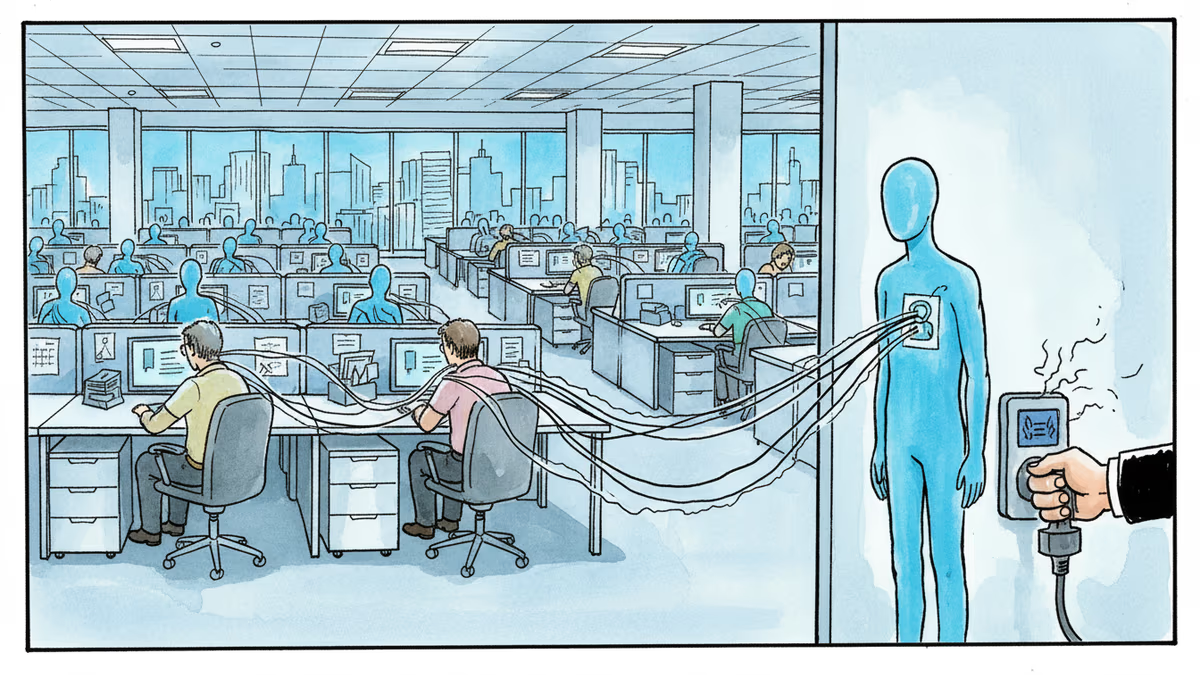
Okta CEO Todd McKinnon on why AI agents need identity management, the SaaSpocalypse threat, and why the kill switch might be the most important button in enterprise tech.
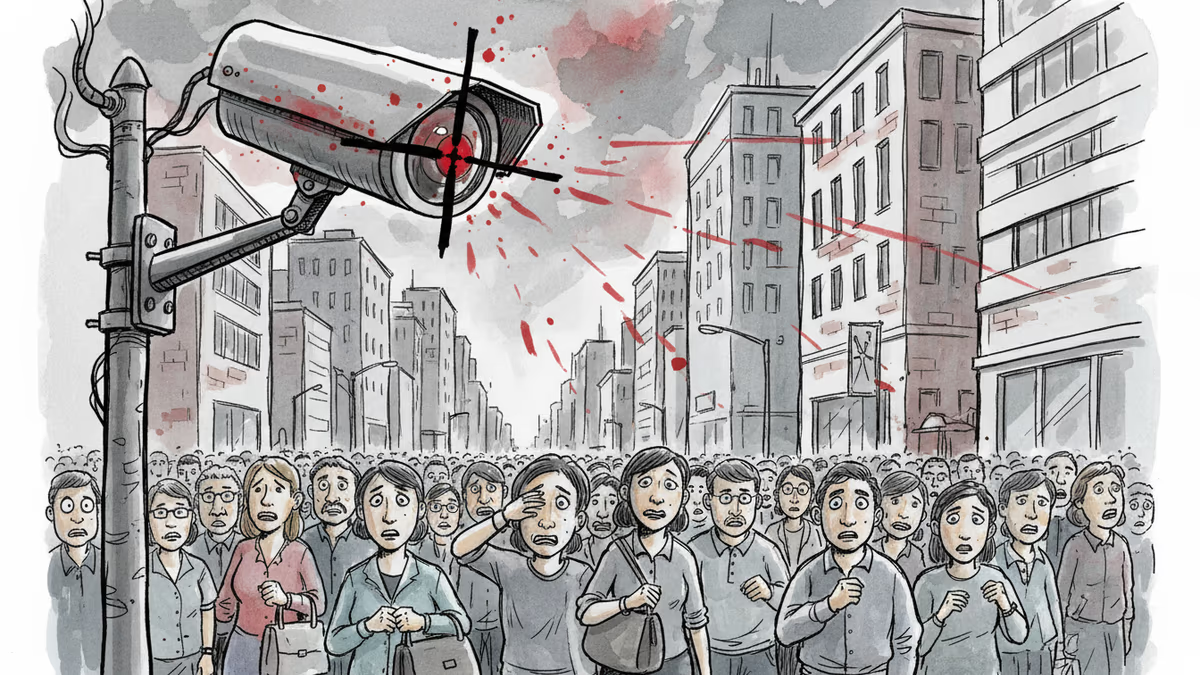
Iran and Israel are hacking civilian security cameras for military reconnaissance. How consumer surveillance devices became weapons of war.
A security researcher discovered he could access 7,000 DJI robot vacuums and peek into strangers' homes. This Valentine's Day revelation exposes the hidden privacy risks of our smart home obsession.
UK Visa Portal, a private immigration service mistaken for an official government site, has been exposing passport scans and selfies of over 100,000 applicants. The breach remains unpatched.
Okta CEO Todd McKinnon on why AI agents need identity management, the SaaSpocalypse threat, and why the kill switch might be the most important button in enterprise tech.
Iran and Israel are hacking civilian security cameras for military reconnaissance. How consumer surveillance devices became weapons of war.
A security researcher discovered he could access 7,000 DJI robot vacuums and peek into strangers' homes. This Valentine's Day revelation exposes the hidden privacy risks of our smart home obsession.
Thoughts
Share your thoughts on this article
Sign in to join the conversation