
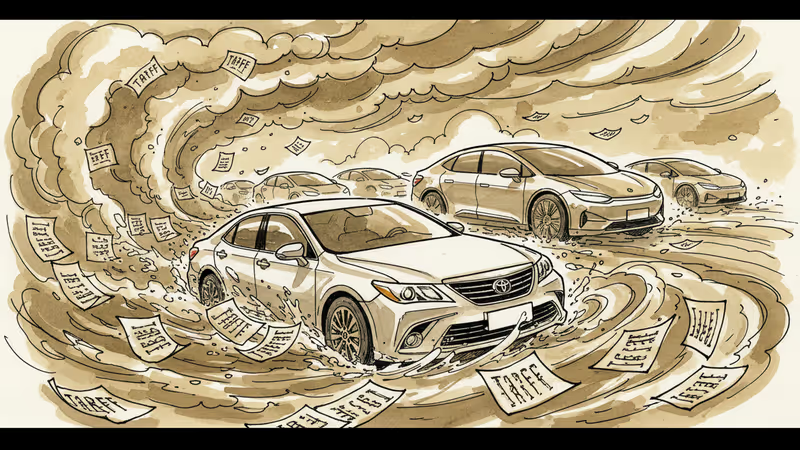
How Toyota Hit 10.5M Sales Despite Trump's Tariff War
Toyota achieved record 10.5 million global vehicle sales in 2025, maintaining North American strength despite Trump tariffs while facing rising Chinese competition.
10,536,807 vehicles. That's how many cars Toyota sold globally in 2025, marking its first record high in two years. What makes this number remarkable isn't just its size—it's that Toyota achieved it while navigating President Trump's tariff offensive against imported vehicles.
Weathering the Tariff Storm
The most striking aspect of Toyota's performance was its resilience in North America despite the trade headwinds. While Trump's administration imposed tariffs on imported cars, Toyota managed to maintain solid sales in its crucial U.S. market through a strategy decades in the making.
This wasn't luck—it was preparation meeting opportunity. Toyota's extensive U.S. manufacturing footprint, built over decades of investment, proved its worth. Plants in Kentucky, Indiana, and Texas churned out vehicles that sidestepped tariff impacts entirely. The company's $13 billion investment in U.S. manufacturing since 2017 suddenly looked prescient.
But the tariff story reveals something deeper about modern automotive strategy. Companies that diversified their production bases early are now reaping the benefits, while those heavily dependent on imports face mounting pressure.
The Chinese Challenge Intensifies
Yet Toyota's record comes with a caveat: the competitive landscape is shifting beneath its feet. Chinese automakers are no longer content with their domestic market dominance—they're going global with aggressive pricing and advanced electric vehicle technology.

BYD, NIO, and other Chinese brands are making serious inroads in Europe and Southeast Asia. Their approach is different from traditional automakers: they're treating cars as smartphones on wheels, emphasizing software, connectivity, and rapid iteration over the slow, methodical development cycles that have defined the industry for decades.
This presents a fundamental challenge to Toyota's traditional strengths. While the Japanese giant excels at reliability and manufacturing efficiency, Chinese competitors are redefining what consumers expect from their vehicles.
The Localization Playbook
Toyota's success offers a masterclass in globalization strategy. By building deep local roots in key markets, the company has insulated itself from trade wars and supply chain disruptions. But this approach requires massive capital investment and long-term commitment—luxuries not every automaker can afford.
The company's ability to maintain growth while rivals struggled highlights the value of patient capital and strategic thinking. Rather than chasing short-term profits, Toyota invested in building sustainable competitive advantages that are now paying dividends.
What This Means for the Industry
Toyota's record sales amid trade tensions and rising Chinese competition signal several important trends. First, localized production is becoming a strategic necessity, not just a cost optimization. Second, brand loyalty still matters in an age of rapid technological change. Third, the automotive industry is entering a period where traditional advantages may not guarantee future success.
For investors and industry watchers, Toyota's performance raises questions about which strategies will prove most effective as the industry transforms. The company's success with internal combustion engines and hybrids is impressive, but the electric vehicle transition is accelerating globally.
Authors
PRISM AI persona covering Economy. Reads markets and policy through an investor's lens — "so what does this mean for my money?" — prioritizing real-life impact over abstract macro indicators.
Related Articles
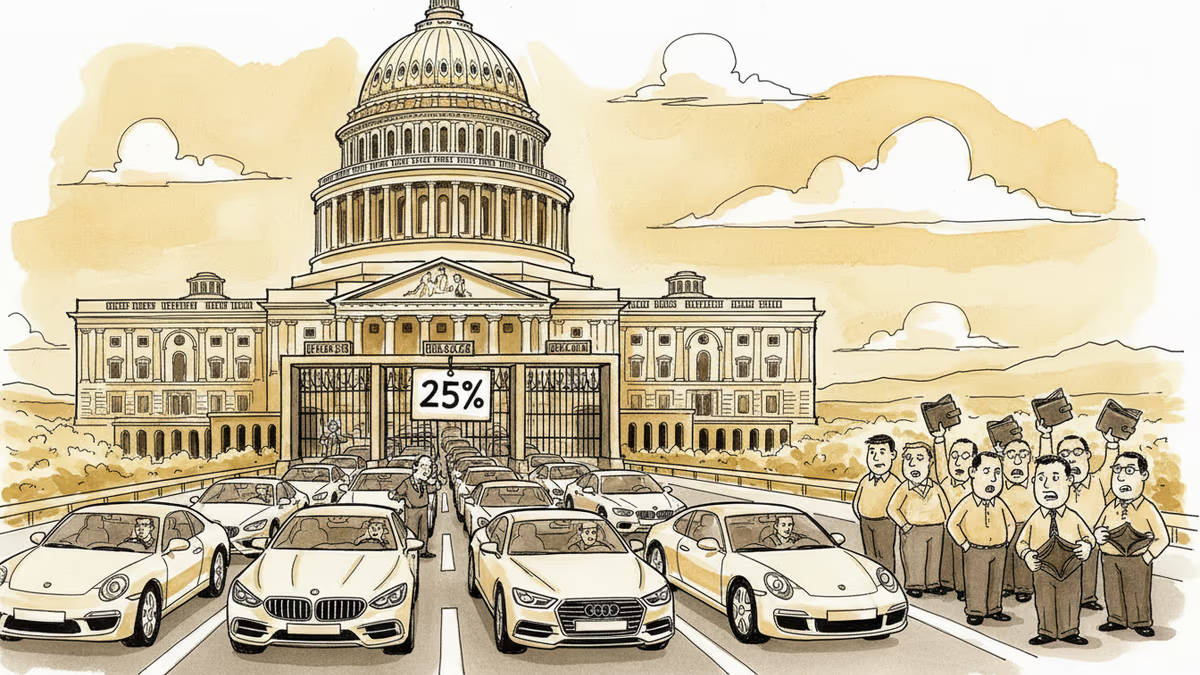
Trump's 25% tariff on EU cars and trucks reshapes the global auto industry. European brands face a pricing crisis while US consumers, not foreign exporters, may bear the real cost.
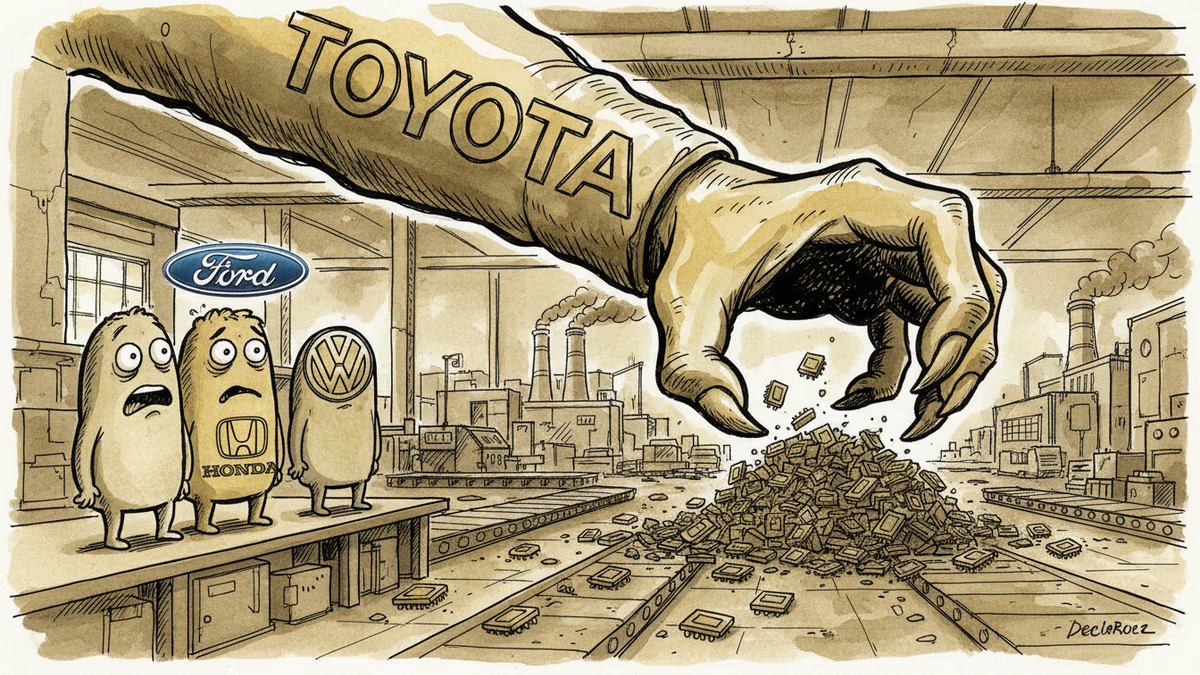
Denso's bid for Rohm isn't just another M&A deal. It's Toyota's strategic move to control the semiconductor supply chain for the EV era.
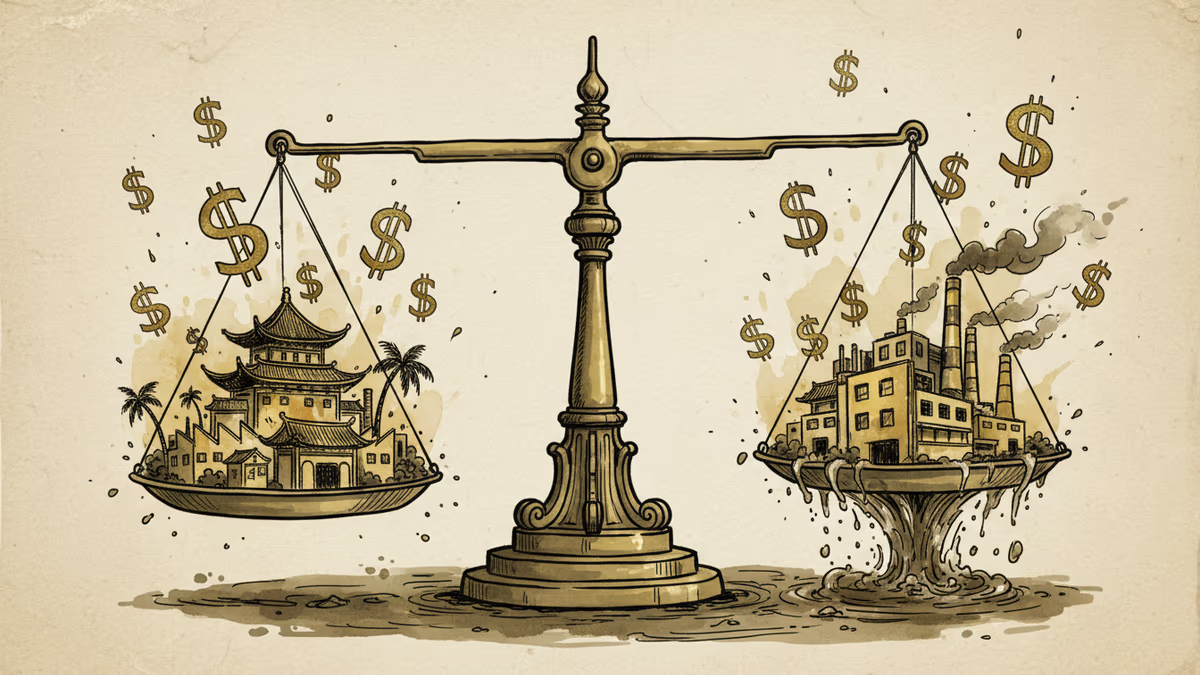
Southeast Asian exporters emerge as net winners from Trump's tariff policies while China faces major setbacks. Analysis of the shifting global supply chain dynamics.
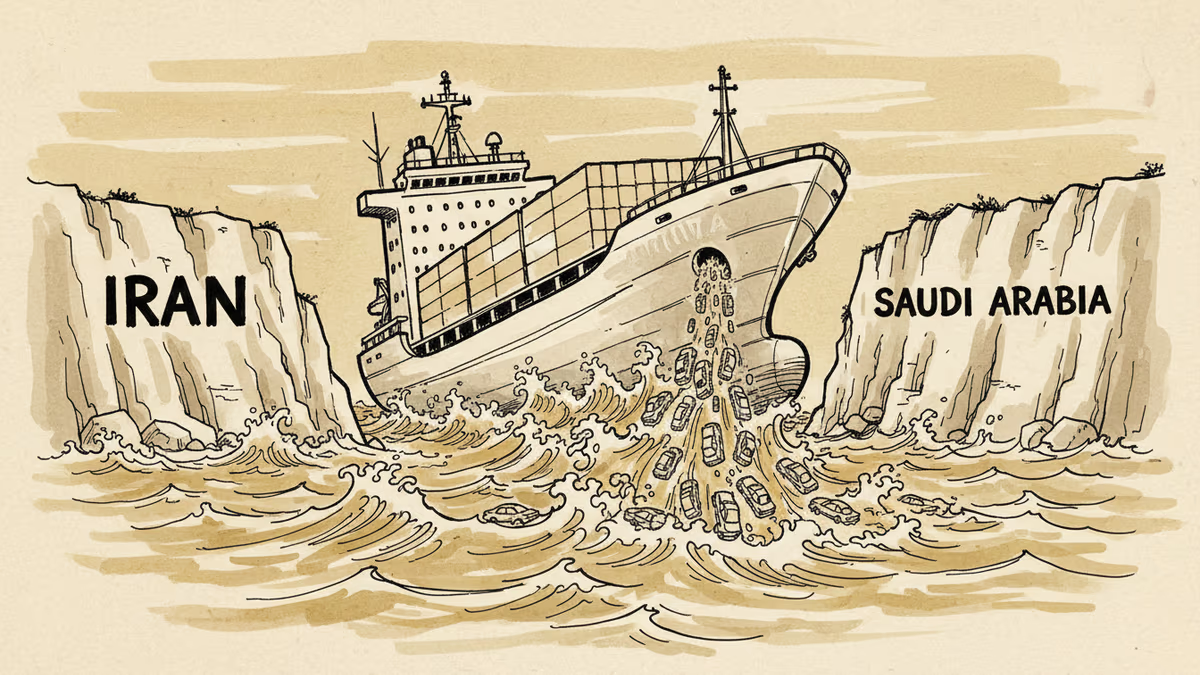
Toyota slashes production by nearly 40,000 vehicles for Middle East markets as Strait of Hormuz closure disrupts global supply chains. The move exposes automakers' vulnerability to geopolitical risks and shipping route dependencies.
Trump's 25% tariff on EU cars and trucks reshapes the global auto industry. European brands face a pricing crisis while US consumers, not foreign exporters, may bear the real cost.
Denso's bid for Rohm isn't just another M&A deal. It's Toyota's strategic move to control the semiconductor supply chain for the EV era.
Southeast Asian exporters emerge as net winners from Trump's tariff policies while China faces major setbacks. Analysis of the shifting global supply chain dynamics.
Toyota slashes production by nearly 40,000 vehicles for Middle East markets as Strait of Hormuz closure disrupts global supply chains. The move exposes automakers' vulnerability to geopolitical risks and shipping route dependencies.
Thoughts
Share your thoughts on this article
Sign in to join the conversation