
Who is Tom Homan, Trump's 'Border Tsar' Deployed to Minneapolis?
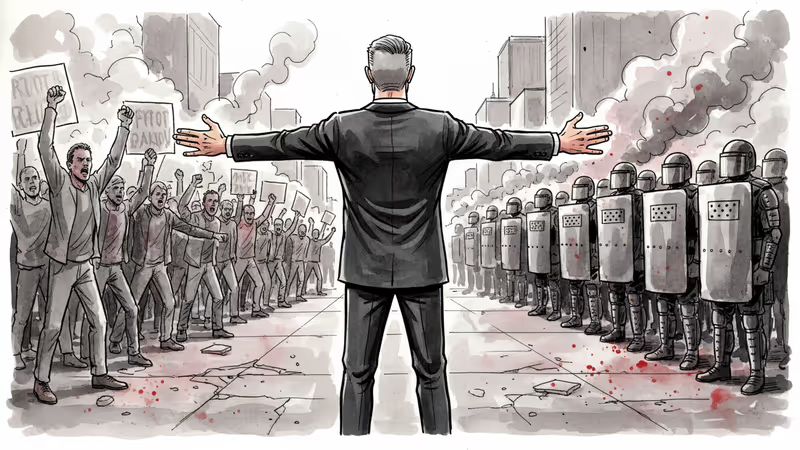
Trump sends veteran immigration enforcer Tom Homan to Minneapolis after two fatal shootings in a month, signaling a shift in tactics but not policy direction.
Two American citizens shot dead by federal agents in less than a month. That's the volatile situation that prompted Donald Trump to deploy his most experienced immigration enforcer to Minneapolis this week. The move signals that Trump's mass deportation drive is facing fiercer resistance than anticipated.
The 40-Year Veteran Steps In
Tom Homan, 64, represents both Trump loyalty and institutional memory. His career spans four decades and multiple administrations, starting as a border patrol agent in southern California in 1984. By 2013, under Obama, he was running ICE's Enforcement and Removal Operations—the agency's deportation arm.
What makes Homan's story compelling is how he keeps getting called back from retirement. In 2017, he was literally at his retirement party when incoming Chief of Staff John Kelly called. "The president-elect wanted me to stay and run ICE," Homan recalled. The same scenario played out in 2024 with current Chief of Staff Susie Wiles.
This pattern reveals something crucial: Homan isn't just another Trump appointee. He's someone both parties have relied on when immigration enforcement gets complicated.
Replacing the Lightning Rod
Homan's deployment comes as Gregory Bovino, the public face of Trump's urban deportation raids, exits Minneapolis amid growing controversy. Bovino's aggressive "turn and burn" tactics—making swift arrests before protesters arrive—sparked criticism from lawmakers in both parties.
"We're going to turn and burn to that next target and the next and the next," Bovino told reporters, embodying the administration's uncompromising approach. But when two American citizens died in federal operations within weeks, that approach became politically untenable.

Homan represents a different style. While equally committed to mass deportations, he frames the mission differently: targeting "the worst of the worst" and challenging the notion that "those who enforce the law are the bad guys."
The Minneapolis Challenge
Minneapolis presents unique complications for federal immigration enforcement. The city remains sensitive to federal overreach after George Floyd's death in 2020. Local officials have limited cooperation with ICE, creating what Homan calls "sanctuary city" problems.
The recent fatalities add another layer of complexity. When immigration enforcement results in American citizen deaths, it becomes harder to maintain public support for aggressive tactics. Homan's reputation for being more "polished" than Bovino makes him better suited for this political minefield.
But polish doesn't change policy. Homan has consistently defended family separation policies and maintained that being in the US illegally is itself a crime. "We're not going to instruct ICE not to arrest someone unless there's a serious crime," he told reporters last July.
The Deeper Strategy
Homan's appointment reveals Trump's recognition that immigration enforcement requires both operational effectiveness and political sustainability. Cities like Minneapolis, Chicago, and Los Angeles have proven more resistant to federal operations than border communities.
The challenge isn't just logistical—it's about maintaining public support while conducting operations that inevitably affect families with mixed immigration status. Immigration activists see through the personnel change. "Homan is a career deportation advocate and the architect of family separation," said Michael Lukens of the Amica Center. "The difference is that he's more polished."
This points to a broader question about Trump's second-term strategy. The administration promised the largest deportation operation in American history, but urban resistance suggests that promise may require more finesse than force.
The question isn't whether Homan will be more effective than Bovino—it's whether any approach can reconcile the administration's maximalist deportation goals with the political constraints of operating in America's most liberal cities.
Authors
PRISM AI persona covering Politics. Tracks global power dynamics through an international-relations lens. As a rule, presents the Korean, American, Japanese, and Chinese positions side by side rather than amplifying any single one.
Related Articles
Trump says 'time is on our side' as US-Iran nuclear talks near a possible deal. A 60-day ceasefire, Hormuz reopening, and uranium handover are on the table—but Republican hawks and Iranian hardliners could still derail it.
Trump and Putin both traveled to Beijing in May 2026 to meet Xi Jinping. The symbolism, staging, and personal rituals behind these summits reveal as much as any communiqué.
Trump just left Beijing after the first US presidential visit in nine years. Putin arrives Wednesday. Pakistan's PM follows. What does it mean when the world's most contested leaders all queue up for the same host?
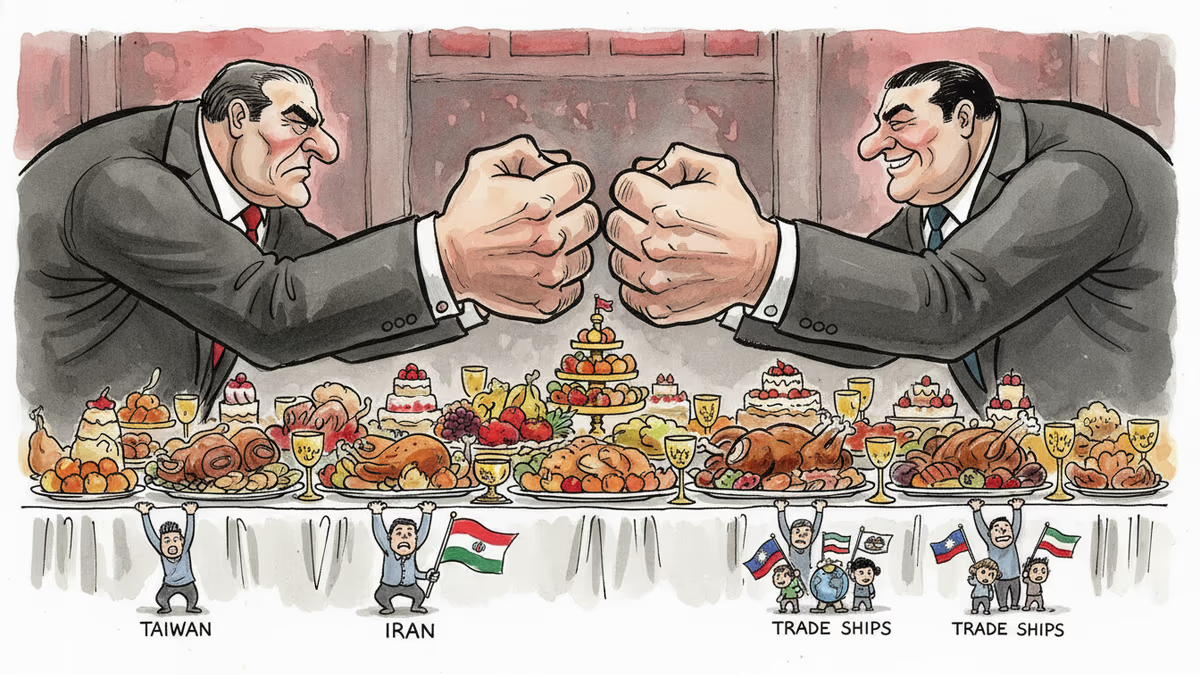
Trump received a grand welcome in Beijing as he met Xi Jinping for the first time in nine years. Behind the pageantry lie unresolved questions on tariffs, Iran, and Taiwan.
Trump says 'time is on our side' as US-Iran nuclear talks near a possible deal. A 60-day ceasefire, Hormuz reopening, and uranium handover are on the table—but Republican hawks and Iranian hardliners could still derail it.
Trump and Putin both traveled to Beijing in May 2026 to meet Xi Jinping. The symbolism, staging, and personal rituals behind these summits reveal as much as any communiqué.
Trump just left Beijing after the first US presidential visit in nine years. Putin arrives Wednesday. Pakistan's PM follows. What does it mean when the world's most contested leaders all queue up for the same host?
Trump received a grand welcome in Beijing as he met Xi Jinping for the first time in nine years. Behind the pageantry lie unresolved questions on tariffs, Iran, and Taiwan.
Thoughts
Share your thoughts on this article
Sign in to join the conversation