
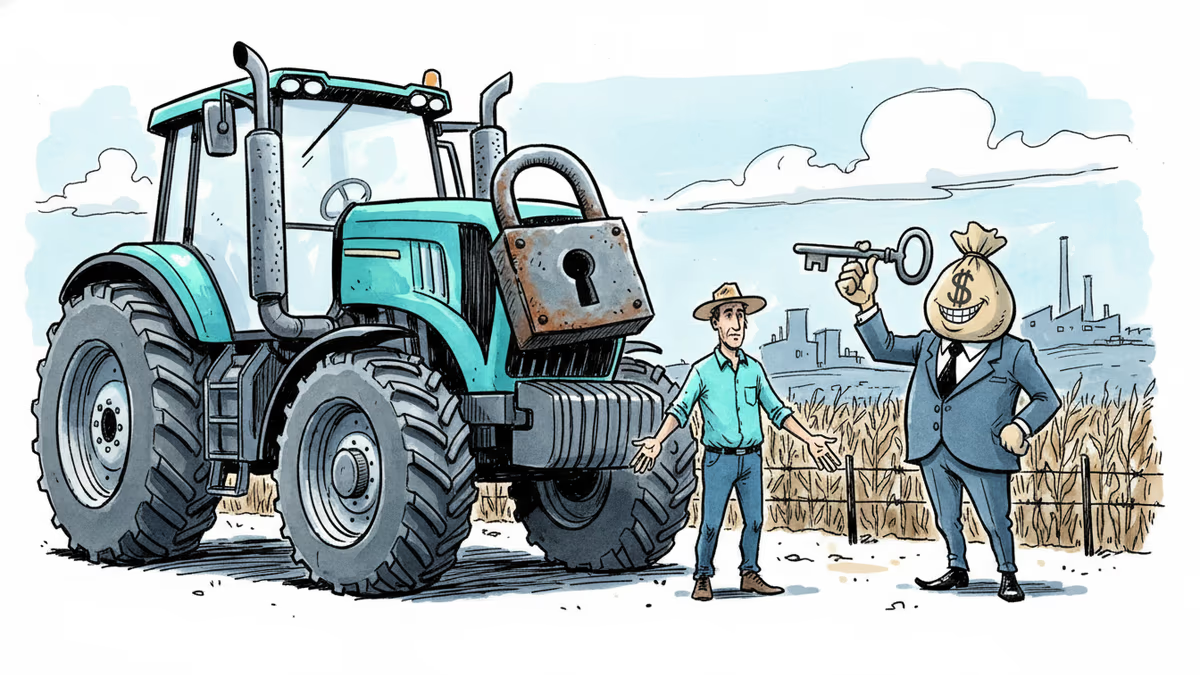
You Own It, But Can't Fix It
From VCRs to John Deere tractors, the right-to-repair battle traces back to a 1998 copyright law never meant to lock your dishwasher. Here's how it happened.
You bought it. You paid for it. But the moment it breaks, you may not legally be allowed to fix it.
This isn't a hypothetical. It's the lived reality for millions of American consumers — and the origins of this situation stretch back not to Silicon Valley, but to Hollywood's panic over the VCR.
The Chain That Started With Betamax
When video cassette recorders exploded in popularity in the late 1970s, the film industry saw catastrophe. For the first time, movies and TV shows could be copied and kept. Universal Studios and Disney sued Sony in 1976, arguing that the Betamax recorder was a machine built for copyright infringement.
The U.S. Supreme Court disagreed. In its landmark 1984 ruling, the court held that taping TV content for personal use fell within the bounds of fair use — a doctrine embedded in American copyright law since the Copyright Act of 1976, itself built on principles stretching back to the Constitution of 1790.
Hollywood lost in court, so it pivoted to technology. The DVD, launched in 1996, was the answer: a read-only format far harder to copy than magnetic tape. By 1997, every Motion Picture Association of America studio had joined the DVD Forum and begun phasing out VHS releases. The entertainment industry had found its lock. Now it needed the law to protect it.
The Law That Locked Everything
In 1998, President Bill Clinton signed the Digital Millennium Copyright Act — the DMCA. The law did two significant things: it increased penalties for online copyright infringement, and it criminalized any technology used to circumvent digital locks, known as digital rights management (DRM).
The intent was to protect movies and music. The consequence was far broader.

Since 1998, virtually every consumer product — from toys to dishwashers to farm equipment — has incorporated microchips running proprietary software. Under the DMCA, that software is protected by copyright. Any third-party repairer who modifies or bypasses it to fix the product risks liability for intellectual property infringement. The law that was meant to stop teenagers from pirating DVDs now governs whether a farmer can fix his own combine.
John Deere doesn't permit farmers to access the software required to repair their own tractors and combines. The purchase covers the physical machine; the software license stays with the manufacturer. The U.S. Department of Defense faces the same constraint — it cannot repair weapons systems it has purchased because the intellectual property remains with the contractor.
Meanwhile, replacing an ink cartridge can cost roughly the same as buying a new printer outright.
The Environmental Toll
The consequences aren't only financial. The United States is the world's second-largest producer of electronic waste, behind China, generating roughly 43 lbs (19.5 kg) per person annually. Only 25% of that e-waste is recycled. When repair becomes economically irrational, disposal becomes the default — and the gap between those two options is, in large part, a legal construction.
The right-to-repair movement emerged directly from this frustration. Its argument is straightforward: people who purchase a product should be able to repair it — themselves or through a third party — without facing unnecessary legal, financial, or technical barriers.
What makes this movement unusual in today's political climate is its bipartisan character. The Warrior Right to Repair Act, introduced in 2025 by a Democrat, and the Repair Act, introduced by a Republican, are both advancing through Congress with the shared goal of creating a federal legal framework for repair rights. Both face fierce opposition from industry groups.
Two Sides of the Same Circuit Board
Manufacturers argue that unauthorized repairs create genuine safety risks and that protecting proprietary software is essential to recouping research and development investment. Without those protections, they contend, the incentive to innovate erodes.
Right-to-repair advocates counter that this framing conflates safety with market control. They point to the European Union, which since 2021 has required appliance manufacturers to provide spare parts and technical documentation — a policy that has not, by any measurable account, triggered a wave of consumer safety incidents. The EU's approach suggests that repair rights and product safety are not inherently in conflict.
More than 80% of Americans say they support the right to repair, according to polling data. The gap between public opinion and legislative reality reflects the lobbying power of industries that have built their business models around the current arrangement.
This content is AI-generated based on source articles. While we strive for accuracy, errors may occur. We recommend verifying with the original source.
Related Articles
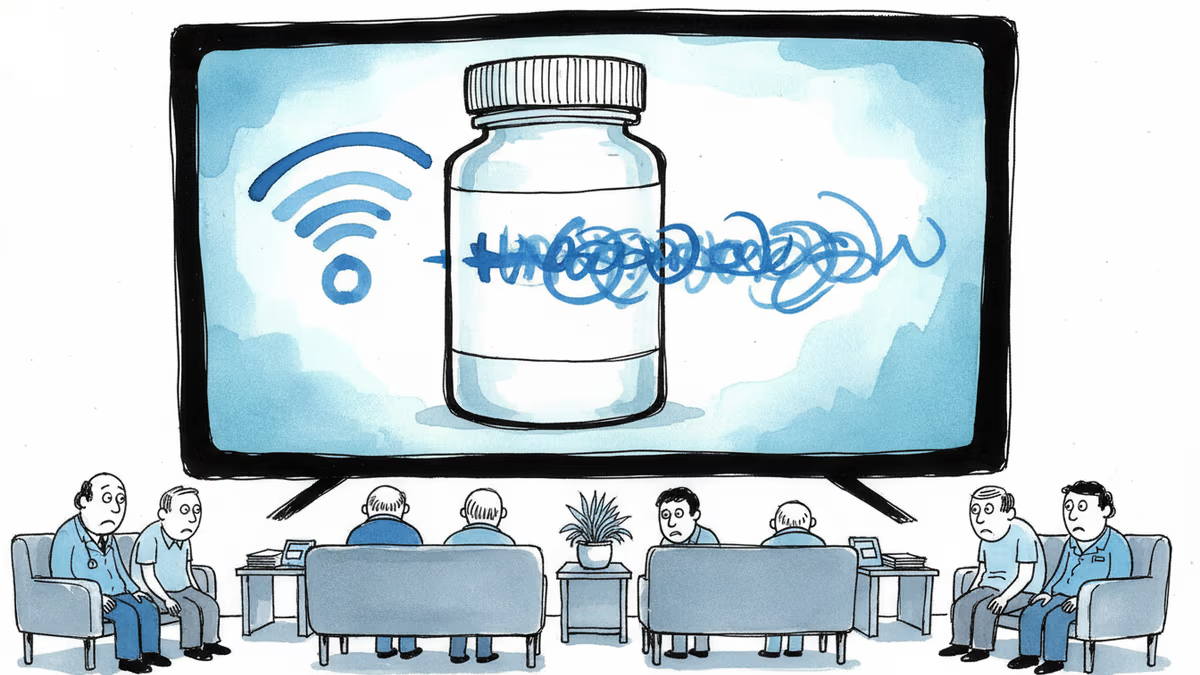
As US officials move to restrict pharmaceutical advertising, new research reveals the complex tradeoffs between consumer choice and medical oversight in America's unique drug marketing landscape.
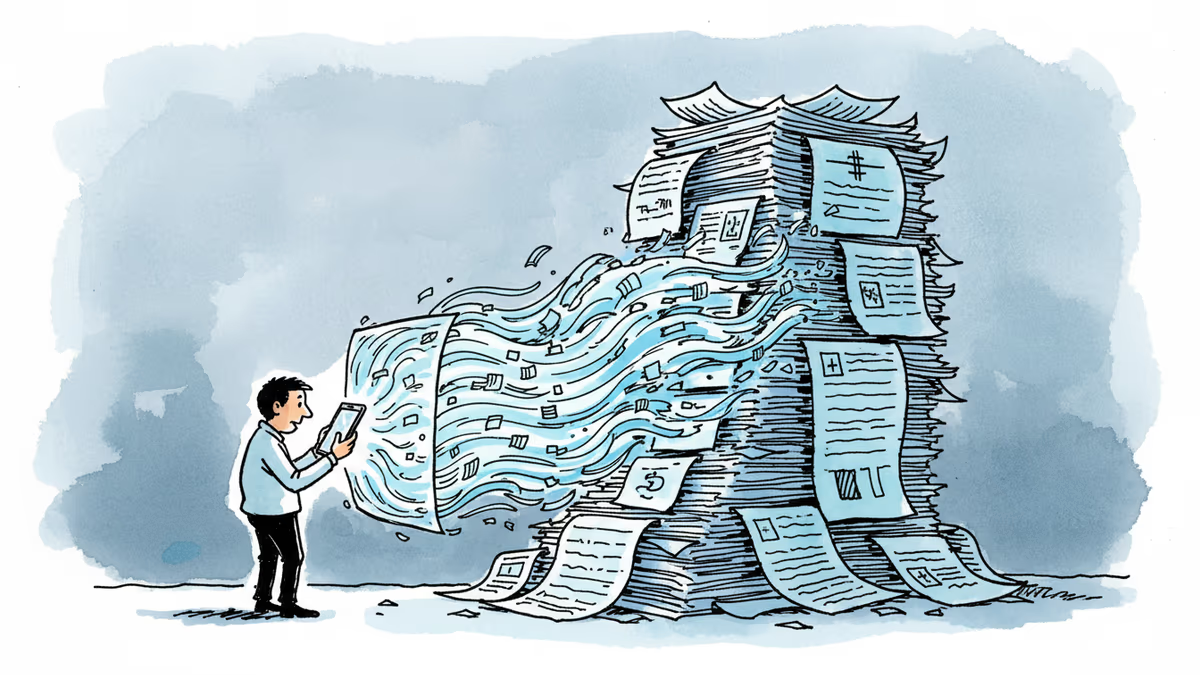
A family used AI to slash a $270,000 medical bill to $32,000, revealing how artificial intelligence is reshaping power dynamics in bureaucratic battles.
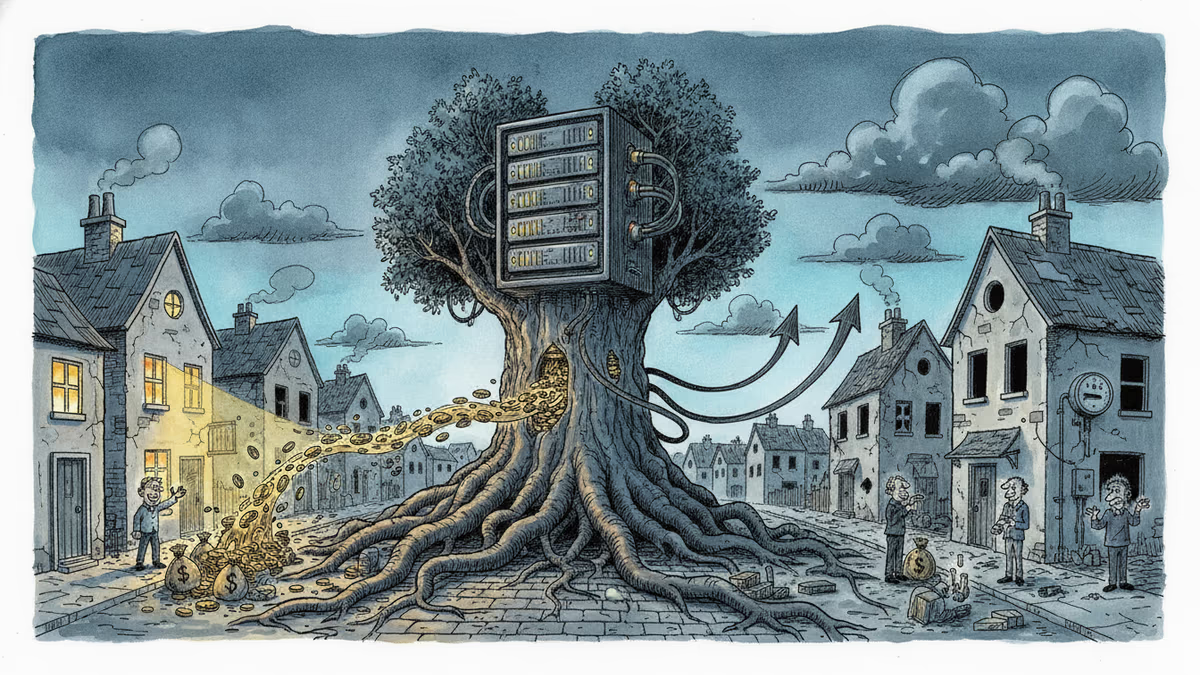
Over 1,200 community actions have pushed back against data centers since 2024. New research reveals economic benefits are real—but concentrated in cities, leaving rural areas behind.
Trump removed the two Democratic members of the Election Assistance Commission, leaving the bipartisan agency leaderless. A Supreme Court ruling made it legal. Here's why a non-crisis can still be a warning sign.
As US officials move to restrict pharmaceutical advertising, new research reveals the complex tradeoffs between consumer choice and medical oversight in America's unique drug marketing landscape.
A family used AI to slash a $270,000 medical bill to $32,000, revealing how artificial intelligence is reshaping power dynamics in bureaucratic battles.
Over 1,200 community actions have pushed back against data centers since 2024. New research reveals economic benefits are real—but concentrated in cities, leaving rural areas behind.
Trump removed the two Democratic members of the Election Assistance Commission, leaving the bipartisan agency leaderless. A Supreme Court ruling made it legal. Here's why a non-crisis can still be a warning sign.
Thoughts
Share your thoughts on this article
Sign in to join the conversation