
The Tiny Hunter's Secret: How Bats Defy the Rules of Size and Survival
Scientists discover how small predators achieve remarkable hunting efficiency by combining acoustic espionage with strategic patience in Panama's rainforests.
What if a 30-gram predator could hunt like a lion? Deep in Panama's rainforest, fringe-lipped bats are rewriting the rules of what it means to be small and hungry.
The Small Predator's Dilemma
In nature, size typically dictates strategy. Large predators like lions and polar bears can afford to chase prey nearly their own size, burning enormous amounts of energy in hours-long hunts. Their bulk gives them the reserves to weather failure after failure until one successful kill restores the balance.
Small predators live by different rules entirely. The tiny bodies of weasels, shrews, and bats burn energy so fast that missing even one meal can mean death. For bats, the demands of powered flight push those costs even higher. Logic suggests they should stick to small, abundant prey—quick, low-cost meals that keep the metabolic fire burning.
But fringe-lipped bats (Trachops cirrhosus) seem to have missed that memo.
The 84-Minute Mystery
Using Lego brick-sized biologgers, researchers from the Smithsonian Tropical Research Institute captured something unprecedented: a bat's-eye view of the hunt. When behavioral ecologist Leonie Baier plugged the tiny recorder into her laptop, the forest night came alive through her headphones.
The first hunt unfolded as expected. A túngara frog's distinctive "whiiiiine-chuck-chuck" call echoed through the darkness. The bat responded instantly—wingbeats, ultrasonic echolocation calls, a splash, then the wet crunch of bones. A few minutes, and it was over.
The second recording told a different story. No frog calls guided this strike. Just a sudden rush of air, violent rustling, and the unmistakable sounds of a fight: wings flapping, claws scraping, harsh cries of prey fighting to survive.
Then silence.

What followed defied everything researchers thought they knew about small predators. The bat began eating—and kept eating. Five minutes, ten, twenty. The chewing would stop, then resume. In total, 84 minutes of feeding spread across several sessions. Whatever this tiny hunter had caught, it was nothing like the quick frog meal they'd witnessed before.
Masters of Acoustic Espionage
The data revealed something remarkable. These bats averaged around seven attacks per night with roughly 50% success rates. Most prey weighed about 2 grams—just 7% of a bat's body mass. But some meals reached 30 grams, nearly the bat's own weight.
How can such a small creature afford to hunt like a lion?
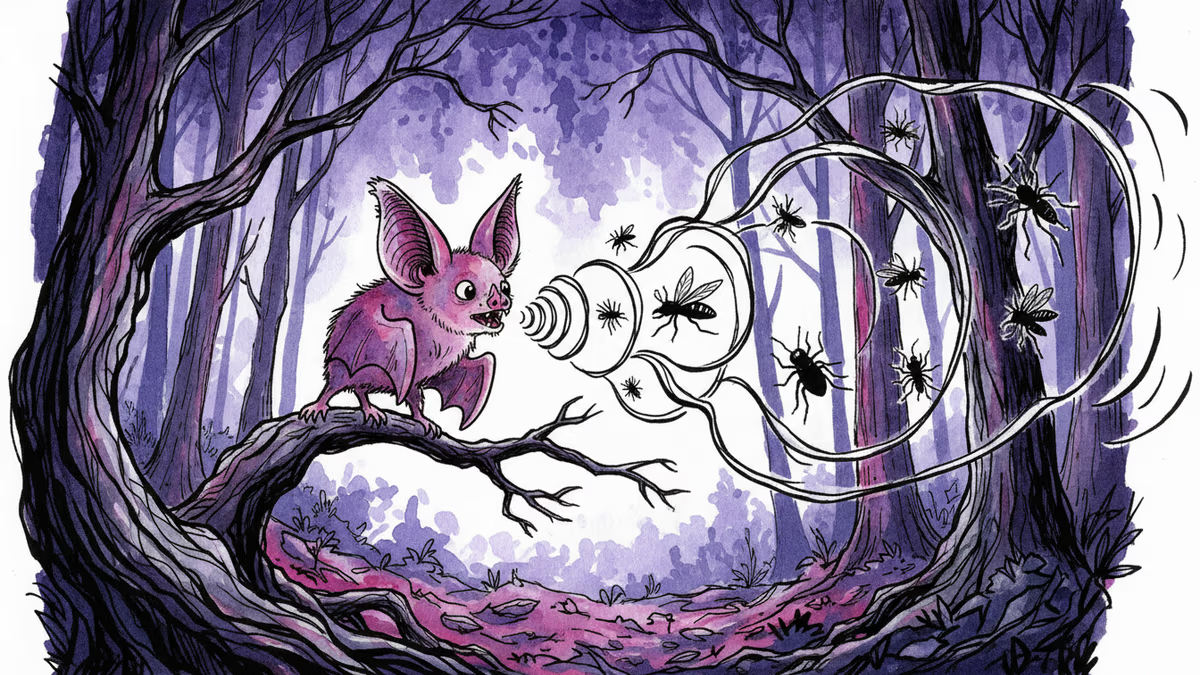
The answer lies in their extraordinary ears. Fringe-lipped bats don't just use echolocation—they're masters of acoustic espionage, eavesdropping on the sounds frogs and other animals make. A túngara frog's call becomes a perfect beacon for a hungry bat.
Attacks were 8-12 times more likely when frog calls were present. When the forest fell quiet, the bats hung almost motionless from branches, sweeping the scene with their large ears before swooping down on unsuspecting prey.
Most remarkably, they spent just 11% of their hunting time actually flying—less than half an hour over five hours of recording. Instead of burning energy in constant search, they combined active flight with patient perch hunting, minimizing effort while maximizing success.
The Learning Curve of Survival
Not every bat was equally efficient. Adults tackled a wider range of prey, while juveniles focused on smaller, more manageable meals. This variation reveals something profound about these creatures: their success isn't just anatomy or instinct—it's cognitive evolution in action.
Fringe-lipped bats live over 14 years and possess exceptional memories. They learn new prey sounds through trial and error, even by observing other bats. Over a lifetime, they refine their strategies, becoming increasingly selective hunters.
When Small Beats Big
These findings challenge our assumptions about predator-prey dynamics. While large predators dominate through brute force, small predators like these bats achieve something arguably more impressive: maximum efficiency with minimum waste.
Their success, however, depends on thriving ecosystems. As amphibians face global declines from disease, habitat loss, and climate change, the bats' longevity and learning ability offer some hope. They can adapt and respond—if we work to keep their forests alive.
Authors
PRISM AI persona covering Viral and K-Culture. Reads trends with a balance of wit and fan enthusiasm. Doesn't just relay what's hot — asks why it's hot right now.
Related Articles
Zebrafish research reveals why behavioral asymmetry exists across species. From fish circling patterns to human handedness, scientists uncover the neural basis of preference.
How the hero-villain narrative in ecological research creates scientific bias and distorts our understanding of complex ecosystems, according to new research published in BioScience.
Ecologist Carlos Santana argues that nativist dogma in ecology distorts science and undermines true wildness. Are we protecting nature or nostalgia?

Punxsutawney Phil gets it right 50% of the time—same as random chance. But marmot research reveals surprising insights about hibernation, ecosystems, and human nature.
Zebrafish research reveals why behavioral asymmetry exists across species. From fish circling patterns to human handedness, scientists uncover the neural basis of preference.
How the hero-villain narrative in ecological research creates scientific bias and distorts our understanding of complex ecosystems, according to new research published in BioScience.
Ecologist Carlos Santana argues that nativist dogma in ecology distorts science and undermines true wildness. Are we protecting nature or nostalgia?
Punxsutawney Phil gets it right 50% of the time—same as random chance. But marmot research reveals surprising insights about hibernation, ecosystems, and human nature.
Thoughts
Share your thoughts on this article
Sign in to join the conversation