

2025 US Semiconductor Industry Timeline: High Stakes and Hard Pivots
Review the most significant events in the 2025 US semiconductor industry timeline, from Nvidia's $57B quarter to Intel's government-backed restructuring and the rising tariff threats.
Is the global chip war entering a new phase? 2025 was a year of paradoxes for the US semiconductor industry. While Nvidia shattered revenue records, Intel faced a fight for its very identity, ultimately leaning on government support. As we navigate the first weeks of 2026, looking back at last year's turbulence reveals a sector caught between explosive growth and tightening geopolitical nooses.
2025 US Semiconductor Industry Timeline: Record Gains and Survival Tactics
Nvidia's momentum seemed unstoppable. In November, it reported a massive $57 billion in Q3 revenue, a 66% jump from 2024. The company didn't just sell chips; it acquired talent and assets, including a $20 billion deal with Groq in December. However, the China market remained a battlefield. Despite the US Commerce Department reversing course to allow H200 chip sales, Beijing retaliated by urging local firms to shun US silicon.

For Intel, 2025 was about painful evolution. In August, the US government took a 10% equity stake, effectively tethering the company's future to national interests. To survive, Intel slashed its workforce by up to 20% and spun off its Network and Edge business. All eyes are now on its 18A process and the Panther Lake chip, which is exclusively made in its Arizona fab.
The 2025 Geopolitical Shift
- Trump Administration signaled upcoming tariffs and mandatory domestic production volumes.
- SoftBank invested $2 billion in Intel as part of a strategic play during the government stake transition.
- Malaysia and the UAE became central to export control discussions, highlighting the complexity of global supply chains.
Authors
Related Articles
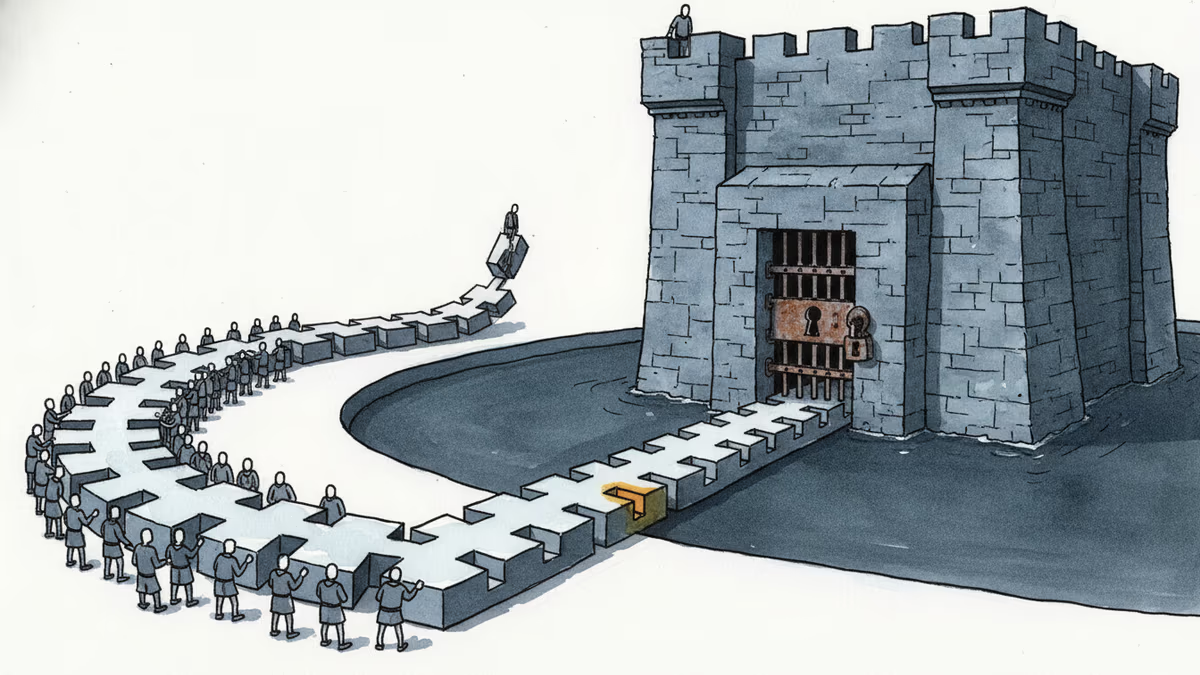
Nvidia shipped roughly a billion RISC-V cores in 2024, then announced it would run CUDA on the open standard. We break down how royalty-free instruction sets and open software stacks are trying to route around CUDA's lock-in. Part 2 of the Semiconductor Sovereignty series.

US AI-chip export controls split into three layers in the first half of 2026 — January easing, a May crackdown on circumvention, and a pending bill. Nvidia erased China from its guidance and still posted a record $81.6 billion quarter. A look at the export policy that both shields and cages it.
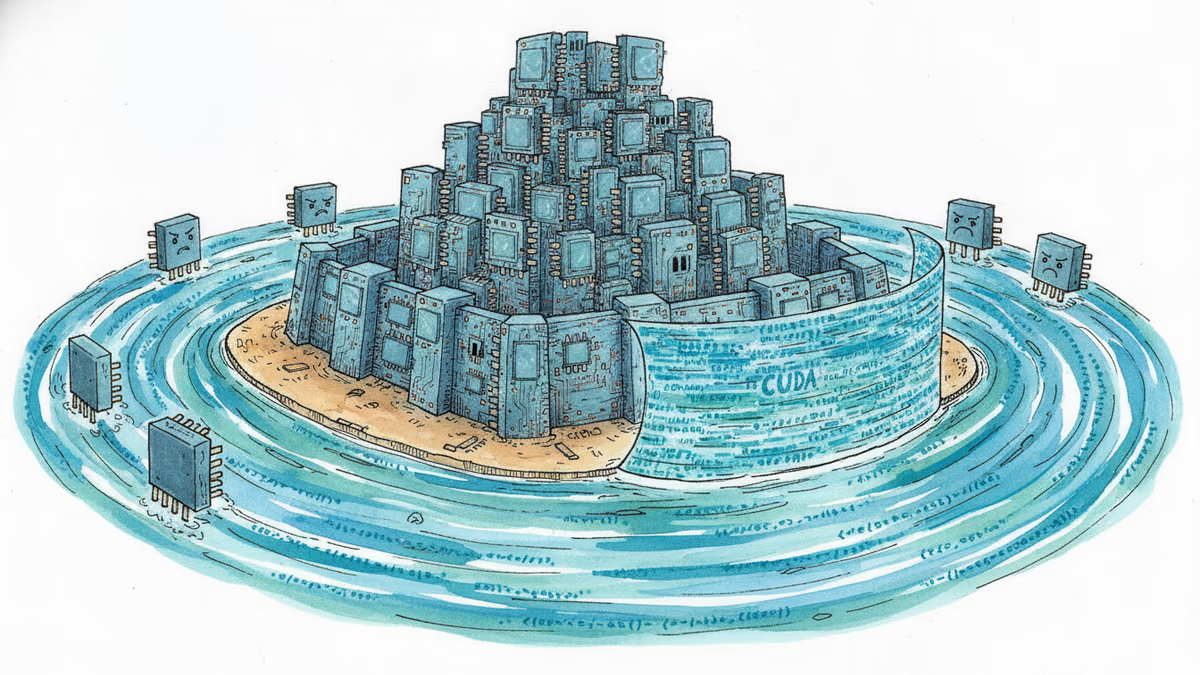
AMD's MI325X matches or beats Nvidia on memory and bandwidth — yet Nvidia's 86-92% share holds. The real moat is CUDA, 20 years in the making. Part 1 of 4.

Snowflake's new $6 billion AWS contract is about more than cloud spending. It signals a shift in AI infrastructure—away from Nvidia GPUs and toward cheaper, homegrown chips for the agent era.
Nvidia shipped roughly a billion RISC-V cores in 2024, then announced it would run CUDA on the open standard. We break down how royalty-free instruction sets and open software stacks are trying to route around CUDA's lock-in. Part 2 of the Semiconductor Sovereignty series.
US AI-chip export controls split into three layers in the first half of 2026 — January easing, a May crackdown on circumvention, and a pending bill. Nvidia erased China from its guidance and still posted a record $81.6 billion quarter. A look at the export policy that both shields and cages it.
AMD's MI325X matches or beats Nvidia on memory and bandwidth — yet Nvidia's 86-92% share holds. The real moat is CUDA, 20 years in the making. Part 1 of 4.
Snowflake's new $6 billion AWS contract is about more than cloud spending. It signals a shift in AI infrastructure—away from Nvidia GPUs and toward cheaper, homegrown chips for the agent era.
Thoughts
Share your thoughts on this article
Sign in to join the conversation