
Why Tim Cook's Trump Call Matters More Than You Think
Apple CEO Tim Cook revealed he spoke with President Trump after Minneapolis protests. The timing and context reveal deeper questions about corporate leadership in political crises.
Apple CEO Tim Cook told employees he had "a good conversation" with President Trump about "the events in Minneapolis" after federal agents killed protester Alex Pretti over the weekend. But the real story isn't what they discussed—it's why Cook chose to reveal this conversation now.
The Optics Problem
According to an internal memo reported by Bloomberg, Cook said "this is a time for deescalation" and that he had "shared his views" with the president. The timing, however, raises questions. Just hours after Pretti's death, Cook attended a VIP screening of Amazon's$40 million Melania documentary alongside fellow tech CEOs Andy Jassy and Lisa Su.
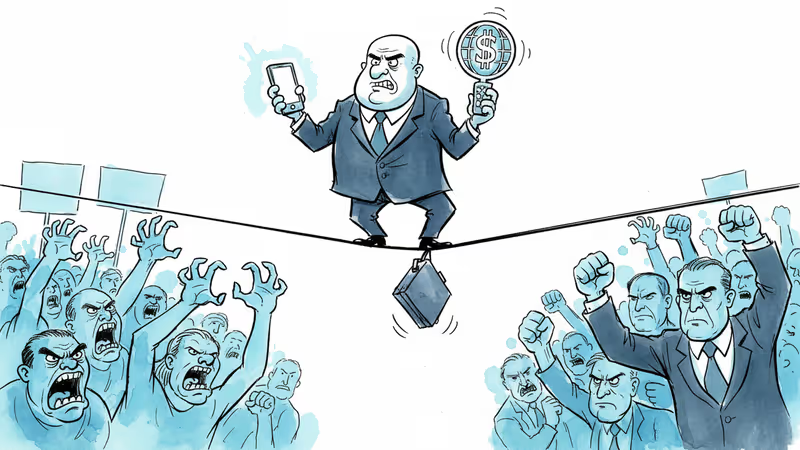
This juxtaposition—discussing violence with the president while attending an elite entertainment event—captures the awkward position of modern corporate leaders. They're expected to be moral voices during crises while maintaining the relationships that keep their businesses running.
The New Rules of CEO Activism

Cook's measured response reflects a calculated approach to corporate activism. Unlike more outspoken executives who take clear partisan stances, Cook chose diplomatic language: "deescalation" rather than condemnation, "sharing views" rather than making demands.
This strategy has served Apple well in navigating complex global markets. The company operates in countries with vastly different political systems and human rights records. Cook's ability to speak out on social issues while avoiding inflammatory rhetoric has helped Apple maintain its market position across diverse geopolitical landscapes.
The Stakeholder Balancing Act
But this approach also reveals the constraints facing modern CEOs. Apple's$3 trillion market cap means Cook's words carry enormous weight. Shareholders expect him to protect their investments. Employees want moral leadership. Customers demand authentic values alignment. Government officials seek cooperative relationships.
The result is often carefully crafted statements that say just enough to appear engaged without saying too much to alienate any constituency. Cook's memo exemplifies this delicate balance—acknowledging the crisis while avoiding specifics that might complicate Apple's relationships.
Authors
Related Articles
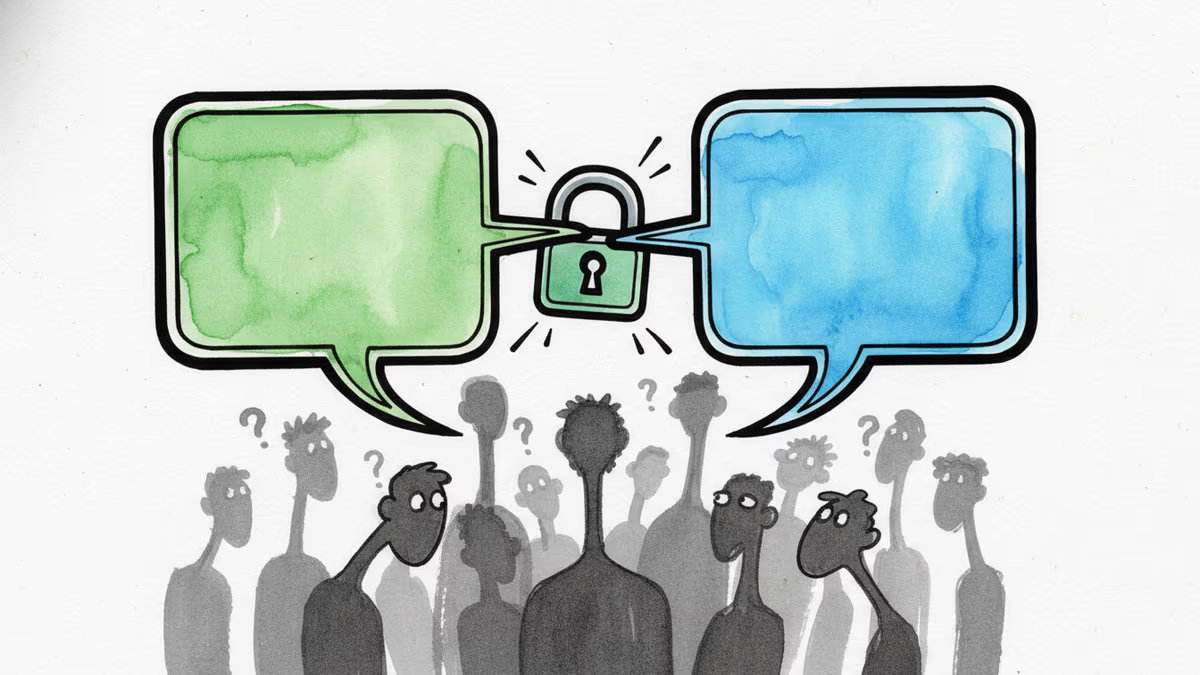
After 15 years of fragmented mobile messaging, Apple and Google are rolling out end-to-end encrypted RCS messaging between iPhones and Android devices. Here's what changed, why it took so long, and what it means for your privacy.
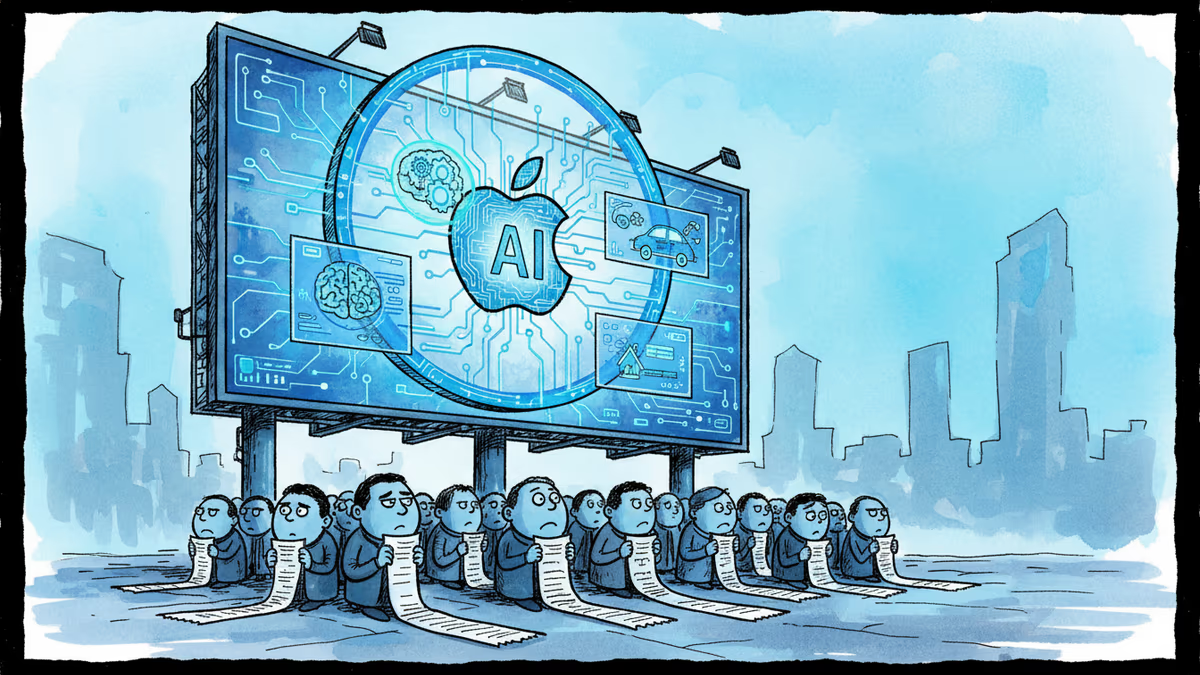
Apple agreed to pay $250 million to settle claims it misled iPhone 16 buyers about Apple Intelligence features. What this means for consumers, Big Tech marketing, and the AI industry.

Apple quietly removed the entry-level $599 Mac Mini, raising the starting price to $799 — just one day after Tim Cook warned of chip supply constraints on the earnings call.

Apple names John Ternus, its hardware engineering chief, as the next CEO. The shift from operator to product person signals where Apple thinks its next decade of growth will come from — and raises real questions about what comes next.
After 15 years of fragmented mobile messaging, Apple and Google are rolling out end-to-end encrypted RCS messaging between iPhones and Android devices. Here's what changed, why it took so long, and what it means for your privacy.
Apple agreed to pay $250 million to settle claims it misled iPhone 16 buyers about Apple Intelligence features. What this means for consumers, Big Tech marketing, and the AI industry.
Apple quietly removed the entry-level $599 Mac Mini, raising the starting price to $799 — just one day after Tim Cook warned of chip supply constraints on the earnings call.
Apple names John Ternus, its hardware engineering chief, as the next CEO. The shift from operator to product person signals where Apple thinks its next decade of growth will come from — and raises real questions about what comes next.
Thoughts
Share your thoughts on this article
Sign in to join the conversation