
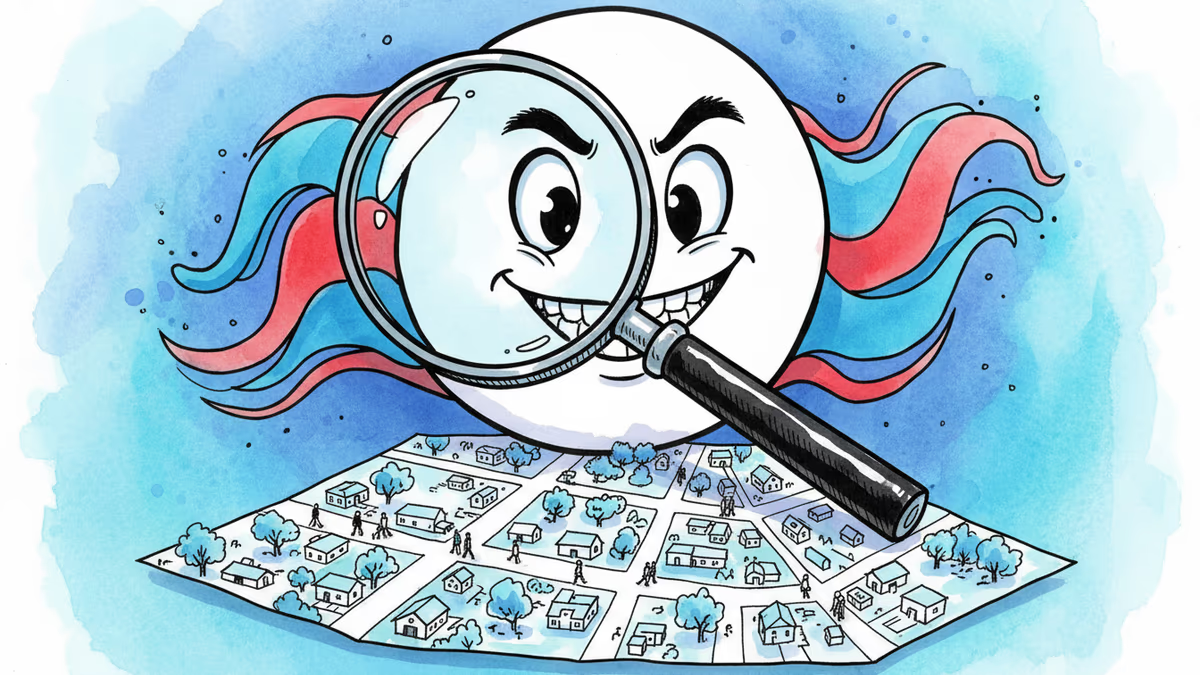
Why TikTok Really Wants to Know Where You Are
TikTok's Local Feed launch brings precise location tracking to the US. But is this about helping users or building a local business empire?
7.5 million businesses depend on TikTok to reach customers. Now the platform wants to know exactly where you are, down to the meter. The timing couldn't be more suspicious.
TikTok just launched its "Local Feed" in the US, showing nearby restaurants, events, and shopping recommendations. But this isn't just another feature rollout—it's a calculated move that reveals TikTok's real ambitions.
The Timing Problem
Here's what's eyebrow-raising: TikTok updated its terms of service to collect "precise location information" right after its US ownership transition, then immediately launched Local Feed to justify the data grab. The company tested this feature in Europe last December, but US users are getting it alongside a major privacy policy change.
TikTok insists the location sharing is opt-in with default set to "off." But the sequence feels deliberate—like asking for house keys before explaining why you need them.
The Real Target: Google's Local Kingdom
This isn't about helping users find nearby coffee shops. It's about challenging Google's dominance in local search and Yelp's grip on local reviews. TikTok's weapon? Viral content that drives real-world traffic.
The numbers tell the story: 84% of TikTok small businesses say the platform helped grow their business, and 75% reached customers beyond their local area. That's not social media—that's economic infrastructure.

Meta played this playbook perfectly, arguing it shouldn't face regulation because small businesses depend on its services. TikTok is borrowing the same strategy, positioning itself as essential to local economies.
Privacy Advocates Sound Alarms
Location data is the holy grail of surveillance capitalism. Unlike your browsing history or shopping preferences, location reveals where you live, work, worship, and seek medical care. It's the most intimate data you can share.
The Electronic Frontier Foundation has repeatedly warned about location tracking's dangers. Once collected, this data often gets shared with third parties, sold to data brokers, or subpoenaed by law enforcement.
TikTok's "only while using the app" promise sounds reassuring, but the app's addictive design means many users have it open constantly.
Small Businesses: Excited or Exploited?
Local restaurant owners and retailers are cautiously optimistic. Sarah Chen, who runs a bubble tea shop in San Francisco, sees potential: "If TikTok can bring foot traffic like Instagram does for photos, I'm interested."
But marketing consultant David Rodriguez warns of platform dependency: "Small businesses already struggle when Facebook changes its algorithm. Adding another platform to that mix increases risk."
The real question isn't whether Local Feed will succeed, but whether we're comfortable living in a world where our every movement feeds someone else's business model.
Authors
Related Articles
The FTC fined Cox Media and two ad firms $930,000 — not for actually eavesdropping on users, but for falsely claiming they could. The case raises uncomfortable questions about surveillance capitalism.
A Utah woman was sentenced to life in prison partly because of her Google searches and deleted texts. The Kouri Richins case reveals how digital footprints have become the courtroom's most reliable witness.
After 15 years of fragmented mobile messaging, Apple and Google are rolling out end-to-end encrypted RCS messaging between iPhones and Android devices. Here's what changed, why it took so long, and what it means for your privacy.
New Mexico already won $375 million from Meta. Now it wants something harder to give: a court order forcing Facebook, Instagram, and WhatsApp to redesign themselves. A three-week trial starts Monday.
The FTC fined Cox Media and two ad firms $930,000 — not for actually eavesdropping on users, but for falsely claiming they could. The case raises uncomfortable questions about surveillance capitalism.
A Utah woman was sentenced to life in prison partly because of her Google searches and deleted texts. The Kouri Richins case reveals how digital footprints have become the courtroom's most reliable witness.
After 15 years of fragmented mobile messaging, Apple and Google are rolling out end-to-end encrypted RCS messaging between iPhones and Android devices. Here's what changed, why it took so long, and what it means for your privacy.
New Mexico already won $375 million from Meta. Now it wants something harder to give: a court order forcing Facebook, Instagram, and WhatsApp to redesign themselves. A three-week trial starts Monday.
Thoughts
Share your thoughts on this article
Sign in to join the conversation